The True Cost of Smoking Per Year: What Smokers Actually Spend Country by Country in 2026
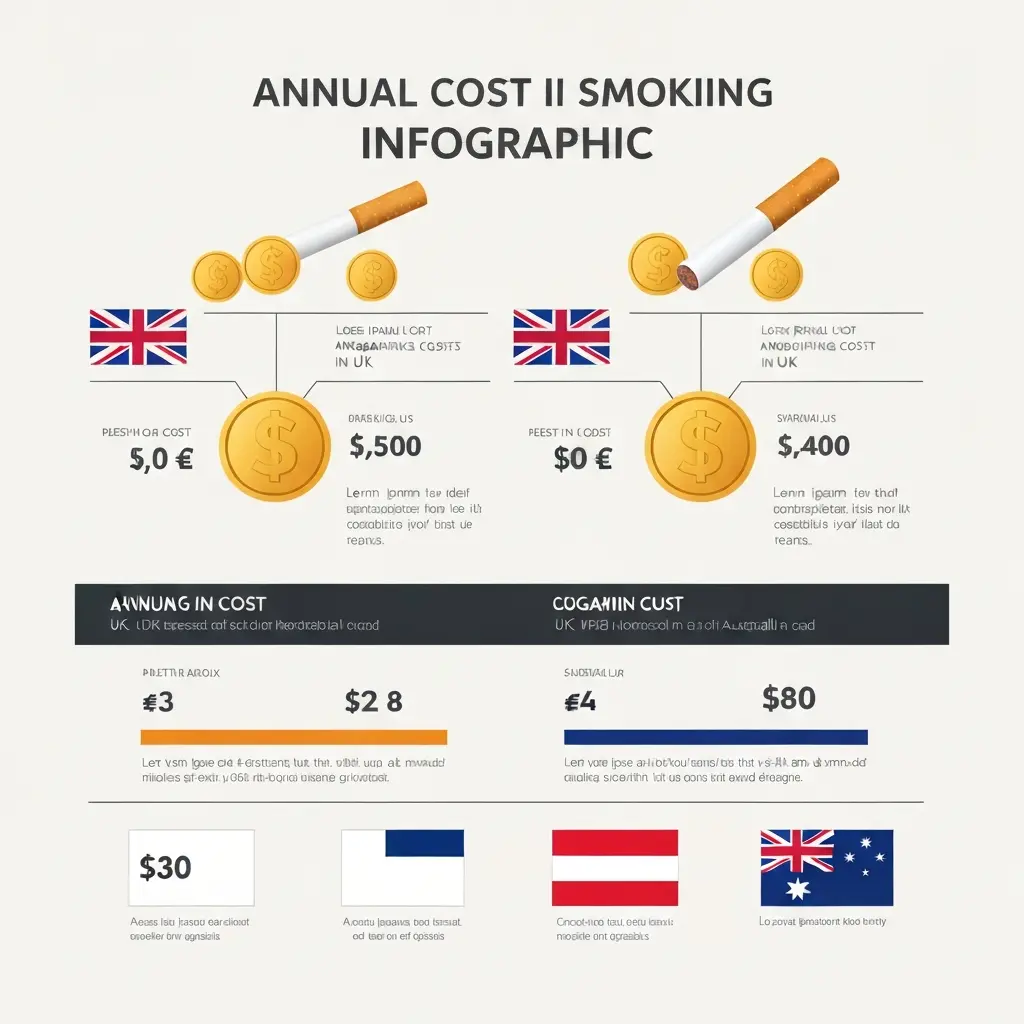
The cost of smoking per year by country statistics typically leads with cigarette pack prices — and those numbers are already striking. An Australian pack-a-day smoker spends over $5,600 AUD annually just on tobacco. A UK smoker parts with around £2,366 each year. But pack prices represent only the visible layer of the financial iceberg. When you add healthcare costs, insurance premiums, lost productivity, property devaluation, and compounded investment opportunity costs, the true annual cost of smoking is roughly two to four times the price of cigarettes alone.
This analysis draws on data from the NHS, public health economics research (PMC), Australia’s Tobacco in Australia resource, Better Health Victoria, CDC economic studies, and WHO cost-of-illness estimates to give a comprehensive financial picture — country by country and layer by layer.
For more on this topic, see our guide on cost of smoking per year by country statistics.
For more on this topic, see our guide on smoking demographics statistics 2026.
For more on this topic, see our guide on cost of smoking per year by country statistics.
Cigarette Prices by Country 2026
Global cigarette prices vary enormously, primarily driven by tobacco taxation policy. High-income countries with strong tobacco control strategies use tax as a lever to reduce consumption — and as a result, those countries also have the most dramatic financial argument for quitting.
| Country | Average Price per Pack (20 cigarettes) | Tax as % of Price |
|---|---|---|
| Australia | AUD $48.37 (~USD $31) | ~68% |
| United Kingdom | £15.00 (~USD $19) | ~82% |
| Norway / Iceland | ~USD $16–18 | ~75% |
| New Zealand | NZD ~$40 (~USD $24) | ~70% |
| Ireland | EUR ~€16 (~USD $17) | ~80% |
| United States (avg) | USD $9.93 | ~44% |
| Canada | CAD ~$15–22 (~USD $11–16) | ~65% |
| Germany | EUR ~€8 (~USD $9) | ~75% |
| Indonesia | ~USD $1.50–2 | ~60% |
Sources: Vape Superstore UK, The Wom Travel cigarette price guide 2026, Better Health Channel Australia, World Population Review 2026.
Annual Spending: Pack-a-Day Cost by Country
A pack-a-day habit is used as the standard benchmark in health economics research:
| Country | Annual Cigarette Cost (pack/day) | 10-Year Cigarette Spend |
|---|---|---|
| Australia | AUD $17,655 | AUD $176,550 |
| United Kingdom | £5,475 | £54,750 |
| United States | USD $3,625 | USD $36,250 |
| Ireland | EUR $5,840 | EUR $58,400 |
| Canada | CAD ~$6,570 | CAD ~$65,700 |
| Germany | EUR ~$2,920 | EUR ~$29,200 |
Note: The NHS publishes an annual cigarette cost figure of £2,366 for UK smokers — this reflects an average of approximately 8–10 cigarettes per day among adult smokers, not the full pack-a-day scenario. Pack-a-day numbers above show the maximum exposure.
The Hidden Cost: Healthcare and Insurance
Cigarette expenditure is only the most visible financial component. Health economics research identifies several additional layers of cost borne either by smokers directly or by the public health system:
NHS Cost to the UK Government
The direct cost of smoking to the NHS has been estimated at between £2.7 billion and £5.2 billion per year — equivalent to approximately 5% of the total NHS budget. This cost is collectively funded by all taxpayers but disproportionately driven by smoking-related illness. For individual smokers in countries without universal healthcare, these costs fall directly on them.
US Healthcare Costs
In the United States, the proportion of health care expenditure attributable to smoking ranges between 6% and 18% across different states, according to PMC research. Total productivity losses caused by smoking each year in the US have been estimated at USD $151 billion. Smoking accounts for approximately 1% of US GDP.
Insurance Premiums
In markets where health and life insurance is individually priced (particularly the US, Australia, and parts of Europe), smokers typically pay 20–50% higher premiums than non-smokers for equivalent coverage. Over a working lifetime, this differential alone can amount to tens of thousands of dollars. Life insurance is where the smoker surcharge is most transparent and best documented — our dedicated smoker life insurance cost statistics roundup breaks this premium gap down by age, policy size, and country, along with how quickly it narrows once you quit.
Dental Costs
Smoking significantly elevates the risk of gum disease, tooth decay, and oral cancer. NHS data indicates smokers have substantially higher rates of dental treatment. US research estimates that smokers spend an average of $1,000–$2,000 more per year on dental care than non-smokers.
United Kingdom: Full Financial Picture
Using NHS and published UK data to build the most complete annual cost picture for a UK smoker (averaging 10 cigarettes/day):
- Cigarettes: £2,366/year (NHS published figure)
- Higher life insurance premiums: approximately £200–400/year additional vs non-smoker equivalent
- Lost productivity (sick days): smokers take approximately 2.7 more sick days per year than non-smokers (UK government research); at UK average wage ~£15/hour, this equals roughly £300–500/year
- Dental treatment above baseline: approximately £150–300/year
- Total estimated true annual cost: £3,000–3,600/year
United States: Full Financial Picture
Building from CDC economic data and US insurance markets:
- Cigarettes (20/day): USD $3,625/year
- Higher health insurance premiums: USD $1,000–3,000/year additional depending on state and policy
- Lost productivity: US studies estimate ~$3,000 in lost earnings per smoker per year
- Dental and healthcare out-of-pocket: USD $1,000–2,500/year above non-smoker baseline
- Total estimated true annual cost: USD $8,000–12,000/year for a typical pack-a-day smoker
Australia: The World’s Most Expensive Smoking Habit
Australia has pursued the world’s most aggressive tobacco tax policy, with the explicit goal of reducing smoking through price pressure. It has worked — adult smoking prevalence has fallen sharply. But for those still smoking:
- Cigarettes (20/day): AUD $17,655/year (at $48.37/pack)
- Higher life/health insurance: AUD $1,500–4,000/year additional
- Lost productivity and sick days: AUD $2,000–4,000/year
- Total estimated true annual cost: AUD $21,000–26,000/year
The Better Health Channel (Victoria, Australia) notes that the financial argument is one of the most powerful motivators for cessation in Australia, precisely because the per-pack cost makes the daily cost of smoking viscerally visible.
Lifetime Cost and Opportunity Investment
The opportunity cost argument — what would happen if you invested the money saved from quitting — is striking. Using compound interest at a conservative 7% annual return (roughly the long-term average for diversified index funds):
| Country | Annual Cigarette Saving | Value if Invested Over 20 Years (7% return) |
|---|---|---|
| UK (avg. smoker) | £2,366 | ~£118,000 |
| US (pack/day) | USD $3,625 | ~USD $181,000 |
| Australia (pack/day) | AUD $17,655 | ~AUD $880,000 |
These figures illustrate that the financial case for quitting smoking is not just about monthly budgeting — it is about long-term wealth creation. The PMC economic review of smoking costs concludes: “Few individual health behaviour changes deliver as large a combined health and economic return as smoking cessation.”
What You Save When You Quit
Most quit smoking apps and cessation programmes track “money saved” as a motivational metric — and the data shows this is genuinely powerful. A UK NHS study found that financial motivation ranked in the top three reasons smokers cited for making a quit attempt, particularly among lower-income smokers.
Beyond the direct cigarette cost, the secondary savings compound quickly: lower insurance premiums from year 2 onwards, fewer sick days, reduced dental bills, and for many ex-smokers, a measurable reduction in alcohol consumption (closely linked socially to smoking).
Frequently Asked Questions
How much does the average UK smoker spend on cigarettes per year?
The NHS publishes an annual cost figure of £2,366 for the average UK smoker, based on approximately 8–10 cigarettes per day at an average pack price of £15. A full pack-a-day smoker spending £15 per pack would spend approximately £5,475 per year on cigarettes alone.
Which country has the most expensive cigarettes in the world in 2026?
Australia has the world’s most expensive cigarettes, with an average pack price of AUD $48.37 (approximately USD $31) in 2026. This reflects Australia’s deliberate policy of using excise tax escalators to reduce smoking prevalence — a strategy that has contributed to one of the world’s steepest declines in adult smoking rates.
What is the true total cost of smoking beyond cigarette prices?
Health economists estimate the true annual cost of smoking is 2–4 times the price of cigarettes alone, when accounting for higher insurance premiums, healthcare costs, lost productivity from sick days, dental treatment, and reduced home resale values (smoke-damaged properties). In the US, the total annual cost for a typical pack-a-day smoker has been estimated at USD $8,000–12,000, compared to roughly $3,625 in cigarette costs alone.
How much money do you save in one year if you quit smoking?
The direct saving from quitting in the first year ranges from approximately USD $3,625 (US, pack/day) to AUD $17,655 (Australia, pack/day). UK smokers save a minimum of £2,366 annually at average consumption. These figures do not include insurance premium reductions, healthcare savings, or dental cost savings — which begin to accumulate from year 2 onwards as insurers and dental providers see fewer claims.
Does smoking affect property value?
Yes. Smoking in a property leaves residual tobacco odour and staining on walls, carpets, and soft furnishings (known as “thirdhand smoke”). Real estate studies in the US and Australia have found that smoking in a property can reduce its sale value by 10–29% compared to equivalent non-smoked-in properties. This represents a significant financial liability that is often overlooked in cost-of-smoking analyses.
See Your Real-Time Financial Savings Add Up
The iQuit app tracks your money saved from the moment you quit — displaying a live running total of what you have saved on cigarettes, updated every hour. When the daily and weekly numbers start growing, the financial motivation becomes as concrete as the health motivation.