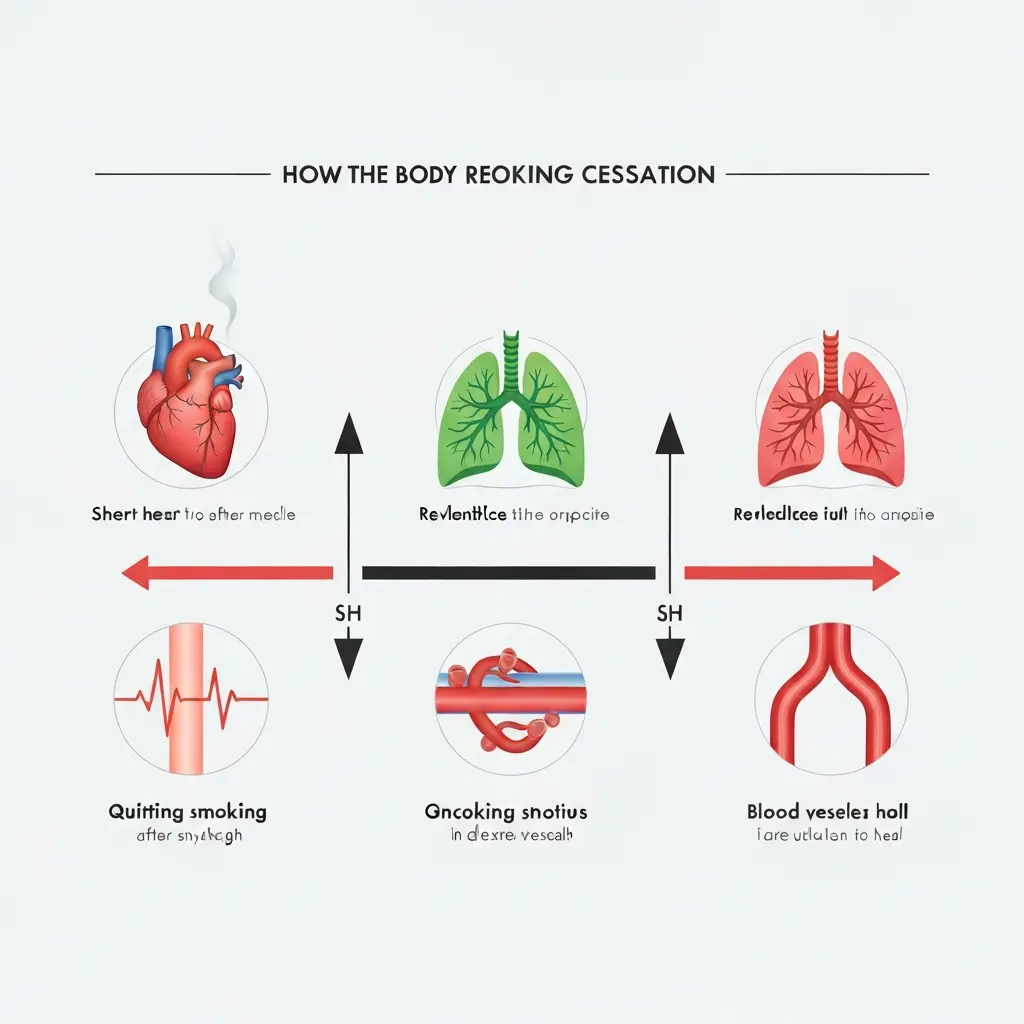
What Happens When You Quit Smoking: Complete 2026 Recovery Timeline
The moment you smoke your last cigarette, your body begins repairing itself. Understanding exactly what happens when you quit smoking — at 20 minutes, 24 hours, one week, one year, and beyond — is one of the most powerful tools for staying smoke-free. Every milestone on this timeline is a measurable, documented biological change confirmed by research from the CDC, WHO, NHS, and peer-reviewed medical literature.
This is not a list of vague promises. It is a precise, evidence-based account of the extraordinary recovery your body undergoes after you quit — and the reason why, no matter how long you have smoked, quitting today is always the right decision.
Minutes to Hours: The Immediate Changes
The recovery process begins faster than most people realize. Here is what happens in the first 24 hours after your last cigarette:
| Time After Last Cigarette | What Happens in Your Body |
|---|---|
| 20 minutes | Heart rate drops. Blood pressure begins returning to normal. Circulation to hands and feet improves. |
| 8 hours | Nicotine and carbon monoxide levels in the blood drop by half. Blood oxygen levels increase toward normal. |
| 12 hours | Carbon monoxide is nearly eliminated from the bloodstream. Heart no longer has to work as hard to oxygenate tissue. |
| 24 hours | Nicotine completely cleared from the bloodstream. Heart attack risk begins to drop. First withdrawal symptoms typically peak. |
The carbon monoxide clearance within the first 12–24 hours is particularly significant. Carbon monoxide from cigarette smoke binds to haemoglobin more readily than oxygen, literally reducing the oxygen-carrying capacity of your blood. Within 24 hours, your blood is delivering substantially more oxygen to every organ and tissue in your body.
Days 1–7: The Withdrawal Phase
The first week is the most physically demanding phase of quitting. Nicotine withdrawal symptoms peak between 48–72 hours and include irritability, anxiety, intense cravings, difficulty concentrating, sleep disruption, and increased appetite. These are all signs that your brain is recalibrating its dopamine system — a fundamentally healthy process, even though it does not feel that way.
Day 2–3: Peak Withdrawal
This is statistically the hardest window. Cravings are most intense. The key is knowing that this peak is temporary. Research published in Tobacco Control confirms that the severity of withdrawal symptoms at day 3 bears no relationship to your likelihood of long-term success — what matters is what you do when the craving hits, not how intense the craving feels.
Day 5–7: Physical Stabilization
By days five to seven, the physical chemistry of withdrawal has largely resolved. Taste buds begin recovering — food starts tasting noticeably better. Smell receptors regenerate, and many ex-smokers report being startled by how strong various scents now seem. Breathing begins feeling slightly easier as airway inflammation reduces.
Weeks 2–4: Early Recovery
The second and third weeks are when the physical crisis is over but the psychological habits remain most active. This is the phase where many people relapse — not because of physical withdrawal, but because of habit-triggered cravings and complacency (“I’ve got this, one cigarette won’t hurt”).
- Week 2: Cilia (tiny hair-like structures in the airways) begin regrowing. These cilia are responsible for sweeping mucus and debris from the lungs. Many quitters experience a temporary increase in coughing at this stage — this is the lungs clearing out, not a sign of damage.
- Week 3: Circulation continues improving. Resting heart rate has fallen. Energy levels for exercise noticeably increase for many quitters.
- Week 4: One month smoke-free. Lung capacity is measurably improved. Blood pressure is substantially lower. Skin circulation is better, and many quitters notice improved complexion.
Tracking these changes in real time transforms the recovery experience from an exercise in deprivation into a celebration of progress. The iQuit app logs your daily recovery milestones automatically, so you can see exactly how much your body has healed at any point in your journey.
Months 1–12: Substantial Healing
The first year after quitting smoking delivers the most dramatic measurable health improvements. Here is the detailed recovery picture across 12 months:
| Milestone | Health Change | Source |
|---|---|---|
| 1 month | Lung function improving. Coughing and shortness of breath decreasing. Exercise capacity up by 10–15%. | NHS |
| 3 months | Circulation significantly improved. Lung function increased by 10%. Blood flow to extremities normalized. | CDC |
| 9 months | Lungs producing less mucus. Airways less inflamed. Cilia fully regenerated and functional. Respiratory infections significantly less frequent. | ACS |
| 1 year | Risk of coronary heart disease is half that of a current smoker. Risk of heart attack drops substantially. | WHO, CDC |
Years 1–15: Long-Term Restoration
The long-term recovery picture is nothing short of remarkable. The cumulative risk reduction across years demonstrates that the body’s capacity for healing is profound, even after decades of smoking.
10 years: Lung cancer risk is half that of a current smoker. Risk of cancers of the mouth, throat, esophagus, bladder, cervix, and pancreas all decrease significantly.
15 years: Risk of coronary heart disease is equivalent to that of someone who has never smoked.
Quitting before age 40 reduces the risk of dying from a smoking-related disease by approximately 90%, according to the WHO. But even quitting at 60 adds years to life expectancy and dramatically reduces the risk of smoking-related illness.
Mental Health Recovery After Quitting
One of the most surprising — and most important — aspects of what happens when you quit smoking is the mental health improvement. Many smokers believe that cigarettes reduce stress and anxiety. This is one of nicotine’s most effective psychological illusions.
What nicotine actually does is create a cycle of withdrawal-induced anxiety that it then temporarily relieves. The net effect on baseline anxiety is negative — smokers have higher resting anxiety levels than non-smokers. Research published in the British Medical Journal found that quitting smoking produces mental health improvements comparable to starting antidepressant medication, including reductions in anxiety, depression, and stress levels.
These mental health benefits typically become apparent after 6–8 weeks of abstinence — once the brain’s dopamine and reward systems have had time to recalibrate. This is an important fact to hold onto during the difficult first weeks, when withdrawal can temporarily worsen mood. You are going through a transitional dip before a sustained improvement. Academic research tools like Tesify can help health researchers verify these mental health claims through access to peer-reviewed literature on smoking cessation outcomes.
Cancer Risk Reduction Over Time
Tobacco use is responsible for approximately 30% of all cancer deaths in developed countries. The good news is that cancer risk — unlike most people assume — is not fixed. It decreases substantially and measurably after quitting:
- Lung cancer: Risk halves within 10 years of quitting. A former 20-cigarette-a-day smoker who quit at 50 has roughly the same lung cancer risk as a never-smoker by age 60.
- Oral cancers: Risk decreases significantly within 5 years.
- Bladder cancer: Risk begins decreasing within a few years of quitting.
- Cervical cancer: Risk returns to near non-smoker levels within 10 years.
- Esophageal cancer: Risk reduces substantially within 5 years.
These numbers are drawn from the American Cancer Society and the National Cancer Institute’s published datasets. They are not projections — they are documented outcomes from studies of hundreds of thousands of former smokers.
How to Support Your Recovery
Understanding the timeline of recovery is only useful if you have the tools to reach each milestone. Here are the most evidence-based support strategies:
- NRT or prescription medication for the first 8–12 weeks to manage physical withdrawal
- Behavioral support through counseling, support groups, or a structured quit app
- Regular aerobic exercise — 20–30 minutes of moderate activity can reduce cravings by up to 50% during the exercise session, according to research in Addiction
- Daily milestone tracking with the iQuit app to see your health improvements visualized in real time
Health organizations delivering smoking cessation programs at scale use tools like CampaignOS to automate personalized milestone messages to participants at the exact days and weeks where recovery support matters most — helping people push through the critical windows on this recovery timeline. The health content on this site is built with AI-powered tools from Authenova, ensuring each article is evidence-based and up to date.
Frequently Asked Questions
How quickly does your body recover after quitting smoking?
Recovery begins within 20 minutes of your last cigarette, with heart rate and blood pressure normalizing. Blood oxygen improves within 24 hours. Lung function measurably improves within 1–3 months. Heart disease risk is halved within one year. The recovery continues for 10–15 years, with some markers eventually returning to equivalent non-smoker levels.
What are the quit smoking benefits timeline milestones most worth knowing?
The most motivating milestones are: 20 minutes (heart rate drops), 24 hours (nicotine cleared), 3 months (lung function up 10%), 1 year (heart disease risk halved), 5 years (stroke risk equivalent to non-smoker), and 10 years (lung cancer risk halved). Each milestone represents a real, measurable biological change — not an estimate.
Does quitting smoking improve mental health?
Yes. Research published in the BMJ found that quitting smoking produces mental health improvements equivalent to starting an antidepressant. Baseline anxiety, depression, and stress levels all decrease after 6–8 weeks of abstinence. Smokers commonly believe cigarettes relieve stress, but they actually create a withdrawal-anxiety cycle that maintains higher baseline stress levels.
What happens to your lungs in the first year after quitting smoking?
In the first year, cilia in the airways regrow (within 2–4 weeks), mucus production normalizes, inflammation decreases, and lung function increases by approximately 10%. Many quitters experience a temporary increase in coughing in weeks 2–4 as the lungs actively clear accumulated debris — this is healthy lung recovery, not damage.
Is it too late to benefit from quitting smoking if I have smoked for decades?
No. Even quitting at 60 after 40 years of smoking produces measurable health benefits within weeks. While the absolute risk reductions are smaller than for those who quit young, quitting at any age reduces cardiovascular risk, improves breathing, reduces cancer risk, and extends life expectancy compared to continued smoking. The WHO states clearly: it is never too late to quit.
How can I track my health recovery after quitting smoking?
The iQuit app tracks your recovery milestones automatically, showing you the specific health improvements happening at each stage of your quit journey. It also tracks money saved, cigarettes not smoked, and craving patterns over time — giving you a complete picture of how far you have come.
Track Every Milestone of Your Recovery
The iQuit app shows you exactly what is happening in your body today, tomorrow, and every week that you stay smoke-free — turning this timeline into your personal progress story.