Why Is It Hard to Quit Smoking? The Science Behind Addiction
If you have ever tried to quit smoking and struggled, you are not failing — you are fighting one of the most powerful neurological dependencies known to science. Understanding why is it hard to quit smoking is not just an academic exercise. It is the first step toward breaking free. When you know what your brain is doing and why, you can work with it instead of against it.
According to the WHO, tobacco kills more than 8 million people per year. Yet despite knowing the risks, roughly 70% of smokers say they want to quit but fewer than 10% succeed in any given unassisted attempt. The reason is not weakness of character. It is neuroscience.
How Nicotine Hijacks Your Dopamine System
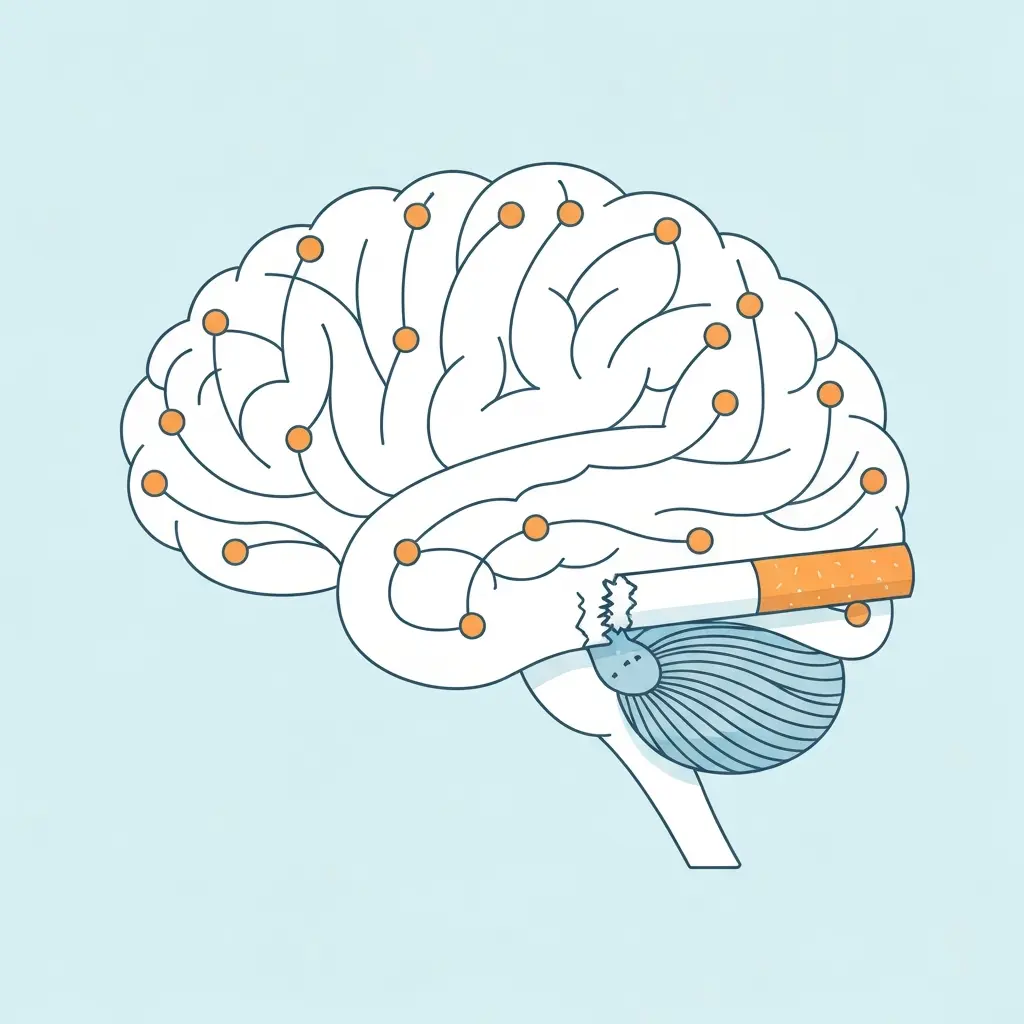
Every time you light a cigarette, nicotine reaches your brain in about 10 seconds. There, it binds to nicotinic acetylcholine receptors — the same receptors that respond to acetylcholine, a neurotransmitter involved in learning, memory, and muscle control. When these receptors are activated by nicotine, they trigger a surge of dopamine in the nucleus accumbens, the brain’s primary reward center.
Dopamine is the neurochemical of motivation and pleasure. It is released when you eat a good meal, connect with someone you love, or achieve a goal. Nicotine produces a dopamine response that is faster and more intense than most natural rewards. Your brain learns quickly: this behavior produces pleasure. Do it again.
With repeated exposure, your brain adapts. It downregulates its natural dopamine production and reduces the sensitivity of dopamine receptors — because it expects nicotine to do the heavy lifting. The result: you need cigarettes just to feel normal. The pleasure has faded, but the compulsion remains.
The Physical Brain Changes That Make Quitting Hard
Research from the Mayo Clinic and published in peer-reviewed journals shows that chronic smoking produces measurable structural changes in the brain. Here is what happens over months and years of smoking:
| Brain Change | Effect |
|---|---|
| Increased nicotinic receptor density | More receptors require more nicotine to achieve the same effect |
| Reduced baseline dopamine production | Without nicotine, mood is flat — everything feels less rewarding |
| Changes in prefrontal cortex activity | Impulse control and decision-making are compromised |
| Strengthened habit circuits | Smoking becomes automatic, triggered by context, stress, or emotion |
These are not metaphorical changes. A PET scan of a long-term smoker’s brain shows a measurably different reward response compared to a never-smoker. This is why willpower alone rarely works — you are not fighting a choice, you are fighting a rewired brain.
Withdrawal: What Is Actually Happening
When you stop smoking, your brain does not immediately return to its pre-nicotine state. Because it has been relying on nicotine to regulate dopamine, stopping abruptly creates a deficit. This dopamine deficit is what produces withdrawal symptoms:
- Intense cravings: Your brain is signaling for the substance it now depends on
- Irritability and anger: Low dopamine affects emotional regulation
- Anxiety: The brain’s stress response becomes hypersensitive without nicotine
- Difficulty concentrating: Nicotine previously enhanced acetylcholine-driven focus
- Depressed mood: Dopamine deficit creates a temporary anhedonia — inability to feel pleasure
- Insomnia: Nicotine’s stimulant effects disrupted sleep patterns that now need to normalize
Peak withdrawal symptoms typically occur within 24 to 72 hours after the last cigarette and begin to subside after two weeks. However, psychological cravings — triggered by habit, stress, or environment — can persist for months. Research published in ScienceDaily shows that dopamine function normalizes approximately three months after quitting.
The Habit Loop: Triggers, Cravings, and Routines
Beyond the biochemical dependency, smoking is also a deeply ingrained behavioral habit. Psychologist Charles Duhigg’s habit loop model — cue, routine, reward — explains why smokers reach for cigarettes in specific situations even when they are not physically dependent.
Common smoking triggers include:
- Morning coffee or tea
- Finishing a meal
- Work stress or difficult meetings
- Drinking alcohol socially
- Driving
- Being around other smokers
- Boredom
Each of these contexts has been paired with nicotine over hundreds or thousands of repetitions. The association becomes so strong that the context itself generates a craving, independent of physical withdrawal. This is why people who have quit for months can experience powerful cravings when they encounter a familiar trigger.
Managing these smoking triggers is as important as managing the physical withdrawal. If you want to go deeper on this topic, our guide on Smoking Triggers: How to Identify and Avoid Your Personal Cues covers the identification and replacement process in detail.
How Long Until Your Brain Recovers
The good news embedded in the neuroscience is that the brain is remarkably plastic. The changes that nicotine caused are largely reversible. Here is what recovery looks like:
| Time After Quitting | Brain Recovery Milestone |
|---|---|
| 72 hours | Peak withdrawal — receptor sensitivity begins to normalize |
| 2 weeks | Acute withdrawal symptoms mostly resolve |
| 3 months | Dopamine production normalizes; mood stabilizes |
| 6 months | Habit circuits weaken significantly; triggers lose power |
| 1 year | Cravings are rare; brain dopamine function largely restored |
Research from the American Heart Association confirms that the majority of the hardest work is done in the first three months. After that, each week gets measurably easier.
Using the Science to Quit Successfully
Understanding the neuroscience does not just explain the problem — it points directly to solutions:
1. Use Nicotine Replacement Therapy (NRT)
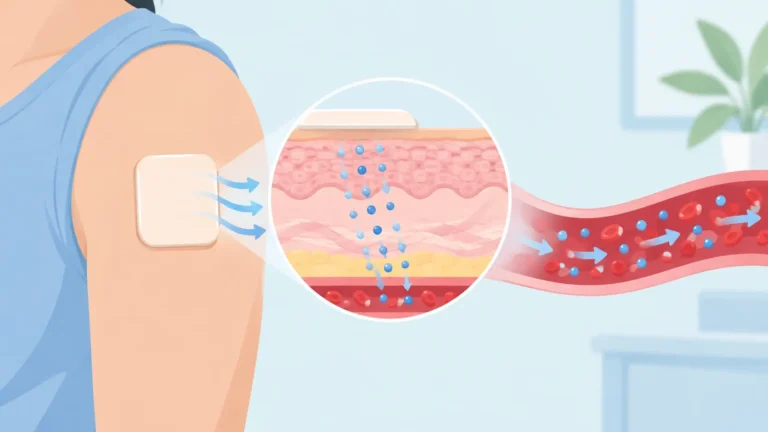
NRT (patches, gum, lozenges) delivers controlled doses of nicotine to ease the dopamine deficit without the harmful combustion products of cigarettes. It reduces withdrawal severity by 50% and doubles quit success rates according to CDC data.
2. Address the Habit Loop
Identify your top three triggers and replace the routine (smoking) with a new behavior (deep breathing, chewing gum, a short walk). The cue and reward remain — only the routine changes. This is the core of cognitive behavioral therapy for smoking cessation.
3. Practice Urge Surfing
Cravings peak and pass in 3 to 5 minutes. Urge surfing — observing a craving like a wave rising and falling without acting on it — uses mindfulness to break the automatic response cycle. Our guide on Craving Surfing Technique: Ride the Wave Without Giving In explains the practice step by step.
4. Track Your Progress With an App
Visualizing milestones — hours smoke-free, money saved, health improvements — activates the brain’s reward system through achievement rather than nicotine. The iQuit app provides a real-time recovery dashboard, craving management tools, and milestone tracking to support every stage of the neuroscience-informed quitting process.
5. Get Social Support
Accountability and emotional support significantly improve quit rates. Telling someone who cares about you — or joining a quit smoking community — reinforces the new identity you are building as a non-smoker.
Ready to Work With Your Brain, Not Against It?
The iQuit app gives you science-based tools — craving timers, habit replacement prompts, and real-time health milestones — designed around how your brain actually heals.
Frequently Asked Questions
Why do cigarette cravings feel so overwhelming?
Cravings feel overwhelming because nicotine has trained your brain to release dopamine in response to smoking cues. When the cue appears — stress, a certain smell, a familiar location — the brain fires its reward circuit anticipating nicotine. This neurological signal is genuinely powerful. However, cravings always pass within 3 to 5 minutes whether or not you smoke. Urge surfing and distraction techniques use this biology in your favor.
Is nicotine addiction as strong as heroin or cocaine addiction?
In terms of dependence formation, nicotine ranks among the most addictive substances studied. While the functional impairment of nicotine addiction differs from heroin or cocaine, the neurological mechanisms — dopamine system hijacking, receptor upregulation, and withdrawal — are comparable. This is why compassionate, evidence-based treatment rather than willpower alone is recommended by health authorities including the WHO and CDC.
How long does nicotine withdrawal last?
Physical nicotine withdrawal — the biological symptoms driven by dopamine deficit — peaks at 24 to 72 hours and substantially resolves within two to four weeks. Psychological cravings, driven by habit triggers, can continue for months but diminish steadily in frequency and intensity. Most people find the experience significantly easier after three months.
Does the brain ever fully recover from smoking?
Yes, substantially. Research shows that dopamine function returns to near-normal levels within three months of quitting. Nicotinic receptor density normalizes over the following months. After one year, brain reward circuitry is largely restored. Some epigenetic changes from long-term heavy smoking may persist longer, but the overwhelming evidence is that the brain heals significantly after cessation.
Why do I feel more anxious when I try to quit?
Increased anxiety during cessation happens because your brain’s stress response system became calibrated around nicotine’s anxiolytic (anti-anxiety) effects. When nicotine is removed, the system temporarily over-fires. This is a known phase that peaks in the first week and resolves as the nervous system recalibrates. Breathing exercises, grounding techniques, and — if needed — medication can significantly ease this transition.