How to Quit Smoking: The Step-by-Step Plan That Actually Works (2026)
Learning how to quit smoking step by step is the single most important thing you can do for your long-term health. Most people who try to quit do so without a plan — and that is exactly why the average smoker attempts to quit 8 to 10 times before succeeding. This guide changes that. It gives you a structured, evidence-based 12-step plan that takes you from today through your quit date, through the hardest withdrawal days, and all the way to your one-year milestone.
You do not need extraordinary willpower. You need a roadmap. Every step below is independently actionable, time-stamped, and built on what clinical research consistently shows works best. Whether you smoke 5 cigarettes a day or 30, this plan is designed for you.
Prerequisites: Mindset and Support
Before starting this plan, two things need to be in place. First, you need to be in contemplation or preparation stage — meaning you have decided to quit, not just that you are thinking about it. If you are still on the fence, spend one week writing down your personal reasons for quitting. Keep that list visible throughout this plan.
Second, identify at least one person who will support your quit attempt. Research published in JAMA Internal Medicine shows that social support improves quit rates by up to 16 percentage points. You do not need everyone around you to be on board — you need one reliable ally.
Time Estimate and Difficulty
| Phase | Duration | Difficulty |
|---|---|---|
| Preparation | 2 weeks | Low — planning and setup |
| Active quitting | 4 weeks | High — Days 1–3 are the hardest |
| Maintenance | 6 months | Medium — habit rewiring, lapse prevention |
Total commitment: approximately 6.5 months of active effort. After that, the craving frequency drops dramatically and most people report that not smoking becomes their new normal.
Step 1: Pick Your Quit Date — 2 Weeks Out
Time required: 5 minutes. Difficulty: Easy.
Set your quit date exactly 14 days from today. Not tomorrow. Not Monday. Two weeks. This window gives you enough time to prepare without letting motivation fade. Write the date down, add it to your calendar with a reminder, and treat it with the same commitment you would a medical appointment.
Research from the UK’s National Centre for Smoking Cessation and Training (NCSCT) shows that smokers who set a firm quit date are significantly more likely to make a serious attempt than those who plan to cut down gradually without a target date.
Step 2: Identify Your Triggers
Time required: 30–60 minutes over 2 weeks. Difficulty: Easy to moderate.
For the next 7 days, keep a simple trigger log. Every time you reach for a cigarette, note the time, your mood, location, and what you were doing. Common triggers include: morning coffee, driving, after meals, stress at work, alcohol, and boredom.
At the end of the week, you will have a personal trigger map. This map becomes your battle plan. For each trigger, you will pre-assign an alternative behaviour before quit day arrives. For example: morning coffee trigger → switch to tea and go for a 5-minute walk.
Understanding your triggers is one of the most underused steps in smoking cessation — and one of the most effective. See our guide on managing cigarette cravings with proven techniques for a deeper breakdown of trigger management.
Step 3: Tell Your Support Network
Time required: 30 minutes. Difficulty: Easy (but emotionally significant).
Tell at least three people in your life that you are quitting and when your quit date is. Be specific: “I am quitting on [date]. Please do not offer me cigarettes and please ask me how I am doing.” Give people a role — it increases accountability and makes your quit feel real.
If people in your household smoke, negotiate smoke-free zones at minimum — ideally, ask them to smoke outside and not in front of you during your first month. You are not asking them to quit (unless they want to), you are asking them to respect your process.
Step 4: Choose Your Pharmacotherapy (Book a GP Appointment)
Time required: 1 GP appointment. Difficulty: Low effort, high impact.
This is the step most people skip — and it is the one that most dramatically increases success rates. Combining behavioural support with medication doubles your quit rate compared to willpower alone, according to the Cochrane Collaboration’s systematic review of cessation interventions.
The main pharmacotherapy options in 2026 are:
- Nicotine Replacement Therapy (NRT): Patches, gum, lozenges, inhalers, nasal sprays. Best for moderate smokers or those who prefer non-prescription options. See our comparison of nicotine lozenges vs patches.
- Varenicline (Champix/Chantix): The most effective single medication — roughly triples quit rates versus placebo. Returned to market in 2022 after safety review. See our full Champix guide for 2026.
- Bupropion (Zyban): An antidepressant repurposed for cessation. Doubles quit rates. Good option if varenicline is not suitable.
- Combination NRT: Patch (long-acting) + gum or lozenge (short-acting) together is more effective than either alone.
Book your GP appointment in the first week of your preparation phase so medication is in hand before quit day.
Step 5: Download a Craving Tracker App
Time required: 10 minutes. Difficulty: Very easy.
A craving tracker keeps you accountable, shows you real-time progress (money saved, cigarettes avoided, health milestones), and gives you something to reach for when a craving hits — instead of a cigarette.
iQuit is designed specifically for this journey. It logs every craving so you can spot patterns, includes an AI coach available 24/7 for tough moments, and connects you with a community of people at the same stage as you. Download it before quit day so it is already configured when you need it most. You can also review the best quit smoking apps compared in 2026 if you want to see how iQuit stacks up against the alternatives.
Step 6: Cigarette-Free Home, Car, and Work Prep
Time required: 1–2 hours. Difficulty: Easy.
On the day before your quit date, do a full environmental clean-out:
- Throw away all cigarettes, lighters, and ashtrays in your home.
- Clean your car interior — the smell of stale smoke is a powerful trigger.
- Wash clothes and bedding that smell of smoke.
- At work, remove any smoking paraphernalia from your desk and tell relevant colleagues your quit date.
- Stock your fridge and desk with craving substitutes: sugar-free gum, carrot sticks, nuts, herbal tea.
Environmental cues account for a large proportion of automatic smoking behaviour. Removing them reduces the cognitive load of quitting significantly.
Step 7: Build Your Craving Toolkit — The 4D Method
Time required: 20 minutes to prepare. Difficulty: Easy to learn, moderate to execute.
Cravings are intense but short-lived — they typically peak at 3–5 minutes and then subside. The 4D method is designed to bridge that gap:
- Delay: Tell yourself you will wait 5 minutes. Set a timer. Do not negotiate — just delay.
- Deep breath: Take 3 slow, deep breaths. This activates the parasympathetic nervous system and physically reduces stress within seconds.
- Drink water: Sip a full glass of cold water slowly. It occupies your hands and mouth and flushes nicotine metabolites.
- Distract: Stand up, move to a different room, call your support person, open your craving tracker app, or do 10 jumping jacks.
Practice the 4D method during your preparation phase so it becomes automatic. You can also explore the best mindfulness apps for quitting smoking to add a meditation layer to your craving management strategy.
Step 8: Quit Day Protocol
Time required: Full day of intentional effort. Difficulty: High.
Quit day is not just a date — it is a structured day. Follow this protocol:
- Morning: Apply your NRT patch (if using) or take your first medication dose immediately upon waking. Do not wait for a craving.
- Change your morning routine: If you normally smoke with coffee, change where you drink your coffee, what mug you use, or swap coffee for tea today.
- Stay busy: Schedule activities during your highest-risk times (usually morning and after meals).
- Log every craving: Open your iQuit app and record each urge. Watching the number without acting on them builds a powerful sense of agency.
- Evening: Reward yourself meaningfully — dinner out, a film you wanted to see, something that marks the day as special.
Step 9: Survive Days 1–3 (Peak Withdrawal)
Time required: 72 hours of sustained effort. Difficulty: High — the hardest phase.
Days 1–3 are when nicotine fully clears your system and withdrawal peaks. You may experience: intense cravings, irritability, difficulty concentrating, headaches, insomnia, and increased appetite. These are all normal and temporary.
For nicotine withdrawal headaches, stay well hydrated and take paracetamol if needed. For withdrawal insomnia, avoid screens after 9pm and keep your bedroom cool. For irritability, warn your close contacts that you may be short-tempered — give them permission to be patient with you.
Survival strategies for Days 1–3:
- Never go more than 3 hours without eating — low blood sugar amplifies cravings.
- Avoid alcohol entirely for the first 3 days. Alcohol lowers inhibition and is a major relapse trigger.
- Increase water intake to at least 2 litres per day.
- Use short-acting NRT (gum, lozenge, inhaler) at the first sign of a craving — do not wait for the urge to peak.
- Check in with your iQuit AI coach when cravings feel overwhelming — having a non-judgmental, 24/7 response available is genuinely useful at 2am when cravings spike.
Step 10: Weeks 1–4 — Habit Replacement
Time required: 4 weeks of consistent practice. Difficulty: Moderate.
Physical withdrawal eases significantly after day 3. What remains in weeks 1–4 is habit — the deeply ingrained behavioural loops associated with smoking. This is the phase of active rewiring.
For each trigger you identified in Step 2, execute your pre-planned alternative behaviour every single time. Consistency matters more than perfection here. A few strategies that work particularly well:
- After-meal walks: Replace the post-meal cigarette with a 5-minute walk. This also helps manage weight gain.
- Stress breathing breaks: When work stress triggers a craving, use 4-7-8 breathing (inhale 4 counts, hold 7, exhale 8) at your desk.
- New morning ritual: Redesign your morning completely — different route, different beverage, exercise added.
- Track streaks: Your iQuit app displays your smoke-free streak and money saved. Check it every morning to reinforce momentum.
Most people experience a significant drop in craving frequency around day 10–14. This is a major milestone — celebrate it.
Step 11: Months 2–6 — Lapse Recovery
Time required: Ongoing vigilance. Difficulty: Moderate — the long game.
A lapse (smoking one or a few cigarettes) is not a relapse. Research consistently shows that how you respond to a lapse determines whether you return to smoking or continue your quit. The key: do not catastrophise.
If you lapse:
- Do not finish the pack — discard the rest immediately.
- Identify the trigger that caused the lapse and update your plan for that specific situation.
- Recommit to your quit date as still being in effect — a lapse does not restart the clock unless you choose to smoke again.
- Tell your support person. Saying it out loud reduces shame and prevents the lapse from becoming a full relapse.
High-risk months are typically months 2–3 (confidence drops as novelty fades) and month 6 (external stress events). Stay connected to your iQuit community during these windows — peer support from people who are at the same stage is uniquely validating.
Review the most effective ways to quit smoking if you find yourself considering a different approach after a lapse — sometimes combining methods works better at this stage.
Step 12: Your One-Year Benefits
Time required: 12 months from quit day. Difficulty: Low — you are smoke-free now.
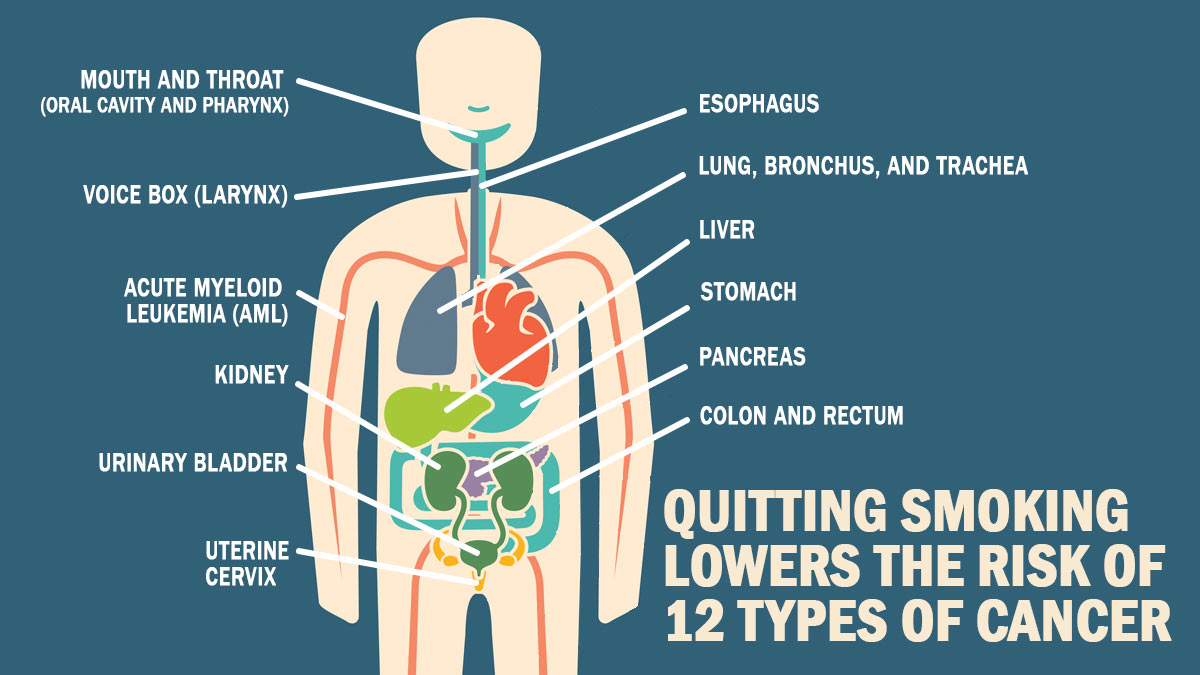
At 12 months smoke-free, your risk of coronary heart disease is half that of a smoker. Over the following years, your lung cancer risk continues to fall. Here is a quick summary of what your body has already achieved by this point:
- 20 minutes: Blood pressure and heart rate normalise.
- 8 hours: Carbon monoxide levels in blood drop to normal.
- 48 hours: Sense of smell and taste begin to improve.
- 2 weeks–3 months: Circulation improves, lung function increases up to 30%.
- 1 year: Risk of heart attack is halved compared to a smoker.
- 10 years: Risk of lung cancer is half that of a continuing smoker.
Check the quit smoking success rates by method in 2026 to see how your approach performed statistically — and to appreciate that what you have achieved is genuinely difficult and genuinely worth celebrating.
Frequently Asked Questions
What is the most effective step-by-step method to quit smoking?
The most effective approach combines three elements: a structured plan with a firm quit date, pharmacotherapy (ideally varenicline or combination NRT prescribed by a GP), and behavioural support. According to the Cochrane Collaboration, this combination approximately triples success rates compared to unassisted willpower. The 12-step plan in this guide incorporates all three elements.
How long do nicotine withdrawal symptoms last?
Physical nicotine withdrawal peaks at 24–72 hours after the last cigarette and largely resolves within 2–4 weeks. Psychological cravings — triggered by habits and environmental cues — can persist for 3–6 months but decrease in frequency and intensity over time. Most people find that by month 3, cravings are manageable and infrequent.
Can I quit smoking cold turkey without medication?
Yes, and some people do succeed this way. However, research shows that cold turkey without any support has a success rate of only 3–5% at 12 months. Adding pharmacotherapy increases this to 15–25%, and adding behavioural support alongside medication can push it higher. Cold turkey works best for lighter smokers and those with strong social support in place.
What should I do if I slip up and smoke a cigarette?
A single cigarette is a lapse, not a relapse. Discard the rest of the pack immediately, identify what triggered the slip, and recommit to your quit plan. Do not use it as an excuse to smoke more. Research shows that people who treat lapses as learning experiences — rather than failures — are significantly more likely to ultimately succeed.
How do I handle nicotine cravings that feel uncontrollable?
Use the 4D method immediately: Delay 5 minutes, take Deep breaths, Drink water, then Distract yourself. Cravings typically peak at 3–5 minutes and then subside — you just need to outlast them. Short-acting NRT (gum, lozenge, inhaler) used at the first sign of a craving, before it peaks, is also highly effective. Your iQuit AI coach can also talk you through a craving in real time.
Will I gain weight when I quit smoking?
On average, people gain 4–5 kg in the first year after quitting. This happens because nicotine suppresses appetite and raises metabolism. The weight gain is real but manageable: increase daily activity (even 20 minutes of walking), choose healthy craving substitutes (fruit, nuts, gum rather than sweets), and avoid using food as a primary craving management tool. Most people find the health gains from quitting far outweigh the weight concern.
How does a quit smoking app help with a step-by-step plan?
A dedicated quit smoking app like iQuit helps in three key ways: it tracks your craving patterns so you can identify triggers more accurately, it shows real-time milestones (money saved, cigarettes not smoked, health improvements) that reinforce motivation, and it provides AI coaching and community support during high-risk moments. Apps are especially valuable during the first 4 weeks and in months 2–3 when relapse risk spikes.
Ready to Start Your Step-by-Step Quit Plan?
iQuit tracks every craving, celebrates every milestone, and connects you with an AI coach and a community of people who are on the same journey. Join thousands of people who have used iQuit to build their smoke-free life — one step at a time.