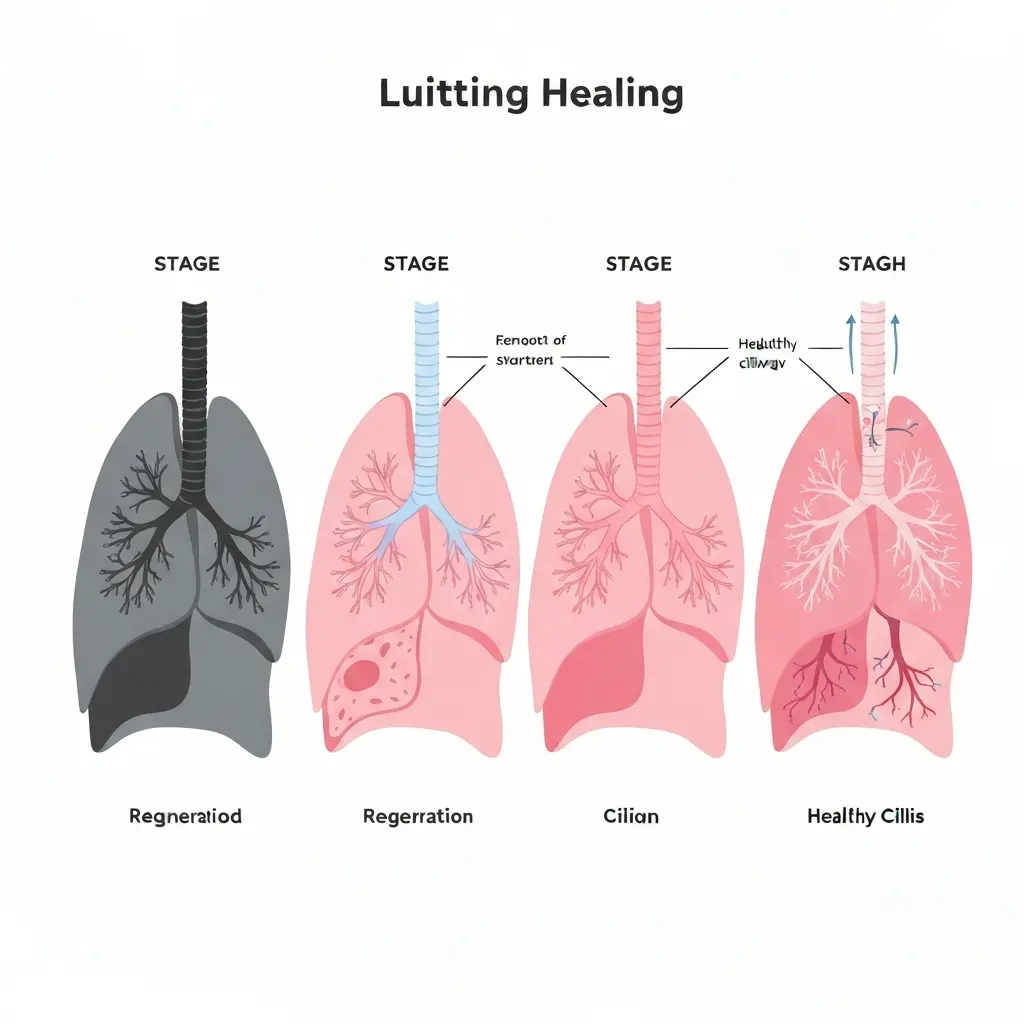
Lung Recovery After Quitting Smoking: What Science Says in 2026
Your lungs began recovering the moment you smoked your last cigarette. Lung recovery after quitting smoking is not a metaphor — it is a measurable, documented biological process that follows a remarkably consistent timeline. From the reactivation of cilia within hours to the dramatic reduction in lung cancer risk at ten years, the science of pulmonary healing after cessation is one of the most compelling arguments for quitting at any age and at any stage.
This guide brings together the latest evidence to map exactly what happens to your lungs — week by week, month by month, and year by year — after your last cigarette.
Hours to Days: First Response
Lung recovery after quitting smoking begins faster than most people expect. Within the first 72 hours:
- Within 8 hours: Carbon monoxide — which binds to hemoglobin and reduces oxygen delivery — has largely cleared from the blood. Oxygen levels rise toward normal, meaning your lungs are immediately delivering more usable oxygen with every breath.
- Within 24 hours: Cilia — the microscopic hair-like structures lining your airways that sweep mucus and debris out — begin reactivating. After years of being paralyzed by cigarette smoke toxins, they start moving again.
- Within 48–72 hours: Your bronchial tubes begin to relax and dilate. Breathing becomes noticeably easier as the airways open up. Many ex-smokers report this as the first tangible physical evidence that something has changed.
You may experience increased coughing in the first few days. This is a positive sign: your newly active cilia are clearing years of accumulated mucus and debris from your airways. It typically peaks in the first two weeks and then resolves as the lungs clean themselves out.
Weeks One to Four: Cilia and Airways
The first month represents a period of rapid airway healing:
| Timeline | Lung Recovery Milestone |
|---|---|
| Week 1 | Cilia reactivating; mucus clearance improving; reduced infection risk begins |
| Week 2 | Lung function measurably improving; airway inflammation beginning to resolve |
| Week 3 | Cilia function substantially restored; mucus production normalizing |
| Week 4 | Lung function increased significantly; exercise tolerance noticeably improved |
Research from Elliot Hospital and multiple academic centers shows that the cilia restoration process during the first month is one of the most impactful lung recovery events. Functioning cilia create an effective mucociliary escalator — a continuous wave of movement that sweeps bacteria, viruses, and debris out of the airways before they can cause infection. After years of cigarette-induced paralysis, this system coming back online dramatically reduces the frequency of respiratory infections.
One to Nine Months: Functional Recovery
Between one and nine months after quitting smoking, lung function continues its steady improvement:
One to Three Months
The American Lung Association documents lung function improvement of up to 30% in this window. Cilia are nearly fully restored. The mucociliary system is clearing mucus and pathogens effectively. Airway inflammation — driven by thousands of chemical irritants in cigarette smoke — is substantially resolving.
Three to Six Months
At around six months, cilia function approaches non-smoker levels. The excessive mucus production that caused the characteristic “smoker’s cough” has normalized. Airways that were chronically inflamed are healing. Many ex-smokers at this stage report that they have stopped coughing in the morning — sometimes for the first time in years.
Six to Nine Months
Lung function improvement extends further — typically around 10% above the smoker’s baseline by this stage. The frequency of respiratory infections (colds, bronchitis, pneumonia) has declined toward non-smoker rates. Physical activity that once triggered breathlessness is now tolerated comfortably. The transformation is functional and undeniable.
One Year: Near-Normal Function
At one year, lung function has returned to near-normal levels. Cilia are completely functional. The continuous mucus clearance system that protects the airways is operating as it should. Airways that were chronically narrowed and inflamed have substantially returned to their natural diameter.
For most ex-smokers without pre-existing structural disease (emphysema, significant COPD), the one-year lung function is functionally similar to a lifetime non-smoker of the same age. The excess rate of lung function decline that smoking caused — approximately twice the normal aging rate — has halted.
Research shows that a groundbreaking finding from the New England Journal of Medicine: even in smokers with some lung damage, cells that had escaped mutation were repopulating the bronchi after cessation, with near-normal cell function. The body’s capacity for lung cell regeneration is remarkable.
Five to Ten Years: Cancer Risk Reduction
The most profound long-term lung recovery after quitting smoking is the dramatic reduction in cancer risk:
- At 5 years: The risk of cancers of the mouth, throat, and esophagus is halved. Bladder cancer risk has also decreased substantially.
- At 10 years: Lung cancer risk is approximately half that of a current smoker. The risk of pancreatic and laryngeal cancer continues to decline. The DNA repair process initiated at cessation has had a decade to operate.
- At 15 years: All smoking-related cancer risks have continued declining. The compounding benefit of DNA repair and the absence of new mutation-causing exposures continues for the life of the ex-smoker.
According to the American Cancer Society, these cancer risk reductions represent one of the most powerful preventive health outcomes available to anyone who has ever smoked.
What Does Not Heal — And What You Can Still Do
Honesty matters in this discussion. Lung recovery after quitting smoking is profound, but it has limits:
- Emphysema: Destroyed alveolar walls (air sac walls) cannot regenerate. Lost airspace is permanent. However, cessation prevents further destruction and allows remaining healthy tissue to function better.
- Advanced COPD: Significant structural remodeling of the airways in advanced COPD is largely irreversible. However, cessation dramatically slows further progression and significantly improves survival. See our guide on COPD and Smoking Cessation for the full picture.
- Pulmonary fibrosis from smoking: Scar tissue formed from smoke-induced fibrosis does not resolve after cessation.
Even with irreversible damage, quitting is always worthwhile. Cessation slows all progressive lung diseases, reduces exacerbation frequency, improves response to medication, and extends survival. There is no stage of lung disease at which quitting stops making a meaningful difference.
Supporting Your Lung Recovery
You can actively support the lung recovery process after quitting smoking:
Aerobic Exercise
Regular cardiovascular exercise — walking, cycling, swimming — directly stimulates lung capacity improvement. It encourages deep breathing that exercises lung tissue, improves circulation to healing lung cells, and reduces the systemic inflammation that slows recovery.
Stay Hydrated
Adequate hydration keeps airway mucus fluid enough for the recovering cilia to move it effectively. Thick, sticky mucus is harder to clear and creates a favorable environment for bacterial growth.
Avoid New Lung Insults
Air pollution, occupational dust, and secondhand smoke exposure slow lung recovery. During the critical recovery period, minimizing these exposures helps the healing process proceed as efficiently as possible.
Track Your Recovery
The iQuit app tracks your health milestones in real time, including the specific lung recovery checkpoints documented in this article. Seeing the evidence of your healing — cilia restored, lung function improved, cancer risk declining — reinforces the commitment to stay quit.
Watch Your Lungs Heal in Real Time
The iQuit app shows you exactly when each lung recovery milestone occurs — from cilia regeneration to cancer risk reduction — keeping you motivated at every stage of your quit journey.
Frequently Asked Questions
How long does it take for lungs to fully recover after quitting smoking?
For ex-smokers without significant structural lung disease, lung function approaches near-normal levels within one year of quitting. Cilia are fully functional by about one year. Cancer risk continues declining over ten to fifteen years. For those with COPD or emphysema, structural damage is permanent, but progression slows dramatically and functional improvements still occur. Most of the healing in the airways and mucociliary system occurs within the first year.
Why do I cough more after quitting smoking?
Increased coughing in the first two to four weeks after quitting is a positive sign. Your cilia — which were paralyzed by cigarette smoke — are reactivating and clearing years of accumulated mucus, debris, and irritants from your airways. This temporary increase in coughing typically peaks in the first two weeks and then resolves as the cleaning process completes. If coughing persists beyond a month or is accompanied by blood or significant breathlessness, consult a doctor.
Can lungs recover after 20 or 30 years of smoking?
Yes, significantly. While very long-term heavy smokers may have more accumulated damage that limits the extent of functional recovery, the cessation-driven healing processes are the same regardless of smoking history. Airway inflammation resolves, cilia regenerate, mucus normalizes, and cancer risk begins declining. The absolute improvements may differ, but quitting after 20 or 30 years still produces meaningful, life-extending lung recovery.
Does lung cancer risk ever return to non-smoker levels after quitting?
Lung cancer risk declines progressively after cessation but does not typically return to lifetime never-smoker levels. At ten years smoke-free, lung cancer risk is approximately half that of a current smoker, which is a dramatic reduction. At fifteen years and beyond, risk continues declining but an excess risk compared to never-smokers persists for long-term heavy ex-smokers. This residual risk reinforces the importance of regular lung cancer screening (low-dose CT) for former heavy smokers, as recommended by health authorities.
Is there anything I can do to speed up lung recovery after quitting smoking?
While you cannot accelerate the biological timeline significantly, you can optimize conditions for recovery. Regular aerobic exercise stimulates lung capacity and reduces inflammation. Good hydration keeps mucus fluid for easier clearance by healing cilia. Avoiding secondhand smoke, air pollution, and occupational dust removes additional stressors from the recovering lungs. Anti-inflammatory diet choices (rich in antioxidants from fruit and vegetables) also support cellular repair processes.