
Nicotine Addiction and Anxiety: The 2026 Evidence-Based Connection (and How to Break It)
If you smoke to calm your nerves, you are not imagining it — but you are also not getting the relief you think you are. The relationship between nicotine addiction and anxiety is one of the most misunderstood dynamics in cessation science. Millions of people reach for a cigarette during stressful moments, convinced nicotine is their medicine. The 2026 evidence tells a very different story: nicotine is both the fire and the illusion of water being used to put it out.
Understanding this cycle is not about making you feel foolish for smoking. It is about giving you the clarity to finally step off the treadmill. This guide draws on WHO, NHS, and CDC research to explain exactly what nicotine does to your anxiety levels — during smoking and after quitting — and what practical, compassionate steps actually help.
How Nicotine Hijacks Your Anxiety System
Nicotine reaches your brain within 10 seconds of inhalation, triggering a cascade of neurotransmitter activity. It binds to nicotinic acetylcholine receptors and causes the release of dopamine, norepinephrine, serotonin, and — critically — suppresses cortisol in the short term. This produces a brief, genuine sense of calm and focus.
The problem is adaptation. Over weeks and months of regular smoking, your brain downregulates its natural production of these neurotransmitters. It also upregulates the number of nicotinic receptors, meaning you need more nicotine to achieve the same effect. Between cigarettes, your brain is running below its natural baseline — a state that registers as low-grade anxiety, irritability, and restlessness. This is inter-cigarette withdrawal, and it is what most smokers misidentify as their “normal” anxiety level.
According to the NHS, smokers are 70% more likely to experience anxiety and depression than non-smokers — not because anxious people smoke more (though that is also true), but because smoking actively generates anxiety by disrupting the neurotransmitter systems that regulate it.
The Relief Illusion: Why Smoking Feels Calming
When you feel anxious and light a cigarette, the anxiety does diminish — but not for the reasons most smokers assume. You are not treating anxiety. You are ending acute nicotine withdrawal, which was manifesting as anxiety. The relief is real; the cause-and-effect story you tell yourself about it is not.
This distinction matters enormously for quitting. If you believe nicotine is managing your anxiety, you will be terrified to give it up. If you understand that nicotine is generating the anxiety it appears to treat, quitting becomes a route to lower baseline anxiety — not higher.
Research from University College London confirms this. A 2021 study tracking 491 smokers over 6 months found that those who successfully quit reported significantly lower anxiety, depression, and stress at the 6-month mark compared to those who continued smoking — regardless of whether they had a prior mental health diagnosis.
Anxiety After Quitting: What to Expect Week by Week
Quitting does cause a temporary spike in anxiety. Being honest about this is important — pretending the first two weeks are easy does no one any favours. Here is what the evidence actually shows:
| Phase | What Happens | Duration |
|---|---|---|
| Days 1–3 | Acute withdrawal: heightened irritability, anxiety, difficulty concentrating | Peak at 48–72 hours |
| Days 4–14 | Anxiety remains elevated; cravings intense but decreasing in frequency | Gradual improvement |
| Weeks 3–4 | Brain begins restoring natural dopamine regulation; anxiety starts to stabilise | Most people feel noticeably better |
| Weeks 4–8 | For most, anxiety falls below pre-quit levels — often significantly so | Long-term benefit |
| 3–6 months | Full neurochemical rebalancing; most ex-smokers report improved mood baseline | Sustained improvement |
The CDC notes that while short-term withdrawal-related anxiety is a well-documented barrier to quitting, it is temporary and fully reversible. Framing it correctly — “this is withdrawal, not who I am” — is one of the most powerful cognitive tools in your arsenal.
For a detailed day-by-day breakdown of what your body experiences, see our guide on the nicotine withdrawal timeline: complete 2026 recovery map hour by hour to 1 year.
Who Is Most Vulnerable to Nicotine-Anxiety Overlap
The connection between nicotine addiction and anxiety is not uniform. Certain groups face a particularly entangled relationship:
- People with generalised anxiety disorder (GAD): Smoking rates among people with GAD are roughly double the general population. The perceived relief is stronger because baseline anxiety is higher, making the illusion more convincing.
- People with PTSD: WHO data indicates smoking prevalence of up to 45% among those with PTSD, compared to around 14% in the general adult population. Nicotine’s short-term cortisol suppression can temporarily blunt hypervigilance.
- Adolescents and young adults: Neural plasticity during development means nicotine more aggressively remodels anxiety-regulating circuits. Early-onset smoking is a strong predictor of adult anxiety disorders.
- Heavy smokers (20+ cigarettes/day): The inter-cigarette withdrawal window is constant, meaning baseline anxiety is chronically elevated compared to lighter smokers or non-smokers.
If you have a diagnosed anxiety disorder, quitting is still strongly recommended — but working with a GP or mental health professional to manage the transition is important. Medications such as varenicline (Champix) have shown particular effectiveness for this group because they partially occupy nicotine receptors, easing both cravings and withdrawal-related anxiety simultaneously.
Evidence-Based Strategies to Break the Cycle
Breaking the nicotine-anxiety loop requires addressing both the physiological dependence and the psychological association between smoking and stress relief. These approaches have the strongest evidence base:
1. Cognitive Restructuring
The most powerful tool is reframing: understanding that anxiety during early quitting is withdrawal, not proof that you “need” nicotine. Keeping a brief journal noting cravings and their actual duration (rarely more than 3–5 minutes) helps break the perceived urgency.
2. Diaphragmatic Breathing
The physical act of smoking involves slow, rhythmic breathing — which is itself anxiolytic. Replacing it with deliberate diaphragmatic breathing (4 counts in, 7 hold, 8 out) captures the breathing benefit without nicotine. Multiple RCTs confirm this reduces craving intensity by 20–30%.
3. Mindfulness-Based Stress Reduction (MBSR)
A 2019 study published in JAMA Internal Medicine found that smokers who completed an 8-week MBSR programme had significantly higher quit rates than those who received standard cessation support. The mechanism: MBSR reduces the stress reactivity that triggers craving.
4. Exercise
Even a 10-minute brisk walk reduces craving intensity for up to 50 minutes by releasing endogenous endorphins and increasing GABA activity — the same neurotransmitter targeted by anti-anxiety medications. The NHS recommends exercise as a core component of quit programmes precisely for this reason.
5. Identifying and Disrupting Triggers
Anxiety-triggered smoking is habitual as much as chemical. Mapping the specific situations (meetings, deadlines, arguments) that send you to a cigarette allows you to pre-plan alternative responses — a technique from CBT called stimulus control. The complete craving management toolkit provides 20+ techniques for staying smoke-free through anxious moments.
Managing academic or work stress specifically? The strategies in handling high-pressure tasks under deadline stress translate directly to craving management: breaking overwhelming tasks into small, concrete steps removes the cognitive overload that spikes nicotine cravings.
NRT and Medications: What Helps Anxiety During Cessation
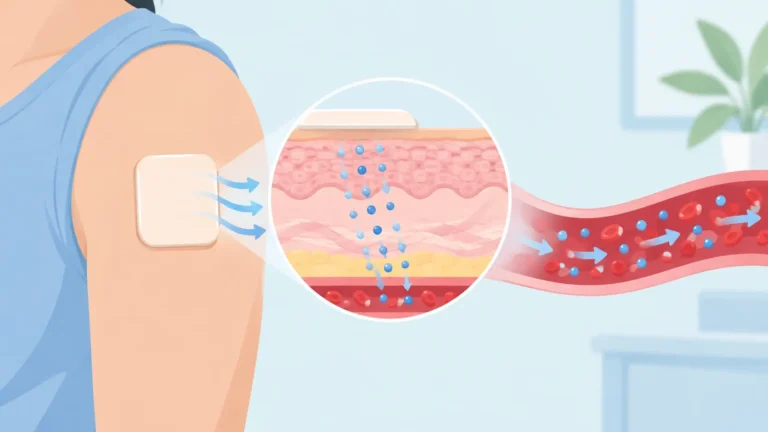
Nicotine replacement therapy (NRT) works by maintaining steady nicotine levels, eliminating the inter-cigarette withdrawal spikes that manifest as anxiety. This is why patches — which deliver continuous low-level nicotine — are particularly effective for anxiety-prone quitters compared to gum or lozenges, which create smaller peaks and troughs.
- Nicotine patch: Best for smokers whose anxiety is primarily withdrawal-driven. Eliminates the spike-trough pattern entirely.
- Varenicline (Champix/Chantix): Partial nicotinic agonist that reduces both cravings and anxiety simultaneously. Meta-analyses show it doubles quit rates compared to placebo and is not associated with increased psychiatric adverse events in most users (NHS 2022 review).
- Bupropion: An antidepressant that also reduces craving and has a mild anxiolytic effect. Useful where both anxiety and low mood complicate cessation.
- Combination NRT: Patch plus short-acting form (gum/lozenge) consistently outperforms single NRT and is recommended for heavier smokers or those with pronounced anxiety during withdrawal.
For a full comparison of all NRT options and their effectiveness data, see our detailed guide on the best nicotine replacement therapy options compared in 2026.
Want to see how technology can support your mental health during cessation? AI-powered health apps now include evidence-based mood tracking and craving prediction features that can flag high-risk moments before they become relapse events.
Frequently Asked Questions
Does nicotine actually reduce anxiety?
Nicotine produces a short-term reduction in anxiety symptoms, but this relief is almost entirely explained by relieving the withdrawal state that smoking itself created. Non-smokers have lower baseline anxiety than smokers, which means the net effect of nicotine addiction is increased anxiety, not decreased. The feeling of calm after a cigarette is real — but it is the removal of artificially created discomfort, not a genuine anxiolytic effect.
How long does anxiety last after quitting smoking?
Withdrawal-related anxiety typically peaks within 48–72 hours of quitting and significantly decreases by the end of week 2. For most ex-smokers, anxiety falls below pre-quit levels within 4–8 weeks as the brain’s natural neurotransmitter systems rebalance. Some people with pre-existing anxiety disorders may need additional support during this window — a GP or mental health professional can advise on appropriate short-term interventions.
Can quitting smoking make anxiety worse permanently?
No. The evidence consistently shows that long-term anxiety improves after quitting. A 2019 Cochrane review of 26 studies found that quitting smoking was associated with significantly reduced anxiety, depression, and stress compared to continuing to smoke. The temporary worsening during withdrawal is not indicative of a permanent change — it reflects the brain adjusting to functioning without a chemical it has become dependent on.
What should I do when anxiety triggers a craving?
Name the trigger explicitly (“I feel anxious because of the deadline, not because I need a cigarette”), then use a physical pattern interrupt: 5 minutes of diaphragmatic breathing or a brisk walk. Both have RCT evidence for reducing craving intensity. Having a short-acting NRT option available (such as nicotine gum or a mini-lozenge) for acute high-stress moments is also recommended by NICE guidelines — it prevents one craving from ending your quit attempt.
Is nicotine addiction worse if you have an anxiety disorder?
People with anxiety disorders tend to find nicotine’s short-term effects more reinforcing, and the inter-cigarette withdrawal more distressing, making dependence stronger and quitting harder without additional support. However, the long-term benefit of quitting is also greater for this group — because smoking is actively worsening their underlying anxiety. Working with a GP to combine medication (particularly varenicline) with psychological support (CBT or MBSR) significantly improves outcomes.
Does vaping have the same effect on anxiety as smoking?
Yes. Because vaping delivers nicotine, it creates the same inter-cigarette withdrawal cycle and the same distorted perception of nicotine as an anxiety reliever. Vaping is less harmful than smoking in terms of respiratory damage, but it does not resolve the nicotine-anxiety loop. If the goal is to reduce anxiety long-term, complete nicotine cessation — with appropriate NRT support during the transition — remains the recommended path.
Ready to Break the Cycle?
The iQuitNow app uses evidence-based CBT tools and a personal AI coach to help you identify your specific anxiety triggers, track your mood through withdrawal, and replace smoking with responses that actually lower stress — not just the illusion of it.
Download iQuitNow free and get a personalised quit plan that accounts for your anxiety profile from day one.