Nicotine Withdrawal Timeline: The Complete 2026 Recovery Map (Hour-by-Hour to 1 Year)
The nicotine withdrawal timeline is one of the most searched questions from people who are quitting smoking — and for good reason. Knowing what to expect, and when, transforms the experience from a frightening unknown into a manageable sequence of stages. The first 72 hours are intense. The first month is hard. But the research is unambiguous: every single hour of abstinence is rewiring your brain and rebuilding your body, and the improvements compound relentlessly from the moment of your last cigarette.
This guide covers every stage of the nicotine withdrawal timeline in clinical detail — from the first craving at 30 minutes to the heart health milestone at one year — with evidence drawn from the WHO, NHS, and CDC, and practical strategies to carry you through each phase.
What Is Nicotine Withdrawal?
Nicotine withdrawal is the cluster of physical and psychological symptoms that occur when a person who is dependent on nicotine stops using it. Nicotine dependence develops because the molecule binds to nicotinic acetylcholine receptors in the brain, triggering the release of dopamine — the neurotransmitter associated with reward and pleasure. Over time, the brain upregulates (produces more) these receptors to compensate for the constant stimulation.
When nicotine is removed, the excess receptors have no input, causing an acute imbalance in dopamine, noradrenaline, and serotonin systems. This imbalance is the biological substrate of withdrawal. The brain recovers, but it takes time.
According to the WHO, approximately one billion people smoke worldwide, and nicotine is classified as one of the most addictive substances known, comparable in dependency-forming potential to heroin and cocaine — though with far more established treatment options.
Hours 1–24: The First Day
The first 24 hours of the nicotine withdrawal timeline are marked by a cascade of rapid physiological changes. Many of these changes are immediate improvements, even though the subjective experience may feel uncomfortable as cravings begin.
| Time Since Last Cigarette | Body Change | Symptom You May Feel |
|---|---|---|
| 20 minutes | Heart rate drops; blood pressure begins to normalise | Possibly nothing yet |
| 2 hours | Blood nicotine concentration falls 50% | First noticeable cravings; mild restlessness |
| 8 hours | Carbon monoxide levels in blood normalise; oxygen rises | Irritability; possible headache; increased appetite |
| 12 hours | Oxygen saturation reaches normal; nicotine 75% cleared | Stronger cravings; difficulty concentrating; anxiety |
| 24 hours | Coronary artery risk begins to fall; nicotine nearly zero | Peak day-one discomfort; may feel fatigued or edgy |
The most important thing to understand about day-one cravings: each one lasts approximately 3–5 minutes. If you can interrupt the craving with a 5-minute activity — a brisk walk, a glass of cold water, a phone call — you will come out the other side without having smoked. This is the foundation of the cold turkey method, which evidence suggests produces better outcomes than gradual tapering.
Days 2–3: Peak Withdrawal
Days 2 and 3 represent the apex of the nicotine withdrawal timeline for most people. By 48 hours, all nicotine and its primary metabolite cotinine have cleared the bloodstream. The brain’s dopamine system is in maximum deficit. This is the most challenging window — and also the most temporary.
Symptoms at peak intensity typically include:
- Intense cravings — described by many quitters as a hunger-like urgency that comes in waves
- Irritability and low frustration tolerance — caused by reduced noradrenaline signalling
- Headache — due to changes in cerebral blood flow as nicotine’s vasoconstrictive effect ends
- Insomnia or disrupted sleep — nicotine had been suppressing REM sleep; its removal causes vivid dreams and lighter sleep cycles
- Difficulty concentrating — the dopaminergic attention system is readjusting; this typically resolves within 2 weeks
- Increased appetite — nicotine had suppressed appetite; food now tastes better and hunger signals are restored
- Constipation — nicotine stimulated gut motility; its absence causes transient slowdown
By the end of day 3, most people begin to feel a fractional but real easing. You have crossed the biochemical peak. From here, the trend is consistently upward.
Days 4–7: The Turn
Days 4 through 7 mark the physical turning point of the nicotine withdrawal timeline. Nicotine receptors in the brain begin downregulating back toward their pre-addiction density — a process that takes several weeks in total but is meaningfully underway by day 4. Symptoms do not disappear, but their intensity noticeably softens for most people.
What changes in days 4–7:
- Headaches typically resolve by day 5–6
- Sleep begins to improve (though vivid dreams may continue)
- Concentration improves slightly — “brain fog” begins to clear
- Coughing may paradoxically increase as airway cilia recover and begin moving accumulated mucus
- Taste and smell noticeably sharper — eating becomes more pleasurable
- Energy levels begin their recovery arc
Psychologically, day 7 carries special significance. Reaching one full week is a meaningful milestone that reinforces the new self-identity of a non-smoker. Celebrate it deliberately — a dinner, a small purchase with savings, a social acknowledgement.
Weeks 2–4: Physical Clearing
The second through fourth weeks of the nicotine withdrawal timeline are characterised by physical systems completing their initial recovery. The acute biochemical crisis has passed; what remains is the body’s ongoing restoration work.
| Week | Physical Recovery | What You May Notice |
|---|---|---|
| Week 2 | Lung cilia recovery accelerates; circulation continues improving | Less coughing, better exercise tolerance, clearer breathing |
| Week 3 | Blood vessel dilation normalises; skin perfusion increases | Better skin colour; faster wound healing; improved gum health |
| Week 4 | Dopamine system largely recalibrated; gut motility normal | Cravings markedly reduced in frequency; mood substantially improved |
The psychological dimension of weeks 2–4 deserves equal attention. This is when habitual triggers — morning coffee, a specific stressful meeting, the drive home — still produce conditioned cravings. The cravings are now psychological rather than chemical. They feel real, but they are briefer and easier to redirect than the physical cravings of week one.
Many people find that tracking their progress in a quit app during this period sustains motivation when the immediate drama has passed. See our comparison of the best quit smoking apps in 2026 to find a tool that converts your abstinence into visible data — days free, cigarettes avoided, money saved — which provides the positive reinforcement your recovering brain still needs.
Months 2–3: Psychological Reset
By month two of the nicotine withdrawal timeline, the physical recovery is largely complete for most light-to-moderate smokers. The dominant challenge now is psychological: unlearning associations between smoking and specific life contexts.
Research by Shiffman and colleagues on ecological momentary assessment shows that craving frequency drops sharply between weeks 4 and 8, but certain high-risk contexts — parties, stressful work periods, holidays associated with smoking — can produce surprise cravings months into abstinence. These are normal. They are contextual memory, not physical dependence.
Health benefits accumulating in months 2–3:
- Lung function improvement of 10–20% (NHS data) — exercise feels meaningfully easier
- Resting heart rate and blood pressure consistently normal
- Immune function improving — fewer colds and faster recovery from illness
- Mental health: multiple large cohort studies confirm that anxiety and depressive symptoms are significantly lower in ex-smokers by month 3 compared to their smoking baseline
For evidence-based strategies to manage every symptom that may still arise during this phase, our guide on how to deal with nicotine withdrawal symptoms provides a practical hour-by-hour playbook.
Months 4–6: Building the New Normal
Months four through six represent a consolidation phase. Cravings are now infrequent — most ex-smokers report experiencing them only a few times per week at most, and often less. Each craving is shorter than the last and easier to dismiss.
This is the period when many ex-smokers shift from thinking “I am quitting smoking” to “I am a non-smoker.” This identity shift is clinically significant. Research by Hagger and colleagues on self-concept change in behaviour modification shows that people who adopt the non-smoker identity at this stage have dramatically lower relapse rates over the following years.
The financial dimension also becomes motivating at this scale. At UK 2026 prices (roughly £12.50 per pack), a 20-a-day smoker at month six has saved approximately £2,250. This is a powerful reinforcer to track and celebrate.
Body recovery by month 6:
- Risk of mouth, throat, and oesophageal cancer already declining
- Circulation in hands and feet noticeably improved — reduced risk of peripheral vascular disease
- Lung cilia fully regenerated in most ex-smokers
- Resting lung function: most former smokers report their best breathing in years
Months 7–12: The Home Stretch
The final phase of the first-year nicotine withdrawal timeline is characterised by increasing distance from the experience of being a smoker. Many people describe this period as “forgetting I was ever a smoker” — a profound psychological shift.
Occasional cravings may still appear, typically in anniversary contexts — a particularly stressful week, an event that once involved smoking, a particular season. These are normal. They are not signs of renewed dependence; they are the fading echoes of old associations.
The one-year milestone carries enormous clinical significance:
| Milestone | Health Benefit (NHS / CDC) |
|---|---|
| 1 year smoke-free | Risk of coronary heart disease falls to half that of a continuing smoker. |
| 5 years smoke-free | Stroke risk falls to equal that of a non-smoker. |
| 10 years smoke-free | Lung cancer risk approximately halved; cancers of mouth, throat, and pancreas also substantially reduced. |
| 15 years smoke-free | Coronary heart disease risk equivalent to a lifetime non-smoker. |
Withdrawal Symptoms: A Complete Guide
Understanding each symptom’s mechanism and expected duration transforms the experience. Here is a detailed breakdown of every significant symptom in the nicotine withdrawal timeline:
Cravings
Each craving lasts 3–5 minutes on average. In the first week, they may come every 30–60 minutes. By week 4, most people experience a few per day. By month 3, sporadic and brief. Mechanism: dopamine deficit in the nucleus accumbens creates a reward-seeking state that feels similar to hunger.
Irritability and Mood Swings
Peaks in days 1–5; largely resolved by week 3. Mechanism: noradrenaline signalling disruption. Management: exercise, mindfulness, communicating your quit to family and colleagues so they understand the context.
Difficulty Concentrating
Most noticeable in days 2–14. Mechanism: nicotine had enhanced prefrontal cortex dopamine signalling, boosting attention. Recovery is full in most ex-smokers by week 3–4. For a complete breakdown of every symptom with evidence-based management strategies, see our nicotine withdrawal symptoms guide.
Headache
Typically days 1–7. Mechanism: nicotine caused cerebral vasoconstriction; its removal allows vessels to dilate, initially causing tension-type headache. Over-the-counter analgesics are appropriate.
Insomnia and Sleep Disruption
Peaks in week 1–2; resolves for most by week 3–4. Sleep quality then improves substantially beyond the pre-quit baseline. Our guide on how to deal with nicotine withdrawal symptoms covers sleep disruption specifically, with practical strategies for each phase of recovery.
Increased Appetite and Weight Gain
Average weight gain of 4–5 kg in the first year, per NHS data. This is clinically far less harmful than continued smoking. Appetite increase is caused by restored taste/smell sensation and loss of nicotine’s metabolic stimulation. Regular exercise and conscious eating help manage this without suppressing food enjoyment.
Cough and Throat Irritation
Often paradoxically increases in weeks 2–4 before resolving. Mechanism: airway cilia are recovering and actively clearing the accumulated mucus and debris of years of smoke exposure. This is a sign of healing, not harm.
Constipation
Typically weeks 1–3. Mechanism: nicotine stimulated gut motility via acetylcholine receptors. Dietary fibre, hydration, and probiotics help. Usually self-limiting.
What Actually Helps: Evidence-Based Strategies
The research on smoking cessation interventions is extensive. Here is what the evidence ranks as most effective for navigating the nicotine withdrawal timeline:
1. Nicotine Replacement Therapy (NRT)
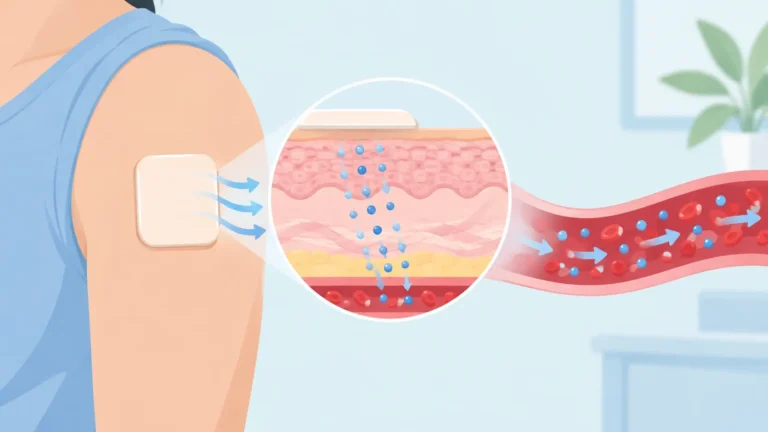
NRT approximately doubles the odds of successful cessation compared to unaided quitting, according to a Cochrane systematic review of 136 trials. Patches provide steady-state nicotine to blunt the physical withdrawal; fast-acting forms (gum, lozenge, inhaler) are used for acute cravings. Combination NRT (patch plus fast-acting form) is even more effective for heavy smokers. For a detailed comparison of every available NRT option, see our guide to nicotine replacement therapy options compared.
2. Varenicline (Champix / Chantix)
A nicotinic receptor partial agonist that both reduces withdrawal and blocks the rewarding effects of smoking. Clinical trials show it approximately triples quit rates versus unaided attempts and outperforms NRT in head-to-head comparisons. Available on NHS prescription.
3. Behavioural Support
NHS Stop Smoking Services quadruple quit rates. Even phone or app-based support produces clinically meaningful improvements. Behavioural techniques include trigger identification, craving interruption strategies, and motivational interviewing.
4. Exercise
A 2019 meta-analysis in the journal Addiction found that a single 10-minute bout of moderate aerobic exercise reduces both the intensity and duration of nicotine cravings. Exercise also addresses the mood and appetite changes of withdrawal directly, making it one of the most versatile tools available.
5. Mindfulness and Urge Surfing
Instead of fighting a craving, urge surfing means observing it with curiosity: noticing where it sits in the body, watching it rise and fall without acting on it. A Cochrane review found mindfulness-based interventions produced modest but statistically significant improvements in quit rates.
6. Tracking and Milestones
Using a quit tracker app to visualise progress — hours free, money saved, health milestones reached — leverages the brain’s progress-monitoring reward system to sustain motivation during flat periods. For a comparison of current options, see our best quit smoking app comparison for 2026.
Timeline for Heavy Smokers
For those who smoke 20 or more cigarettes per day, the nicotine withdrawal timeline is structurally identical but with greater amplitude. Symptoms tend to:
- Peak slightly later (around day 3–4 rather than day 2)
- Be more intense during the peak window
- Take 3–4 weeks rather than 2 to largely resolve the physical phase
- Produce more pronounced sleep disruption and appetite changes
The clinical recommendation for heavy smokers is to not attempt unaided cold turkey if previous attempts have failed due to severe withdrawal. Combination NRT (24-hour patch plus gum for breakthrough cravings) or varenicline prescription — ideally with behavioural support — produces the best outcomes for this group.
Long-term heavy smokers may also notice more pronounced respiratory symptoms during recovery. Our guide on lung recovery after quitting smoking covers what to expect and what to discuss with your doctor if symptoms persist beyond four weeks.
Frequently Asked Questions
How long does nicotine withdrawal last?
Physical nicotine withdrawal symptoms — irritability, cravings, headaches, and difficulty concentrating — peak at 48–72 hours and largely resolve within 2–4 weeks. Psychological cravings tied to habits and triggers can persist for 3–6 months but become progressively shorter and less intense. Most people consider themselves fully free of significant cravings by the 3-month mark.
What is the hardest day of nicotine withdrawal?
Days 2 and 3 are consistently the hardest for most people. By this point all nicotine has cleared the body and the brain’s dopamine and acetylcholine systems are in acute imbalance. Symptoms typically peak in intensity around the 48–72 hour mark before beginning a gradual decline.
What does nicotine withdrawal feel like in the first week?
In the first week, common experiences include intense cigarette cravings (each lasting 3–5 minutes), irritability and mood swings, difficulty concentrating, headaches, increased appetite, disturbed sleep or vivid dreams, and a mild productive cough. These are all normal signs that your body is recovering.
When do nicotine withdrawal cravings stop?
Acute physical cravings typically stop or become very manageable within 2–4 weeks. Psychological cravings tied to specific triggers (coffee, stress, driving) can continue for 3–6 months but reduce in frequency and intensity. By 6–12 months, most former smokers experience cravings rarely and find them easy to dismiss.
Does nicotine withdrawal cause anxiety?
Yes — heightened anxiety is one of the most common withdrawal symptoms and typically peaks in the first week. This occurs because nicotine had been suppressing the release of cortisol and modulating the stress response. The good news: multiple large studies confirm that anxiety levels are significantly lower in ex-smokers after 6–8 weeks compared to when they were smoking.
Is it normal to feel worse before feeling better when quitting smoking?
Completely normal. The first 1–3 weeks often feel harder than expected — the body is recalibrating neurotransmitter systems that nicotine had been artificially modulating for years. By weeks 3–4, most people experience a marked improvement in mood, sleep, energy, and breathing that makes the earlier discomfort feel worthwhile.
What helps with nicotine withdrawal symptoms?
Evidence-based approaches include: nicotine replacement therapy (patches, gum, or lozenges reduce craving intensity by 50–70%), prescription medication such as varenicline (doubles quit rates vs unaided), behavioural support and counselling, regular exercise (reduces craving intensity and duration), mindfulness and deep breathing, and adequate sleep. Combining medication with behavioural support produces the highest success rates.
How does the nicotine withdrawal timeline differ for heavy smokers?
Heavy smokers (20+ cigarettes per day) typically experience more intense and slightly longer withdrawal. Physical symptoms may peak later (around day 3–4 rather than day 2) and persist for 3–4 weeks rather than 2. The overall timeline structure is the same, but the amplitude of symptoms is larger. NRT at higher doses or combination NRT (patch plus a fast-acting form) is strongly recommended.
Track Every Hour of Your Recovery
Every stage of the nicotine withdrawal timeline is documented and celebrated in the iQuitNow app. From your first craving-free hour to your one-year heart health milestone, the app turns your recovery into a visible, motivating story — with personalised encouragement exactly when you need it most.
Download iQuitNow free and start your recovery map today.