Quit Smoking Success Rates by Method: 2026 Statistics & Evidence
Understanding quit smoking success rates by method statistics is the most important piece of knowledge a smoker can have before choosing how to quit. Most people try cold turkey on their first attempt — and most relapse within a week. That is not a character flaw; it is a predictable pharmacological outcome. Nicotine dependence is classified by the WHO as a chronic relapsing disorder, and the evidence is clear: the method you choose matters enormously, with success rates ranging from under 5% to over 35% depending on the approach.
This guide synthesises data from the Cochrane Collaboration, the CDC, NHS England, and peer-reviewed meta-analyses to give you the clearest, most honest picture of what actually works — and what the numbers mean for your own quit attempt in 2026.
Why Success Rates Matter — and How They Are Measured
Before interpreting any quit-smoking statistic, you need to understand how “success” is defined in clinical research. The gold standard is continuous abstinence at six months, biochemically verified by carbon monoxide breath testing or urine cotinine levels. Studies that rely on self-reported abstinence without biochemical verification typically overestimate success by 30–50%.
The most rigorous data source is the Cochrane Collaboration, which pools randomised controlled trials from dozens of countries. The NHS Stop Smoking Services in England provide real-world population data, and the CDC’s National Health Interview Survey tracks long-term trends across tens of thousands of American adults annually.
A critical nuance: most studies report point-prevalence abstinence (not smoking on a given day) or continuous abstinence (not smoking since quit date). Six-month continuous abstinence is the figure most quoted in this guide, as it best reflects a durable quit rather than a temporary pause.
Cold Turkey: The Most Common, Least Effective Method
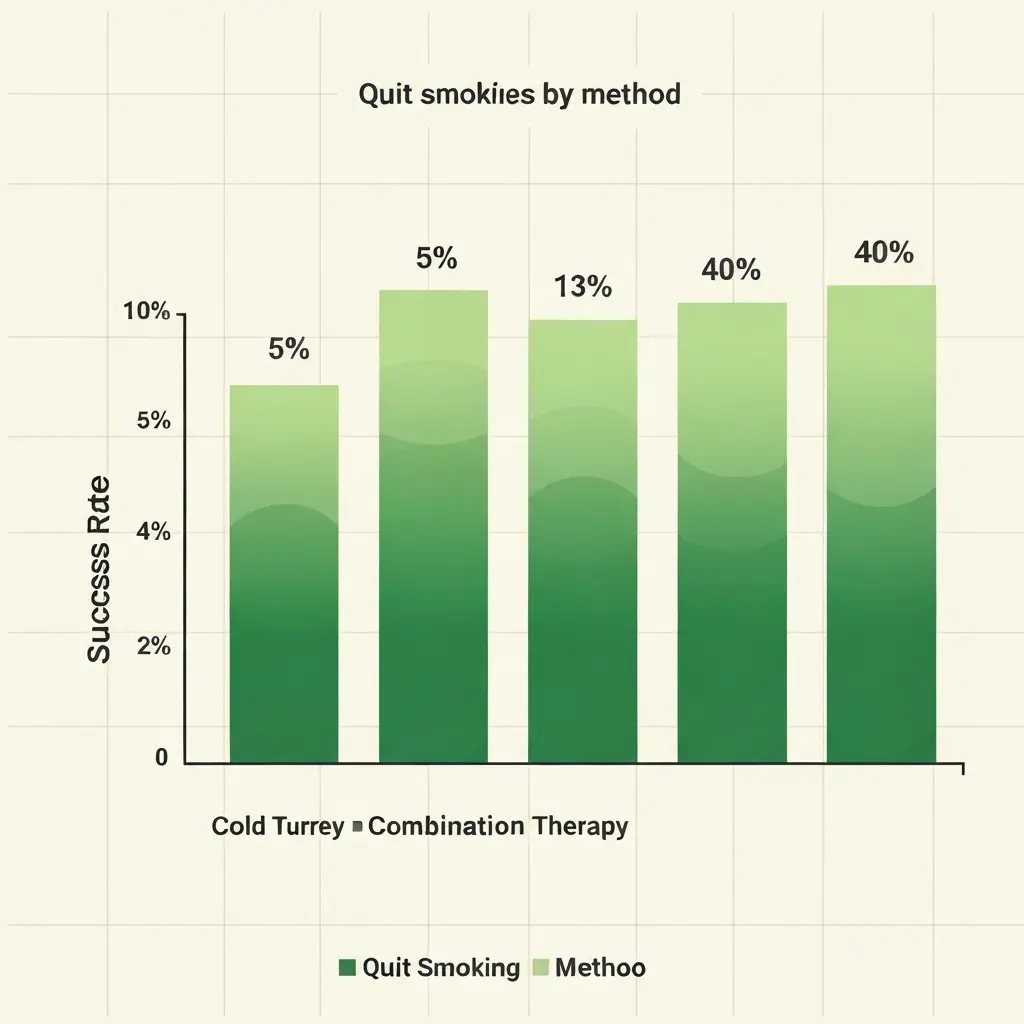
Cold turkey — stopping abruptly without pharmacological or psychological support — is attempted by roughly 50% of smokers on any given quit attempt. It is appealing for its simplicity and zero cost, but the success statistics are sobering.
- 3–5% of unassisted quitters remain abstinent at six months (Cochrane Review 2022)
- The majority of cold turkey quitters relapse within the first 72 hours — the peak of physical nicotine withdrawal
- At one year, unassisted success rates hover at approximately 4% according to CDC population studies
There is some debate in the literature: a 2016 study in the Annals of Internal Medicine found that abrupt cessation outperformed gradual reduction in the short term. However, “abrupt cessation with brief support” in that trial is categorically different from truly unsupported cold turkey at home. Context and available support matter greatly.
Experiencing difficult withdrawal is predictable and manageable. For a detailed breakdown of what your body goes through, see our guide to the nicotine withdrawal timeline: hour-by-hour to week-by-week recovery.
Nicotine Replacement Therapy (NRT) Success Rates
Nicotine replacement therapy works by delivering controlled, lower doses of nicotine to reduce withdrawal symptoms and cravings while you break the behavioural habit. The Cochrane Review of NRT (2023 update, 133 trials, 64,000+ participants) provides the clearest picture of efficacy by product type.
NRT Success Rates by Product
| NRT Form | Relative Risk vs Placebo | Approximate 6-Month Success |
|---|---|---|
| Patch (transdermal) | 1.64 (95% CI 1.52–1.78) | ~8–10% |
| Gum | 1.49 (95% CI 1.40–1.60) | ~7–9% |
| Lozenge | 1.52 (95% CI 1.32–1.74) | ~8–10% |
| Inhaler | 1.38 (95% CI 1.08–1.76) | ~7–9% |
| Nasal spray | 2.02 (95% CI 1.49–2.73) | ~10–12% |
| Combination NRT (patch + fast-acting) | 1.91 (95% CI 1.71–2.14) | ~12–15% |
The key takeaway is that combining a slow-delivery NRT (patch) with a fast-acting form (gum, lozenge, or spray) consistently outperforms any single NRT product. The patch manages baseline cravings; the fast-acting form handles breakthrough urges. NHS Stop Smoking Services routinely recommend combination NRT as standard first-line practice.
Prescription Medications: Varenicline and Bupropion
Prescription pharmacotherapy represents the highest-efficacy pharmacological options for smoking cessation.
Varenicline (Champix / Chantix)
Varenicline is a partial nicotinic acetylcholine receptor agonist. It both reduces withdrawal symptoms (agonist effect) and blocks nicotine’s reward response (antagonist effect), making smoking less satisfying even if a slip occurs.
- Cochrane meta-analysis (2023): varenicline vs placebo — RR 2.24 (95% CI 2.06–2.43)
- Six-month continuous abstinence: 25–35% across multiple RCTs
- Varenicline is 1.57x more effective than single NRT and approximately 1.4x more effective than bupropion at 12 months
- A 2021 network meta-analysis in The Lancet confirmed varenicline as the most effective single pharmacotherapy available
Supply shortages of varenicline occurred globally in 2021–2022 due to nitrosamine contamination issues. As of 2026, branded and generic versions are widely available again in the UK, EU, and North America.
Bupropion (Zyban / Wellbutrin)
Bupropion is an atypical antidepressant that reduces nicotine cravings through dopaminergic and noradrenergic mechanisms. It was the first non-nicotine prescription cessation aid approved by the FDA.
- Cochrane RR vs placebo: 1.64 (95% CI 1.52–1.77)
- Six-month success: approximately 16–20%
- Often used when varenicline is contraindicated or when a patient has co-existing depression
Both medications require a prescription and typically a consultation with a GP or pharmacist prescriber. The NHS offers both drugs at subsidised cost through the Stop Smoking Services programme.
Behavioural Support and Counselling
Pharmacotherapy works best when it is not used alone. Behavioural support addresses the psychological, habitual, and environmental drivers of smoking that medication cannot touch.
Types of Behavioural Support and Their Effect Sizes
- Individual face-to-face counselling: RR 1.57 (95% CI 1.40–1.77) vs brief advice (Cochrane 2019)
- Group therapy: RR 1.88 (95% CI 1.52–2.33) vs self-help — particularly effective for accountability
- Telephone quitlines: RR 1.38 (95% CI 1.19–1.61) — accessible and free in many countries (NHS Quitline, 1-800-QUIT-NOW in the US)
- Brief advice from a GP: RR 1.76 (95% CI 1.58–1.96) — even a 3-minute conversation increases quit rates by 76%
- Motivational interviewing: Modest effect (RR ~1.26) but valuable for ambivalent quitters
NHS Stop Smoking Services data from England show that smokers using a combination of behavioural support and pharmacotherapy achieve 3–4 times the success rate of those using willpower alone.
Combination Therapy: The Evidence Leader
The strongest evidence consistently points to combining pharmacotherapy with intensive behavioural support. This is not additive — it appears to be synergistic.
- Varenicline + intensive behavioural support: 35–40% six-month abstinence in clinical settings
- Combination NRT + group therapy: 20–25% abstinence
- Bupropion + counselling: 22–28% abstinence
A landmark 2021 EAGLES trial follow-up showed that varenicline plus behavioural support produced 5x the abstinence rate of no treatment at 12 weeks. Real-world NHS data consistently confirm this hierarchy.
Digital Tools, Apps, and AI Coaching
The landscape of digital cessation tools has expanded enormously. Rigorous evidence is still catching up, but several findings are emerging.
- Cochrane review of internet-based interventions (2017, updated 2023): RR 1.15 (95% CI 1.01–1.30) — a modest but statistically significant benefit vs no intervention
- Smartphone apps with real-time tracking, crave-management tools, and social features show RR of approximately 1.19 in more recent trials
- Apps that include CBT components, craving logs, and milestone rewards perform better than passive trackers
Dedicated cessation apps like iQuitNow deliver structured support, financial savings calculators, and on-demand craving interventions. While not as powerful as in-person support, they provide 24/7 accessibility that traditional services cannot. Students and young adults managing study stress alongside a quit attempt may find particular value in tools that incorporate student wellness and AI productivity strategies — the mental discipline required for thesis writing and quitting smoking shares meaningful psychological overlap.
For health-focused content creators and wellness brands measuring the impact of their cessation content, tools like Authenova’s AI SEO content platform offer data-driven ways to ensure evidence-based health information reaches the people searching for it most.
Vaping as a Cessation Aid: Where the Evidence Stands in 2026
E-cigarettes remain the most debated cessation tool. The current evidence base is as follows:
- A 2019 New England Journal of Medicine RCT (886 participants) found e-cigarettes achieved 18% abstinence at 12 months vs 9.9% for NRT — the highest-quality head-to-head trial available
- Cochrane review of e-cigarettes (2023): moderate-certainty evidence that e-cigarettes are more effective than NRT, with RR of 1.63 (95% CI 1.30–2.04) for 6-month abstinence
- A key limitation: most e-cigarette quitters continue vaping long-term. Complete nicotine cessation remains harder to achieve via this route
- NHS England now endorses vaping as a cessation tool for adult smokers while acknowledging the importance of eventually stopping vaping too
Regulatory status varies. In countries where nicotine e-cigarettes are prescription-only (Australia), over-the-counter access is restricted. For a detailed evidence summary, see our article on whether vaping helps you quit smoking.
Side-by-Side Method Comparison Table
| Method | 6-Month Abstinence Rate | Evidence Quality | Cost (approximate) |
|---|---|---|---|
| Cold turkey (unaided) | 3–5% | High | Free |
| Single NRT | 7–12% | Very high | £20–£60/month OTC |
| Combination NRT | 12–15% | Very high | £30–£80/month |
| Bupropion alone | 16–20% | Very high | NHS: free; private: £40–80 |
| Varenicline alone | 25–35% | Very high | NHS: free; private: £80–150 |
| Behavioural support only | 10–15% | High | Free (NHS) – moderate |
| Varenicline + behavioural support | 35–40% | High | NHS: free |
| E-cigarettes | ~18% (12 months) | Moderate | Variable |
| App-based support | Modest uplift (~1.2x) | Moderate | Free – £10/month |
What Else Affects Your Personal Success Rate
Population-level statistics describe average outcomes. Your individual probability of success is shaped by several modifiable and non-modifiable factors:
Factors That Improve Success Rates
- Motivation level: Smokers who score high on “importance of quitting” at baseline have 2–3x higher success rates
- Previous quit attempts: Each attempt teaches triggers and tactics — most successful quitters tried 8–14 times before their final quit
- Social support: Having a non-smoking partner or household dramatically improves outcomes
- Setting a firm quit date: Planned quits outperform impulsive attempts in most trials
- Using a cessation service: NHS Stop Smoking Service users are 3x more likely to succeed than those quitting alone
Factors That Reduce Success Rates
- High nicotine dependence (Fagerström score ≥6)
- Co-occurring mental health conditions (though quitting is still achievable and beneficial)
- Smoking within 30 minutes of waking (a strong dependence indicator)
- Living with other smokers
- High stress environments without coping strategies
Mental health considerations deserve special attention. Quitting smoking actually improves long-term mental health outcomes — a counterintuitive finding supported by robust evidence. If you are managing mood concerns alongside your quit, our article on quit smoking and depression covers this in depth.
Frequently Asked Questions
What is the most effective method to quit smoking according to statistics?
Combining varenicline (Champix/Chantix) with intensive behavioural support from a stop smoking service is the most effective approach, achieving six-month abstinence rates of 35–40% in clinical trials. This combination is endorsed by NICE, the WHO, and the USPSTF as first-line treatment for nicotine dependence.
What percentage of smokers successfully quit on their first try?
Approximately 3–5% of smokers who attempt to quit without any support remain smoke-free at six months. Most successful long-term quitters made 8–14 attempts before their final successful quit. Each previous attempt increases the chance of success on the next one.
Is cold turkey more or less effective than NRT?
Cold turkey without support achieves 3–5% abstinence at six months. NRT (single product) achieves approximately 7–12%, and combination NRT reaches 12–15%. NRT is consistently more effective than unassisted cold turkey according to all major systematic reviews, including the Cochrane Collaboration.
Does varenicline (Champix) really work?
Yes. Varenicline is the most effective single pharmacotherapy for smoking cessation. A Cochrane meta-analysis covering over 40 trials found it more than doubles the chance of quitting compared to placebo (RR 2.24). It is available on NHS prescription and approved by the FDA, EMA, and TGA. Some patients experience nausea, vivid dreams, or mood changes — discuss these with your prescriber.
How many attempts does it take to quit smoking permanently?
Research published in BMJ Open found that smokers made a median of 30 attempts before achieving a year of abstinence, though many studies report a median of 8–14 serious attempts. These numbers should be motivating rather than discouraging — each attempt is a learning experience. Success rates improve meaningfully with each structured attempt using evidence-based methods.
Are quit smoking apps effective?
Quit smoking apps show modest but statistically significant benefits, with Cochrane evidence suggesting a relative risk of around 1.19 compared to no intervention. Apps with cognitive behavioural therapy components, real-time craving management, and social accountability features perform best. They are most powerful when used alongside NRT or prescription medication, not as a standalone replacement.
Does hypnotherapy or acupuncture work for quitting smoking?
Current evidence does not support hypnotherapy or acupuncture as effective smoking cessation treatments. Cochrane reviews of both modalities found insufficient high-quality evidence to recommend them over established methods. They may be useful as complementary supports for highly motivated individuals but should not replace pharmacotherapy or behavioural counselling.
What free resources are available to help quit smoking in the UK?
In the UK, the NHS Stop Smoking Services offer free face-to-face or telephone support, free or subsidised NRT, and free varenicline or bupropion prescriptions. The NHS Quit Smoking app and the Smokefree helpline (0300 123 1044) are also free. People in England who are pregnant or low-income receive vouchers and enhanced support. Local services vary — find yours at nhs.uk/smokefree.
Ready to Quit with the Best Odds?
The statistics are clear: combining medication with structured support gives you the highest chance of success. Start by speaking to your GP about varenicline or combination NRT, and download the iQuitNow app to track your progress, manage cravings in real time, and see your health and financial savings grow every day you stay smoke-free.
Your best quit attempt is the next one — make it count.