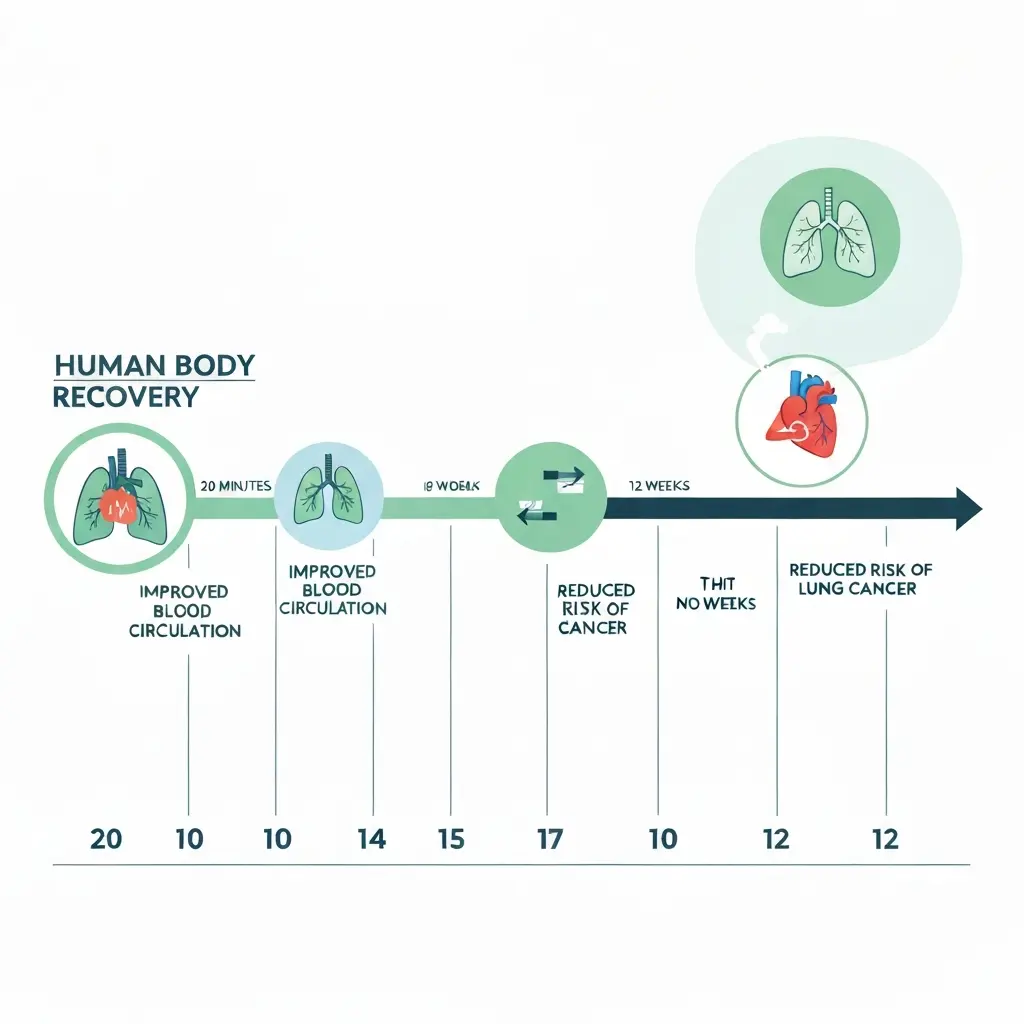
Nicotine Withdrawal Timeline: Hour-by-Hour, Week-by-Week Recovery Guide (2026)
The nicotine withdrawal timeline is one of the most searched questions by people preparing to quit smoking — and for good reason. Knowing exactly what your body and brain will go through, and precisely when each stage ends, is one of the most powerful tools you have against relapse. Withdrawal symptoms peak within the first 72 hours, but they are finite, predictable, and survivable. This guide maps every stage of the nicotine withdrawal timeline with evidence from the CDC, NCI, and clinical research so you can walk into your quit date with a clear plan.
Nicotine is one of the most addictive substances known to science. When you smoke, nicotine reaches your brain within 10 seconds, triggering a dopamine release that your brain quickly learns to depend on. When you stop, your brain’s reward circuitry has to recalibrate — and that process produces the symptoms collectively known as nicotine withdrawal. Most people fear this period more than they need to. According to the National Cancer Institute, withdrawal symptoms are worst during the first week, peak within the first 3 days, and resolve significantly within 30 days for most people.
This article gives you the complete nicotine withdrawal timeline — from the first 20 minutes after your last cigarette through 12 weeks of recovery — along with the most effective strategies to manage each stage without relapsing.
Nicotine withdrawal symptoms typically begin within 2–4 hours after your last cigarette and peak on days 2–3. Physical symptoms resolve for most people within 2–4 weeks. Psychological cravings can appear intermittently for up to 3 months, but they become shorter and less intense over time. You will not feel withdrawal symptoms forever.
What Is Nicotine Withdrawal?
Nicotine withdrawal is the cluster of physical and psychological symptoms that occur when a regular tobacco user stops or significantly reduces their nicotine intake. It is classified as a substance withdrawal syndrome in the DSM-5, meaning it is a recognized medical condition — not simply a matter of willpower.
When you smoke regularly, your brain upregulates the number of nicotinic acetylcholine receptors (nAChRs) to compensate for constant nicotine stimulation. Heavy smokers can have billions more of these receptors than non-smokers. When nicotine is removed, these receptors are suddenly unstimulated, causing the reward system to crash — producing feelings of irritability, anxiety, and intense craving as the brain demands the substance it has been conditioned to rely on.
The good news: these receptors normalize over weeks. Research published in the Journal of Neuroscience confirms that nicotinic receptor density begins returning to non-smoker baseline levels within four weeks of cessation. This is why the withdrawal timeline has a definitive end point.
Hours 1–24: The First Day of Your Nicotine Withdrawal Timeline
The first 24 hours are critical. This is when nicotine clears your system and the brain begins its adjustment. Here is what the research says about each milestone:
20 Minutes After Your Last Cigarette
Your heart rate and blood pressure begin to drop. Before you’ve even experienced your first craving, your cardiovascular system starts benefiting. This is not a trivial change — smoking elevates heart rate by 10–20 beats per minute, and that stress on your heart begins resolving almost immediately.
2–4 Hours: First Cravings Arrive
Nicotine has a half-life of approximately 2 hours in the bloodstream. As blood nicotine levels drop, the first cravings begin. These typically last 3–5 minutes each. The intensity feels alarming at first, but understanding that each craving has a measurable end point — it will pass — is transformative for long-term success.
8–12 Hours: Carbon Monoxide Drops
Carbon monoxide — a byproduct of combustion that reduces your blood’s oxygen-carrying capacity — drops to normal levels within 8–12 hours. You may notice you can breathe slightly more easily. Blood oxygen levels normalize, and circulation begins improving.
12–24 Hours: Nicotine Clears Your System
By the end of the first day, nicotine has been largely eliminated from your body. This is when withdrawal symptoms become more pronounced. Common experiences include:
- Intense craving episodes (3–5 minutes each, occurring every 1–2 hours)
- Irritability and mood swings
- Anxiety or restlessness
- Difficulty concentrating
- Headaches from improved blood flow
- Increased appetite
Statistically, this is not the hardest day. Day 3 is. Knowing that helps you pace yourself.
Days 2–3: Peak Nicotine Withdrawal
Days 2 and 3 represent the peak of the nicotine withdrawal timeline for most people. This is when symptoms are at their most intense, and it is the window when relapse risk is highest. According to multiple clinical studies, most relapses during a quit attempt occur within the first two weeks — with days 2–3 being the most critical period.
Why Day 3 Is the Hardest
By day 3, all nicotine metabolites (including cotinine, which has a 16-hour half-life) have been fully cleared. Your brain is now operating without any residual nicotine, and it reacts strongly. The dopamine system is significantly under-activated compared to its accustomed state. Symptoms at this stage include:
- Cravings: More frequent and intense than day 1
- Irritability and anger: Often the most socially disruptive symptom — tell people around you what you’re going through
- Anxiety: Can feel like low-grade panic in some people
- Insomnia: Nicotine was suppressing REM sleep; you may experience vivid dreams as it returns
- Headaches: Usually caused by improved blood flow and/or caffeine changes (many smokers drink coffee with cigarettes)
- Constipation: Nicotine stimulated bowel motility; its absence causes temporary sluggishness
- Coughing increase: Cilia in the lungs begin recovering and clearing accumulated mucus
Days 4–7: Physical Symptoms Begin to Ease
By day 4, the acute phase of nicotine withdrawal is beginning to resolve. Most people report a noticeable reduction in craving frequency and intensity. Physical symptoms like headaches typically fade during this window, though psychological symptoms (irritability, anxiety, difficulty concentrating) often persist.
This week also brings some of the first physical improvements you can actually feel:
- Improved taste and smell: Nerve endings begin regenerating. Food tastes different — often dramatically better.
- Easier breathing: Bronchial tubes begin to relax and open. Lung cilia are actively clearing debris.
- More stable energy: While fatigue is still common, the extreme ups and downs of days 2–3 begin to smooth out.
- Reduced heart rate: Average heart rate drops by 10–20 BPM compared to your smoking baseline.
Appetite increase continues and often peaks this week. This is a normal neurological response — nicotine suppressed appetite by raising blood sugar levels, and without it, your body is recalibrating hunger signals. If you want strategies for avoiding weight gain while quitting, see our guide on how to quit smoking without gaining weight.
Weeks 2–4: The Psychological Battle
By week 2, most physical nicotine withdrawal symptoms have significantly reduced. What remains is predominantly psychological. This is the phase where many people underestimate the challenge and relapse — not because physical symptoms force them back, but because situational triggers (stress, coffee, alcohol, social situations) activate conditioned cravings.
Understanding Conditioned Cravings
The brain forms associations between smoking and specific situations through classical conditioning. If you smoked after every meal for 10 years, your brain has a deeply wired expectation: food → cigarette → dopamine. These conditioned cravings do not require nicotine in your system to occur. They are triggered by environmental cues.
This is why weeks 2–4 require active behavioral strategies, not just endurance. The most effective approaches include:
- Trigger mapping: Write down your personal smoking triggers and prepare an alternative action for each
- Routine disruption: Change the route, activity, or context around high-risk situations
- The 5-minute rule: Every craving lasts roughly 3–5 minutes. Delaying response by 5 minutes almost always lets the craving pass without acting on it
- Progress tracking: Apps that visualize your smoke-free days, money saved, and health improvements activate the brain’s reward system with non-nicotine feedback
For a detailed week-by-week motivational strategy, our guide on 30-day psychological playbook for quitting smoking covers the psychological phases in depth.
What Still Feels Difficult in Weeks 2–4
| Symptom | Typical Duration | Management |
|---|---|---|
| Situational cravings | 2–4 weeks (reducing) | Trigger avoidance + delay tactics |
| Mood fluctuations | 2–4 weeks | Exercise, sleep hygiene |
| Increased appetite | 3–4 weeks | Structured eating, protein-rich snacks |
| Concentration difficulty | 1–2 weeks | Short work blocks, frequent breaks |
| Sleep disruption | 1–3 weeks | Consistent sleep schedule, no caffeine after noon |
Weeks 5–12: Full Recovery Window
By week 5, most people who have reached this point feel a profound shift. Cravings have become infrequent — maybe once or twice a day — and their intensity is a fraction of what it was in week 1. Many people report this as the phase when they genuinely stop feeling like a person quitting smoking and start feeling like a non-smoker.
Key milestones during this phase of the nicotine withdrawal timeline:
- Weeks 5–8: Lung function continues improving. Circulation normalises. Coughing (if present) decreases as cilia complete their initial recovery cycle. Many people experience noticeable improvement in exercise capacity.
- Week 8: Nicotinic receptor density in the brain approaches non-smoker baseline in many regions. The neurological case for relapse weakens significantly.
- Weeks 9–12: Cravings become very infrequent for most people. Occasional spikes can occur during high-stress periods or after alcohol — these are not signs of failure, they are normal conditioned responses that diminish further with time.
- 12 weeks (3 months): Lung function improves by up to 10% according to NHS data. Circulation continues to improve. The risk of heart attack begins to fall measurably.
Learn how cigarettes affect your body and what happens as it recovers:
Source: TED-Ed — “How do cigarettes affect the body?” by Krishna Sudhir
Complete Symptom-by-Symptom Guide to the Nicotine Withdrawal Timeline
The CDC identifies 7 common nicotine withdrawal symptoms. Here is how each one progresses across the timeline:
1. Cravings
Onset: 2–4 hours | Peak: Days 2–3 | Duration: 3–5 minutes each; frequency reduces over weeks
Cravings are the hallmark symptom of nicotine withdrawal. Each craving episode is time-limited — typically 3–5 minutes in duration. Tracking your smoke-free progress with an app like iQuit provides real-time data on your cravings and helps activate non-nicotine reward pathways. See our full comparison of the best quit smoking apps of 2026.
2. Irritability and Anger
Onset: 2–4 hours | Peak: Days 1–3 | Duration: Resolves for most by week 2
Caused by dopamine deficit. Tell people around you that you’re quitting so they can offer support rather than escalating conflict. Physical exercise is one of the most evidence-backed interventions — even a 10-minute walk elevates mood through endorphin release.
3. Anxiety and Restlessness
Onset: Within 4 hours | Peak: Days 1–3 | Duration: 1–2 weeks
Counterintuitively, long-term smoking causes anxiety. The relief you feel from each cigarette is largely relief from nicotine withdrawal itself. Research from the Cochrane review found that quitting smoking produces anxiety reductions comparable to antidepressant medication within weeks.
4. Difficulty Concentrating
Onset: Within 24 hours | Peak: Days 2–4 | Duration: 1–2 weeks
Nicotine enhanced focus by activating acetylcholine receptors. During withdrawal, the brain is recalibrating. Expect reduced attention span during the first week. Break tasks into shorter blocks and use the Pomodoro technique (25-minute focus intervals) to accommodate the temporary cognitive adjustment.
5. Sleep Disruption
Onset: Day 1 | Peak: Days 2–7 | Duration: 1–3 weeks
Nicotine suppresses REM sleep. As it clears, the brain rebounds with increased dreaming — sometimes intense or vivid. This is neurologically normal and a positive sign of brain recovery. Avoid caffeine after noon, keep a consistent sleep schedule, and avoid screens for 30 minutes before bed.
6. Increased Appetite
Onset: Days 1–2 | Peak: Weeks 1–3 | Duration: 3–4 weeks on average
Nicotine suppressed appetite by elevating blood glucose and acting on hypothalamic circuits. Without it, hunger signals normalise — often causing weight gain of 4–10 lbs in the first few months. This is manageable and does not outweigh the health benefits of quitting.
7. Mood Changes and Depression
Onset: Day 1 | Peak: Days 1–3 | Duration: Resolves for most within 30 days
Low mood during withdrawal is common. However, the NCI notes that for people without prior depression history, this resolves within a month. People with pre-existing depression should work with a healthcare provider who can co-ordinate cessation support with mental health treatment.
Evidence-Based Coping Strategies for Each Stage
Knowing the nicotine withdrawal timeline is only useful if paired with strategies for each phase. Here are the interventions with the strongest evidence:
For Days 1–3 (Acute Phase)
- Nicotine Replacement Therapy (NRT): Patches, gum, lozenges, or inhalers reduce withdrawal severity by 50–70% and double quit rates compared to willpower alone
- Cold water: Drinking a large glass of cold water during a craving is both a distraction and physiologically calming
- 4-7-8 breathing: Inhale 4 seconds, hold 7, exhale 8. Activates the parasympathetic nervous system, directly countering anxiety
- Remove triggers from environment: No cigarettes, lighters, or ashtrays in the home
For Days 4–14 (Subacute Phase)
- Exercise: Even 10 minutes of aerobic activity reduces craving intensity. A 2019 Cochrane review found exercise reduces nicotine cravings within minutes of activity
- Craving delay: Commit to waiting 10 minutes before responding to any craving. The craving will almost always pass
- Social accountability: People with a designated quit buddy relapse 67% less often according to AHA research
- Progress tracking: Apps like iQuit track your smoke-free milestones and show the money you’re saving in real time
For Weeks 2–12 (Consolidation Phase)
- Mindfulness-based relapse prevention: Mindfulness teaches urge surfing — observing the craving without acting on it
- Cognitive reframing: Instead of “I’m depriving myself of a cigarette,” try “I’m choosing not to poison myself”
- Reduce alcohol during early weeks: Alcohol dramatically lowers inhibition and is one of the most common relapse triggers
How Nicotine Replacement Therapy Changes the Timeline
NRT does not eliminate the nicotine withdrawal timeline — it attenuates it. By providing a controlled, lower-dose source of nicotine without the thousands of combustion chemicals in cigarette smoke, NRT reduces peak symptom severity while the brain gradually adjusts.
The NHS and CDC both recommend NRT as first-line treatment for smoking cessation. Key facts:
- Patches provide a steady background level of nicotine, blunting trough cravings
- Fast-acting forms (gum, lozenges, inhalers) address acute craving spikes
- Combination NRT (patch + fast-acting) is more effective than single-form NRT
- Prescription medications (varenicline/Chantix, bupropion) are more effective than NRT for heavy smokers
The nicotine withdrawal timeline with NRT is the same in duration but significantly smoother in intensity. For a full comparison of all quit methods, see our guide to the stages of nicotine withdrawal.
Track Every Day of Your Recovery
The iQuit app shows your real-time nicotine withdrawal progress, money saved, health milestones, and sends you evidence-based coping tips exactly when you need them most.
FAQ: Nicotine Withdrawal Timeline
How long does nicotine withdrawal last?
Nicotine withdrawal symptoms typically last 2–4 weeks for most people. Physical symptoms like headaches, cravings, and irritability are worst in the first 3 days and significantly reduced by week 2. Psychological cravings can occur intermittently for up to 3 months, particularly in response to triggers, but they become shorter and less intense over time.
What are the worst days of nicotine withdrawal?
Days 2 and 3 are typically the most intense period of nicotine withdrawal. By day 3, all nicotine and its primary metabolite (cotinine) have cleared the body, and the dopamine deficit is at its peak. After day 3, symptoms begin a gradual decline for most people. Planning ahead for days 2–3 — with NRT, social support, and structured activities — significantly improves quit success rates.
When does nicotine withdrawal peak?
Nicotine withdrawal peaks between 48 and 72 hours (days 2–3) after the last cigarette. This is when all nicotine metabolites have cleared the body and the brain’s reward system is operating at maximum deficit. Symptoms then gradually decline, with most physical symptoms resolving within 2 weeks and psychological symptoms within 4 weeks.
Can nicotine withdrawal cause anxiety and depression?
Yes — anxiety and low mood are common nicotine withdrawal symptoms, typically peaking in the first 3 days. However, research consistently shows that these symptoms are temporary and that quitting smoking actually improves long-term anxiety and depression levels compared to continuing to smoke. A Cochrane systematic review found that smoking cessation produces mental health improvements comparable in size to antidepressant medication after the acute withdrawal phase passes.
Does the nicotine withdrawal timeline differ between heavy and light smokers?
Yes. Heavy smokers (20+ cigarettes per day) typically experience more intense withdrawal symptoms and may find they last longer than for light smokers. This is because heavier smoking causes greater upregulation of nicotinic receptors in the brain, requiring more time to normalize. Heavy smokers benefit most from combination NRT or prescription medications (varenicline or bupropion) to manage the more severe withdrawal curve.
What helps most during nicotine withdrawal?
The most evidence-backed interventions are: (1) Nicotine Replacement Therapy — reduces withdrawal severity by 50–70% and doubles quit rates; (2) Prescription medication (varenicline) — the most effective single pharmacological intervention, tripling quit rates; (3) Behavioral support and quit apps — structured coping tools reduce relapse risk; (4) Exercise — reduces craving intensity within minutes; (5) Social support — having a quit partner or support group significantly improves outcomes. Combining medication with behavioral support produces the highest success rates.
Sources: CDC — 7 Common Withdrawal Symptoms | NCI — Nicotine Withdrawal Fact Sheet | WHO — Health Benefits of Smoking Cessation