Quit Smoking Cold Turkey vs Nicotine Replacement: Which Actually Works?
Most people who try to quit smoking do it the same way: they pick a date, toss the pack, and white-knuckle it through withdrawal. That approach fails roughly 95% of the time within a year. So why do so many smokers keep choosing it — and is nicotine replacement therapy really the better path?
The honest answer is more nuanced than most articles admit. Quitting cold turkey isn’t as hopeless as those statistics suggest, and nicotine replacement isn’t a magic fix either. What actually matters is matching the right method to the right person — and understanding exactly what the evidence says about each approach.
For more on this topic, see our guide on quit smoking cold turkey vs gradual.
This article unpacks both options head-to-head: success rates, withdrawal timelines, costs, and the practical factors that tip the scales one way or the other.
What Cold Turkey Quitting Actually Involves
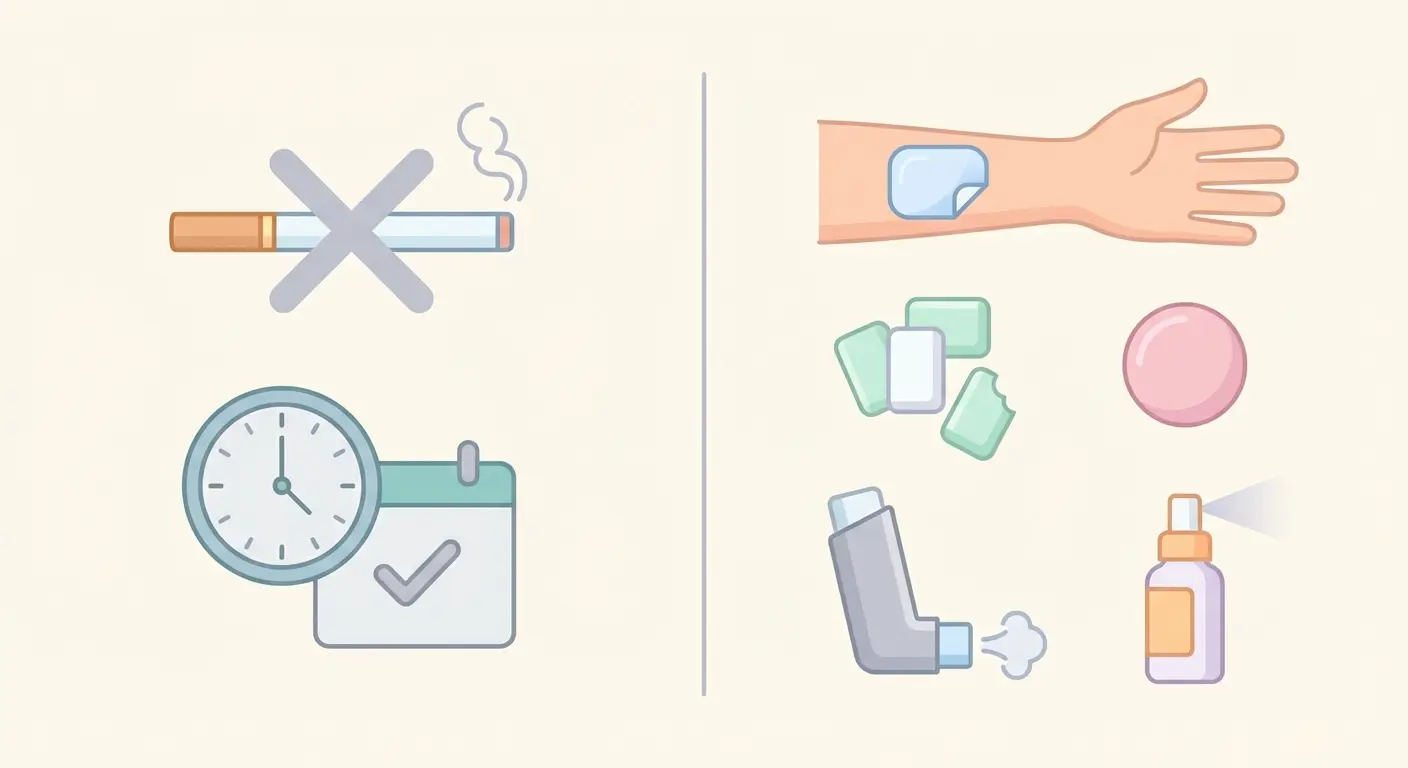
Cold turkey means stopping all nicotine completely — no patches, no gum, no tapering down — on a single chosen day. It sounds brutally simple, and it is. The appeal is obvious: no cost, no planning, no dependence on a product to help you escape another product.
What most people underestimate is just how physical nicotine addiction is. Within 24 hours of your last cigarette, acetylcholine receptors in your brain — which have been suppressed by nicotine — start firing again erratically. That biological recalibration is what produces the irritability, concentration problems, insomnia, and intense cravings that make the first week so brutal.
Here’s something surprising: a 2016 study published in Annals of Internal Medicine actually found that cold turkey quitters were 25% more likely to succeed at 6 months than those who tried to gradually cut down before quitting. Abrupt cessation appears to reduce the “one more cigarette” negotiation that gradual quitting invites.
That said, cold turkey without any behavioral support still has low absolute success rates — most estimates put long-term success (12 months+) at around 3–7% per attempt. The method can work. It just works better when it’s not the only tool you’re using.
Nicotine Replacement Therapy: Types and How They Work
Nicotine replacement therapy works on a clear principle: give the brain a controlled, lower dose of nicotine to ease withdrawal while you break the behavioral habit of smoking. You’re separating two intertwined problems — physical addiction and learned behavior — and tackling them at different speeds.
The Main NRT Options
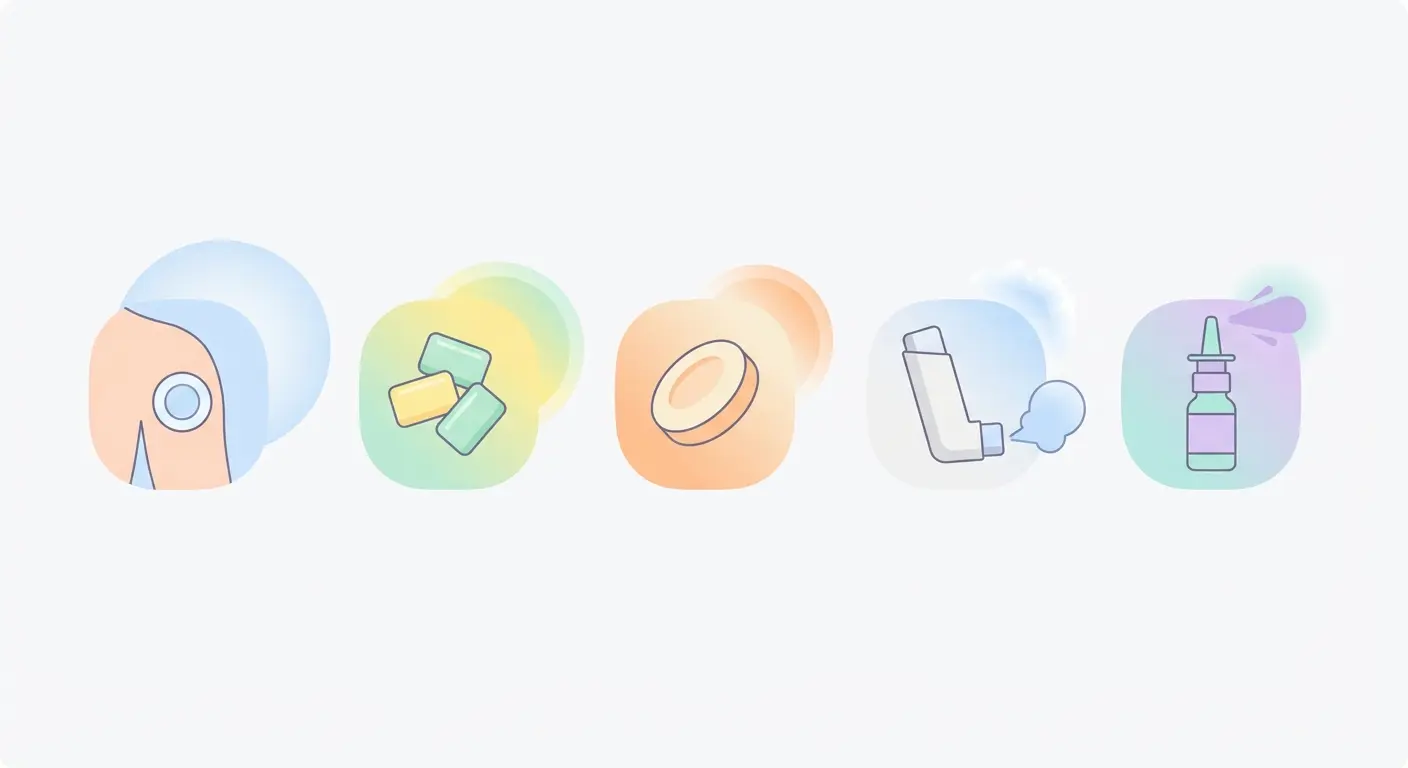
Not all NRT products are equivalent. They differ in how fast they deliver nicotine, how long they last, and what type of craving they’re best suited for.
| Product | Delivery Speed | Best For | Duration of Use |
|---|---|---|---|
| Nicotine Patch | Slow (steady 16-24hr) | Background cravings, daily stability | 8–12 weeks, stepped down |
| Nicotine Gum | Medium (20–30 min) | Situational/sudden cravings | Up to 12 weeks |
| Nicotine Lozenge | Medium (20–30 min) | Oral cravings, discreet use | Up to 12 weeks |
| Nicotine Inhaler | Fast (mimics hand-to-mouth) | Smokers with strong behavioral habit | Up to 6 months |
| Nicotine Nasal Spray | Fastest (within minutes) | Intense, acute craving episodes | Up to 6 months |
Prescription options like varenicline (Champix/Chantix) and bupropion aren’t technically NRT — they work on brain receptors differently — but they’re often grouped into the same “pharmacological support” category. Varenicline in particular has shown strong results in clinical trials, with some studies suggesting success rates of 20–30% at one year.
According to a Cochrane systematic review on NRT, combining a long-acting form (patch) with a short-acting form (gum or lozenge) is more effective than using either alone — a detail that many first-time NRT users never hear from their pharmacist. For a comprehensive side-by-side breakdown of all five NRT types with clinical efficacy data, dosing schedules, pricing, and a decision framework for choosing the right product for your smoking pattern, see our complete guide to the best nicotine replacement therapy options compared for 2026.
Success Rates: Cold Turkey vs NRT — The Real Numbers
Here’s where it gets interesting — and where a lot of internet advice quietly gets things wrong.
Population-level data consistently shows that the majority of people who successfully quit smoking long-term did so without formal NRT or medication. A 2016 study in BMJ Open found that 48.9% of successful quitters achieved abstinence unassisted. Does that mean cold turkey is better?
Not exactly. What it reflects is that more people attempt cold turkey — so even a low per-attempt success rate produces a large number of successful quitters overall. When you control for attempt type and look at per-attempt success rates, NRT consistently outperforms unaided quitting.
Without any support, roughly 3–7% of people who attempt to quit smoking remain smoke-free after 12 months. Nicotine replacement therapy raises that to approximately 10–15% per attempt. Combining NRT with behavioral support or prescription medication can push success rates to 20–30% or higher per quit attempt.
The CDC’s smoking cessation data confirms that among U.S. adults who tried to quit in the past year, only about 7.5% remained abstinent for 6–12 months — and most of those attempts were unaided. The gap narrows significantly when behavioral support is added to any method.
One key takeaway: the number of quit attempts matters too. Most people who successfully quit do so after multiple attempts. Every attempt — even a “failed” one — teaches you something about your specific triggers and vulnerabilities.
Withdrawal Symptoms and How Each Method Handles Them
Withdrawal is the battlefield where most quit attempts are won or lost. Understanding what’s actually happening in your body — rather than just dreading it — changes how you respond to it.
The Withdrawal Timeline
- Hours 1–4: Blood nicotine levels drop. First cravings emerge, often mild initially.
- Hours 4–24: Irritability, anxiety, and concentration difficulties begin. Carbon monoxide levels in blood normalize within 12 hours.
- Days 2–3: Peak withdrawal intensity for most people. Headaches, insomnia, and intense cravings are common.
- Days 4–7: Physical symptoms typically begin easing. Psychological cravings remain strong.
- Weeks 2–4: Most physical withdrawal resolves. Behavioral triggers and stress responses become the dominant challenge.
- Months 2–6: Occasional cravings persist, especially in trigger situations. Brain receptor density begins normalizing.
NRT doesn’t eliminate withdrawal — it blunts it. By maintaining a lower baseline nicotine level, patches in particular reduce the severity of days 2–3. The trade-off is that the body’s process of downregulating nicotine receptors happens more gradually, which is why proper NRT use involves stepping down dosage over weeks rather than stopping abruptly.
Cold turkey forces a faster, sharper withdrawal curve. More intense early discomfort, but potentially a faster path to full nicotine-free status if you get through the first two weeks. Some people genuinely prefer the clean break — the psychological clarity of knowing there’s no negotiation happening.
For practical coping strategies during withdrawal — whether you’re using NRT or not — the effective quit smoking strategies guide on iQuit covers behavioral techniques that complement both approaches.
Cost Comparison: NRT, Prescriptions, and Quitting Unaided
Cost is a real barrier — and often an underappreciated one. People who are already spending $300–500 a month on cigarettes sometimes balk at spending $60 on a patch kit, which is a somewhat irrational trade-off but a very human one.
| Method | Estimated Cost | Prescription Required? | Insurance Coverage (US) |
|---|---|---|---|
| Cold Turkey (unaided) | $0 | No | N/A |
| Nicotine Patch (OTC) | $150–$200 | No | Often covered |
| Nicotine Gum/Lozenge | $100–$200 | No | Often covered |
| Varenicline (Champix/Chantix) | $400–$700 | Yes | Usually covered |
| Bupropion (Zyban) | $100–$200 | Yes | Usually covered |
| Combination NRT (patch + gum) | $200–$350 | No | Often covered |
The financial case for quitting is stark. The National Cancer Institute’s quit smoking savings calculator shows that a pack-a-day smoker at average US prices saves over $2,000 in the first year alone. Even the most expensive pharmacological quit program pays for itself within a few weeks of success.
In the UK, the NHS inform savings calculator offers a similar perspective — and NRT is often available free through NHS Stop Smoking services, which makes the cost barrier largely irrelevant for UK smokers who access those programs.
Combining Methods for Better Quit Smoking Results
This is the section most comparison articles skip — and it might be the most important one.
The evidence strongly suggests that combining pharmacological support (NRT or prescription medication) with behavioral support produces better outcomes than either approach alone. A 2018 meta-analysis found that adding counseling to NRT increased quit rates by approximately 40% compared to NRT alone.
What does behavioral support actually look like in practice?
- Identifying personal smoking triggers (stress, boredom, social situations) and planning responses in advance
- Tracking cravings to find patterns — time of day, emotional state, environment
- Building accountability through a quit buddy, support group, or digital coaching
- Using distraction protocols during peak craving windows (the classic “3D” approach: Delay, Distract, Drink water)
- Setting milestone rewards that reinforce the identity shift from smoker to non-smoker
The top strategies to quit smoking successfully covers these behavioral approaches in detail — and they’re relevant whether you’re going cold turkey or using NRT. They address the side of quitting that no patch can fix on its own.
For real-world stories of what combined approaches look like, the CDC’s Tips From Former Smokers video resources feature compelling first-person accounts that illustrate what long-term success actually required.
Apps built specifically for smoking cessation can play a meaningful role here. The iQuit app combines real-time craving support with an AI coach, health recovery tracking, and daily missions — the kind of structured behavioral layer that the evidence shows amplifies any quit method you choose. When a craving hits at 11pm and your willpower is at its lowest, having an SOS function in your pocket is a different experience than trying to remember breathing techniques you read about once.
How to Choose Your Quit Smoking Method: A Decision Framework
There’s no single right answer — but there are clearer answers for different types of smokers. Work through these questions honestly.
Step 1: Assess Your Physical Dependence Level
Ask yourself: Do you smoke within 30 minutes of waking up? Do you smoke more than 15 cigarettes a day? Do you find it difficult to avoid smoking in places where it’s prohibited?
Three or more “yes” answers indicate higher physical dependence — and a stronger case for NRT or prescription medication to manage withdrawal physically while you address behavior.
Step 2: Evaluate Your Quit History
If you’ve tried cold turkey multiple times and consistently make it past the first week but relapse at 3–6 weeks (usually due to stress or social triggers), that’s a behavioral problem, not a physical one. Adding NRT won’t necessarily help. Behavioral coaching and trigger management will.
If you’ve never made it past day 3–4 because of physical withdrawal symptoms — cravings, headaches, anxiety — NRT is worth trying. It’s addressing the actual bottleneck.
Step 3: Consider Your Lifestyle and Support System
Do you have a partner or family member who smokes? Do your social groups heavily involve smoking? Does your job involve high stress? These factors don’t determine success, but they shape which behavioral strategies you need to layer in.
Step 4: Talk to a Healthcare Provider
This isn’t a box-ticking suggestion. Varenicline and bupropion have meaningful clinical evidence behind them, and a GP or pharmacist can assess whether either is appropriate for your situation — including any contraindications. The Mayo Clinic’s quit smoking guidance consistently emphasizes that combining professional advice with personal preparation significantly improves outcomes.
Step 5: Build Your Quit Date Plan
- Set a specific quit date 7–14 days out (not too far, not too close)
- Remove smoking cues from your environment before quit day — ashtrays, lighters, spare packs
- Tell people who matter about your quit date — accountability is statistically associated with higher success rates
- Stock up on your chosen support tools — NRT products, quit app, emergency snacks, whatever reduces friction in the hard moments
- Plan for your three highest-risk trigger situations specifically — what will you do instead when those moments hit?
- Schedule a check-in with yourself (or a healthcare provider) at days 7, 14, and 30
Cancer Research UK’s how to stop smoking guide offers a well-structured step-by-step framework aligned with these principles, with particular detail on free support services available in the UK.
Frequently Asked Questions About Quitting Smoking
Is it better to quit smoking cold turkey or use nicotine patches?
Nicotine patches and other NRT products roughly double your per-attempt success rate compared to cold turkey alone, according to Cochrane review data. That said, cold turkey can work well for lighter smokers or those who find that any nicotine prolongs their dependence. The most effective approach for most people is combining NRT with behavioral support rather than relying on either alone.
How long does nicotine withdrawal last when quitting smoking?
Physical nicotine withdrawal peaks within 2–3 days of quitting and largely resolves within 2–4 weeks. Psychological cravings and behavioral urges can persist for several months, particularly in trigger situations like stress, alcohol, or social settings where you previously smoked. NRT reduces the intensity of physical withdrawal but doesn’t eliminate psychological cravings.
What is the most effective way to quit smoking?
The most effective quit smoking method — based on clinical evidence — is combining varenicline (prescription) or combination NRT with behavioral counseling or coaching. This stacked approach addresses both the physical addiction and the behavioral habit simultaneously. Success rates with combined treatment range from 20–35% at 12 months, compared to 3–7% for unaided cold turkey.
Can you use nicotine replacement therapy while still smoking?
Using NRT while continuing to smoke is not recommended and can raise nicotine to unsafe levels, particularly with patches. NRT is designed to replace cigarette nicotine after quitting, not supplement it. Some structured “cut to quit” programs do involve gradually reducing cigarettes while introducing NRT under medical supervision, but this should be done with professional guidance.
What are the best quit smoking tips for dealing with cravings?
The most evidence-backed quit smoking tips for cravings include: using the “delay and distract” technique (most cravings peak and pass within 3–5 minutes), having short-acting NRT available for sudden urges, identifying your personal craving triggers in advance, and using physical activity as an immediate craving disruptor. Tracking craving patterns over several days also reveals the specific times and situations where you need the most support.
How many quit attempts does it typically take to stop smoking for good?
Research suggests it takes an average of 8–14 quit attempts before achieving long-term abstinence, though this varies widely. Importantly, each failed attempt is not wasted — smokers who persist through multiple attempts and adjust their strategy each time do eventually succeed. Reframing a relapse as information rather than failure is both psychologically accurate and strategically useful.
Build on What You’ve Learned
Understanding the difference between quitting methods is the starting point — not the finish line. The smokers who succeed long-term typically combine the right method with the right behavioral tools and the right moment of honest self-assessment.
If you want to go deeper on the behavioral side of quitting smoking, the top strategies to quit smoking successfully covers trigger management, relapse prevention, and the psychological shifts that make quitting stick. And if you need structured support in real time — especially in the moments when resolve is thinnest — the effective strategies to quit smoking guide pairs well with any method you choose.
Share this article with someone who’s thinking about quitting. Sometimes the most useful thing you can do is put clear, honest information in front of someone who’s ready to act on it.