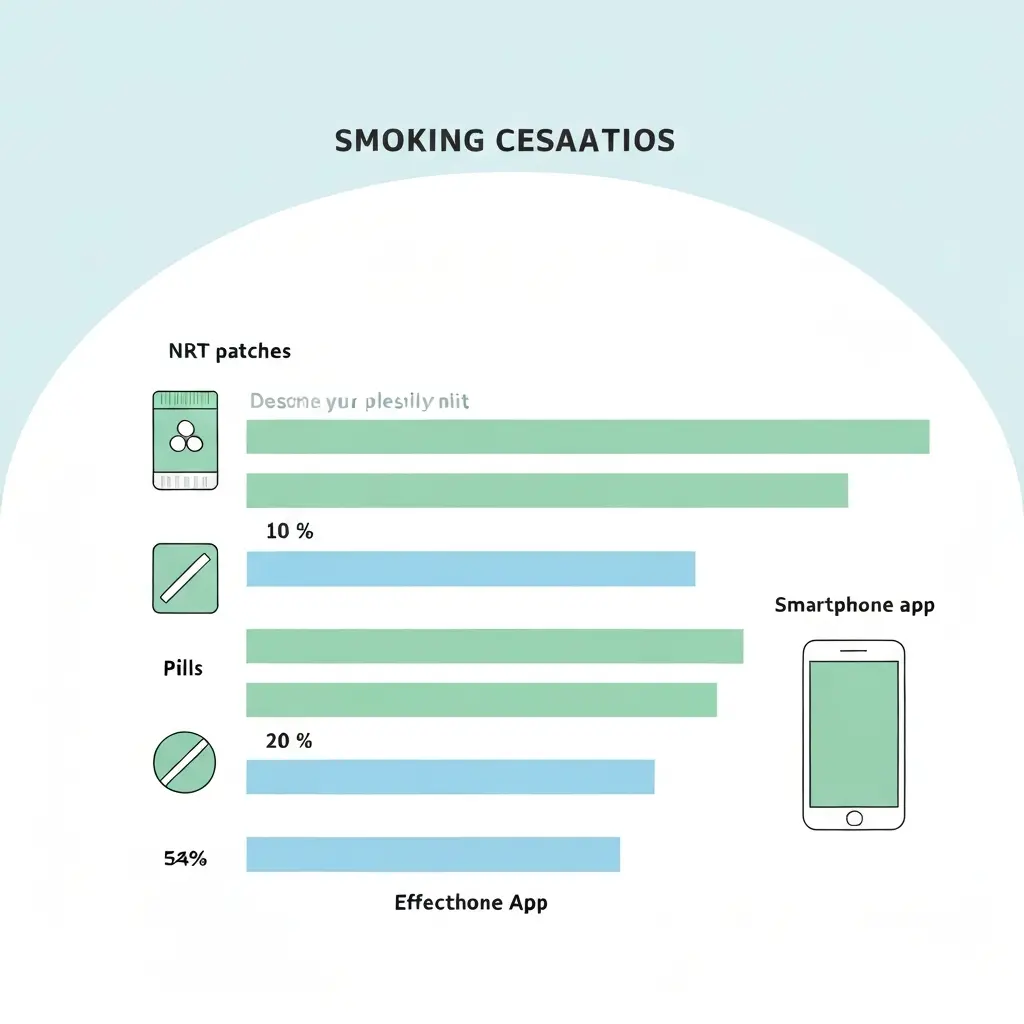
Smoking Cessation Methods Comparison: What Works Best in 2026
There has never been more evidence-based help available for people who want to quit smoking. But with so many options — patches, gum, prescription medications, apps, hypnotherapy, cold turkey — the question “what actually works?” matters enormously. This smoking cessation methods comparison cuts through the noise with real data, explaining what each method does, what the success rates look like, and how to combine approaches for the best possible outcome.
The science is clear on one foundational point: using any cessation support is significantly better than trying to quit through willpower alone, which has a success rate of approximately 3 to 5% per attempt.
Cold Turkey
Cold turkey — abrupt cessation without any pharmacological or behavioral support — is the most commonly attempted method. Despite its popularity, research consistently shows it has the lowest success rate of any documented cessation approach.
- Six-month success rate: Approximately 3–5% per unassisted attempt
- Advantages: No cost, no side effects, immediate cessation
- Disadvantages: Maximum withdrawal intensity, high relapse risk in first week
Cold turkey can work — some of the longest-term ex-smokers quit this way — but the odds are significantly against success without support. The willpower required is enormous, and the biological reality of withdrawal is a serious challenge that support tools are specifically designed to mitigate.
Nicotine Replacement Therapy (NRT)
NRT delivers controlled nicotine to reduce withdrawal symptoms while the behavioral habit of smoking is broken. Available forms include patches, gum, lozenges, inhalers, and nasal sprays.
- Six-month success rate: Approximately 10–15% (roughly doubles cold turkey)
- Combination NRT success rate: Up to 20–25% (patch plus fast-acting form)
- Best for: Physically dependent smokers who want OTC access without prescription
A 2023 Cochrane review found high-certainty evidence that combining a long-acting NRT form (patch) with a fast-acting form (gum, lozenge, or spray) produces significantly higher quit rates than either alone. The patch manages baseline nicotine levels; the fast-acting form handles breakthrough cravings. This combination approach is now recommended as the standard NRT protocol by leading health authorities including the CDC.
Varenicline (Champix/Chantix)
Varenicline is a prescription medication that partially activates nicotinic receptors (reducing cravings) while blocking the reinforcing effects of nicotine (reducing the pleasure of smoking). It is the most studied single-agent cessation medication.
- Six-month success rate: Approximately 28–34% in clinical trials
- Compared to NRT: 50% more effective than nicotine patches, 70% more effective than gum alone
- Best for: Moderate to heavy smokers; those who have tried NRT without success
A comprehensive Cochrane analysis of over 150,000 smokers identified varenicline as one of the most effective cessation aids currently available. It requires a prescription and monitoring, particularly in people with existing mental health conditions, but is generally well-tolerated.
Bupropion (Zyban)
Originally developed as an antidepressant, bupropion was found to reduce smoking cravings and withdrawal symptoms. It works by inhibiting dopamine and norepinephrine reuptake, helping stabilize the neurochemical disruption of cessation.
- Six-month success rate: Approximately 15–20%
- Compared to placebo: Approximately doubles quit rates
- Best for: Smokers with depression or anxiety comorbidities; those who cannot use NRT
Bupropion is particularly useful when nicotine addiction and anxiety or depression coexist — it addresses both issues simultaneously. It is less effective than varenicline as a standalone cessation aid but remains significantly better than unassisted cessation.
Digital and App-Based Support
Digital cessation tools — apps, online programs, and text message interventions — have become a significant component of modern cessation support. Research shows that effective apps approximately triple quit rates compared to minimal support.
- Six-month success rate (with evidence-based features): Approximately 12–20%
- Best feature combinations: CBT, mindfulness, progress tracking, craving management
- Best for: All smokers as a complement to pharmacotherapy; heavy app users; those without access to in-person support
The iQuit app is designed around the evidence-based feature set identified in cessation research: real-time health milestones, financial savings tracking, craving management tools, and mindfulness exercises. For a deep dive on app features, see our guide on Smoking Cessation App: Features That Make a Real Difference in 2026.
Behavioral Counseling
Behavioral support — whether individual therapy, group counseling, or telephone quit lines — addresses the psychological and habit dimensions of smoking that pharmacotherapy does not. CBT-based cessation counseling is the best-studied behavioral approach.
- Six-month success rate (counseling alone): Approximately 10–15%
- Six-month success rate (counseling plus medication): Up to 35–40%
- Best for: All smokers, particularly as a complement to NRT or varenicline
Full Methods Comparison Table
| Method | ~6-Month Success Rate | Prescription Required | Key Advantage |
|---|---|---|---|
| Cold turkey | 3–5% | No | No cost, immediate |
| Single NRT | 10–15% | No | OTC access, evidence-based |
| Combination NRT | 20–25% | No | Better than single NRT alone |
| Bupropion | 15–20% | Yes | Helps comorbid depression/anxiety |
| Varenicline | 28–34% | Yes | Most effective single agent |
| App/digital support | 12–20% | No | 24/7 support, craving management |
| Combination (med + behavioral) | 35–40% | Partial | Best overall outcomes |
Why Combination Approaches Win
The consistent finding across all cessation research is that combination approaches outperform any single method. This makes scientific sense: smoking addiction has multiple dimensions — physical dependence (managed by NRT or medication), behavioral habit (managed by behavioral support and apps), and psychological dependency (managed by CBT and mindfulness).
Addressing only one dimension leaves the others unmanaged. The combination of varenicline or NRT plus a behavioral support app represents the current gold standard supported by evidence from multiple systematic reviews and meta-analyses.
Whichever approach you choose, starting is the most important step. Our complete guide on How to Quit Smoking in 2026: The Complete Evidence-Based Guide walks you through building your personal quit plan.
Add Evidence-Based Behavioral Support to Any Method
Whatever cessation method you choose, the iQuit app adds the behavioral support layer that research shows improves success rates across the board.
Frequently Asked Questions
What is the most effective smoking cessation method in 2026?
The most effective smoking cessation approach combines pharmacotherapy — preferably varenicline, or combination NRT — with behavioral support. The Cochrane analysis of over 150,000 smokers identified varenicline as the most effective single pharmacological agent. Adding behavioral counseling or a evidence-based cessation app to any medication approach consistently improves success rates to 35-40% at six months, compared to 3-5% for unassisted cold turkey.
Is cold turkey ever a good approach?
Cold turkey can work — some studies suggest that people who quit abruptly may be slightly more successful than those who cut down gradually, even without pharmaceutical support. However, adding behavioral support and tracking tools to cold turkey significantly improves outcomes. The combination of abrupt cessation plus an evidence-based cessation app retains the benefit of immediate stopping while adding craving management and progress tracking support.
How long should I use NRT when quitting smoking?
Standard NRT protocols recommend eight to twelve weeks of use, with gradual dose reduction toward the end. Research shows that longer NRT use (up to six months) can improve outcomes for heavier smokers. The risk of NRT dependence is minimal compared to the risk of returning to cigarettes. Your doctor or pharmacist can recommend the most appropriate duration based on your smoking history and dependence level.
Can I combine varenicline and NRT?
Yes, and research supports this combination. A systematic review and meta-analysis published in 2025 found that combining varenicline with NRT produced higher quit rates than either alone, particularly during the pre-quit period. The combination is generally well-tolerated. Discuss with your doctor whether this approach is appropriate given your health status and the varenicline dosing timeline.
What cessation method is best if I have tried and failed before?
Previous quit attempts are not failures — they are information. Each attempt teaches you what your triggers are and where your support gaps were. If you tried cold turkey before, add NRT. If you used a single NRT, try combination NRT or varenicline. If you used medication without behavioral support, add an evidence-based app. The combination most people have not fully tried — medication plus comprehensive behavioral support — has the highest success rates and is the logical next step after previous partial approaches.