What Happens When You Quit Smoking: Hour-by-Hour, Day-by-Day Timeline (2026)
Understanding what happens when you quit smoking can be the single most powerful motivator to start — and stay — smoke-free. Within 20 minutes of your last cigarette, measurable, life-saving changes begin inside your body. By the time one year passes, your heart disease risk has halved. This medically sourced timeline draws on data from the CDC, WHO, NHS, and peer-reviewed journals to show you exactly what your body is doing at every stage of recovery in 2026.
Most people expect quitting to be purely about loss — the absence of nicotine, the fight against cravings. What the evidence actually shows is a cascade of gains: normalization of blood pressure, regeneration of lung cilia, reversal of cancer risk, and a restoration of senses you may have forgotten you had. This guide maps every milestone so you know what to expect and can celebrate each one.
First 20 Minutes: Your Heart Starts Recovering
Twenty minutes after your last cigarette, your heart rate begins to drop toward normal levels, and your blood pressure starts to decrease. Smoking elevates both by stimulating the sympathetic nervous system — a process that reverses almost immediately upon cessation. According to the CDC (2024), this is the first of a long chain of cardiovascular improvements that continue for years.
Your peripheral circulation also begins to improve. Fingers and toes that may have felt persistently cold due to vasoconstriction start to warm as blood flow normalizes. This early signal, while subtle, marks the beginning of a full-body repair process.
8 Hours: Carbon Monoxide Drops
By the 8-hour mark, the carbon monoxide level in your blood drops by more than half, and oxygen levels rise toward normal. Carbon monoxide — a toxic byproduct of cigarette combustion — binds to hemoglobin in red blood cells up to 200 times more readily than oxygen does, effectively starving your tissues of oxygen with every puff. Within 8 hours, this chemical displacement reverses.
Nicotine is still present in your bloodstream at the 8-hour mark, typically peaking within 10 minutes of smoking and declining over the following hours. Your body’s nicotine receptors begin sending signals for replenishment — this is when the first wave of cravings emerges. Learn more about what drives these signals in our guide to nicotine withdrawal symptoms.
24–48 Hours: Nicotine Clears and Senses Return
Within 24 hours, nicotine levels in the blood have dropped to near zero (CDC, 2024). This is a physiological turning point: your body is now fully in withdrawal, but it’s also beginning to recalibrate. Carbon monoxide levels reach those of a non-smoker by the 24-hour mark as well.
At 48 hours, taste buds and olfactory receptors damaged by tobacco exposure begin to regenerate. Smokers often describe noticing food tastes more vivid and smells are sharper at this stage — a welcome and tangible reward that continues improving for weeks. The risk of a heart attack also begins to decline measurably as blood viscosity and platelet function normalize.
72 Hours: The Hardest Peak — and Why It Matters
By 72 hours, nicotine has fully left your system. This is physiologically the most intense period of withdrawal: nicotine receptors in the brain are fully upregulated (having multiplied during addiction), and they are now firing without satisfaction. Irritability, anxiety, headaches, and intense cravings typically peak at this point. You can read a detailed breakdown of these stages in our article on the stages of nicotine withdrawal explained.
The 72-hour mark is also, paradoxically, when your bronchial tubes begin to relax. The airways in your lungs, which were chronically constricted by tobacco smoke’s irritants, start to open up. Breathing can feel noticeably easier for many people by the end of day three. Energy levels may begin to rise as oxygen delivery to muscles improves.
Weeks 1–4: Lung Cilia Reactivate
During the first month of quitting, the cilia — tiny hair-like structures lining the airways of your lungs — begin to reactivate and regenerate. Smoking paralyzes and destroys cilia, which are responsible for sweeping mucus, debris, and pathogens out of the respiratory tract. Their recovery means your lungs regain their natural self-cleaning mechanism.
| Timeframe | What Happens | Source |
|---|---|---|
| Day 3 | Nicotine fully cleared; bronchial tubes relax; cravings peak | CDC, 2024 |
| Days 3–7 | Cilia begin reactivating; phlegm production may temporarily increase | NHS, 2024 |
| Week 2 | Circulation improves; walking and exercise become easier | American Lung Association, 2024 |
| Weeks 2–4 | Cravings reduce in frequency; sleep quality begins to normalize | CDC, 2024 |
A temporary increase in coughing during weeks 1–2 is actually a positive sign: the reactivated cilia are expelling accumulated debris. This “quitter’s cough” usually resolves within 2–3 weeks as the airways clear. For strategies to get through this phase, see our complete guide on how to quit smoking cold turkey.
Months 1–9: Breathing Improves Measurably
By the 1–9 month mark, the American Lung Association (2024) reports that coughing and shortness of breath decrease significantly. Lung function can improve by up to 10% within 9 months of quitting. The cilia are now functioning efficiently, mucus clearance has normalized, and the chronic inflammation that swelled airway walls begins to subside.
At 6 months, many former smokers report being able to exercise at intensities that were impossible while smoking. Cardiovascular efficiency improves as the heart no longer has to compensate for reduced oxygen delivery. Sleep apnea symptoms often reduce as airway swelling decreases. For more on lung healing, see our evidence-based guide on whether lungs can heal after years of smoking.
1 Year: Heart Disease Risk Halved
At the 1-year milestone, your excess risk of coronary heart disease drops to half that of a current smoker (CDC, 2024; WHO, 2024). This is one of the most dramatic and data-supported markers in smoking cessation research. The mechanisms involve reduced arterial inflammation, improved endothelial function, lower fibrinogen levels, and decreased platelet aggregation — all of which reduce the likelihood of a heart attack or stroke.
One year is also when nicotine dependence — both physiological and psychological — has typically been substantially resolved for most quitters. The probability of long-term abstinence increases sharply after the first year. Tracking these milestones with a quit smoking app can powerfully reinforce your progress. The iQuit tracker app visualizes your health gains in real time, including this critical 1-year milestone.
Years 2–5: Cancer Risk Begins Declining
Between 2 and 5 years after quitting, the risk of developing mouth, throat, esophagus, and bladder cancers is cut in half, according to the American Cancer Society (2024). By 5 years, stroke risk drops to the same level as a non-smoker — a milestone that can take up to 15 years in some individuals depending on baseline risk factors.
The cervical cancer risk also declines significantly for women by 5 years post-cessation. Former smokers who quit before age 40 reduce their excess risk of dying from smoking-related causes by approximately 90% (NEJM, 2023).
Years 10–15: Lung Cancer Risk Halved
By 10–15 years of smoke-free living, lung cancer death risk is approximately 50% lower than that of a continuing smoker (CDC, 2024). The risk of cancers of the larynx, esophagus, mouth, bladder, kidney, and pancreas also continues to fall. At 15 years, coronary heart disease risk approaches the level of a person who has never smoked.
Even long-term smokers with decades of tobacco use experience measurable risk reduction after quitting. The lungs retain considerable regenerative capacity, and while some permanent damage from emphysema or COPD cannot be reversed, progression halts and remaining healthy lung tissue compensates over time. Our guide examines this in detail: can lungs heal after years of smoking?
Long-Term Data: Life Expectancy Gains
WHO data (2024) on life expectancy gains from quitting at various ages:
- Quit at 30: ~10 additional years of life expectancy
- Quit at 40: ~9 additional years
- Quit at 50: ~6 additional years
- Quit at 60: ~3 additional years
These figures represent excess mortality avoided compared to continued smoking. Every year of quitting compounds these gains. People who have never smoked live on average 10 years longer than lifelong smokers. Natural methods to help you through this journey are covered in our guide: 10 natural methods to quit smoking without medication in 2026.
What to Expect Emotionally and Physically
The physical timeline is well-mapped, but the emotional recovery deserves equal attention. Nicotine powerfully regulates mood by stimulating dopamine and serotonin release. When nicotine is removed, many quitters experience temporary depression, anxiety, and irritability — not because quitting makes them unhappy, but because their brain’s reward system is recalibrating.
Research published in NCBI (2024) confirms that these mental health symptoms typically resolve within 2–4 weeks, and long-term data shows that ex-smokers report lower rates of depression, anxiety, and stress than continuing smokers. The short-term discomfort gives way to lasting psychological wellbeing improvements.
Video: The Science of Cigarettes and Quitting
This TED-Ed animation by cardiologist Dr. Krishna Sudhir explains the cellular mechanisms by which tobacco damages the body — and how cessation reverses them.
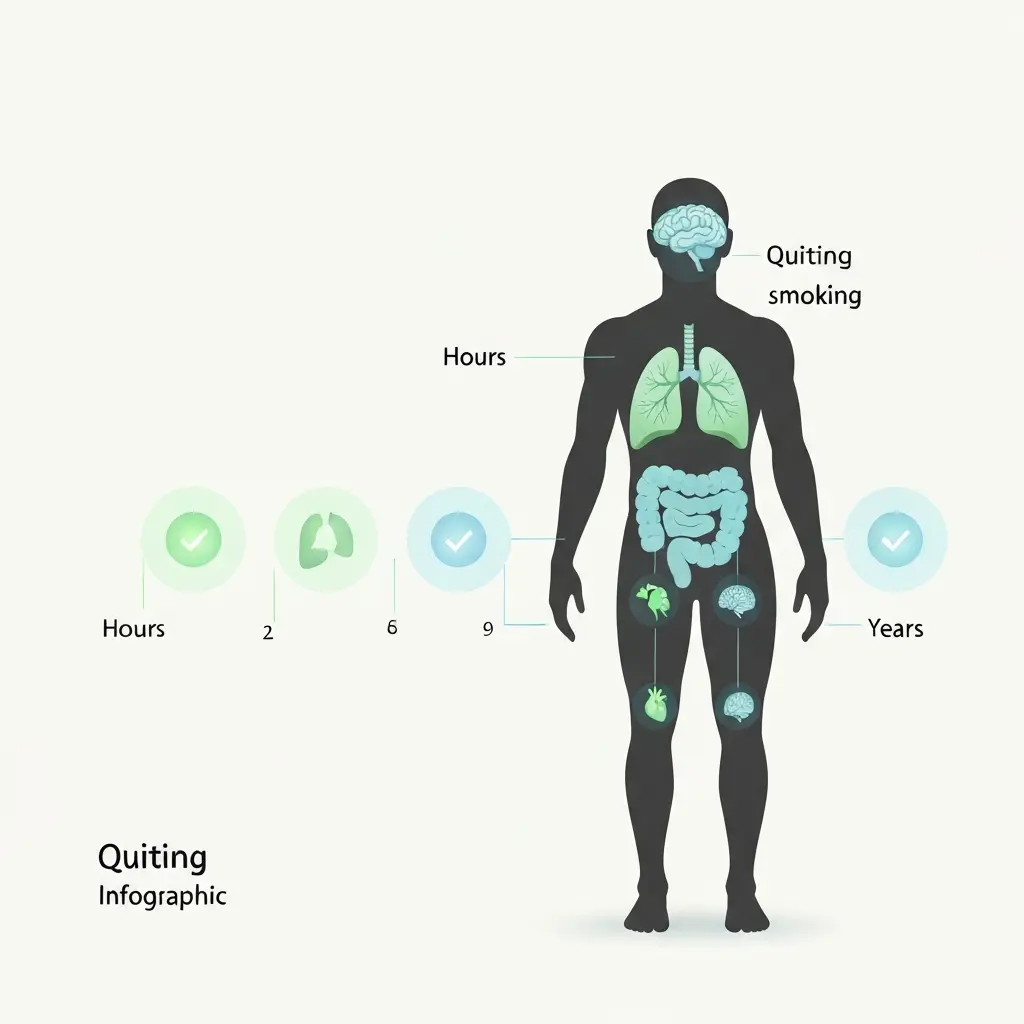
Health Benefits Infographic
The CDC’s visual summary of health benefits over time provides a quick-reference chart of every recovery milestone:

Frequently Asked Questions
How quickly does the body start healing after quitting smoking?
Healing begins within 20 minutes of the last cigarette. Heart rate and blood pressure drop, and carbon monoxide levels fall sharply within 8 hours. By 24–48 hours, nicotine clears the bloodstream, taste and smell improve, and heart attack risk begins to fall. (CDC, 2024)
How long does nicotine withdrawal last?
Physical nicotine withdrawal symptoms peak at 72 hours and typically resolve within 2–4 weeks. Psychological cravings can persist for several months, particularly in response to triggers, but decrease in frequency and intensity over time. (NHS, 2024)
Does lung damage from smoking reverse after quitting?
Much of the lung damage from smoking is reversible. Cilia regenerate within weeks, airways de-inflame, and lung function can improve by up to 10% within 9 months. Structural damage from COPD or emphysema cannot be fully reversed, but progression stops and remaining lung tissue compensates. (American Lung Association, 2024)
When does heart disease risk return to normal after quitting?
After 1 year of not smoking, excess coronary heart disease risk drops to half that of a continuing smoker. After 15 years, risk approaches the level of someone who has never smoked. (WHO, 2024; CDC, 2024)
Is it too late to benefit from quitting smoking after age 60?
No. WHO data (2024) shows that quitting at age 60 still adds approximately 3 years of life expectancy and significantly reduces cancer, heart disease, and stroke risk. It is never too late to benefit from smoking cessation.
Why do I cough more after quitting smoking?
Increased coughing in the first 1–3 weeks after quitting is a sign of lung recovery. As cilia regenerate, they expel accumulated mucus and debris from the airways. This “quitter’s cough” is a normal, temporary symptom and typically resolves within 2–3 weeks. (NHS, 2024)
Track Your Recovery Milestones in Real Time
The iQuit Quit Smoking App displays every milestone from the timeline above — live, personalized to your quit date. See your heart rate recovery, money saved, and cancer risk declining, moment by moment.