
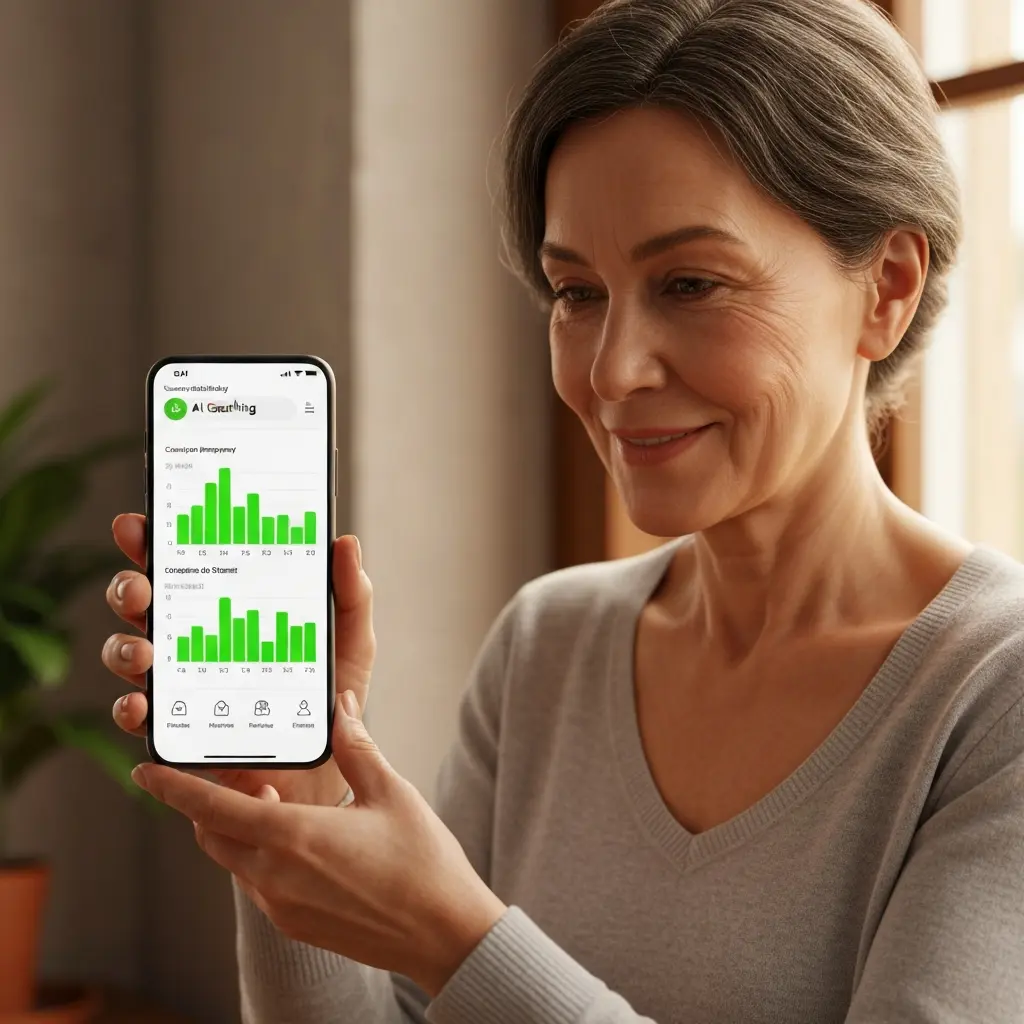
AI Quit Smoking Coach: How Artificial Intelligence Is Transforming Cessation in 2026
If you have ever tried to quit smoking alone, you know the moments that undo weeks of progress: the unexpected craving at 11 pm, the stress spike at work, the social situation where everyone around you lights up. An AI quit smoking coach is designed to be present at exactly those moments — available around the clock, personalised to your patterns, and free of the judgement that sometimes makes asking a human for help feel difficult. In 2026, this technology has matured significantly, and the clinical evidence behind it is growing.
This guide walks you through what an AI quit smoking coach actually does, what peer-reviewed research says about its effectiveness, how it differs from older app-based approaches, and how tools like iQuitNow combine artificial intelligence with behavioural science to give you the best possible chance of becoming permanently smoke-free.
What Is an AI Quit Smoking Coach?
An AI quit smoking coach is a software system — typically embedded within a mobile app — that uses artificial intelligence to guide someone through the process of becoming tobacco-free. Unlike a static checklist or a generic tips-and-tricks guide, an AI coach adapts to the individual. It learns your craving times, your highest-risk situations, your preferred communication style, and your motivations for quitting. It then delivers the right support at the right moment.
The core components of an AI cessation coach usually include:
- Natural language processing (NLP): Allows you to type or speak to the coach as you would to a person, describing how you feel or asking questions in plain language.
- Behavioural pattern recognition: The system analyses your logs — craving entries, mood check-ins, location data if permitted — to predict when you are most at risk and proactively sends interventions.
- Cognitive behavioural therapy (CBT) delivery: Many AI coaches are built on evidence-based CBT frameworks, guiding users through thought-challenging exercises, urge surfing, and coping plan development.
- Progress tracking and reward systems: Real-time dashboards showing cigarette-free days, money saved, and health milestones (lung capacity recovery, carbon monoxide normalisation) reinforce motivation.
The appeal is clear: human quit coaches and counsellors are highly effective, but they are not available at 2 am when a craving peaks. An AI coach fills that gap without replacing the human support system — it complements it.
What the Research Says in 2026
Scepticism about app-based cessation tools is reasonable — the wellness app market is full of products with weak evidence bases. But the research specifically on conversational AI for smoking cessation is now robust enough to take seriously.
Meta-Analysis: 29% Higher Quit Rates
A systematic review and meta-analysis published in JMIR (2023) analysed eight randomised controlled trials involving AI-driven conversational agents for tobacco cessation. The pooled result: participants in the AI intervention arm were 29% more likely to report abstinence at six months (RR = 1.29, 95% CI 1.13–1.46, p < 0.001) compared to control conditions. This effect size is comparable to brief physician counselling, which the CDC estimates increases quit rates by 1–3 percentage points above unassisted attempts.
WHO-Commissioned Review: Promising but Still Evolving
The World Health Organization commissioned a review of AI-powered cessation interventions as part of its broader Framework Convention on Tobacco Control work. The conclusion was nuanced: the evidence base is limited but consistently positive, and the low cost of deployment makes AI coaching particularly valuable in low- and middle-income countries where human cessation counsellors are scarce.
Machine Learning Feature Analysis: What Actually Works
A 2024 secondary analysis published in JMIR AI examined which specific app features predicted successful quitting when identified through machine learning. The strongest predictors were: consistent craving logging, engagement with personalised coping strategies delivered at craving peaks, and use of savings/health milestone trackers. Generic motivational content delivered on a fixed schedule showed no significant benefit — only personalised, contextually triggered support moved the needle.
Peer Support + AI: A Powerful Combination
A 2025 non-randomised trial found that combining an AI-driven app with peer support features (anonymous community, shared milestones) produced higher engagement and longer abstinence periods than AI alone. This reinforces the design philosophy of the best cessation apps: AI handles personalisation and 24/7 availability; community handles social accountability and emotional validation.
How AI Personalises Your Quit Plan
The word “personalised” is used liberally in marketing, but in AI cessation coaching it has a specific, functional meaning. Here is how personalisation actually works at the technical level:
Onboarding Assessment
When you first set up an AI quit smoking coach, you complete a structured intake: how many cigarettes per day, when you smoke your first cigarette (a key measure of nicotine dependence called the Fagerstrom score), your primary triggers, your previous quit attempts, and your goals. This data seeds the AI’s initial model of your needs.
Continuous Learning from Your Behaviour
As you use the app — logging cravings, completing check-ins, noting your mood — the system builds a richer picture. It identifies patterns you may not have noticed yourself: that your cravings spike on Sunday evenings, or that mood-related cravings are your hardest category while social cravings are manageable. Interventions shift to match.
Contextual Triggers
Advanced AI coaches can integrate with your phone’s activity data and calendar (with permission) to send a supportive message before a known high-risk event — before a work meeting that typically causes you stress, or in the first 20 minutes after you arrive home, which your data shows is a peak craving window.
Adaptive Content Delivery
Rather than presenting all CBT techniques at once, the AI sequences them based on where you are in your quit journey. During the first 72 hours — the hardest window physically — the focus is on distraction and craving surfing. By week two, when physical withdrawal is subsiding but psychological habit loops remain strong, the AI shifts to trigger identification and habit replacement exercises.
Key Features to Look for in an AI Cessation App
Not all apps marketed as “AI” are created equal. When evaluating a quit smoking app with AI coaching, these are the features that evidence suggests actually matter:
| Feature | Why It Matters | Evidence Level |
|---|---|---|
| Craving log with contextual prompts | Builds personal trigger map; powers AI personalisation | Strong (JMIR AI, 2024) |
| Personalised CBT exercises | CBT is the gold standard psychological intervention for cessation | Strong (Cochrane) |
| Financial savings tracker | Concrete financial motivation sustains long-term commitment | Moderate |
| Health milestone timeline | Shows tangible recovery progress; counters relapse rationalisation | Moderate |
| Community / peer support | Social accountability increases quit rates | Strong (2025 trial) |
| Offline functionality | Cravings don’t wait for a Wi-Fi connection | Practical |
| Slip recovery protocol | Most quit attempts involve at least one slip; how the app responds is critical | Strong (relapse prevention research) |
How iQuitNow Uses AI Coaching
iQuitNow is built around the core insight that quitting smoking is not a single decision — it is a daily, sometimes hourly commitment that requires context-sensitive support. The app’s AI coaching layer is designed around the features that research consistently identifies as impactful.
When you open iQuitNow after setting your quit date, the app begins personalising immediately. It tracks your craving entries, notes the time, location (if you opt in), and emotional context you attach to each craving log. Within the first week, it starts to surface your personal craving profile: “Your hardest cravings tend to occur in the first hour after meals. Here is a 5-minute breathing sequence designed for that window.”
The financial tracking feature — one of the most-used elements of iQuitNow — calculates your savings based on the cost per pack in your country and the number of cigarettes you smoked daily. By day 30, users who smoked a pack a day are typically looking at savings exceeding £150 or $200. This is not abstract: iQuitNow presents it as a growing total you can choose to allocate to a specific reward goal.
For users who experience a slip, iQuitNow’s AI responds with compassion, not punishment. The slip-recovery conversation reframes the event using CBT principles — the slip as data rather than failure — and updates the personal risk model to reflect the trigger that led to it. Research consistently shows that how a quit attempt responds to a slip predicts whether the attempt continues or collapses entirely.
iQuitNow also integrates with the iQuitNow community feature, connecting you with others in similar stages of their quit journey. The combination of AI personalisation and social support mirrors the evidence-backed model from the 2025 peer-support trial referenced earlier.
You can learn more about the full range of cessation strategies available at iQuitNow in our complete evidence-based quit smoking guide. For those who want to understand the physical side of what is happening as you quit, the nicotine withdrawal timeline explains what to expect hour by hour and week by week.
AI Coach vs. Human Support: Which Is Better?
The honest answer is: the evidence does not support choosing one over the other — the evidence supports using both.
Human quit counsellors and NHS Stop Smoking Services have decades of effectiveness data behind them. The NHS recommends that combining behavioural support with nicotine replacement therapy or medication gives you the best chance of quitting successfully. An AI coach does not replace that; it extends it.
The practical advantages of AI coaching are availability and personalisation at scale:
- A human counsellor typically offers weekly or fortnightly sessions. An AI coach is available at 3 am on a Saturday.
- A human counsellor works from notes and memory. An AI coach has access to your entire craving history, mood logs, and pattern data.
- A human counsellor has to serve many clients. An AI coach allocates its full attention to you in every interaction.
If you have access to NHS Stop Smoking Services, a pharmacist-led programme, or a GP who can prescribe varenicline, do not skip those resources. Use them alongside iQuitNow’s AI coaching for maximum support density. Our guide to nicotine replacement therapy options covers the medication side in detail.
Getting Started: Your First Week with an AI Coach
The first week after your quit date is the hardest — physically, because nicotine withdrawal peaks in the first 48–72 hours, and psychologically, because every habit loop in your day will fire without its usual completion. Here is how to get the most from an AI quit smoking coach during that critical window:
Day 1–2: Set Up Your Risk Profile
Complete the full onboarding assessment honestly. The more accurate data you give the AI, the more useful its support will be. Log every craving, even ones you resist easily — the pattern data is cumulative and becomes more valuable over time.
Day 3–4: Engage With the AI During Peaks
The withdrawal peak is typically around 48–72 hours. When a craving hits, open the app immediately. Use the craving log, engage with the distraction exercise it offers, and note the outcome. You are training both yourself and the AI simultaneously.
Day 5–7: Review Your First Week Data
Most AI cessation apps offer a weekly review screen showing your craving frequency, the time-of-day distribution, and which interventions you found most helpful. This review is more than motivational — it is strategic information. What were your hardest moments? What worked? What did not? Use it to plan week two.
If physical withdrawal symptoms are severe — intense irritability, difficulty sleeping, significant mood disturbance — talk to your GP or pharmacist about NRT or prescription medication. The AI coach is a powerful support layer, but it is not a substitute for clinical care when it is needed. You can read more about managing the physical side in our nicotine withdrawal symptoms guide.
Frequently Asked Questions
Is an AI quit smoking coach as effective as a human counsellor?
Research suggests AI coaches achieve comparable quit rates to brief physician counselling and are significantly more effective than no support. They are best used alongside, not instead of, human support. A 2023 meta-analysis found a 29% higher abstinence rate at six months for those using conversational AI tools.
How does an AI quit smoking app personalise support?
AI cessation apps learn from your craving logs, mood check-ins, and engagement patterns. Over time, they identify your highest-risk times and triggers, then deliver targeted interventions — specific breathing exercises, CBT thought-challenging prompts, or distraction tasks — at the moments you are most likely to need them.
What happens if I have a slip while using an AI coach?
A well-designed AI coach treats a slip as data, not failure. It will walk you through a relapse analysis — what trigger led to the slip, what support was missing — and update your risk profile accordingly. Most slips do not end quit attempts when they are handled constructively in the first few minutes.
Can I use iQuitNow alongside nicotine replacement therapy?
Yes. iQuitNow is designed to complement all evidence-based cessation methods, including NRT patches, gum, or prescription medications like varenicline. The app tracks your progress regardless of which physical cessation aids you are using, and the AI coaching layer focuses on the behavioural and psychological dimensions of quitting.
Is there scientific evidence that quit smoking apps work?
Yes, though the evidence varies by app quality. A 2023 systematic review in JMIR found that apps incorporating personalised AI coaching, craving logs, and CBT-based exercises significantly outperformed passive or static apps. The key is whether the app adapts to your behaviour rather than delivering generic content.
How much money can I save using a quit smoking app tracker?
The amount depends on how much you smoke and local cigarette prices. A typical pack-a-day smoker in the UK spends around £4,500–£5,000 per year on cigarettes in 2026. iQuitNow’s savings calculator shows you your running total in real time, updated to reflect your local pack cost — making the financial motivation concrete and visible every time you open the app.
Ready to Try an AI Quit Smoking Coach?
iQuitNow combines AI-powered personalisation with evidence-based CBT techniques, a real-time savings tracker, and a supportive community — everything the research says works, in one app. Your quit journey is unique; your support should be too.
Download iQuitNow and set your quit date today. The AI coach will be ready when you need it most — including at 3 am.