Nicotine Withdrawal Timeline: 6 Facts About How Long It Lasts
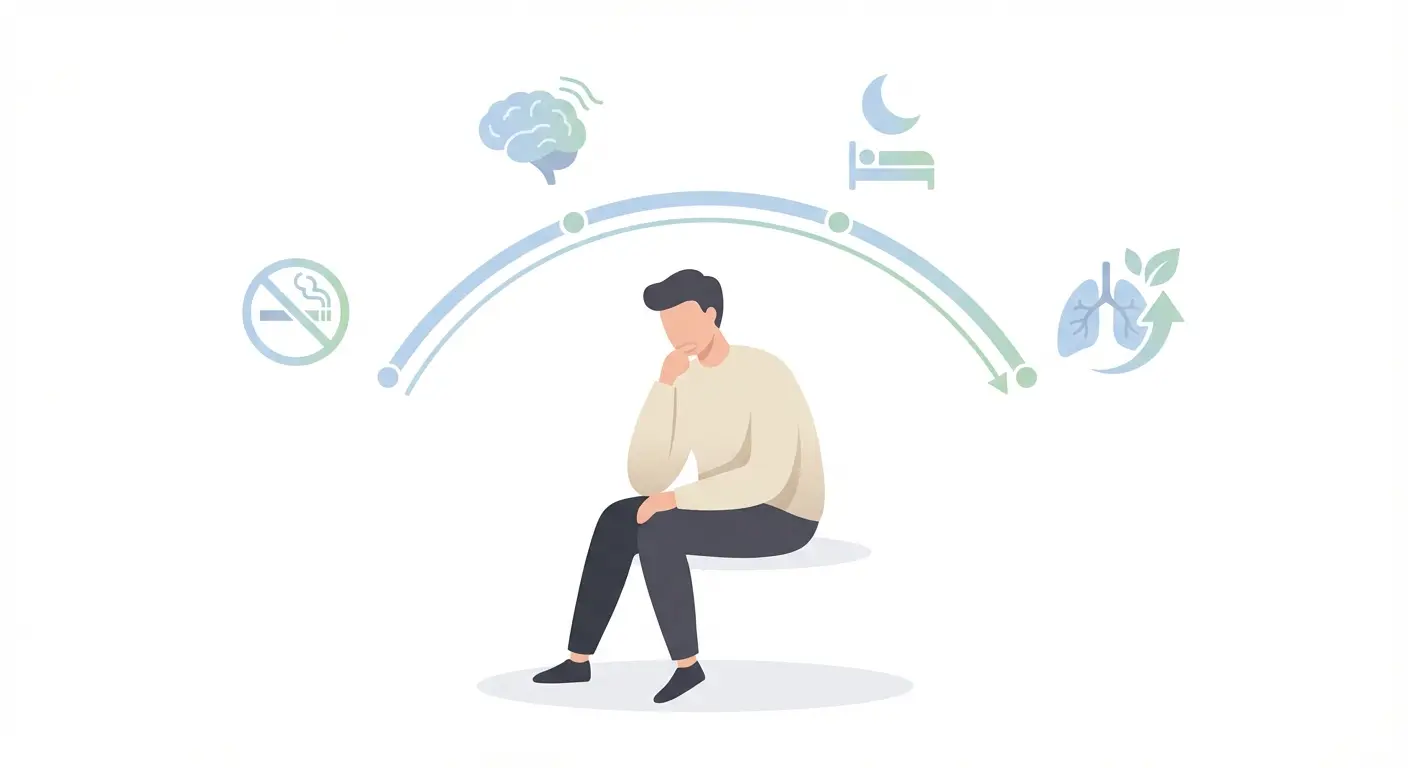
Most people expect nicotine withdrawal to feel bad. What surprises them is how fast it starts — sometimes within 30 minutes of the last cigarette — and how unpredictable the wave of symptoms can be over the days and weeks that follow. If you’ve quit and you’re wondering whether what you’re feeling is normal, the short answer is almost certainly yes. And the better news: there’s a clear, well-documented timeline to when it ends.
What You’ll Learn in This Article
What Is Nicotine Withdrawal?
Nicotine withdrawal is the set of physical and psychological symptoms that occur when a person who is dependent on nicotine abruptly reduces or stops their nicotine intake. Symptoms arise because the brain’s dopamine and acetylcholine receptor systems — recalibrated over months or years of smoking — must readjust to functioning without a constant nicotine supply. Most symptoms resolve within 2–4 weeks.
Nicotine is one of the most rapidly addictive substances known to pharmacology. According to the 2020 Surgeon General’s Report on Smoking Cessation, approximately 70% of smokers want to quit, but dependence — driven largely by nicotine withdrawal — is one of the primary reasons attempts fail in the first two weeks.
For more on this topic, see our guide on nicotine withdrawal symptoms.
When you smoke, nicotine floods the brain within seconds, triggering a release of dopamine that the brain starts to expect. Stop smoking, and the brain notices immediately. That gap between what the brain expects and what it receives is what you feel as withdrawal.
The Cleveland Clinic identifies the following as the most common nicotine withdrawal symptoms:
- Intense cravings for cigarettes
- Irritability, anxiety, or restlessness
- Difficulty concentrating
- Increased appetite and weight gain
- Depressed mood or mood swings
- Insomnia or disturbed sleep
- Headaches and dizziness
- Coughing (as the lungs begin clearing)
The Complete Nicotine Withdrawal Timeline
Here’s where the real clarity is. The nicotine withdrawal timeline follows a fairly predictable arc for most people, though individual factors — how long you’ve smoked, how many cigarettes per day, genetics, stress levels — affect intensity.
| Time Since Quitting | Primary Symptoms | What’s Happening Physically | Intensity (1–10) |
|---|---|---|---|
| 30–60 minutes | First cravings begin | Blood nicotine levels start dropping | 3–4 |
| Hours 2–12 | Irritability, anxiety, headaches | Nicotine nearly cleared from bloodstream | 5–6 |
| Days 1–3 | Peak physical symptoms: cravings, mood swings, insomnia, nausea | Brain receptors firing without nicotine stimulation | 7–9 (peak) |
| Days 4–7 | Cravings begin spacing out; coughing may increase temporarily | Brain dopamine system starting to recalibrate | 5–7 |
| Weeks 2–4 | Physical symptoms mostly resolve; psychological cravings persist | Receptor density normalizing; cilia regrowth active | 3–5 |
| Months 1–3 | Situational cravings triggered by habits, stress, or social cues | Brain chemistry largely stabilized; lung function improving | 2–4 |
| Months 3–6+ | Occasional cravings; improved mood, energy, and lung capacity | Continued cardiovascular and pulmonary recovery | 1–2 |
The NHS notes in its guide to managing nicotine withdrawal symptoms that individual cravings typically only last 3–5 minutes at peak intensity, even when they feel overwhelming. That’s a surprisingly short window — and it means coping strategies only need to work for a few minutes at a time.
6 Timeline Facts About Nicotine Withdrawal Duration
Numbers and ranges are useful, but these six specific facts about the nicotine withdrawal timeline tend to be the ones that actually help people stay quit — because they reframe what’s happening.
Fact 1: The Worst Is Usually Over by Day 3
Peak physical withdrawal from nicotine hits hardest between 24 and 72 hours. This is when headaches, intense cravings, sweating, and difficulty sleeping are most severe. If you’ve made it past day 3, the physiological peak is behind you. That’s not easy — but it is finite.
Fact 2: A Single Craving Lasts Only 3–5 Minutes
This is the counterintuitive fact that catches most people off guard. It doesn’t feel like 3 minutes — it feels endless. But every individual craving wave has a biological ceiling. Distraction, deep breathing, or cold water really does outlast the urge. Understanding this transforms cravings from something to survive into something to simply wait out.
Fact 3: Psychological Withdrawal Outlasts Physical Withdrawal by Months
Physical symptoms from nicotine are largely resolved in 2–4 weeks. But psychological cravings — triggered by routine, stress, social situations, or even specific smells — can persist for 3 to 6 months, and occasionally longer. This is why understanding your triggers matters as much as surviving the first week. Learning to identify and manage smoking triggers is central to long-term success.
Fact 4: Sleep Disruption Peaks Around Days 2–3 Then Improves
Vivid dreams and insomnia are documented withdrawal effects that many people don’t anticipate. Nicotine affects sleep architecture — particularly REM sleep. When it’s removed, the brain temporarily overshoots, producing unusually vivid dreaming and lighter sleep. For most people, this normalizes within 1–2 weeks.
Fact 5: Weight Gain Is Real but Usually Modest
Nicotine suppresses appetite and increases metabolic rate slightly. When you quit, appetite increases and metabolism slows a little — the average weight gain in the first year post-quitting is 4–10 lbs according to published research. That’s real, and it’s worth planning for. But it’s also manageable and does not outweigh the cardiovascular benefits of quitting.
Fact 6: Using NRT Can Shift the Timeline Significantly
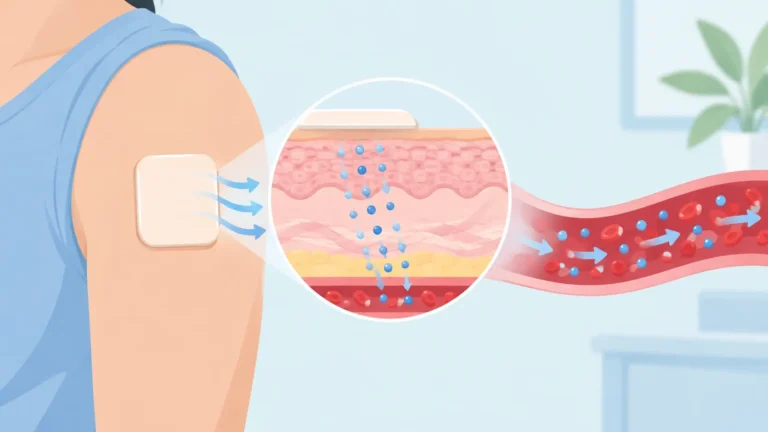
Nicotine Replacement Therapy (NRT) — patches, gum, lozenges, or inhalers — doesn’t eliminate withdrawal, but it meaningfully reduces peak severity and can extend the timeline more gradually. The 2020 Surgeon General’s Report found that NRT approximately doubles the likelihood of successful cessation compared to willpower alone. Prescription medications like varenicline (Champix/Chantix) show even stronger success rates. For a full comparison of every NRT product type with clinical efficacy data and pricing, see our detailed guide to the best nicotine replacement therapy options compared for 2026.
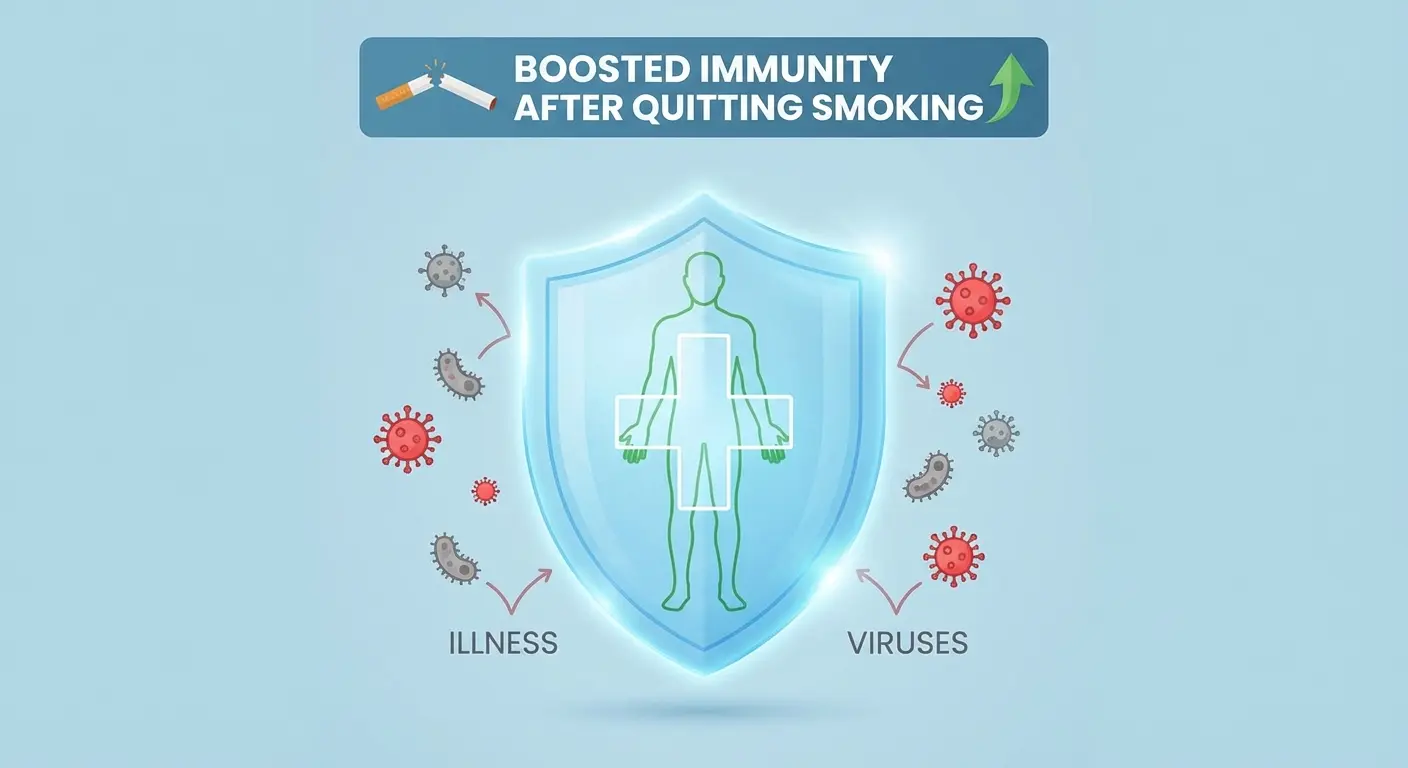
What Happens to Your Body: Quit Smoking Benefits Timeline
Withdrawal gets all the attention, but the recovery side of what happens when you quit smoking is remarkable — and it starts far sooner than most people expect.
| Time After Quitting | Health Benefit | Source |
|---|---|---|
| 20 minutes | Heart rate and blood pressure drop toward normal levels | CDC / Surgeon General |
| 12 hours | Carbon monoxide level in blood drops to normal | CDC |
| 2–12 weeks | Circulation improves; lung function increases up to 30% | NHS / Surgeon General |
| 1–9 months | Coughing and shortness of breath decrease significantly | American Cancer Society |
| 1 year | Heart disease risk drops to half that of a current smoker | Surgeon General’s Report |
| 5 years | Stroke risk reduced to that of a non-smoker | CDC |
| 10 years | Lung cancer death risk cut in half compared to continuing smokers | Surgeon General’s Report |
| 15 years | Heart disease risk equal to that of someone who never smoked | CDC |
These numbers are worth sitting with. The discomfort of the first few weeks trades against 15 years of recovery that the body willingly performs on its own — if given the chance.
The financial recovery is worth tracking too. The National Cancer Institute’s Quit Smoking Savings Calculator lets you see exactly what you’d save over 1, 5, and 10 years — numbers that can be genuinely motivating during hard days.
Managing Nicotine Withdrawal Symptoms: A Practical Framework
Knowing the timeline is half the work. Having a plan for each phase is the other half.
Week 1: Survive the Peak
- Use NRT if appropriate. Talk to a pharmacist or GP about patches, gum, or lozenges. There’s no medal for doing this without help.
- Identify your trigger situations. Most relapses happen in predictable contexts — after meals, during stress, with coffee, or socially. Write them down before they happen.
- Build a 5-minute toolkit. Cold water, a short walk, a breathing exercise, or even a specific podcast episode. The goal is to outlast individual cravings.
- Tell someone. Social accountability measurably improves outcomes. Even one person who knows you’ve quit creates a layer of motivation that pure willpower doesn’t.
Weeks 2–4: Manage the Transition
- Expect good days and bad days. A hard day at week three doesn’t mean relapse is inevitable — it means you’re still in recovery. The trend still matters more than any single day.
- Watch for “permission-giving” thinking. Thoughts like “just one won’t hurt” are the cognitive precursors to most relapses. Recognize them as part of withdrawal, not as valid reasoning.
- Adjust routines around former smoking rituals. If you smoked every morning with coffee, change the coffee routine. New cues reduce the pull of old habits.
Months 1–3: Build the New Normal
- Track your progress concretely. Days smoke-free, money saved, and health milestones create momentum. Apps like iQuit show you a real-time health recovery timeline that visualizes what your body is gaining back — which is a different kind of motivation than just “staying away” from something.
- Have a relapse plan, not just a quit plan. If you do slip, a single cigarette doesn’t have to become a return to full smoking. The Smokefree.gov quit plan builder helps you structure both a quit strategy and a response to setbacks.
For more structured approaches — including behavioral techniques and nicotine replacement guidance — the effective strategies to help you quit smoking resource covers these in detail, organized by phase of cessation.
Frequently Asked Questions About Nicotine Withdrawal
How long does nicotine withdrawal last on average?
For most people, the physical symptoms of nicotine withdrawal peak at days 2–3 and largely resolve within 2–4 weeks. Psychological cravings — triggered by habits, stress, and social contexts — can persist for 3 to 6 months but decrease steadily in both frequency and intensity over time.
What are the worst days of nicotine withdrawal?
Days 1 through 3 are typically the most intense, with peak symptoms including severe cravings, irritability, headaches, difficulty sleeping, and mood swings. By day 4–7, most people notice that while cravings still occur, they’re spaced further apart and slightly less intense. Day 3 is commonly reported as the hardest single day.
What happens to your body when you quit smoking?
Health improvements begin within 20 minutes of quitting — heart rate drops, and carbon monoxide levels normalize within 12 hours. Over weeks and months, lung function improves, circulation increases, and cardiovascular disease risk drops significantly. Within 10–15 years, many health risks return to levels comparable to someone who never smoked.
Does nicotine withdrawal cause anxiety or depression?
Yes — anxiety, irritability, and low mood are recognized nicotine withdrawal symptoms caused by disruption to the brain’s dopamine system. These symptoms are temporary and typically improve significantly within 2–4 weeks. People with pre-existing anxiety or depression may experience more pronounced symptoms and should speak with a healthcare provider before quitting.
Does nicotine replacement therapy (NRT) reduce withdrawal symptoms?
Yes. NRT — including patches, gum, lozenges, and inhalers — reduces the severity of withdrawal symptoms by maintaining a lower, steady level of nicotine while eliminating the harmful chemicals from combustion. Research cited in the Surgeon General’s 2020 report found NRT approximately doubles quit success rates compared to quitting without any pharmaceutical support.
Can you quit smoking without experiencing withdrawal?
It’s uncommon but not impossible. People who smoked lightly (fewer than 5 cigarettes per day) or for a short period may experience minimal withdrawal. However, most regular smokers will experience at least some symptoms. The degree of withdrawal correlates roughly with the duration of smoking and number of cigarettes smoked daily.
Ready to Track Your Own Quit Smoking Timeline?
Reading about the health effects, withdrawal timeline, and recovery after quitting smoking is one thing. Watching it happen in real time — your health milestones, money saved, and days smoke-free — is what actually keeps people going through the hard weeks.
The articles below go deeper on the strategies that work best at each stage of withdrawal and cessation:
→ Top Strategies to Quit Smoking Successfully
Last updated: 2025. Information sourced from the CDC, NHS, Cleveland Clinic, and the 2020 U.S. Surgeon General’s Report on Smoking Cessation. This article is for informational purposes only. Always consult a healthcare provider for personalized medical advice about quitting smoking.