Can Your Lungs Heal After Years of Smoking: 7 Milestones
Your lungs have taken years of punishment — and somewhere in the back of your mind, you’re wondering if it’s too late. It’s not. The human respiratory system has a remarkable capacity for self-repair that most people never hear about, and the science on what happens after quitting smoking is genuinely surprising.
Whether you smoked for 5 years or 35, your body starts working to undo the damage within minutes of your last cigarette. That’s not motivational fluff — it’s measurable, documented physiology.
Does Lung Healing Actually Happen After Years of Smoking?
Yes — and the evidence is unambiguous. Lung tissue is not static. It responds, repairs, and regenerates in measurable ways once cigarette smoke stops entering the airways. The 2020 U.S. Surgeon General’s Report on Smoking Cessation concluded that quitting at any age improves health outcomes and reduces disease risk — including for people who smoked for decades.
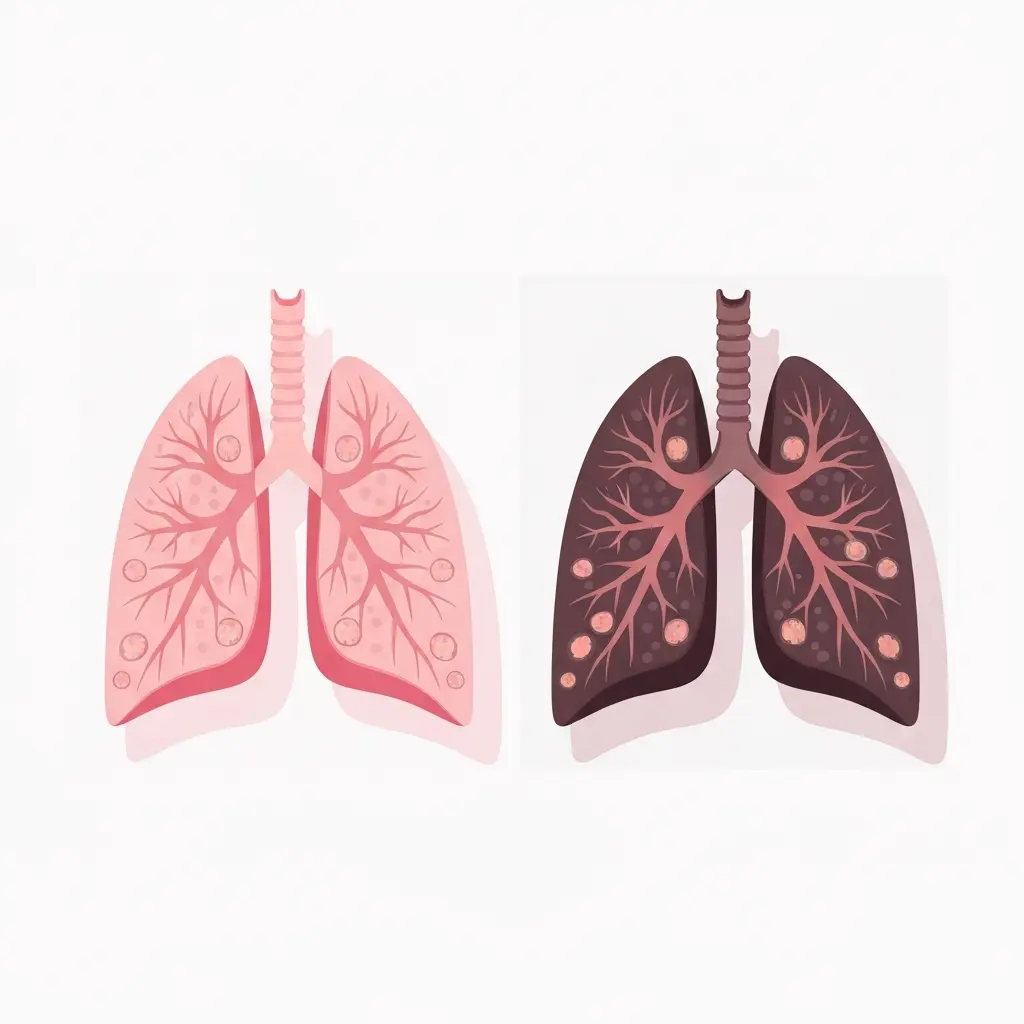
What changes? Inflammation in the airways begins to subside. Cilia — the tiny hair-like structures that sweep mucus and debris out of your lungs — start regenerating. Lung function, measured as FEV1 (forced expiratory volume in one second), improves over time in ex-smokers compared to those who continue smoking.
There’s an honest caveat here: some damage is permanent. If smoking has caused emphysema, the destroyed air sacs (alveoli) don’t regrow. COPD cannot be reversed. But it can stop progressing as fast — and that distinction matters enormously for quality of life and life expectancy. For a deeper look at what the research actually shows, this breakdown of the science on lung healing after smoking separates the reversible from the irreversible in plain language.
What Are the 7 Lung Recovery Milestones After Quitting?
These milestones aren’t arbitrary — they’re based on measurable biological events documented in clinical research and compiled by health authorities including the NHS and the CDC.
| Milestone | Timeframe | What Happens in Your Lungs | Evidence Source |
|---|---|---|---|
| 1. Carbon monoxide clears | 8–12 hours | Blood oxygen levels normalise; CO is expelled from lungs | NHS, 2024 |
| 2. Airways stop irritating | 72 hours | Bronchial tubes begin to relax; breathing often feels easier | CDC, 2023 |
| 3. Cilia regrowth begins | 2–12 weeks | Tiny airway hairs regenerate; mucus clearance improves | Surgeon General, 2020 |
| 4. Lung function improves | 1–3 months | FEV1 increases; coughing and breathlessness reduce | NEJM data cited in SGR 2020 |
| 5. Infection risk drops | 9–12 months | Lungs clear secretions better; fewer chest infections | NHS Yorkshire Smokefree |
| 6. Lung cancer risk halves | 10 years | Risk of lung cancer is approximately 50% lower than a current smoker | Surgeon General, 2020 |
| 7. Lung cancer risk approaches baseline | 15+ years | Risk approaches (but may not fully match) lifetime non-smoker levels | Cross-Cohort Collaboration, 2025 |
Milestone 3 is one people often don’t expect: the temporary increase in coughing around weeks 2–4. Here’s what’s counterintuitive — that cough is often a sign of healing, not harm. Regenerating cilia are now actively clearing accumulated mucus that was trapped for months or years. It passes.
Milestone 6 comes from robust epidemiological data. A 2025 analysis published in PMC (Cross-Cohort Collaboration) found that cessation duration was consistently associated with declining cardiovascular and cancer mortality outcomes across multiple large cohorts — reinforcing that the benefits compound the longer you stay quit.
For a full organ-by-organ view of what’s happening beyond just your lungs during this period, the health recovery timeline after quitting smoking maps out heart, blood vessel, and neurological changes alongside respiratory ones.
How Long Does Lung Recovery Take After Quitting Smoking?
The honest answer: lung recovery isn’t a single event — it’s a spectrum that unfolds over years. Some changes happen within hours; others take a decade. The timeline depends heavily on your smoking history.
Short-term lung recovery (days to months)
Within 72 hours, bronchial tubes relax and breathing often feels noticeably easier. Over the first 1–3 months, lung capacity measurably improves. People who track their breathing — through peak flow meters or spirometry — often see numbers shift in this window.
The NHS guidance on nicotine withdrawal notes that respiratory symptoms like coughing and wheezing typically improve significantly within the first few months of quitting.
Long-term lung recovery (years to decades)
The big cancer risk reductions happen over a longer arc. Ten years out, lung cancer risk is roughly half that of someone still smoking. This is significant — lung cancer is the leading cause of cancer death in both the US and UK, and this risk reduction is one of the most powerful outcomes of quitting.
What most people miss is that even partial recovery is enormously valuable. A 65-year-old who quits after 40 years of smoking won’t have the lungs of a never-smoker — but they’ll have meaningfully better lung function, lower infection risk, and reduced cancer risk compared to someone who keeps smoking. That’s worth every hard day of withdrawal.
What Limits How Much Your Lungs Can Heal?
Three main factors determine the ceiling of your lung recovery: the type of damage sustained, the duration and intensity of smoking, and whether you develop complications like COPD.
Irreversible vs. reversible lung damage
Emphysema destroys alveoli — the tiny air sacs where gas exchange happens. Once lost, those sacs don’t regenerate. This is why quitting stops the progression of emphysema but doesn’t reverse the structural damage already done. Chronic bronchitis, however — the excess mucus production and airway inflammation — does respond to cessation. Many people see dramatic improvement in chronic bronchitis symptoms within 6–12 months of quitting.
Airway scarring and narrowing from long-term inflammation also partially limits recovery. But the biological response to removing smoke from the equation is powerful enough that even heavily damaged lungs show measurable improvement in most cases.
Pack-years and recovery potential
Clinicians use a measure called “pack-years” (packs per day × years smoked) to estimate cumulative exposure. Someone with 10 pack-years of exposure will generally recover more lung function than someone with 40 pack-years — though both will benefit from quitting. For a detailed look at cilia restoration rates and how lung function metrics track against pack-year history, this guide to lung recovery from cilia to cancer risk covers the biology in useful depth.
What Are the Signs Your Lungs Are Healing After Quitting Smoking?
Lung healing has real, perceptible signs — you don’t have to take it on faith. Here’s what to watch for:
- Reduced morning cough: That deep, persistent morning cough that ex-smokers know well typically improves significantly within 3–9 months as cilia restore normal mucus clearance.
- Less breathlessness on exertion: Climbing stairs or walking briskly feels easier as bronchial inflammation resolves and lung capacity improves.
- Increased exercise tolerance: Many ex-smokers report being able to sustain physical activity for longer within 1–3 months of quitting — a direct reflection of improved oxygen delivery.
- Fewer chest infections: If you used to get two or three chest infections per winter, you’ll likely notice fewer by the end of your first smoke-free year.
- Decreased mucus production: Goblet cells in the airways (which overproduce mucus in response to smoke irritation) normalise over time.
- The temporary cough increase: Counterintuitively, some people cough more in weeks 2–4. This is typically cilia doing their job again — clearing accumulated debris. It’s a positive sign, not a red flag.
Tracking these changes can be genuinely motivating. Apps like iQuit include a health recovery timeline that maps these exact milestones against your quit date — so when that cough shows up in week 3, you can see it for what it is: progress.
How to Support Your Lung Recovery: A Practical Checklist
Stopping smoking is the most important step, but these evidence-aligned actions can support your respiratory recovery:
- Stay smoke-free: Every cigarette delays recovery. No number is “safe” post-cessation.
- Get active gradually: Aerobic exercise improves lung function and accelerates cilia recovery. Start with 10-minute walks and build up.
- Avoid secondhand smoke: Even passive exposure triggers airway inflammation.
- Stay well-hydrated: Water helps thin mucus secretions, making it easier for recovering cilia to clear airways.
- Consider spirometry testing: A baseline lung function test at your GP 6–12 months after quitting lets you see measurable progress in FEV1 numbers.
- Manage withdrawal properly: Using NRT (nicotine replacement therapy) or prescribed cessation medication reduces the craving-driven risk of relapse. The CDC’s guidance on why quitting is hard outlines why medication support doubles quit success rates.
- Track your milestones: Use a quit-smoking app, a journal, or both. Seeing concrete progress — days smoke-free, money saved, health milestones passed — sustains motivation during hard periods.
- Talk to your GP if symptoms persist: Persistent breathlessness, blood in sputum, or severe wheezing warrant clinical evaluation regardless of quit status.
Frequently Asked Questions About Lung Healing After Quitting Smoking
Can lungs fully recover after 20 years of smoking?
Partial recovery is likely; full recovery depends on what type of damage occurred. Reversible changes — like chronic bronchitis, airway inflammation, and impaired cilia function — can improve substantially. Structural damage from emphysema, however, is permanent. The 2020 U.S. Surgeon General’s Report confirms that quitting at any age, even after decades of smoking, reduces lung cancer risk, improves respiratory function, and cuts infection risk — making cessation worthwhile regardless of smoking history.
Why do I cough more after quitting smoking?
Increased coughing in the first 2–4 weeks after quitting is normal and typically signals healing, not harm. Cigarette smoke paralyses cilia — the hair-like structures that clear mucus from airways. As cilia regenerate post-cessation, they begin actively moving accumulated mucus and debris upward, causing a temporary increase in coughing. NHS guidance confirms this usually resolves within a few weeks to months as airways clear.
How long after quitting smoking does lung function improve?
Measurable improvements in lung function (FEV1) typically begin within 1–3 months of quitting smoking, with continued improvement over the first year. Cilia begin regenerating within 2–12 weeks. By 9–12 months, the lungs are significantly better at clearing secretions, reducing infection risk. The rate and extent of improvement depend on baseline damage, but most ex-smokers experience noticeable respiratory benefits within the first year.
Does quitting smoking reduce lung cancer risk even after 30+ years?
Yes. Quitting smoking reduces lung cancer risk at any age and after any duration of smoking. According to the Surgeon General’s 2020 Cessation Report, lung cancer risk is approximately 50% lower after 10 years of not smoking compared to continuing smokers. A 2025 Cross-Cohort Collaboration study published in PMC confirmed continued mortality risk reductions the longer cessation is maintained, even among long-term heavy smokers.
Can lungs heal if you have COPD and quit smoking?
Quitting smoking is the single most effective intervention for slowing COPD progression, though it cannot reverse existing structural damage. Studies show that ex-smokers with COPD experience a slower decline in FEV1 compared to those who continue smoking. Breathlessness, infection frequency, and hospitalisation rates all improve post-cessation. While the lost alveolar tissue doesn’t regenerate, stopping smoking significantly improves quality of life and life expectancy in COPD patients.
What are the best methods for quitting smoking to protect lung health?
The most evidence-supported cessation methods are a combination of nicotine replacement therapy (NRT) — patches, gum, lozenges — and behavioural support. Prescription medications like varenicline (Champix/Chantix) are also highly effective. The CDC reports that using cessation medication alongside behavioural support more than doubles quit success rates. Free resources like Smokefree.gov and the EX Program (developed with Mayo Clinic) offer personalised quit plans at no cost.
What is nicotine withdrawal and how long does it affect breathing?
Nicotine withdrawal is the physical and psychological response when the body stops receiving nicotine after dependence has formed. Respiratory symptoms during withdrawal — like tightness in the chest, increased coughing, or shortness of breath — typically peak within the first 1–3 days and improve significantly within 2–4 weeks. The Cleveland Clinic notes that most acute withdrawal symptoms resolve within 1 month, though cravings can persist longer.
How can I track my lung recovery milestones after quitting?
Several tools help you track lung recovery progress: spirometry tests at your GP (which measure FEV1 directly), peak flow meters for home use, and quit-smoking apps that map health milestones against your quit date. Apps like iQuit include a built-in health recovery timeline, daily missions, and progress tracking that align with documented medical milestones — making it easier to recognise and celebrate real biological progress as it happens.
Ready to Start Your Own Recovery Timeline?
Every milestone above started with one decision: the last cigarette. The 7 milestones in this article aren’t a wish list — they’re what your biology is set up to do the moment you stop exposing your airways to smoke.
If you’re still in the research phase, that’s fine. Keep learning. Explore the detailed science behind lung healing after smoking or the full organ-by-organ recovery data to understand what’s at stake beyond just your lungs. Knowledge is genuinely part of the quit process.
When you’re ready to track your own milestones in real time, the iQuit app maps your progress against these exact biological events — so day 3, week 9, and month 12 aren’t just dates on a calendar. They’re milestones you can see, measure, and own.
Share this article with someone who’s considering quitting — sometimes the right information at the right moment is what finally tips the scale.