
Quit Smoking One Month Benefits: Complete Guide to Your 30-Day Milestone
Reaching one month smoke-free is a genuine milestone — one that deserves to be celebrated with full knowledge of what your body has achieved. The quit smoking one month benefits are not abstract promises. They are documented, measurable changes in your cardiovascular system, lungs, brain chemistry, and overall health that research has tracked precisely.
After 30 days without cigarettes, many quitters report feeling physically and psychologically different in ways they did not fully anticipate. The improvements are real, and understanding them in detail gives you both motivation to reach this milestone and motivation to protect it once you are there.
This guide covers every documented benefit at the one-month mark — physical, mental, financial, and social. For the longer arc of recovery, see the 3-month benefits guide and the 1-year benefits article. For the week-by-week picture of how you got here, see the one-week quit timeline.
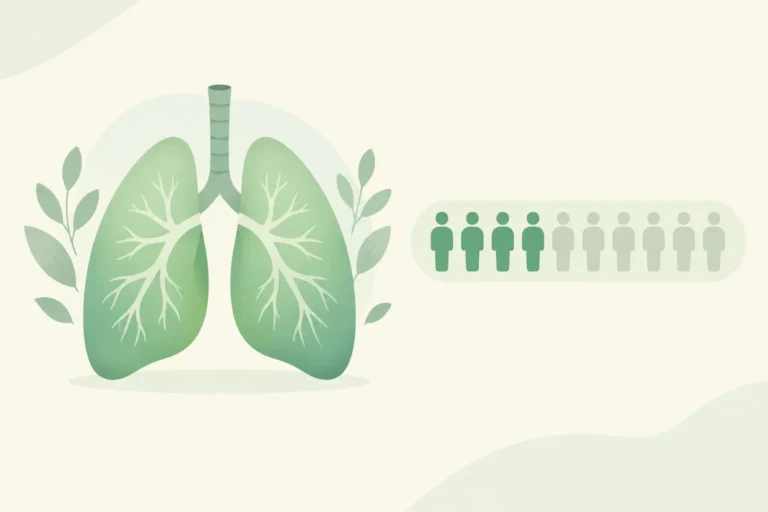
At one month smoke-free, lung function improves by up to 30%, circulation is significantly better, blood pressure has stabilized, coughing and shortness of breath have decreased, taste and smell are fully restored, and mood has measurably improved. Most acute withdrawal symptoms are resolved, and nicotine cravings are infrequent and manageable.
Lung and Respiratory Benefits
The lungs begin recovering within hours of quitting, but the one-month mark is when the cumulative improvements become substantial and measurable in clinical testing.
- Lung function improvement: Spirometry studies show lung function (FEV1 and FVC) improves by 10–30% within the first month for former smokers who had not yet developed severe COPD
- Cilia regeneration: The tiny hair-like structures that clear mucus and pathogens from airways — damaged by smoke — are largely regenerated within 1–3 months. By the one-month mark, significant cilia recovery is underway
- Reduced coughing: The productive cough that intensifies in the first week largely resolves by weeks 2–4 as airways clear
- Reduced bronchial inflammation: Airway inflammation measurably decreases by 2–4 weeks, reducing the frequency of respiratory infections
- Improved oxygen delivery: With carbon monoxide gone and blood oxygen normalized, the entire body receives more efficient oxygen delivery — contributing to every other benefit on this list
Cardiovascular and Circulatory Benefits
The cardiovascular system begins recovering within 20 minutes of the last cigarette. By one month, the improvements are clinically significant:
- Blood pressure: Normalized and stable — smoking was causing repeated spikes with each cigarette
- Peripheral circulation: Hands and feet are warmer; peripheral vascular resistance is reduced
- Heart rate: Resting heart rate is lower and more stable — smoking was adding 10–20 bpm per cigarette
- Platelet function: Blood platelets are less sticky within 2–4 weeks, reducing clotting risk
- Heart disease risk trajectory: After one month, the cumulative cardiovascular risk from smoking has begun its long-term decline toward non-smoker levels
Brain Chemistry and Mental Health Benefits
The relationship between smoking and mental health is complex. Many smokers start smoking to manage anxiety or low mood — but research consistently shows that long-term, quitting smoking significantly improves mental health outcomes.
By one month:
- Dopamine system recovery: Brain dopamine receptor density, which was downregulated by chronic nicotine exposure, has largely normalized — this means everyday pleasures (food, exercise, social connection) feel more rewarding again
- Anxiety reduction: Counterintuitively, anxiety levels in ex-smokers are measurably lower by 4 weeks than they were while smoking. The anxiety felt during withdrawal was nicotine withdrawal anxiety — not baseline anxiety
- Depression improvement: Multiple studies show improved mood and reduced depressive symptoms by 4 weeks post-quit in most smokers
- Cognitive function: Attention, processing speed, and memory show measurable improvements as brain blood flow improves and dopamine systems normalize
A 2021 meta-analysis in BMJ covering 26 studies and over 50,000 participants concluded: “Smokers who quit have improved mental health compared with those who continue to smoke.”
Taste, Smell, and Physical Appearance
Some of the most immediately rewarding one-month benefits are sensory and cosmetic:
- Taste: Fully restored by 2–4 weeks — food tastes richer, more complex, and more satisfying. Many one-month quitters report that this change is larger than expected
- Smell: Similarly improved — the world literally smells different when you are no longer a smoker with desensitized olfactory nerves
- Skin: Improved circulation delivers more oxygen and nutrients to skin; color improves, and the yellow-gray undertone of smoking begins to fade. Collagen production is recovering
- Teeth and gums: Gum inflammation reduces; staining is not reversed overnight but the process of new staining has stopped
- Hair: Improved scalp circulation; hair may feel healthier and grow faster
- Body odor and breath: Completely changed — and others notice before you do
Sleep and Energy Levels
Sleep disruption is a common complaint in the first week of quitting (nicotine has mild sedative effects). By one month, the picture has reversed significantly:
- Sleep quality measurably improves by weeks 3–4 in most former smokers
- Resting energy levels are higher due to improved oxygen delivery and cardiovascular efficiency
- Exercise capacity improves noticeably — activities that caused breathlessness become easier
- Morning waking is easier; the need for an immediate cigarette to “function” is gone
Financial Benefits at 30 Days
The financial benefits of quitting are concrete and immediately satisfying to calculate. At average prices in 2026:
| Cigarettes Per Day | Saved at 30 Days (US) | Saved at 30 Days (UK) |
|---|---|---|
| 10 cigarettes/day | ~$165 | ~£90 |
| 20 cigarettes/day | ~$330 | ~£180 |
| 30 cigarettes/day | ~$495 | ~£270 |
By one month, most pack-a-day smokers have saved enough for a nice dinner, a new experience, or a contribution toward something meaningful. Apps like iQuit display this savings counter in real time — it is one of the most motivating features for many users.
What to Watch Out For at One Month
One month is a milestone but also a known relapse-risk point. Some quitters experience an overconfidence effect — the sense that the hardest part is over and a single cigarette “won’t matter.” This is one of the most common precursors to relapse.
- Continue using your quit app and support network — don’t “graduate” early
- Be especially vigilant in high-risk social situations where alcohol is present
- If weight gain is occurring and causing distress, address it proactively — see quitting without gaining weight
- Acknowledge emotional cravings (stress-linked, social) which are more common at this stage than physical cravings
The Cumulative Recovery Timeline: Week by Week
| Milestone | Key Benefits |
|---|---|
| 20 minutes | Heart rate and blood pressure normalize |
| 12 hours | Carbon monoxide levels normalize; blood oxygen improves |
| 3 days | Nicotine eliminated from blood; taste and smell improving |
| 1 week | Cilia regenerating; cravings decreasing; significant sleep improvement beginning |
| 2 weeks | Circulation markedly improved; exercise tolerance noticeably better |
| 1 month | Lung function up 10–30%; mental health significantly improved; taste and smell fully restored |
| 3 months | See the 3-month milestone guide |
Frequently Asked Questions
What happens to your lungs after one month of not smoking?
After one month, lung function (measured by spirometry) typically improves by 10–30% compared to pre-quit levels. Cilia are substantially regenerated and actively clearing mucus, reducing infection risk. Airway inflammation has decreased, and breathing during physical activity is noticeably easier for most people.
Does anxiety get better one month after quitting smoking?
Yes. By one month, anxiety levels in former smokers are measurably lower than they were while smoking. The anxiety experienced during the early quit was nicotine withdrawal anxiety — a temporary state. Long-term, quitting smoking consistently improves anxiety outcomes, a finding confirmed by multiple large-scale studies.
How much money will I save after one month of not smoking?
At average 2026 prices, a pack-a-day smoker saves approximately $330 (US) or £180 (UK) in one month. Heavier smokers save proportionally more. Use a quit app like iQuit to track your exact savings based on your previous consumption and local cigarette prices.
Is one month a high relapse risk period?
Yes — the one-month period is a known relapse risk point. Some quitters experience overconfidence or let their guard down after the acute withdrawal phase. Continue using your quit app, support network, and coping strategies. Do not assume the hard work is over just because the physical withdrawal has passed.
When do the mental health benefits of quitting smoking appear?
Mood and mental health improvements typically emerge by weeks 2–4 post-quit. A 2021 BMJ meta-analysis found that quitters show significantly better mental health outcomes — lower anxiety, better mood, reduced depression — within the first month and continuing long-term.
What are the skin benefits of quitting smoking at one month?
By one month, improved circulation is delivering more oxygen and nutrients to skin cells. The yellowish-gray undertone from poor circulation begins fading. Collagen production improves. Skin hydration improves. While dramatic cosmetic changes take several months to fully manifest, the foundation for visible improvement is well established by the 30-day mark.
See Your 30-Day Milestones in Real Time
The iQuit app tracks every health milestone from the first 20 minutes to your one-month marker and beyond. Watch your lung function improve, your savings grow, and your health stats update in real time.
You have earned every one of these benefits. Let iQuit show you exactly how far you’ve come.