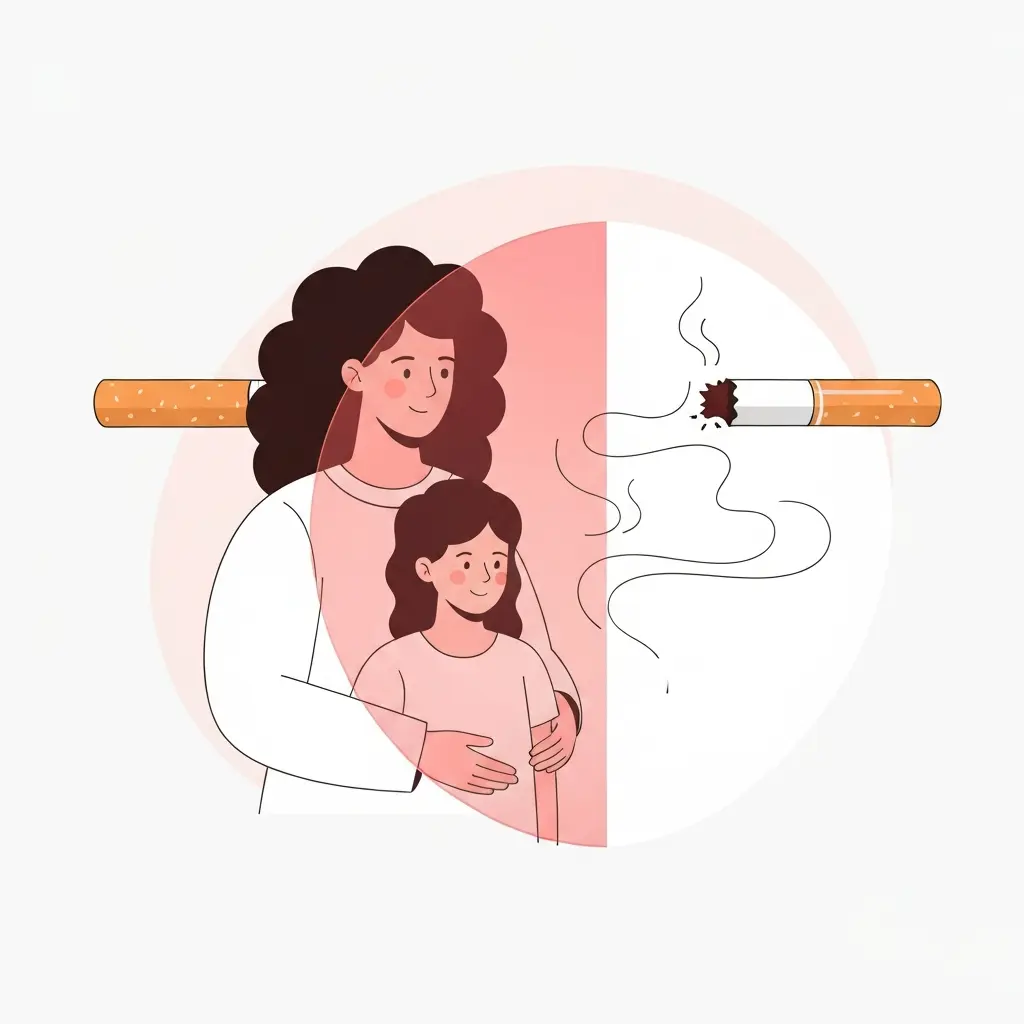
Secondhand Smoke Dangers: What the Science Says About the Risks to Your Family in 2026
The dangers of secondhand smoke are among the most thoroughly documented in public health science. Tobacco smoke does not harm only the person who smokes it. It harms everyone in the immediate environment — family members, colleagues, friends, and particularly children and infants whose developing bodies are far more vulnerable to toxic exposure than adults. According to the World Health Organization, secondhand smoke kills more than 1.6 million non-smokers every year — people who never chose to smoke, who have no tobacco dependency, but who died because someone near them did.
This guide presents the current scientific evidence on secondhand smoke dangers from the WHO, CDC, and leading cancer and lung organisations. Understanding what your smoking exposes others to is not about shame — it is about informed decision-making. For many smokers, learning the specific risks that their habit poses to the people they love most is the single most powerful motivation that finally makes a quit attempt stick.
What Is Secondhand Smoke?
Secondhand smoke — also called passive smoke or environmental tobacco smoke — is the combination of two types of smoke that come from burning tobacco:
- Mainstream smoke: The smoke exhaled by the smoker
- Sidestream smoke: The smoke that comes directly from the burning end of the cigarette between puffs
Sidestream smoke is actually more toxic than mainstream smoke because it burns at a lower temperature and contains higher concentrations of many carcinogenic compounds. According to the CDC’s secondhand smoke overview, tobacco smoke contains over 4,000 known chemicals, many of which are harmful, with at least 40 that cause cancer.
Critically — and this is a point that surprises many people — secondhand smoke cannot be made safe by ventilation, air conditioning, or filtering. The WHO confirms that there is no safe level of exposure. Any amount of secondhand smoke exposure poses health risks.
Health Risks for Adults
Adults who live or work with smokers and do not smoke themselves face the following well-documented risks:
Lung Cancer
Non-smoking adults exposed to secondhand smoke face a 20–30% increased risk of developing lung cancer compared to those not exposed. According to the American Cancer Society and CDC, this increased risk is well-established across multiple large-scale epidemiological studies and is not diminished by reducing exposure — only elimination of exposure reduces the risk.
Coronary Heart Disease
Secondhand smoke exposure increases the risk of coronary heart disease by 25–30%. The mechanisms include increased platelet aggregation (making blood clots more likely), damage to coronary artery walls, and reduced oxygen-carrying capacity of the blood. Even brief secondhand smoke exposure — as little as 30 minutes — can cause measurable effects on coronary artery function in non-smokers.
Stroke
According to the CDC, non-smokers exposed to secondhand smoke have a significantly elevated risk of stroke. The cardiovascular damage from secondhand smoke affects the cerebral vasculature in the same ways it affects coronary arteries.
Reproductive Health
In pregnant women, secondhand smoke exposure is associated with low birth weight, premature birth, and adverse developmental outcomes. Even if the mother does not smoke, exposure to secondhand smoke in the home or workplace during pregnancy carries these risks.
Health Risks for Children and Infants
Children and infants are disproportionately vulnerable to secondhand smoke dangers for two reasons: they breathe faster than adults (inhaling more smoke relative to body weight) and their respiratory and immune systems are still developing. The documented health effects are severe:
Sudden Infant Death Syndrome (SIDS)
The CDC confirms that secondhand smoke exposure significantly increases the risk of sudden infant death syndrome. The WHO notes that SIDS is among the most serious harms attributable to secondhand smoke in infants.
Respiratory Illness and Asthma
Children exposed to secondhand smoke at home have significantly higher rates of:
- Asthma — and more severe asthma attacks in children already diagnosed
- Respiratory infections including bronchitis and pneumonia
- Chronic respiratory symptoms including coughing, wheezing, and shortness of breath
- Reduced lung function that can persist into adulthood
Ear Infections
Children in smoking households have higher rates of middle ear infections (otitis media) and are more likely to require grommets (ear tubes). The mechanism is believed to involve smoke-induced inflammation of the Eustachian tubes, which impairs drainage and creates an environment for bacterial growth.
Cognitive Development
Emerging research suggests that secondhand smoke exposure in early childhood is associated with modest but measurable reductions in cognitive performance and attention — effects that may influence educational outcomes.
| Population | Key Risk | Risk Magnitude |
|---|---|---|
| Adult non-smokers | Lung cancer | +20–30% risk increase |
| Adult non-smokers | Coronary heart disease | +25–30% risk increase |
| Pregnant women | Low birth weight / preterm birth | Significantly elevated |
| Infants | SIDS | Significantly elevated |
| Children | Asthma, respiratory illness | Higher incidence and severity |
Why “Just Outside” or “Just by the Window” Is Not Safe
Many smokers in families with children move their smoking outdoors, or open a window when smoking inside — believing this significantly reduces exposure. The evidence suggests the protection is far less than commonly assumed:
- Smoking near an open window still allows significant indoor secondhand smoke concentrations, particularly in smaller spaces
- Smoke particles adhere to clothing, hair, and skin, and are carried indoors by the smoker immediately after smoking (see thirdhand smoke, below)
- Outdoor smoking areas near entrances still expose non-smoking individuals who pass through or stand nearby
- The particles from secondhand smoke are small enough to travel through ventilation systems in multi-unit housing
The American Lung Association confirms that there is no safe level of exposure: the only way to fully protect non-smokers from secondhand smoke is to create completely smoke-free environments — ideally by quitting.
Thirdhand Smoke: The Danger That Stays Behind
Thirdhand smoke is the tobacco residue that remains on surfaces — walls, furniture, carpets, clothing, hair, skin — long after a cigarette has been extinguished. This residue continues to off-gas toxic compounds into the air and can be absorbed through the skin by infants and young children who crawl on carpets and touch contaminated surfaces, then put their hands in their mouths.
Thirdhand smoke cannot be eliminated by ventilation. Contaminated rooms may require deep cleaning, repainting, and in some cases replacement of carpets and upholstered furniture to reduce exposure to acceptable levels. This is why the “safe” approach of smoking exclusively outside or in specific rooms often provides less protection than families believe.
How Quitting Protects Everyone Around You
Quitting smoking eliminates secondhand and thirdhand smoke exposure for everyone in your environment. The benefits to your family begin immediately:
- Children’s asthma symptoms improve within weeks of a parent stopping smoking indoors
- The risk of SIDS for infants falls immediately when household smoking stops
- Partners’ cardiovascular risk from secondhand smoke exposure begins to decrease
- The thirdhand smoke residue in your home stops accumulating and begins to diminish
For many smokers, this is the most powerful quit motivation: not the abstract health benefits to themselves, but the concrete, immediate protection quitting provides to children, partners, and others they love. If you’ve struggled to quit for your own health, quitting for those around you may be the motivation that finally makes it stick. The article on quit smoking motivation covers how to use family motivation effectively — and how to ensure it becomes intrinsic rather than just external pressure.
For the full health recovery picture for yourself, the article on what happens when you quit smoking maps your body’s recovery organ by organ from the moment you stop. And for practical support on the hardest days, how to deal with cigarette cravings provides 12 evidence-based tools.
Frequently Asked Questions
How dangerous is secondhand smoke for non-smokers?
Secondhand smoke is classified as a Group 1 carcinogen — the highest risk category — by the International Agency for Research on Cancer. Non-smoking adults exposed to secondhand smoke face a 20–30% increased risk of lung cancer and a 25–30% increased risk of coronary heart disease. Children face elevated risks of asthma, respiratory illness, ear infections, and SIDS. There is no safe level of secondhand smoke exposure.
Is secondhand smoke as dangerous as smoking?
Secondhand smoke does not carry the same absolute health risk as active smoking — active smokers face much higher overall tobacco-related mortality. However, secondhand smoke is not safe: it causes lung cancer, heart disease, and a range of other serious conditions in non-smokers who never chose to smoke. The WHO emphasises that any exposure carries health risks, particularly for children.
Does smoking outdoors protect my family from secondhand smoke?
Smoking outdoors reduces but does not eliminate exposure. Smoke particles adhere to clothing, hair, and skin (thirdhand smoke) and are brought indoors by the smoker. Outdoor smoking near open windows or doorways still allows indoor penetration. The only complete protection is a fully smoke-free home — ideally achieved by quitting smoking entirely.
What happens to secondhand smoke exposure when someone quits smoking?
When a smoker quits, secondhand smoke exposure in the household ceases immediately. Children’s asthma symptoms begin to improve within weeks. The risk of SIDS for infants falls immediately. Partners’ cardiovascular exposure ends. Thirdhand smoke residue stops accumulating and begins to dissipate over time. Quitting smoking is therefore one of the most powerful health interventions available for the entire family, not just the smoker.
How can iQuit help me quit to protect my family from secondhand smoke?
iQuit allows you to set a family-related motivation as your core “why” and keeps it visible throughout your quit journey. The AI coach can use this motivation in its responses when cravings hit — reminding you specifically of who you’re protecting when the urge to smoke is strongest. The community includes many people who quit for family reasons and can provide the specific peer support that family-motivated quitters need.
Protect Your Family by Quitting With iQuit
The moment you quit smoking, secondhand smoke exposure for everyone you live with stops. iQuit gives you the AI coach, craving tools, and community to make that moment happen — and to keep it permanent. Download iQuit and start protecting the people who matter most.
Start today at iquitnow.life