Smoking and Heart Attack Risk: 2026 Statistics on How Fast Cardiovascular Risk Falls After Quitting
Smoking is one of the most powerful modifiable risk factors for heart attack and cardiovascular disease. According to the CDC, smokers are two to four times more likely to develop coronary heart disease than non-smokers, and smoking accounts for roughly one in three cardiovascular deaths in the United States. The mechanism is well understood: tobacco smoke damages the lining of artery walls, accelerates atherosclerosis, raises blood pressure, reduces oxygen delivery to heart muscle, and promotes blood clot formation — a near-perfect storm for myocardial infarction.
The data on smoking heart attack risk statistics for 2026 carries a genuinely hopeful message: the cardiovascular system begins to repair itself within hours of the last cigarette, and the risk trajectory drops steeply across the first five years. This article synthesises the best available evidence — from the British Heart Foundation, the American Heart Association, the European Society of Cardiology, and peer-reviewed journals — to give you a precise, sourced picture of what quitting does to your heart risk at each milestone.
How Smoking Damages the Heart: The Mechanisms
Cardiovascular harm from smoking operates through several concurrent pathways. Carbon monoxide (CO) in tobacco smoke binds to haemoglobin roughly 200 times more readily than oxygen, reducing the oxygen supply to heart muscle and forcing the heart to work harder. Nicotine stimulates the release of adrenaline, acutely raising heart rate and blood pressure, while simultaneously promoting platelet aggregation — thickening the blood and raising clot risk.
Over time, smoking promotes endothelial dysfunction: the inner lining of blood vessels loses its ability to dilate normally and becomes “sticky,” accelerating the build-up of fatty plaques (atherosclerosis). When a plaque ruptures, the resulting clot can block a coronary artery entirely — a heart attack. The 2024 cardiovascular review in PMC (Cardiovascular Effects of Smoking and Smoking Cessation) confirms that even low-level smoking (fewer than five cigarettes per day) causes disproportionate cardiovascular harm: the dose-response curve is steepest at the lower end of consumption.
Heavy smokers also show significantly elevated levels of fibrinogen, C-reactive protein, and other inflammatory markers — all independent predictors of heart attack risk that partially normalise after cessation.
The Cardiovascular Risk Numbers: Smokers vs Non-Smokers
The scale of smoking-related cardiovascular harm is best understood through population-level data:
- Smokers are 2–4 times more likely to develop coronary heart disease than non-smokers (CDC, 2024).
- Smoking causes more than 30% of coronary heart disease deaths in the US (PMC review, Smoking Cessation and Benefits to Cardiovascular Health, 2023).
- In the UK, smoking-related cardiovascular disease kills approximately 40 people every day (British Heart Foundation, 2025).
- The relative risk of a heart attack in smokers compared to never-smokers ranges from approximately 1.7 to 3.0 depending on the study, cigarette load, and age group (PMC: Cardiovascular risk of smoking and benefits of smoking cessation, 2020).
- Smoking also raises the risk of peripheral artery disease (PAD) and aortic aneurysm — conditions that share the same atherosclerotic mechanism.
For context on how these numbers compare to other tobacco products, see Smoking Cessation Statistics 2026: 60+ Data Points, which covers global prevalence and broader health outcomes.
Risk Reduction Timeline After Quitting
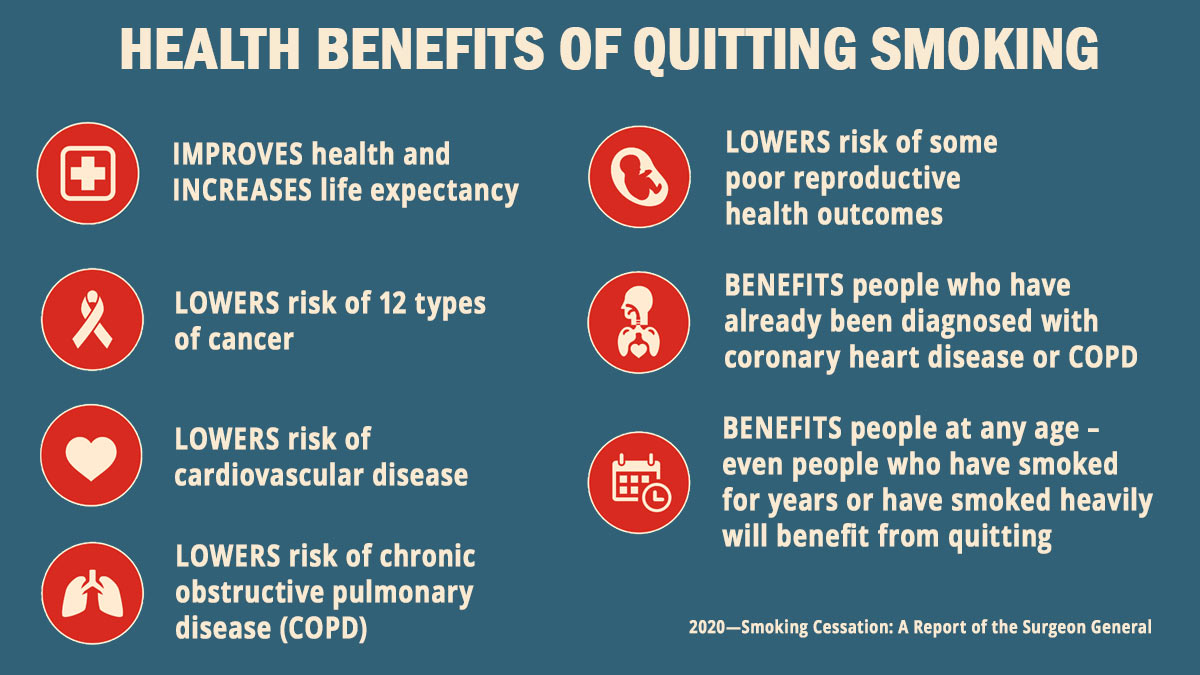
The cardiovascular benefits of quitting are not a distant, decades-away reward. They begin within the first day and continue compounding for fifteen or more years. The following milestones are drawn from the CDC Benefits of Quitting page, the British Heart Foundation, the European Society of Cardiology (ESC) 2024 press release, and the peer-reviewed literature.
Within 20 Minutes
Heart rate and blood pressure drop toward normal. This is nicotine’s acute stimulant effect wearing off — not a permanent fix, but the first biological signal that the cardiovascular system is no longer under constant chemical stress.
Within 12–24 Hours
Carbon monoxide levels in the blood fall to the normal range, allowing haemoglobin to carry oxygen efficiently to heart muscle again. The risk of a heart attack begins to decrease from this point. The heart is no longer being starved of oxygen at every beat.
At 1 Year
This is the most dramatic milestone in the data. According to the British Heart Foundation and CDC, the excess risk of coronary heart disease is approximately half that of a current smoker after one year of abstinence. The ESC, citing a large European cohort study, found that quitting smoking “nearly halves heart attack risk” — and that cutting down (rather than stopping) produced only modest benefit, underscoring why complete cessation matters.
At 5 Years
The risk of stroke falls to that of a non-smoker at approximately 5–15 years after quitting, depending on the specific outcome measured. Peripheral artery disease risk drops by around 60% compared to continuing smokers at five to ten years (PMC 2023 review). For coronary heart disease specifically, the risk at 5 years is substantially reduced — though not yet at non-smoker levels for heavy, long-term smokers.
At 10–15 Years
After 15 years of abstinence, the risk of coronary artery disease approaches that of a lifelong non-smoker (CDC). A large Cross-Cohort Collaboration study published in 2025 (PMC 2025) found that over 20 years of cessation, former smokers demonstrated more than 80% lower relative cardiovascular risk compared to current smokers. The data are unambiguous: sustained quitting produces near-complete cardiovascular risk normalisation over a decade and a half.
Data Table: Cardiovascular Risk Reduction After Quitting
| Time Since Quitting | Cardiovascular Benefit | Source |
|---|---|---|
| 20 minutes | Heart rate and blood pressure normalise | CDC 2024 |
| 12–24 hours | Carbon monoxide clears; heart muscle oxygen supply restored; heart attack risk begins to fall | CDC 2024 |
| 1 year | Excess coronary heart disease risk ~50% lower than a current smoker | BHF 2025; ESC 2024 |
| 5–10 years | Peripheral artery disease risk ~60% lower; CHD risk substantially reduced; stroke risk approaching non-smoker levels | PMC 2023 review |
| 15 years | Coronary artery disease risk approaches that of a lifelong non-smoker | CDC 2024 |
| 20+ years | >80% lower relative cardiovascular risk vs current smokers | PMC Cross-Cohort Collaboration 2025 |
Note: Risk reductions are relative estimates derived from cohort data. Individual outcomes depend on smoking duration, pack-years, age, and co-existing conditions.
Stroke Risk: Separate but Related Data
Stroke and heart attack share many of the same risk mechanisms — both involve blood vessel damage, clot formation, and interrupted blood supply to vital tissue. Smoking roughly doubles the risk of ischaemic stroke. The good news is that stroke risk also normalises after quitting, typically reaching non-smoker levels within 5–15 years. For a detailed account of how withdrawal itself unfolds in the first days, see the Nicotine Withdrawal Timeline: Complete 2026 Recovery Map.
If You Already Have Heart Disease: The Evidence for Quitting
Quitting after a cardiac event delivers some of the most dramatic risk reductions in all of medicine. In a large international registry study of patients with established coronary artery disease cited by the American College of Cardiology (2024), those who quit smoking during the stable period of their disease saw a 44% reduction in major cardiovascular events — including death or myocardial infarction — over a 5-year follow-up.
For patients who have already had a heart attack, the AHA notes that stopping smoking reduces the risk of a second heart attack and death from heart disease by approximately half. This is arguably the most powerful single behavioural intervention available after a first cardiac event.
The full recovery story — what happens across body systems from the first 20 minutes onwards — is covered in What Happens When You Quit Smoking: The 2026 Health Recovery Guide.
Methodology Note
The statistics in this article are drawn from observational cohort studies, large registry analyses, and systematic reviews rather than randomised controlled trials — because it is not ethically possible to randomly assign people to smoke. Cohort data carries the limitation that former smokers may differ from continuing smokers in ways beyond cessation (e.g., they may have been lighter smokers to begin with). However, the consistency of findings across multiple independent datasets with different populations, designs, and countries gives high confidence to the directional conclusions: quitting smoking substantially and progressively reduces cardiovascular risk. Where specific percentage figures are cited, the source publication is linked. No figures have been extrapolated beyond what the cited sources state.
For people tracking their own cessation journey, apps like iQuit visualise health recovery milestones — including cardiovascular markers — in real time, making the data personally meaningful day by day.
Frequently Asked Questions
How quickly does heart attack risk drop after quitting smoking?
The risk begins to fall within 24 hours, as carbon monoxide clears and blood pressure normalises. After 1 year of abstinence, the excess risk of coronary heart disease is approximately half that of a continuing smoker, according to the British Heart Foundation and CDC. The risk continues to decline over the following decade, approaching non-smoker levels at 15 years.
Does cutting down on cigarettes reduce heart attack risk?
Evidence from the European Society of Cardiology (2024) shows that cutting down — rather than stopping completely — produces only modest cardiovascular benefit. Full cessation is required to achieve the approximately 50% risk reduction seen at 1 year. This is because even low cigarette consumption causes disproportionate cardiovascular harm via endothelial damage and clot-promoting mechanisms.
Is it too late to quit smoking if I already have heart disease?
No. Quitting after a cardiac diagnosis produces some of the most striking benefits in the cessation literature. Registry data cited by the American College of Cardiology (2024) found a 44% reduction in major cardiovascular events over 5 years in patients with established coronary artery disease who quit smoking. The AHA similarly notes that stopping after a first heart attack roughly halves the risk of a second event.
Does smoking cause stroke as well as heart attacks?
Yes. Smoking approximately doubles the risk of ischaemic stroke through similar mechanisms: endothelial damage, atherosclerosis, and increased clot formation. Stroke risk normalises toward non-smoker levels within 5–15 years of quitting, depending on smoking history and the specific stroke type.
How many cigarettes per day makes heart attack risk significantly higher?
There is no safe level. A 2024 review in PMC notes that the dose-response relationship between smoking and cardiovascular risk is steepest at the lower end of consumption — meaning even 1–4 cigarettes per day carries a disproportionately high cardiovascular risk relative to the number smoked. Heavier smoking increases absolute risk further, but lighter smokers should not assume they are protected.
Does quitting smoking reverse arterial damage?
Cessation halts the progression of endothelial damage and allows some repair, particularly of vascular reactivity and inflammation markers. Established atherosclerotic plaques do not fully disappear, but their growth slows and the inflammatory environment that makes plaques rupture — triggering a heart attack — improves substantially. The result is a measurable and progressive reduction in clinical cardiovascular events over years.