Why Is It Hard to Quit Smoking? The Neuroscience Behind Nicotine Addiction
If you’ve ever tried to quit smoking and failed, you’ve probably wondered — or been told — that you need more willpower. That framing is not just unhelpful. It’s scientifically wrong. Why is it hard to quit smoking? Not because smokers lack discipline. But because nicotine is one of the most addictive substances known to science, and it has physically altered the architecture of the brain in ways that make quitting genuinely, measurably difficult — independent of any personal failing.
Understanding the neuroscience of nicotine addiction doesn’t make quitting easier by itself. But it fundamentally changes how you approach it. When you understand that your cravings are a predictable neurological response rather than a character weakness, you can deploy the right tools — and have compassion for yourself during the hardest days. This guide explains what nicotine does to the brain, why quitting feels so hard, and what the science tells us works.
How Nicotine Works in the Brain
Nicotine reaches the brain within 10 seconds of inhaling cigarette smoke. Once there, it binds to nicotinic acetylcholine receptors throughout the brain, triggering a cascade of neurotransmitter release — most significantly dopamine in the mesolimbic pathway (the brain’s reward system). The dopamine surge creates feelings of pleasure, relaxation, and improved focus. These effects are immediate, reliable, and deeply satisfying.
The CDC explains that cigarettes are specifically engineered to deliver nicotine to the brain as rapidly as possible, maximising this dopamine response. This rapid delivery is a key factor in why cigarettes are more addictive than slower delivery methods like patches — the speed of the reward is itself addictive, conditioning the brain to associate the specific act of smoking with immediate pleasure.
Why Nicotine Addiction Forms So Quickly
The brain’s remarkable adaptability — which is usually an asset — becomes a liability with nicotine. Because dopamine is triggering receptors far more than the brain’s natural processes would, the brain responds by growing additional nicotine receptors and reducing its natural dopamine production. This process is called neuroadaptation.
The consequence: after months or years of smoking, your baseline dopamine level is calibrated around nicotine. Without it, your brain cannot produce the dopamine levels associated with normal mood, focus, and pleasure. This is why smokers often describe needing a cigarette just to “feel normal” — because their brain’s chemistry has genuinely adjusted to require nicotine as an input.
Research published in PMC (Nicotine Addiction review) confirms that the upregulation of nicotinic receptors in the brain persists for weeks or months after quitting — which is why cravings can continue long after the initial withdrawal period. The brain is still, at a chemical level, configured to expect nicotine.
What Happens in Your Brain When You Quit
When you stop smoking, nicotine levels in the blood drop. Within 30 minutes, the first withdrawal symptoms begin. Within 12 hours, brain blood oxygen levels drop significantly compared to baseline — a neurobiological effect that helps explain the mental fog and irritability that characterise early withdrawal.
The withdrawal symptoms that make quitting so uncomfortable — anxiety, irritability, difficulty concentrating, disrupted sleep, strong cravings, increased appetite — are direct consequences of the brain’s readjustment to operating without nicotine. They are not signs of weakness or sickness; they are signs that the brain is recovering and recalibrating.
According to the CDC’s guide to withdrawal symptoms, these effects are most intense in the first 3–7 days and significantly reduce within 2–4 weeks as the brain readjusts. But the timeline varies: some people experience reduced cravings within days; others continue to have intermittent cravings for months.
The Dual Nature of Nicotine Dependence
Nicotine addiction operates on two levels simultaneously:
Physical Dependence
The neurochemical changes described above — receptor upregulation, dopamine system recalibration, withdrawal symptoms — constitute physical dependence. This is the part that NRT and medication address most directly: by supplying nicotine without tobacco, or by blocking the receptor effects of nicotine, they reduce the physical discomfort of withdrawal.
Psychological Dependence
Equally important, and often harder to address, is psychological dependence: the deeply conditioned associative learning that connects smoking to specific emotions, situations, times, and environments. Your brain has learned — through thousands of repetitions — that stress is followed by a cigarette, that coffee is paired with a cigarette, that finishing a meal means lighting up. These are not cravings driven by physical need; they are Pavlovian responses that fire automatically in the presence of a conditioned trigger.
This is why even after the physical withdrawal has passed — typically after 2–4 weeks — cravings can still be triggered powerfully by specific situations, emotions, or environments. The conditioned pathways persist long after the physical dependence has resolved, which is why behavioural support (quitting apps, counselling, community) remains important even after the withdrawal phase.
The Brain Regions That Make Cravings Feel Irresistible
Two brain regions are particularly implicated in why cigarette cravings feel so compelling:
The Insula
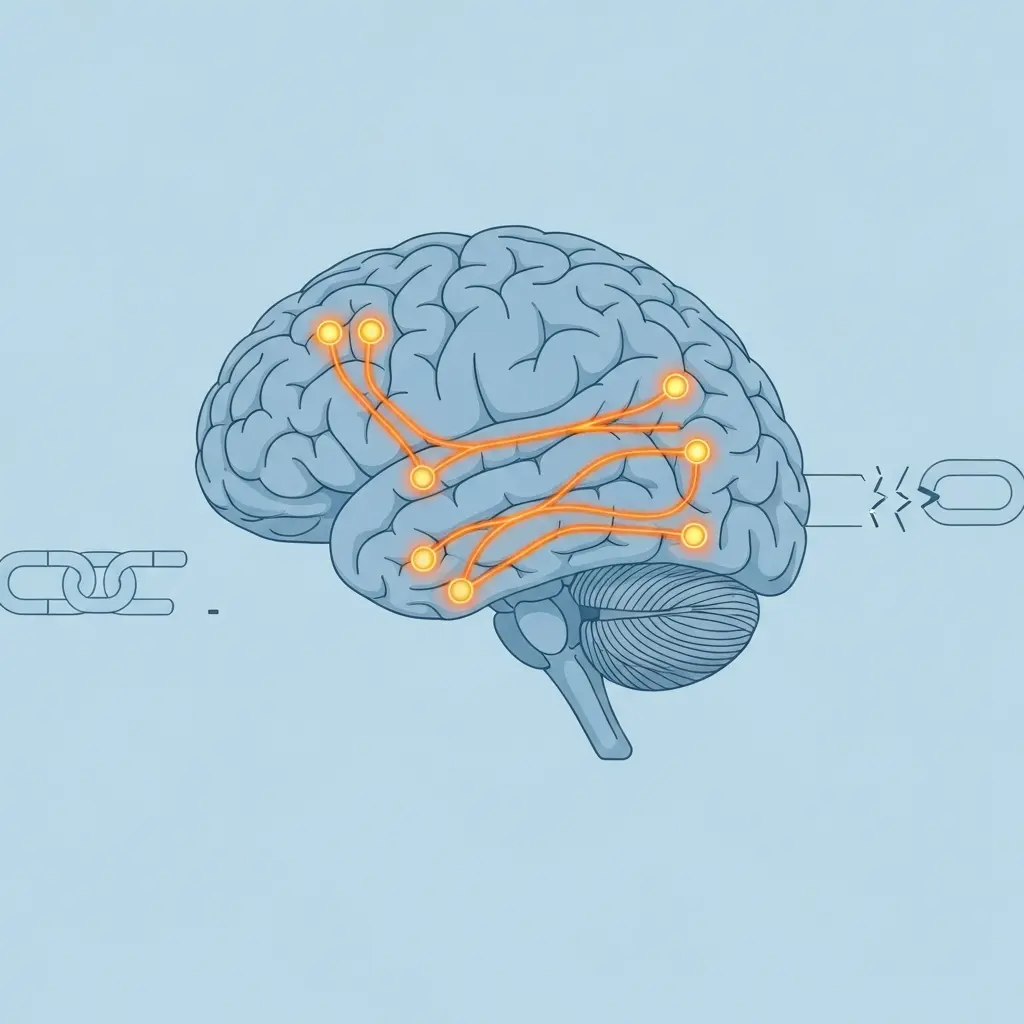
The insula — a large region in the cerebral cortex — is considered the neurological seat of addictive urges. Neuroimaging research shows the insula lights up powerfully when smokers see images of cigarettes or smoking-related cues. Crucially, research from the American Cancer Society found that smokers who experienced strokes damaging the insula often lost the desire to smoke instantly — suggesting the insula’s activation is central to the experience of craving.
The Interpeduncular Nucleus
A 2013 study from the University of Massachusetts Medical School identified neurons in the interpeduncular nucleus — a region at the base of the midbrain — that trigger the stress and anxiety associated with nicotine withdrawal. When nicotine is absent, these neurons fire more intensely, producing the characteristic anxiety and discomfort of withdrawal.
Neural Reward Response Variability
Penn State University research found that people with the weakest neural reward responses were also the least willing to abstain from smoking even when offered financial incentives. This means that some people are neurobiologically more vulnerable to the difficulty of quitting — and that for them, stronger support (combination NRT, medication, an AI coach) is not optional but essential.
What the Neuroscience Tells Us Actually Works
Because quitting is hard for neurobiological reasons, the solutions that work are ones that address the neurobiology:
- NRT and medication: These address physical dependence directly — either by providing nicotine without tobacco (NRT) or by blocking nicotine receptors (varenicline) to reduce the reward of smoking and the discomfort of withdrawal.
- Behavioural support: Counselling, quit apps, and community support address the psychological dependence — the conditioned associations — through repeated alternative responses to triggers.
- Mindfulness and urge surfing: These techniques change the relationship between the brain and craving. Instead of automatically responding to the craving by smoking, mindfulness creates a pause that allows the craving to complete its cycle without action — weakening the conditioned pathway over time.
- Milestone-based reward: This rebuilds the brain’s dopamine response to smoke-free achievements — creating a new, positive association with not smoking that gradually competes with the old association with smoking.
Research cited by NIDA consistently finds that combination approaches — NRT or medication plus behavioural support — produce the highest quit rates. Neither pharmacological nor behavioural support alone is as effective as both together.
How iQuit Works With Your Brain, Not Against It
iQuit’s design is grounded in exactly this neuroscience. Every feature targets a specific aspect of the neurobiological challenge of quitting:
- The craving tracker creates a pause between trigger and response, disrupting the automatic conditioned pathway
- The AI coach delivers immediate alternative responses calibrated to your specific trigger — addressing psychological dependence in the moment
- The health milestone timeline creates positive associations with smoke-free time, rebuilding the dopamine response pathway around not smoking
- The money counter provides tangible, real-time rewards for quitting — directly addressing the brain’s reward-seeking drive
- The community provides social belonging and accountability — addressing the social dimension of identity-based smoking behaviour
For the practical emotional and motivational toolkit that sits on top of this neurobiological understanding, the article on quit smoking motivation covers every psychological strategy in depth. For managing the specific craving experiences that arise, how to deal with cigarette cravings provides 12 evidence-based techniques.
Frequently Asked Questions
Why is nicotine so addictive?
Nicotine is addictive because it triggers rapid dopamine release in the brain’s reward system, creating immediate feelings of pleasure and relief. Over time, the brain upregulates nicotine receptors and reduces natural dopamine production, becoming dependent on nicotine to maintain normal mood and function. The fast delivery of nicotine via cigarettes — reaching the brain within 10 seconds — makes cigarettes particularly addictive compared to slower nicotine delivery methods.
Why do I still have cravings months after quitting smoking?
Cravings that persist months after quitting are driven by psychological rather than physical dependence. The conditioned associations your brain formed between smoking and specific triggers — stress, meals, coffee, social situations — can persist long after physical withdrawal has resolved. These pathways weaken over time with every craving you survive without smoking. A quit app’s craving tracker helps identify and address these specific trigger associations.
Does quitting smoking get easier over time?
Yes — definitively. The first 3–7 days are typically the hardest, with peak withdrawal intensity. By weeks 2–4, most physical withdrawal symptoms have substantially reduced. Cravings decrease in both frequency and intensity over the following months as the conditioned neural pathways weaken. By 3–6 months, most successful quitters report that cravings are manageable and infrequent. By one year, most describe rarely thinking about smoking.
Why do I feel worse when I try to quit smoking?
Feeling worse when you try to quit is a normal neurobiological consequence of nicotine withdrawal. Your brain has adjusted its chemistry to operate with nicotine; without it, dopamine levels temporarily drop, causing irritability, anxiety, difficulty concentrating, and low mood. These are not signs that quitting is harming you — they are signs your brain is readjusting. The symptoms are most intense in the first week and resolve within 2–4 weeks for most people.
Quit Smarter, Not Harder
Now you know why quitting is hard — and what your brain needs to make it possible. iQuit is designed around the neuroscience of addiction: craving tools that disrupt automatic responses, AI coaching that addresses the psychological dimension, and milestones that rebuild your brain’s reward system around not smoking. Download iQuit and give your brain the right support.
Get started at iquitnow.life