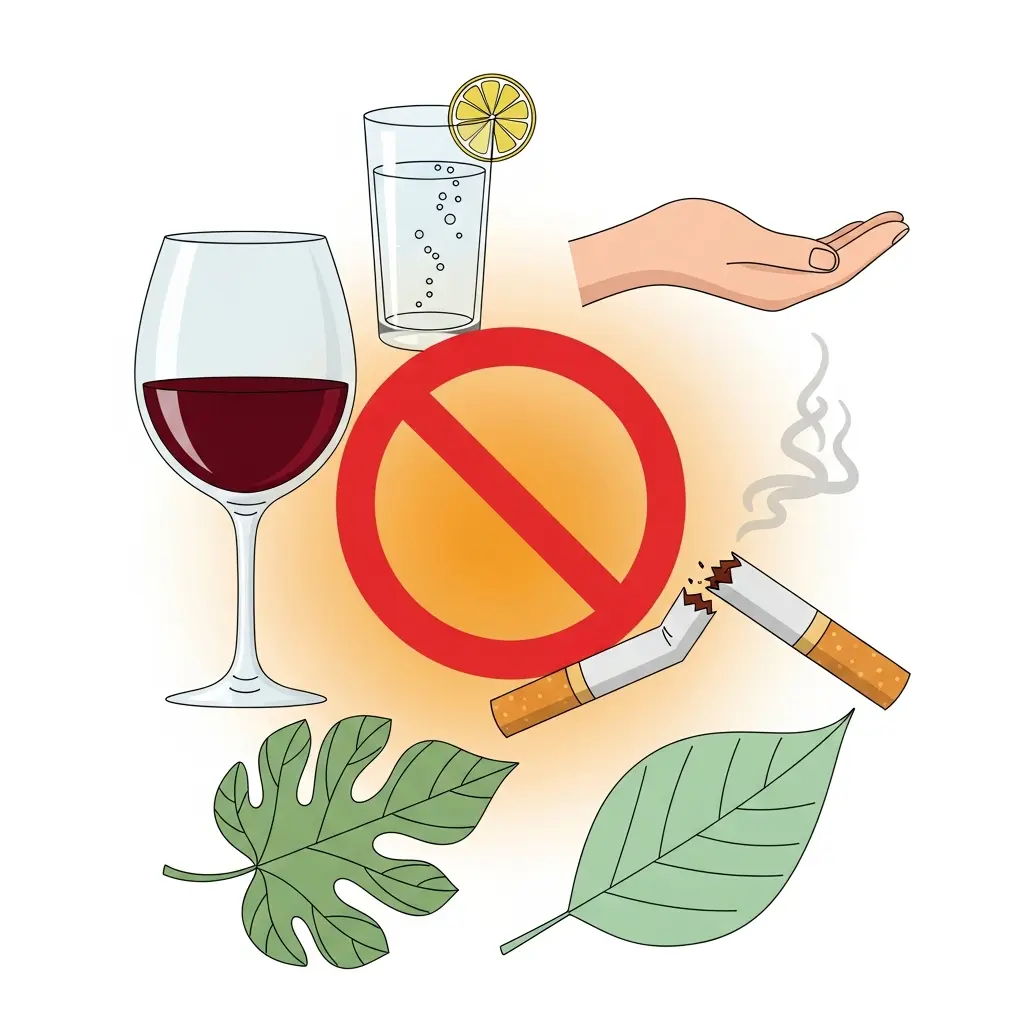
Can You Drink Alcohol While Quitting Smoking? Why Drinking Triggers Relapse (2026)
Drinking alcohol while quitting smoking is possible, but it is one of the most reliable ways to undermine your quit attempt. Alcohol is consistently identified in research as a leading trigger for smoking relapse — not because of a lack of willpower, but because alcohol and nicotine act on overlapping reward pathways in the brain, and decades of pairing them together creates automatic craving responses that are very difficult to override in the moment. Understanding why this happens puts you in a far better position to manage it.
Why Does Alcohol Trigger Smoking Cravings?
Three distinct mechanisms link alcohol consumption to cigarette craving and relapse. The first is conditioned cue reactivity. For people who have smoked and drunk socially for years, the taste of alcohol, the smell of a bar, or the social context of drinking have become powerful conditioned stimuli that automatically trigger cigarette craving — the same mechanism that makes certain songs, locations, or times of day feel inseparable from smoking. This conditioning does not disappear the moment you quit; it fades gradually with repeated exposure without reinforcement.
The second mechanism is disinhibition. Alcohol reduces activity in the prefrontal cortex — the brain’s executive control centre responsible for overriding impulses and acting in line with your intentions. When you drink, the resolve that keeps you from reaching for a cigarette becomes neurologically weaker in real time. Research published by the Journal of Substance Use and Addiction Treatment (2024) found that alcohol consumption elevated smoking relapse risk, with the effect most pronounced in the early months of abstinence.
The third is direct pharmacological interaction. Alcohol appears to increase the rewarding properties of nicotine — making a cigarette smoked during drinking feel more satisfying than one smoked sober. Research in PMC (2015) on pharmacological options for heavy drinking smokers found that pre-treatment with alcohol increased smoking enjoyment, satisfaction, and relief of craving compared to sober conditions. The combination reinforces both habits simultaneously, making each harder to quit in isolation.
How Much Does Alcohol Increase Relapse Risk?
The evidence is striking. A systematic review examining the relationship between alcohol and smoking relapse found that in 12 out of 13 experimental studies, exposure to alcohol cues induced strong urges to smoke among people attempting to quit. Across long-term follow-up research, heavy drinking was associated with roughly double the smoking relapse risk compared to non-drinking quitters.
Across 19 out of 20 long-term follow-up studies reviewed in PMC research on smoking cessation and alcohol, high alcohol consumption was associated with shorter periods of smoking abstinence. The bidirectional relationship runs both ways: cigarette smoking is also associated with higher rates of relapse to alcohol use disorder among people in recovery from both.
The practical implication is clear: the first four to eight weeks of a quit attempt are the highest-risk window, and this is exactly when alcohol should be most carefully managed. This does not mean permanent abstinence from alcohol — it means being honest about risk during the period when your quit is most fragile. Our article on how to identify and avoid smoking triggers covers a full framework for mapping and managing high-risk situations, including social drinking environments.
Does Alcohol Worsen Nicotine Withdrawal?
Yes, in several ways. Alcohol is a CNS depressant that, despite causing initial sedation, dramatically disrupts sleep architecture — suppressing REM sleep and causing fragmented sleep in the second half of the night. For someone already experiencing withdrawal-related insomnia, even moderate drinking can significantly worsen sleep quality the following night. This in turn worsens withdrawal symptoms including irritability, difficulty concentrating, and low mood.
Alcohol also depletes B vitamins (particularly thiamine and B6) that are involved in neurotransmitter synthesis, potentially amplifying the mood disruption of withdrawal. Blood sugar fluctuations from alcohol can increase hunger and cravings in the short term. And the hangover state — characterised by anxiety, low mood, and impaired self-regulation — is one of the highest-risk conditions for relapse. Choosing to drink during early withdrawal stacks multiple disadvantages simultaneously.
How to Manage Social Situations While Quitting
What are practical alternatives to drinking in social settings?
Alcohol-free versions of social drinks have improved dramatically in recent years, and ordering a sparkling water with lime, a non-alcoholic beer, or a mocktail addresses the social ritual without the pharmacological risk. Having something in your hand at social events serves the same function as a cigarette did — occupying a habitual behaviour slot — which reduces the urge to fill it with smoke.
Tell close friends or your host that you are quitting smoking. People who know are significantly less likely to offer cigarettes, and some will actively support you. Plan an exit strategy for situations where craving intensity gets high: a five-minute walk outside the venue (away from smokers), a call to a supportive contact, or using a craving-tracking tool. Apps like iQuit let you log a craving trigger in real time, which research suggests reduces relapse risk by introducing a moment of pause between impulse and action.
Should you avoid parties and social events entirely?
Not necessarily — avoidance has costs to wellbeing and social connection. The goal is preparation, not isolation. Knowing in advance that a particular environment is high-risk allows you to attend with a plan: arrive knowing your drink choice, your exit route, and the craving management technique you will use if needed. Over time, as conditioning weakens, the same environments become progressively easier. For broader craving management strategies, our guide on how to deal with cigarette cravings covers the full toolkit including breathing, CBT urge surfing, and distraction techniques.
How Long Should You Avoid Alcohol After Quitting?
Most cessation specialists suggest keeping alcohol low or absent for at least the first four to eight weeks — the window of highest craving intensity and lowest established resilience. After this period, most people find that their resistance to alcohol-triggered cravings has improved as their quit has consolidated and some of the conditioned associations have weakened through non-reinforcement.
There is no fixed rule, and individual circumstances vary considerably. What matters is honest self-assessment: if alcohol consistently produces strong cravings even after two months of quitting, it is worth discussing with a cessation counsellor. Some people choose to reduce or eliminate alcohol permanently as part of their broader health change — a decision that is entirely valid and has multiple additional health benefits.
What If You Have Concerns About Alcohol Use?
If alcohol is not just a smoking relapse trigger but a concern in its own right, that deserves direct attention. Alcohol use disorder (AUD) and nicotine dependence frequently co-occur and are both treatable conditions. Addressing them simultaneously with professional support generally produces better outcomes than tackling each in isolation.
The National Institute on Alcohol Abuse and Alcoholism (NIAAA) provides comprehensive resources on alcohol use disorder and treatment options at niaaa.nih.gov. In the UK, NHS alcohol support is available through your GP and via free helplines. If you are concerned about your drinking alongside your quit attempt, your GP is the right first contact — they can coordinate cessation support with alcohol counselling if needed.
NIAAA — Alcohol & Smoking Cessation: Key Facts
- 12 of 13 experimental studies: alcohol cues induced strong urges to smoke among quitters
- Heavy drinking roughly doubles smoking relapse risk vs non-drinking quitters
- Alcohol and nicotine act on overlapping dopaminergic reward pathways
- Alcohol use disorder and nicotine dependence frequently co-occur — both are treatable
- Free support: NIAAA resources | NHS alcohol support
Source: National Institute on Alcohol Abuse and Alcoholism (NIAAA)
For a complete picture of your body’s recovery from smoking across all systems, see our full health and recovery guide after quitting smoking. Every day without a cigarette is a real physiological win — even the harder days.
Frequently Asked Questions
Can you drink alcohol while quitting smoking?
Technically yes, but it significantly increases relapse risk. Alcohol amplifies cigarette cravings, reduces the inhibitory control needed to resist them, and increases nicotine’s rewarding effect. Most cessation specialists recommend avoiding or strictly limiting alcohol for at least the first 4–8 weeks of quitting.
Why does drinking alcohol make you want to smoke?
Conditioned cue reactivity links the taste and context of drinking to automatic cigarette craving. Alcohol also reduces prefrontal cortex inhibitory control, making it neurologically harder to resist impulses. Research found that alcohol increases the rewarding properties of nicotine, making cigarettes more satisfying during drinking than at other times.
Is alcohol the biggest trigger for smoking relapse?
Alcohol is one of the most consistently identified relapse triggers in research. A systematic review found that 12 of 13 experimental studies showed alcohol cues induced strong urges to smoke. Heavy drinking roughly doubled smoking relapse risk in long-term follow-up studies.
How long should I avoid alcohol after quitting smoking?
Most cessation specialists suggest limiting alcohol for at least the first 4–8 weeks — the highest-risk window for relapse. After this period, resistance to alcohol-triggered cravings typically improves as the quit attempt consolidates. If alcohol consistently triggers cravings beyond this period, raise it with a cessation specialist.
What can I do instead of drinking when socialising while quitting?
Drink alcohol-free alternatives; tell friends or hosts you are quitting so they can support rather than offer; plan an exit strategy for high-craving moments; stay active at events rather than stationary near smokers; and use a craving-tracking app to manage the urge in real time.
Does alcohol worsen nicotine withdrawal symptoms?
Yes. Alcohol disrupts REM sleep, amplifying withdrawal-related insomnia and irritability. It depletes B vitamins involved in neurotransmitter synthesis and creates blood sugar fluctuations that worsen mood. The next-day hangover state — anxiety, low mood, impaired self-control — is a high-risk condition for smoking relapse.
What if I have a problem with both alcohol and smoking?
Both alcohol use disorder and nicotine dependence are treatable and frequently co-occur. The NIAAA provides treatment resources, and your GP can coordinate cessation support with alcohol counselling. Addressing both with professional support generally produces better outcomes than tackling each separately.
Are there medications that reduce both alcohol cravings and smoking urges?
Research has explored whether varenicline (approved for smoking cessation) may also reduce alcohol consumption in heavy drinkers, with some promising clinical evidence. Naltrexone (approved for alcohol use disorder) has also been studied alongside cessation medication. Discuss this with your doctor if both alcohol and smoking are concerns — they can consider options addressing both.