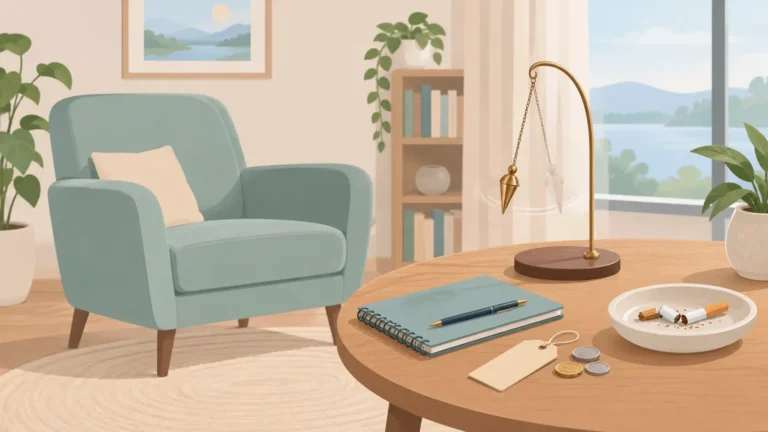

How to Prepare Your Home and Environment to Quit Smoking: A Step-by-Step Setup Guide (2026)
Most quit smoking guides focus on willpower and medication — but your physical environment may be the single biggest predictor of whether you succeed. Research from the CDC shows that environmental cues — the sight of an ashtray, the smell of stale smoke, the habit of stepping outside — are powerful smoking triggers that operate below conscious awareness. When you prepare your home to quit smoking, you eliminate those triggers before they can derail you.
This guide walks you through a complete environment reset: from deep-cleaning every room to rearranging furniture, replacing smoking rituals, and setting up your home as an active ally in your quit journey. These are practical, evidence-based steps you can take the week before your quit date — and they dramatically improve your odds of lasting success.
Why Your Environment Matters More Than You Think
Smoking is one of the most heavily conditioned behaviors humans can develop. Over years of smoking, your brain creates dense neural pathways linking specific places, times, and sensory cues to the act of lighting a cigarette. The kitchen after breakfast. The couch after dinner. The back door. The car seat. These associations don’t disappear on quit day — they persist for months, and they’re activated by the environment around you.
A landmark study published in Addiction found that people who restructured their home environment before quitting were significantly more likely to still be smoke-free at 6 months compared to those who relied on medication alone. The mechanism is simple: fewer environmental cues mean fewer triggered cravings, and fewer cravings mean fewer opportunities to relapse.
This isn’t about making your home look sterile. It’s about thoughtfully redesigning the spaces where you spent years reinforcing a habit — and replacing those reinforcements with new ones that support your quit.
Step 1: What to Do the Week Before Your Quit Date
The days leading up to your quit date are not for passive waiting. They’re for active preparation. Here’s what to do:
Remove All Tobacco Products
Go through every room, bag, jacket pocket, and drawer. Remove and dispose of:
- All cigarettes, cigars, pipe tobacco, and rolling tobacco
- Every lighter and box of matches — even decorative ones
- All ashtrays, including hidden or rarely used ones
- Cigarette cases, rolling papers, and filters
- Any tobacco-branded promotional items
Do not keep a “just in case” pack. Research consistently shows that having cigarettes available dramatically increases relapse risk. If they’re not there, you can’t smoke them in a moment of weakness.
Tell Everyone in Your Home
If you live with other smokers, have a direct conversation. You don’t need them to quit too, but you need them to agree not to smoke inside the home, not to leave cigarettes in shared spaces, and to support your efforts. If you need help having this conversation, our guide on how to support someone quitting smoking has a section written specifically for housemates and partners.
Set Your Quit Date and Tell People
Announcing your quit date to friends and family increases accountability. Write it somewhere visible — on your fridge, in your phone calendar, in a quit smoking plan. Your environment should remind you of your commitment, not tempt you away from it.
Step 2: Deep-Clean Every Room
The smell of cigarette smoke is a powerful conditioned cue. Even if you can’t consciously detect it, your brain recognizes it and associates it with smoking. A thorough deep-clean before your quit date removes those olfactory triggers and helps your home feel like a fresh start.
Priority Cleaning Tasks
| Area | What to Clean | Why It Matters |
|---|---|---|
| Walls and ceilings | Wash with white vinegar solution or TSP cleaner | Removes tar deposits that release smoke smell |
| Carpets and rugs | Professional steam clean or baking soda treatment | Fabric holds smoke smell for months |
| Curtains and drapes | Machine wash or dry clean | Major smoke odor reservoir |
| Upholstered furniture | Steam clean + fabric freshener spray | Sofas and armchairs absorb years of smoke |
| Air vents and filters | Replace HVAC filters; clean vent covers | Circulated air carries trapped smoke particles |
| Car interior | Professional detail clean + air freshener | Driving is one of the top smoking triggers |
Consider using an air purifier with a HEPA and activated carbon filter in rooms where you smoked most. These can measurably reduce volatile organic compounds (VOCs) from tobacco residue. The fresher your home smells, the weaker the conditioned smoke cues become.
Step 3: Rearrange Spaces to Break Smoking Patterns
Here’s a counterintuitive but highly effective strategy: physically rearrange the areas where you smoked most frequently. Move the couch. Put a plant where the ashtray used to sit. Change the chair you sat in. Reroute your path from the kitchen door to somewhere that doesn’t pass the “smoking spot.”
This works because habitual behaviors are partly triggered by spatial patterns. Your brain has mapped certain physical configurations to smoking. A changed physical layout disrupts those maps, forcing conscious decision-making where automaticity used to operate.
High-Priority Spaces to Redesign
- The back porch or balcony: Add a new feature — a bird feeder, a small herb garden, a hammock. Make it a place of enjoyment that has nothing to do with smoking.
- The kitchen table or counter: If you smoked with morning coffee, change the routine entirely. Move the kettle to a different counter. Sit in a different chair. Use a different mug.
- The home office desk: If you smoked while working, add plants, a water bottle, and a stress ball to your desk. See managing smoking triggers at work for more strategies.
- The bedroom nightstand: Replace any smoking paraphernalia with a glass of water, herbal lozenges, and your phone showing your quit tracking app.
Step 4: Stock Your Quit Kit at Every Trigger Point
A quit kit is a collection of craving-management tools strategically placed exactly where you used to smoke. The idea is to give your hands, mouth, and mind an alternative the moment a craving hits — before you have to “decide” anything.
What to Put in Your Quit Kit
- Oral substitutes: Sugar-free gum, nicotine gum or lozenges, herbal tea sachets, sunflower seeds, or hard candy
- Hand fidgets: A stress ball, worry stone, pen spinner, or small fidget toy to replace the hand-to-mouth motion
- Breathing aids: A printed card with box breathing instructions — inhale 4 counts, hold 4, exhale 4, hold 4
- Distraction prompts: A short list of 3-minute activities (quick walk, 10 push-ups, text a friend, water a plant)
- Motivational reminder: A photo of why you’re quitting — your kids, a health goal, a financial target
Place a quit kit at: the kitchen counter, the back door or balcony exit, your car cupholder, your work desk, and your bedside table. Proximity matters — the kit needs to be in reach before the craving peaks, not after.
Step 5: Prepare Your Car and Workplace Too
Your home is the anchor, but the car and workplace are where many people actually relapse. Both need the same environmental preparation.
Your Car
- Get a professional interior detail clean to eliminate smoke smell
- Remove all lighters from glove boxes and door pockets
- Replace the car lighter socket with a USB charger or phone mount
- Keep gum or nicotine lozenges in the cupholder
- Change your driving route if your usual route passes a tobacconist or petrol station where you’d buy cigarettes
Your Workplace
- Tell your closest colleagues about your quit — recruit at least one supporter
- Change your break schedule or break location to avoid the smoking area
- Keep a water bottle and gum at your desk
- Use break times for a short walk rather than standing at the smoking spot
For a deeper dive into workplace quit strategies, read our full guide on handling smoking triggers at work and social events.
Step 6: Adjust Your Social Environment
The social environment is the hardest part of environment preparation because you can’t deep-clean your friends. But you can make strategic adjustments that reduce exposure to smoking cues during the most vulnerable period — typically the first four weeks.
- Temporarily avoid high-risk social situations: Pubs, clubs, or parties where you always smoked are not the place to be in week one. You’re not weak for acknowledging this — you’re strategically managing your environment.
- Brief your social circle: A simple “I’m quitting from [date], please don’t offer me cigarettes” goes a long way. Most people will respect the request.
- Find a quit buddy: Someone who is also quitting, or who has already quit, provides accountability and social proof that it’s possible. Online communities and support groups are a good option — see our guide on quit smoking support groups online.
- Replace smoking social rituals: If you and your work colleagues always smoked together at 3pm, suggest a 10-minute walk instead. Replacing the ritual maintains the social bond without the cigarette.
Frequently Asked Questions
How long does the smell of cigarette smoke stay in a home?
Without cleaning, cigarette smoke smell can persist in soft furnishings, carpets, and walls for months to years. The compounds from tobacco smoke (including nicotine and formaldehyde) bind to surfaces and are released slowly over time. Deep-cleaning carpets, washing curtains, repainting walls, and replacing HVAC filters can significantly reduce or eliminate the smell within a week.
Should I throw away all my cigarettes before my quit date?
Yes. Research consistently shows that keeping cigarettes “just in case” significantly increases relapse risk. Dispose of all tobacco products, lighters, and ashtrays before your quit date. If money is a concern, giving away unused cigarettes to a willing smoker removes them from your environment without the feeling of financial waste.
What if I live with someone who smokes?
Living with a smoker makes quitting harder, but not impossible. The key steps are: ask them to smoke outside only, keep cigarettes and lighters out of shared areas, and establish smoke-free zones (especially the bedroom and kitchen). Research shows that implementing a strict no-smoking-inside rule reduces your exposure to smoke cues by up to 70%. Our detailed guide on quitting when you live with a smoker covers this fully.
Do air purifiers actually help when quitting smoking?
Yes, particularly HEPA + activated carbon combination units. HEPA filters capture particulate matter from cigarette residue, while activated carbon absorbs volatile organic compounds (VOCs) that cause lingering smoke smell. Running an air purifier in rooms where you smoked most can measurably reduce indoor VOC levels within 24-48 hours, removing a significant olfactory smoking cue.
How early should I start preparing my home before quitting?
Start 7-10 days before your planned quit date. This gives you enough time to do a thorough clean, rearrange furniture, stock quit kits, and have conversations with housemates. Doing preparation on your actual quit day is too late — the goal is to wake up on quit day in an environment that already supports your decision, not one you’re frantically trying to change.
Can changing my environment really help me quit?
Absolutely. Environmental cue-reactivity is one of the most well-documented phenomena in addiction research. A systematic review in the journal Addiction found that environmental restructuring significantly improved quit rates when combined with standard cessation support. The environment doesn’t do the quitting for you, but it determines how often your brain is triggered to crave cigarettes — and fewer cravings means more opportunities to succeed.
Ready to Quit? Let iQuit Guide You Through Every Step
You’ve set up your home — now set up your support system. The iQuit app gives you an AI quit coach, real-time craving management tools, health milestone tracking, and a community of people on the same journey. Available free on Android.
Related reading: Complete step-by-step quit smoking plan | Managing nicotine withdrawal symptoms | Stop smoking cravings instantly | What the data says about quit smoking apps | Best free quit smoking resources