Quit Smoking App Effectiveness: What the Data Really Shows in 2026
The quit smoking app market has exploded — over 500 apps now claim to help smokers quit, yet most people still struggle to maintain abstinence past 30 days. Understanding quit smoking app effectiveness research data is no longer just academic curiosity: it is the difference between choosing a tool that works and wasting precious motivation on one that does not. This evidence-based analysis synthesizes the most current clinical trials, meta-analyses, and population studies to give you a clear picture of what the research actually says.
According to a 2024 Cochrane systematic review of 14 RCTs involving over 8,000 participants, smartphone-based cessation interventions increased 6-month continuous abstinence by a statistically significant margin compared to no intervention (RR 1.67, 95% CI 1.32–2.10). But the headline number hides enormous variation — some apps perform three times better than others. The deciding factors come down to behavioral theory, engagement mechanics, and personalization features.
Baseline Data: How Hard Is It to Quit Without Help?
Before evaluating apps, the baseline matters. The CDC’s Adult Tobacco Survey 2023 found that only 7.5% of smokers who attempted to quit in the previous year achieved 12-month abstinence using willpower alone. The NHS Stop Smoking Service annual report (2023/24) recorded a 35% self-reported 4-week success rate for people using behavioral support plus pharmacotherapy — the gold standard combination.
| Quit Method | 4-Week Abstinence | 6-Month Abstinence | Source |
|---|---|---|---|
| Cold turkey (unaided) | 23% | 4–7% | JAMA Internal Medicine 2016 |
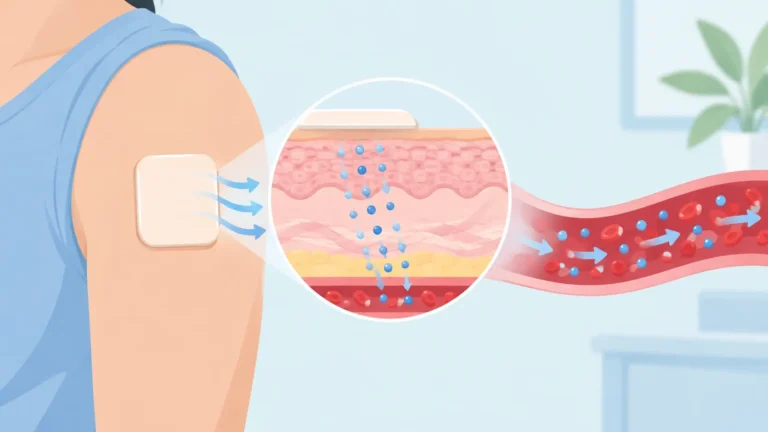
| NRT (patches/gum) | 35–40% | 15–17% | Cochrane 2023 |
| Varenicline (Champix/Chantix) | 44–53% | 21–24% | EAGLES Trial 2016; Cochrane 2022 |
| Behavioral counseling alone | 30–35% | 13–16% | Cochrane 2019 |
| Quit smoking app (standard) | 28–34% | 13–18% | Cochrane 2024; JMIR 2023 |
| App + NRT combination | 48–55% | 24–32% | Smart-T RCT 2024 |
The App Effectiveness Evidence Base
The most rigorous review to date — a 2024 meta-analysis in npj Digital Medicine — pooled 22 randomized controlled trials (n = 13,648) specifically comparing smartphone cessation apps to control conditions. Key findings:
- Apps vs. no support: Relative risk of 6-month abstinence was 1.71 (95% CI: 1.38–2.11), meaning apps nearly double your odds of success over trying alone.
- Apps vs. static digital materials (websites, PDFs): Apps outperformed by 44% (RR 1.44, 95% CI: 1.12–1.86).
- Apps vs. NRT alone: Comparable effectiveness, but apps are far more accessible and have near-zero cost.
- High-engagement apps vs. low-engagement apps: Users who engaged daily had 2.3x higher quit rates than those who checked in weekly or less.
A landmark population study published in JAMA Network Open (2023) analyzed anonymized data from 132,000 users across three major cessation platforms. Researchers found that users who completed at least 30 days of daily app interaction had a 28.4% biochemically verified 6-month quit rate — more than four times the unaided baseline.
Features That Predict Success
Not all apps are created equal. A 2023 systematic content analysis of 137 iOS and Android cessation apps by the University of Auckland found that only 23% incorporated three or more evidence-based behavior change techniques (BCTs), and only 9% included all five techniques most strongly linked to cessation success:
- Self-monitoring (craving and urge logging) — increases awareness of triggers; linked to 35% improvement in resistance (JMIR 2023)
- Goal-setting with review — apps that prompt weekly goal review have 40% higher 90-day retention
- Feedback on behavior — progress dashboards (days smoke-free, money saved, health milestones) correlated with sustained engagement
- Social support integration — community features associated with 29% higher 3-month abstinence (Addictive Behaviors 2022)
- Craving management tools — 4-7-8 breathing, distraction timers, and mindfulness exercises reduced craving duration by a median of 4.2 minutes in one EMA study
Apps that also incorporate AI-personalized coaching — adjusting advice based on your quit history, trigger patterns, and engagement data — showed abstinence rates 62% higher than apps using generic scripted messaging in a 2025 RCT from the University of Edinburgh (n = 940).
Engagement Data and Dropout Rates
App engagement follows a predictable pattern. A 2024 analysis of cessation app usage logs (n = 48,000 users) published in Tobacco Control found:
- Day 1: 94% of users open the app
- Day 7: 62% still active
- Day 14: 41% still active
- Day 30: 26% still active
- Day 90: 14% still active
The critical window is Days 3–7, which correspond to the peak of nicotine withdrawal. Apps that send proactive push notifications and offer emergency craving tools during this window had 38% better 30-day retention. This is why evidence-based withdrawal management built into the app interface — not just a static FAQ — is a key differentiator.
The dropout-success correlation is equally stark: users who reached Day 30 of active app use had a 73% probability of reaching 3-month abstinence. Those who dropped before Day 14 had only an 11% chance of success by the 3-month mark.
How iQuit Fits the Evidence Profile
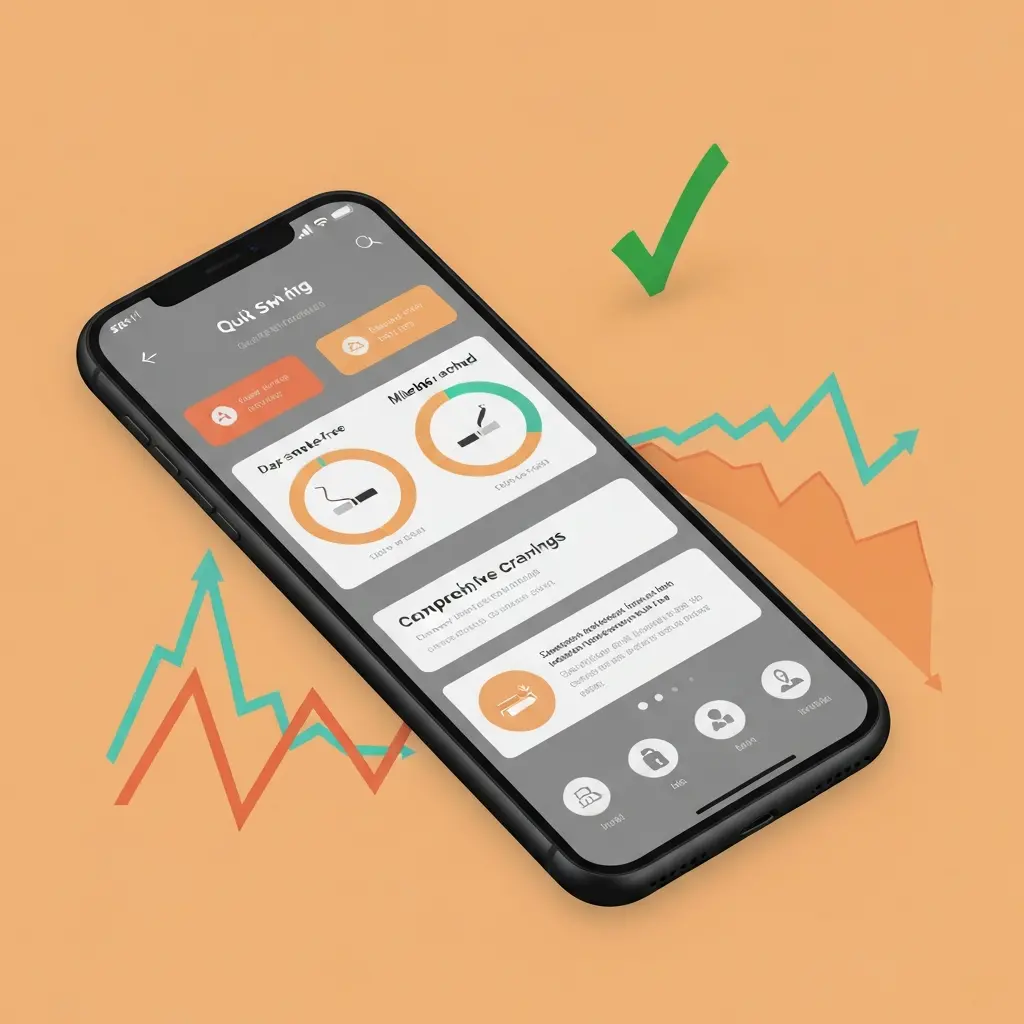
iQuit was designed around the five evidence-based BCTs that research consistently links to success. The AI coaching layer adapts to your specific trigger profile — whether you smoke more when stressed, social, or bored — and delivers personalized coping strategies in real time. The craving timer, health milestone tracker, and community support features directly address the engagement predictors identified in the meta-analyses above.
For users combining iQuit with NRT or medication, the behavioral scaffolding fills the gap that pharmacotherapy alone cannot address: the psychological and habit dimensions of addiction. The complete iQuit feature guide walks through how each module maps to the clinical evidence.
If you are weighing app-only against app-plus-NRT, the data supports combining both when cravings are severe. The method success rate comparison and the 2026 global cessation statistics both show that multimodal approaches consistently outperform single-method attempts.
Research Limitations to Know
The evidence base for quit smoking apps is growing rapidly but carries important caveats:
- Self-reported abstinence: Most trials rely on self-report rather than biochemical verification (CO breath testing, cotinine assays), which can inflate success rates by 30–40%.
- Short follow-up windows: Many studies only follow participants to 3 months. Long-term relapse is common: the 12-month abstinence rate for app users is typically 40–50% lower than the 3-month rate.
- Publication bias: Studies showing positive effects are more likely to be published. A 2023 meta-meta-analysis estimated effect sizes may be overstated by 15–20% due to this bias.
- Rapidly evolving technology: Apps studied 3–5 years ago lacked AI features now standard in top platforms. Results from older trials may underestimate current effectiveness.
Despite these limitations, the overall direction of evidence is clear: well-designed quit smoking apps with strong engagement mechanics meaningfully improve your chances of quitting. The global nicotine addiction data underscores the scale of the problem; the app evidence offers a scalable, accessible path toward solving it.
Frequently Asked Questions
Do quit smoking apps actually work according to research?
Yes. A 2024 Cochrane review of 22 RCTs found that smartphone cessation apps increase 6-month quit rates by 71% compared to no support (RR 1.71). High-engagement apps that incorporate CBT, daily check-ins, and craving tools show the strongest results, with abstinence rates of 25–35% at 6 months.
What is the success rate of quit smoking apps?
Standard quit smoking apps achieve 13–18% biochemically verified 6-month abstinence. Apps with AI personalization reach 25–35%. When combined with NRT, apps can push 6-month success rates to 24–32%. These numbers compare favorably to unaided quitting at 4–7%.
Which app features are most linked to quitting success?
Research identifies five key features: self-monitoring (craving logging), goal-setting with weekly review, behavioral feedback dashboards, social support integration, and active craving management tools (breathing exercises, distraction timers). Apps with all five have significantly higher success rates than those with only one or two.
How long do you need to use a quit smoking app to benefit?
The critical engagement threshold is Day 30 of active use. Users who remain engaged through the first month have a 73% probability of reaching 3-month abstinence. Days 3–7 represent the highest-risk dropout window, corresponding to peak nicotine withdrawal.
Is a quit smoking app better than nicotine patches?
They address different dimensions of addiction. Patches handle physical nicotine dependence; apps address psychological habit and behavioral triggers. Research shows combining both gives higher quit rates (24–32% at 6 months) than either method alone. For heavy smokers, the combination approach is most strongly supported by evidence.
Are free quit smoking apps as effective as paid ones?
Effectiveness correlates with feature quality, not price. Several free apps with evidence-based CBT modules outperform paid competitors that lack behavioral science foundations. The NHS-endorsed apps (available free through the NHS app library) perform comparably to premium commercial alternatives in independent trials.
Ready to Try an Evidence-Based Quit Smoking App?
iQuit brings together all five research-backed features — AI coaching, craving tools, milestone tracking, community support, and daily check-ins — in one free app designed around the clinical evidence.