How Long Does It Take for Nicotine to Leave Your Body: 48 Hours Explained
You smoked your last cigarette. Now you’re watching the clock, wondering: when does your body actually become nicotine-free? The answer is faster than most people expect — and understanding that timeline changes how you survive the hardest days of quitting smoking.
Here’s the part that surprises almost everyone: nicotine itself clears your bloodstream quickly. But its metabolite, cotinine, lingers for days longer. And withdrawal symptoms? They don’t follow the same schedule as nicotine clearance at all. That disconnect is why the first 48 to 72 hours can feel so brutal even as your body is technically getting cleaner by the hour.
What Happens to Your Body in the First 48 Hours After Quitting?
The first 48 hours after your last cigarette are the most pharmacologically intense period of quitting smoking. Your body is simultaneously clearing nicotine, recalibrating neurotransmitter levels, and triggering withdrawal symptoms — often all at once.
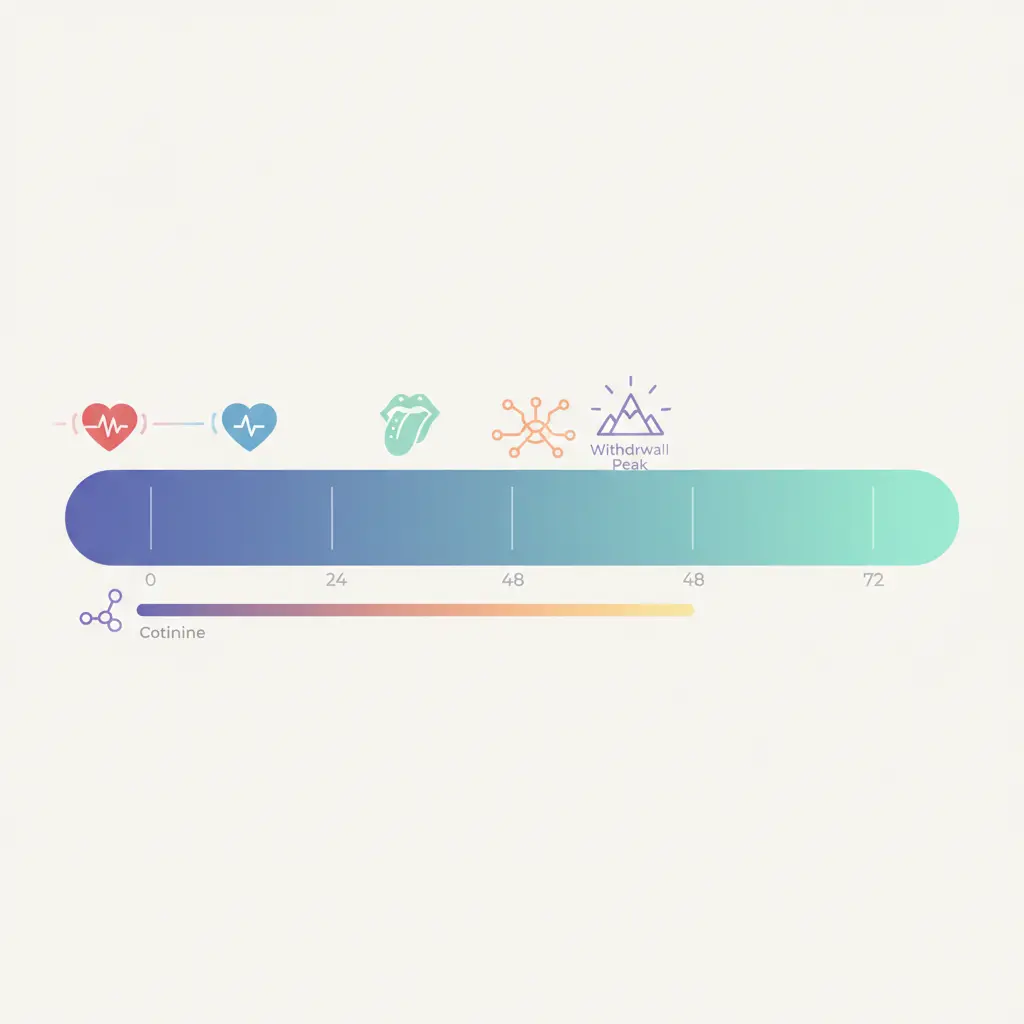
Within 20 minutes of your final cigarette, your heart rate and blood pressure begin dropping toward healthier levels, according to the CDC’s smoking cessation timeline (2023). By the 8-hour mark, carbon monoxide levels in your blood drop significantly, allowing oxygen to flow more efficiently. At 24 hours, your risk of a heart attack begins to decrease.
The 48-hour milestone is particularly meaningful. By this point, nicotine has largely cleared your bloodstream. Damaged nerve endings in your nose and mouth start regrowing, which is why some former smokers notice that food tastes different — sometimes intensely better — around day two. That’s not a side effect. That’s recovery.
Here’s a concise look at the 48-hour milestones:
| Time After Last Cigarette | Nicotine Status | Body Change |
|---|---|---|
| 20 minutes | Still in bloodstream | Heart rate and BP begin dropping |
| 2 hours | ~50% of last dose cleared | Withdrawal symptoms may begin |
| 8 hours | Mostly cleared from blood | Carbon monoxide levels normalize |
| 24 hours | Trace levels in blood | Heart attack risk begins decreasing |
| 48 hours | Blood nicotine effectively zero | Nerve endings begin regenerating; withdrawal peaks |
| 72 hours | Cotinine still detectable | Bronchial tubes relax; breathing easier |
How Long Does Nicotine Actually Stay in Your System?
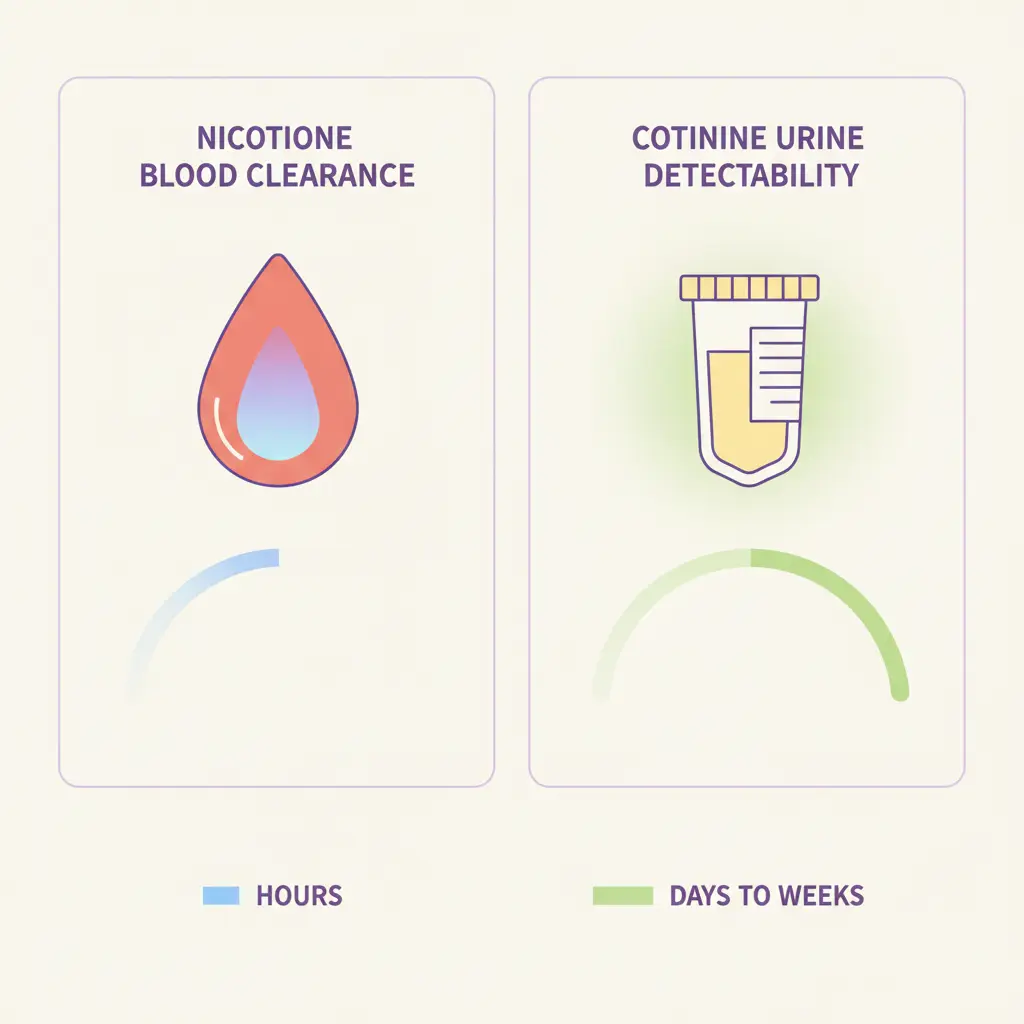
Nicotine’s blood half-life is approximately 1 to 2 hours — meaning your body eliminates half of the nicotine present every 60 to 120 minutes. After five half-lives (roughly 8 to 10 hours), nicotine is largely gone from your bloodstream. That’s the pharmacology in plain numbers.
But “nicotine leaving your body” isn’t quite as simple as clearing your blood. Your liver converts nicotine into cotinine, a metabolite that has a much longer half-life of approximately 16 to 20 hours. Cotinine remains detectable in urine for 3 to 4 days in most people — and up to 3 weeks in heavy, long-term smokers. A 2022 study published in the NHANES 2015–2016 data (NIH, 2022) confirmed that total urinary nicotine biomarkers are a more accurate indicator of exposure than blood nicotine alone.
For a deeper look at exactly how nicotine is metabolized, the factors that alter cotinine clearance speed, and what the science says about detection windows, read our detailed breakdown: How Long Does It Take for Nicotine to Leave Your Body? The Complete Guide.
Cotinine is the primary metabolite produced when your liver processes nicotine. It’s used in clinical settings to measure tobacco exposure because it stays in the body 5–10 times longer than nicotine itself. Blood, urine, saliva, and hair tests all screen for cotinine — not nicotine — in most smoking cessation and insurance contexts.
What this means practically: you can be nicotine-free in your blood at 48 hours and still test positive for tobacco use on a urine screen. These are two different things, and conflating them causes unnecessary confusion for people who are genuinely trying to quit.
Why Do Withdrawal Symptoms Peak Around 48 Hours?
Withdrawal symptoms peak around 48 to 72 hours after your last cigarette because that’s when nicotine’s effect on your brain chemistry is most acutely absent. This isn’t coincidence — it’s neuroscience.
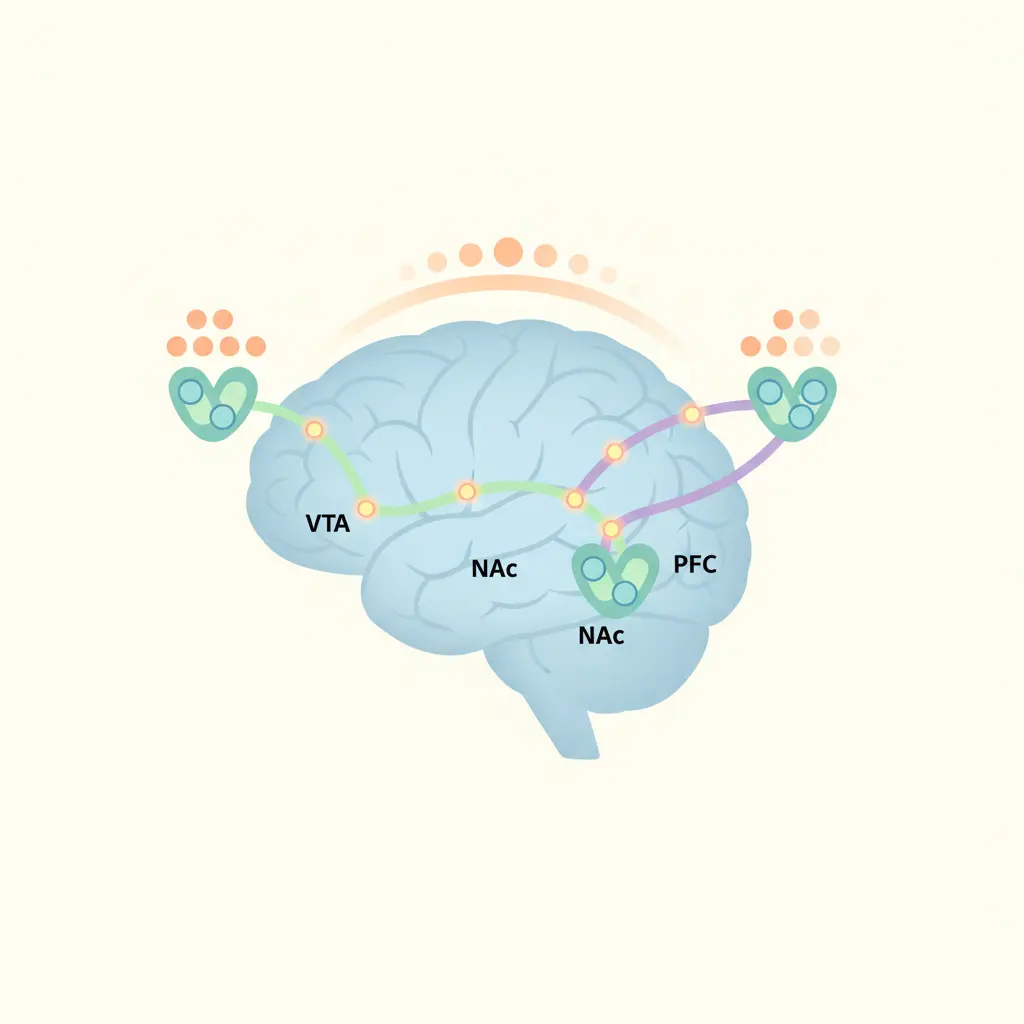
Nicotine binds to nicotinic acetylcholine receptors (nAChRs) in the brain, triggering dopamine release in the reward pathway. Over time, your brain compensates by upregulating — creating more receptors. When nicotine disappears, those receptors are suddenly understimulated. The result: irritability, anxiety, intense cravings, difficulty concentrating, and disturbed sleep. The NHS (2024) describes these symptoms as the body’s normal response to removing a substance it has adapted to expect.
Dr. Andrew Huberman, neuroscientist at Stanford, explains in his detailed episode on nicotine’s effects on the brain that nicotine’s interaction with the dopaminergic system is what makes behavioral withdrawal so intense — it’s not just physical dependence, it’s a conditioned neurological response that outlasts the nicotine itself.
Here’s the counterintuitive part: the intensity of your 48-hour symptoms is partly a sign of how effectively your brain was adapted to nicotine. Severe withdrawal doesn’t mean you’re failing — it means your nervous system was deeply engaged, and it’s now recalibrating aggressively.
What Should You Expect Day by Day During Nicotine Withdrawal?
Quitting smoking withdrawal doesn’t follow a perfectly linear path, but most people experience a recognizable pattern. Understanding that pattern in advance reduces the panic that comes when symptoms intensify right when you expected relief.
For a full hour-by-hour and day-by-day breakdown with symptom severity ratings, see the Nicotine Withdrawal Timeline: Hour by Hour, Day by Day. Here’s the condensed version:
Hours 1–24: The First Wave
Cravings begin within 30 minutes to 2 hours of your last cigarette. Irritability, restlessness, and mild anxiety are common. Some people feel physically fine during this window — don’t let that fool you into thinking it’ll stay easy.
Hours 24–48: Intensity Builds
This is where most people struggle most. Cravings are frequent and strong, sleep is often disrupted, and concentration becomes difficult. Headaches, increased appetite, and low mood are reported by a significant majority of quitters. Per the CDC, nicotine withdrawal symptoms typically peak during this window.
Days 3–7: The Peak and Plateau
Symptoms peak around day 3, then most physical symptoms begin to ease. The psychological cravings — triggered by habits, places, and emotions — remain strong. This is the week where environmental cues become the primary enemy, not pharmacology.
Weeks 2–4: Symptom Resolution
Most physical withdrawal resolves within 2 to 4 weeks. Mood typically stabilizes, concentration improves, and sleep quality returns. Cravings become less frequent but can still be intense when triggered. The Smokefree.gov quit plan builder recommends having coping strategies specifically planned for weeks 2 and 3, when many relapses occur.
Months 1–3: Rewiring Continues
Dopamine regulation continues normalizing. Many former smokers report improved mood, energy, and mental clarity by the 8 to 12 week mark. This is the phase that doesn’t get talked about enough — the genuine neurological recovery that makes the short-term suffering worth it.
What Factors Change How Quickly Nicotine Leaves Your Body?
Not everyone clears nicotine at the same rate. Genetics, physiology, and behavior all influence how fast your body processes nicotine and cotinine — sometimes dramatically.
| Factor | Effect on Clearance | Clinical Significance |
|---|---|---|
| CYP2A6 gene variant | Slower metabolizers retain cotinine longer | High — affects NRT dosing strategy |
| Age | Older adults clear nicotine more slowly | Moderate — longer symptom window possible |
| Kidney/liver function | Impaired function extends detection window | High — medical supervision recommended |
| Hydration | Better hydration may slightly speed renal clearance | Low-moderate — practical but limited impact |
| Smoking volume | Heavy smokers have higher baseline cotinine | High — detection window extends 1–3 weeks |
| Oral contraceptives | Speed up nicotine metabolism in women | Moderate — may require adjusted NRT doses |
The CYP2A6 enzyme is responsible for roughly 80% of nicotine metabolism. People who are “slow metabolizers” due to CYP2A6 gene variants actually tend to smoke less and find quitting slightly easier — their bodies process nicotine more slowly, so they get nicotine’s effects from fewer cigarettes. Fast metabolizers, on the other hand, may need higher NRT doses to manage withdrawal effectively.
This isn’t something you can determine on your own without genetic testing, but it’s worth mentioning to your doctor if you’ve struggled with NRT patches or gum not feeling effective enough. There are validated clinical tools — like the Nicotine Metabolite Ratio (NMR) test — that can guide more personalized cessation treatment.
Does Nicotine Still Show Up on Drug Tests After 48 Hours?
Yes, for most people — especially those who smoked regularly. While nicotine itself clears your blood within 48 hours, cotinine remains detectable in urine for 3 to 4 days in occasional smokers and up to 3 weeks in heavy, long-term smokers.
Here’s the breakdown by test type, based on data reviewed by Healthline’s clinical review (2023):
- Blood test: Nicotine detectable for 1–3 days; cotinine for up to 10 days
- Urine test: Cotinine detectable for 3–4 days (light smokers) to 3 weeks (heavy smokers)
- Saliva test: Cotinine detectable for 1–4 days
- Hair follicle test: Detectable for up to 90 days (reflects long-term exposure)
Nicotine replacement therapy (NRT) — patches, gum, lozenges, inhalers — also produces cotinine and will cause a positive test result. This is worth knowing before any insurance or workplace screening. NRT use doesn’t indicate active smoking, but cotinine tests can’t distinguish between NRT and cigarette-derived cotinine without additional medical context.
How Do You Survive the First 48 Hours of Quitting Smoking?
The first 48 hours are the hardest for most people — and having a concrete strategy before they start makes a measurable difference in outcomes. The WHO estimates that people with cessation support are up to 3 times more likely to quit successfully than those going cold turkey alone.
For detailed coping strategies and stage-specific management techniques, the Stages of Nicotine Withdrawal: A Day-by-Day Survival Guide covers practical tools for each phase. Here’s what the evidence supports for the critical 48-hour window:
Step 1: Remove Every Trigger in Your Environment
Before your quit date, remove cigarettes, lighters, ashtrays, and any smoking paraphernalia from your home, car, and workspace. This isn’t just symbolic — environmental cue reactivity is a well-documented driver of relapse in the first 72 hours.
Step 2: Use Nicotine Replacement Therapy If Appropriate
The NHS and CDC both recommend NRT (patches, gum, lozenges, nasal spray) as a first-line cessation aid. NRT reduces withdrawal severity by maintaining low-level nicotine in your bloodstream while you break the behavioral habit. Consult your GP or pharmacist for the right product and dose — this isn’t one-size-fits-all.
Step 3: Plan for the Craving Curve
Individual cravings peak in intensity around 3 to 5 minutes, then subside. This is documented, consistent, and genuinely useful to know at 2 a.m. when you’re desperate. The 4 Ds — Delay, Deep breathe, Drink water, Do something else — are clinically validated distraction strategies that work within that craving window.
Step 4: Track Your Progress Hour by Hour
Real-time progress tracking changes how you experience early withdrawal. Seeing that it’s been 18 hours, 24 hours, 36 hours — each milestone rewires your perception of the experience. Apps like iQuit include an emergency SOS craving support feature alongside a health recovery timeline that shows your body’s progress in real time, which many users find more motivating than willpower alone during those peak 48-hour cravings.
Step 5: Sleep More Than You Think You Need To
Sleep is genuinely underrated as a quitting strategy. Fatigue dramatically lowers your resistance to cravings. During the first 48 hours, prioritize sleep even if it’s disrupted — and avoid alcohol, which disrupts sleep architecture and is a documented relapse trigger.
What Does Recovery Look Like Beyond the First 48 Hours?
Surviving 48 hours is genuinely something to celebrate — it’s the pharmacological turning point. But the recovery story doesn’t end there, and knowing what comes next makes the longer journey feel manageable rather than indefinite.
Here’s the evidence-based long-term timeline, pulled from CDC and NHS data:
- 2 weeks to 3 months: Circulation improves. Lung function increases by up to 30%, making exercise noticeably easier.
- 1 to 9 months: Coughing and shortness of breath decrease as cilia in the lungs regrow and clear mucus more effectively.
- 1 year: Risk of coronary heart disease drops to half that of a current smoker.
- 5 years: Stroke risk equals that of a non-smoker for most people.
- 10 years: Lung cancer death rate drops to about half that of a continuing smoker.
- 15 years: Risk of coronary heart disease matches a non-smoker’s baseline.
What most recovery timelines don’t capture is the psychological trajectory. Anxiety and irritability — often at their worst in the first week — typically resolve by week 4. A large body of research, including longitudinal studies reviewed by the PBS documentary “Kick the Nic”, shows that many former smokers report lower baseline anxiety and depression levels after 6 months than they experienced while smoking — contrary to what withdrawal makes you feel in the moment.
That’s not a small thing. Nicotine’s apparent stress-relief effect is largely the relief of withdrawal itself. When nicotine is no longer in the equation, the baseline shifts upward.
The WebMD quit-smoking video library at WebMD Smoking Cessation includes a visual timeline that many people find helpful for staying motivated during the weeks after the acute withdrawal phase ends.
Your 48-Hour Quit Smoking Action Checklist
Print this or screenshot it. Concrete actions reduce decision fatigue when cravings are highest.
- Set your quit date and time — specificity matters more than readiness feelings.
- Tell someone — accountability partners improve quit rates by up to 60% per JAMA research (2020).
- Stock your NRT before your quit date, not after.
- Clear your environment — cigarettes, lighters, ashtrays removed from all spaces.
- Plan your 3–5 minute craving responses in advance (walk, cold water, breathing exercises).
- Download a tracking app to see your body’s progress in real time — seeing 32 hours smoke-free on a screen is more motivating than you’d expect.
- Schedule your sleep — aim for 7–9 hours during the first 48 hours; plan your bedtime ahead.
- Identify your three highest-risk triggers and have a written response for each.
- Prepare a distraction list of 10 specific activities you can do in under 10 minutes when cravings hit.
- Celebrate every milestone — 2 hours, 8 hours, 24 hours, 48 hours. These aren’t arbitrary; they’re physiologically meaningful.
Frequently Asked Questions About Quitting Smoking and Nicotine Clearance
How long does nicotine stay in your blood after quitting smoking?
Nicotine clears from your blood within approximately 1 to 3 days after your last cigarette, given its blood half-life of 1 to 2 hours. However, cotinine — nicotine’s primary metabolite — remains detectable in blood for up to 10 days in heavy smokers. Blood tests used in clinical and insurance settings screen for cotinine, not nicotine itself (Healthline Clinical Review, 2023).
What are the worst withdrawal symptoms when quitting smoking?
The most commonly reported severe withdrawal symptoms are intense cravings, irritability, anxiety, difficulty concentrating, and sleep disturbances. These peak between 48 and 72 hours after the last cigarette. The NHS (2024) lists increased appetite and low mood as additional common symptoms. Most physical symptoms resolve within 2 to 4 weeks, though psychological cravings can persist longer in habitual smokers.
Can you speed up nicotine clearance from your body?
No proven method dramatically accelerates nicotine or cotinine clearance. Adequate hydration supports normal kidney function, which clears cotinine through urine, but the effect is modest. Exercise may marginally increase metabolic rate but doesn’t significantly shorten the detection window. The primary determinant is your liver’s CYP2A6 enzyme activity, which is genetically determined and cannot be altered by lifestyle alone.
Is it normal to feel worse at 48 hours than at 24 hours after quitting?
Yes, this is completely normal and expected. Nicotine withdrawal symptoms typically intensify over the first 48 to 72 hours as your brain adjusts to the absence of nicotine stimulation. Feeling worse at 48 hours than at 24 hours doesn’t indicate a problem with your quit attempt — it indicates your body is at peak recalibration, and symptoms will begin declining after this window for most people (CDC, 2023).
Will nicotine patches or gum still show as positive on a cotinine test?
Yes. Nicotine replacement therapy (NRT) products — including patches, gum, lozenges, nasal spray, and inhalers — all introduce nicotine that your liver converts to cotinine. Standard cotinine tests cannot distinguish between NRT-derived and cigarette-derived cotinine. If you’re being tested for insurance or medical purposes while using NRT, inform the testing party in advance so results are interpreted with accurate clinical context.
How long do nicotine cravings last after you quit smoking?
Individual cravings typically last 3 to 5 minutes and then subside — regardless of whether you smoke. The frequency of cravings decreases significantly after the first week and continues declining over weeks 2 through 4. Trigger-based cravings (associated with habits, places, or emotions) can persist for several months but become shorter and less intense over time. Most people find cravings manageable after the 4-week mark (NHS, 2024).
What happens to your lungs in the first 48 hours after quitting smoking?
Within 48 to 72 hours of quitting smoking, bronchial tubes begin to relax and widen, making breathing slightly easier. The cilia — tiny hair-like structures in the lungs that sweep out mucus and debris — begin recovering function. Some people notice increased coughing in the first few days as cilia become more active; this is a sign of the lungs clearing accumulated toxins, not a sign of damage (CDC, 2023).
Does quitting smoking affect mental health during withdrawal?
Yes. Anxiety, irritability, low mood, and difficulty concentrating are all recognized nicotine withdrawal symptoms that affect mental health during the first 1 to 4 weeks of quitting. Counterintuitively, research shows that within 6 months of successful cessation, most former smokers report lower baseline anxiety and depression than during active smoking — because nicotine’s perceived stress relief was masking withdrawal itself, not providing genuine anxiolytic benefit (Huberman Lab, 2022).
How long does it take for your body to fully recover after quitting smoking?
Recovery happens in stages across years. Most withdrawal symptoms resolve within 2 to 4 weeks. Lung function improves by up to 30% within 3 months. Heart disease risk halves after 1 year. After 10 years, lung cancer risk drops to roughly half that of a continuing smoker, and after 15 years, cardiovascular risk returns to near-baseline non-smoker levels. The body’s capacity for recovery after smoking cessation is genuinely remarkable (CDC Smoking Cessation Timeline, 2023).
Take Your First 48 Hours Seriously — Then Let the Data Carry You
The first 48 hours of quitting smoking are the hardest 48 hours you’ll face in this process. They’re also the most important. Getting through them — even imperfectly — fundamentally changes your biology and your relationship to nicotine.
If you want to explore the full scientific breakdown of nicotine pharmacology and cotinine clearance, the How Long Does It Take for Nicotine to Leave Your Body? Complete Guide covers the half-life calculations, testing windows, and factors that affect your personal clearance rate in clinical detail.
For symptom-by-symptom guidance through every stage — from the first hour to the first month — the Stages of Nicotine Withdrawal: Day-by-Day Survival Guide offers practical strategies grounded in what actually works, not just what sounds reasonable.
And if you want real-time support during those peak-craving moments at the 48-hour mark, the Nicotine Withdrawal Timeline: Hour by Hour, Day by Day tells you exactly what’s happening physiologically at every point — which makes the process feel less like suffering and more like a known, survivable process.
You’re not alone in this. And every hour you record, every craving you outlast, and every milestone you hit is evidence that your body is doing exactly what it’s supposed to do.