
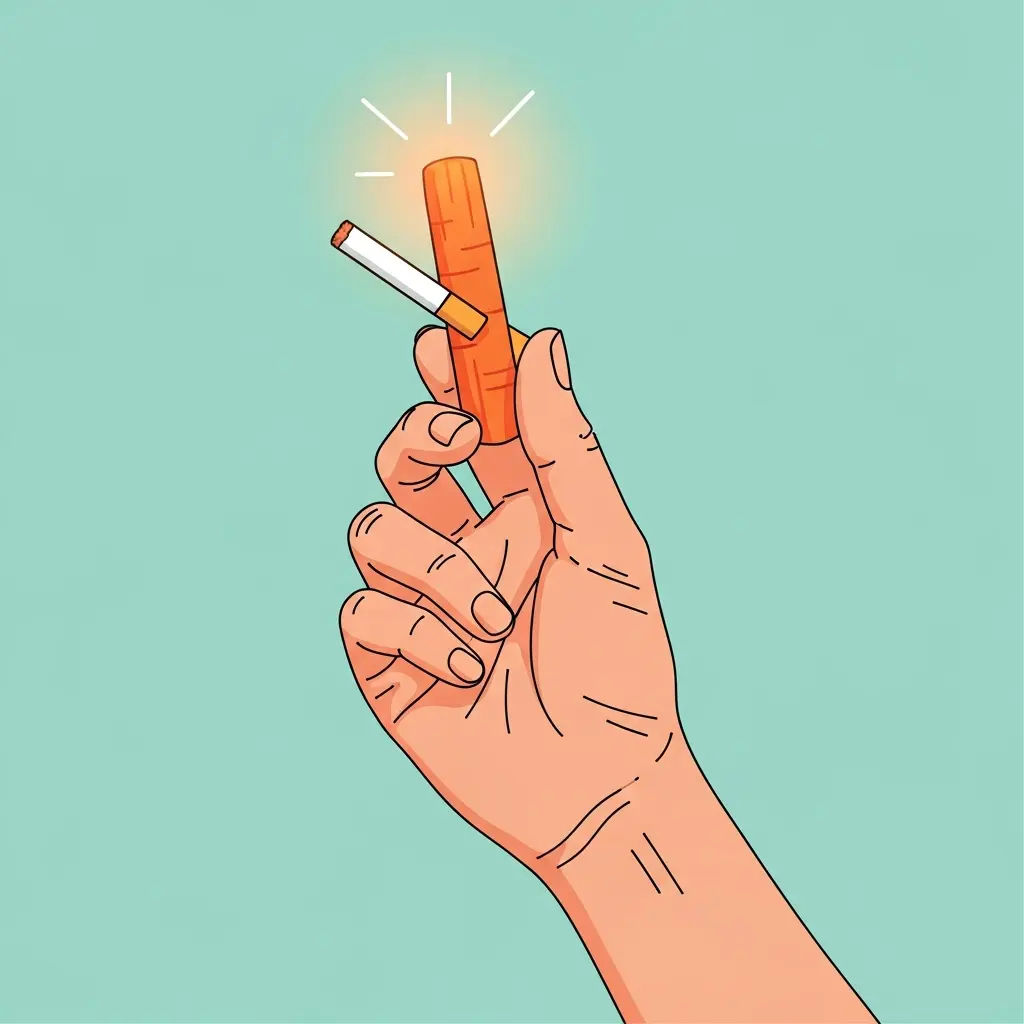
How to Beat the Hand-to-Mouth Habit: Managing the Oral Fixation of Smoking (2026)
You have made it through day five without a cigarette. The worst of the nicotine withdrawal — the headaches, the irritability, the restless nights — is beginning to ease. And yet something keeps pulling at you. Not the desperate urgency of a full craving, but something quieter and more insistent: your hand keeps drifting to your face. You reach for something that is not there. You find yourself chewing the end of a pen without realising it. This is the hand-to-mouth oral fixation of smoking, and it is a real and distinct layer of the habit that exists entirely separately from nicotine dependence. Many people who manage their withdrawal symptoms well are still caught off-guard by it weeks into their quit.
Understanding why it exists — and having specific tools to address it — makes a genuine difference to how comfortable you feel in those early weeks.
What Is the Hand-to-Mouth Oral Fixation?
When most people think about quitting smoking, they think about nicotine. And nicotine dependence is absolutely real — it is a neurochemical process involving dopamine pathways and withdrawal symptoms that can be severe. But smoking is also a behaviour, and behaviours are learned through repetition, context, and reward.
Over the course of a twenty-cigarette-a-day habit, a smoker completes the physical ritual of lighting up, holding a cigarette, bringing it to their mouth, and exhaling somewhere between 70,000 and 150,000 times per year. That is not a figure to dismiss. The nervous system learns to associate the physical gesture itself with relief, pleasure, and a moment of pause in a busy day. The brain does not cleanly separate “the nicotine hit” from “the motion of the hand” — it bundles them together into a single reward experience.
This is why oral fixation is classified by cessation researchers as a distinct component of tobacco dependence alongside physical, psychological, and social dependence. The Nicorette resource on oral fixation describes the psychological needs satisfied by smoking as ingesting, sucking, grasping, and repetitive hand-to-mouth activity — each of which operates independently of the nicotine molecule itself.
Why It Persists After Nicotine Withdrawal
Acute nicotine withdrawal typically peaks at 48 to 72 hours after quitting and substantially resolves within two to four weeks. The hand-to-mouth fixation does not follow the same timeline. It is a conditioned response — like Pavlov’s dog — that has been reinforced thousands of times. Even after the physical addiction has faded, the situational and gestural triggers remain.
Common moments when the hand-to-mouth fixation is strongest include:
- After finishing a meal
- During a phone call or video meeting
- When driving or commuting
- In moments of boredom or waiting
- After alcohol
- During a break from work
Notice that most of these moments are characterised by a transition, a pause, or an absence of engagement. Smoking provided a ready-made ritual for exactly these gaps. Without a substitute, the gaps feel conspicuously empty in a way that has nothing to do with nicotine levels in the blood.
Understanding your personal triggers is a key part of managing both nicotine cravings and the oral fixation component. Our guide to identifying and avoiding smoking triggers covers the full trigger landscape in practical detail.
Behavioural Substitution Techniques That Work
The most evidence-supported approach to the hand-to-mouth fixation is behavioural substitution: replacing the smoking behaviour with a different behaviour that satisfies a similar need without the harm. The substitutes do not need to be perfect replacements — they just need to be good enough to interrupt the automatic chain of cue-craving-action that smoking had established.
Cognitive-behavioural therapy (CBT) applied to smoking cessation explicitly targets these learned behaviours. The approach involves:
- Identifying the cue (post-meal, driving, a break)
- Interrupting the automatic response with a deliberate pause
- Substituting a prepared alternative behaviour
- Rewarding the new behaviour to begin forming a new association
The key word is “prepared”. Having your substitutes ready before the cue arrives is the difference between successfully riding out the urge and finding yourself lighting up on autopilot. People who plan their substitutes in advance have significantly better outcomes than those who try to improvise in the moment.
Oral Substitutes: What to Try
The goal with oral substitutes is to give your mouth something to do that is not a cigarette. These work best in the first four to six weeks, with the plan to gradually use them less as the new routines establish themselves.
Sugar-free gum and mints
A reliable, portable, and inexpensive option. Nicotine gum serves double duty — it addresses both the oral fixation and delivers small, controlled doses of nicotine during withdrawal. Plain sugar-free gum works for the fixation alone and is useful later in the quit when nicotine replacement is no longer needed. Many people find that choosing a distinctive flavour — something they do not normally chew — helps the brain associate the new routine with a new identity rather than simply a substitute habit.
Raw vegetable sticks and fruit
Carrot sticks, celery, apple slices — these work particularly well after meals and during the post-food craving window. They engage the jaw, provide a slightly satisfying texture, and offer a mild nutritional benefit rather than extra calories from sweets.
Herbal toothpicks and cinnamon sticks
These closely mimic the physical act of holding something in the mouth and lips — arguably closer to the actual cigarette gesture than gum does. They are non-caloric, non-addictive, and discreet enough to use in most social settings. Many dedicated cessation communities recommend flavoured wooden toothpicks as a first-line tool for exactly this reason.
Herbal inhalers and breath tools
Products that provide an inhaling sensation without nicotine or tobacco — some using menthol or herbal oils — are specifically designed to address the inhalation component of the hand-to-mouth fixation. They are more controversial than the simpler options because they maintain some of the physical ritual rather than replacing it. Whether they are useful depends on whether the person is trying to step away from the gesture gradually or all at once.
Keeping Your Hands Busy
The “hand” half of the hand-to-mouth equation is often underestimated. Many ex-smokers describe a persistent sense of not knowing what to do with their hands, particularly in social situations. This is particularly conspicuous at parties, pubs, and social gatherings where smoking used to give the hands a purpose.
Practical hand substitutes:
- A cold glass of water or a hot mug. The temperature sensation adds a physical anchor that occupies both hand and attention. Herbal tea in particular provides a ritual — boiling, steeping, holding the cup — that echoes the ceremony of smoking without any of the harm.
- Worry beads or fidget tools. These are designed for exactly this purpose and have a long cultural history in contexts where having something to handle with the hands reduces anxiety.
- Doodling or journalling during breaks. For people whose smoking was concentrated around desk breaks and work transitions, replacing the cigarette break with a brief writing or sketching ritual repurposes the pause productively.
- Squeezing a small stress ball. Physical pressure in the hand provides proprioceptive input that can interrupt the automatic hand-to-mouth drift.
If you rolled your own cigarettes rather than smoking manufactured ones, the hand ritual you are replacing is even bigger — rolling itself was a whole sequence of hand movements on top of the smoking gesture. Our dedicated guide on how to quit rolling tobacco (roll-ups) addresses that extra layer specifically, including substitutes for the rolling ritual itself, not just the smoking part.
For managing the anxiety that often accompanies the restless-hands feeling, the grounding exercises in our guide on grounding exercises for smoking anxiety can be used in parallel with physical hand substitutes.
The Breath as the Real Ritual
Here is something worth sitting with: the most physiologically significant part of smoking may not be the nicotine — it may be the breath. A deep, slow inhale followed by a long, deliberate exhale is one of the most effective activators of the parasympathetic nervous system that exists. Smokers do this every time they light up. They have been self-administering a breathing exercise several times an hour without realising it.
This means that one of the best substitutes for the entire smoking ritual is conscious deep breathing. Not shallow breathing — the same deep, deliberate, slow inhale-and-exhale cycle that smoking provided. Done deliberately and without a cigarette, it delivers most of the calming effect of the physical ritual with none of the harm.
The 4-7-8 breathing method (inhale for four counts, hold for seven, exhale for eight) is particularly effective here. It takes roughly the same time as smoking a cigarette, requires the same physical pause and focus, and activates the same parasympathetic response. Our dedicated guide to breathing exercises for stopping smoking cravings has step-by-step instructions for seven techniques you can use anywhere.
- Use nicotine gum or lozenges — addresses both the oral fixation and nicotine withdrawal simultaneously
- Keep sugar-free gum, toothpicks, or vegetable sticks available for high-risk moments
- Replace the cigarette break ritual with a mindful tea or water break
- Practice slow, deliberate breathing as a direct substitute for the inhale-exhale of smoking
- Fidget tools or stress balls address the hand component of the habit
- Gradually reduce reliance on substitutes as the conditioned response weakens (typically 4–8 weeks)
Based on guidance from NHS Better Health — Quit Smoking and cessation behaviour change research
How to Gradually Step Down From Substitutes
Substitutes are a bridge, not a destination. The goal is to use them actively in the first four to eight weeks, then begin stepping down as the old neural associations weaken and new ones form.
Signs that you are ready to reduce a substitute:
- You can sit through the trigger moments without the substitute and feel only mild discomfort rather than urgent need.
- You reach for the substitute out of habit rather than genuine craving.
- The trigger has begun to lose its association with the smoking urge.
A practical approach is to eliminate one trigger-substitute pairing at a time — for example, stopping the after-meal gum first, then the driving toothpick, then the work-break mints — rather than giving up all substitutes at once. This gradual withdrawal mirrors the same logic behind stepped NRT programmes for nicotine itself.
If you find yourself reaching for substitutes more and more rather than less, it is worth checking whether there is an underlying anxiety or stress driver that warrants its own attention — a GP, a stop-smoking counsellor, or the AI coaching available through the iQuit app can help you identify what is going on and adjust your approach accordingly.
For more on managing craving intensity when substitutes are not enough, see our comprehensive guide on how to deal with cigarette cravings.
Frequently Asked Questions
Is oral fixation a real thing, or just a habit?
It is both — a habit that is real. The hand-to-mouth pattern is a conditioned behaviour reinforced by tens of thousands of repetitions. It is recognised in cessation research as a distinct component of tobacco dependence. “Just a habit” understates how deeply ingrained it is, but it is also not a biological addiction in the same way nicotine is, which means it responds well to behavioural interventions.
How long does the hand-to-mouth fixation last after quitting?
For most people it is strongest in the first four to eight weeks and largely fades by three months. For heavy, long-term smokers it can persist as a mild urge for six months or more, particularly in strong trigger situations. Using substitutes actively and gradually stepping them down typically shortens the overall duration.
Will using a substitute create a new dependency?
Non-addictive substitutes like sugar-free gum, toothpicks, vegetables, or herbal tea do not create dependency in any clinical sense. The goal is to use them as a transitional bridge while the old associations weaken, then step them down gradually. The risk of becoming dependent on a carrot stick is negligible. NRT products like nicotine gum do carry some dependency risk, but it is far less harmful than continued smoking and is managed by following the recommended stepped-reduction schedule.
What should I do when I’m at a party and don’t know what to do with my hands?
Keep a drink in your hand — even sparkling water — as it gives your hands an anchor and a purpose. If you are at a party in the early weeks of quitting, it is also completely valid to pre-plan an exit strategy for high-craving moments: a short walk outside, a phone call, or a move to a different room. Having a prepared response (“I’m going to grab some water and I’ll be back in five”) is far easier than improvising in the moment.
Can the iQuit app help with oral fixation specifically?
iQuit’s AI coach is available at any moment a craving or fixation hits — including the specific trigger moments when the hand-to-mouth urge is strongest. It can walk you through a breathing exercise, suggest a substitution technique, or simply provide company during a difficult few minutes. The tracking function also helps you notice patterns — which times of day the fixation is strongest — so you can prepare your substitutes accordingly.