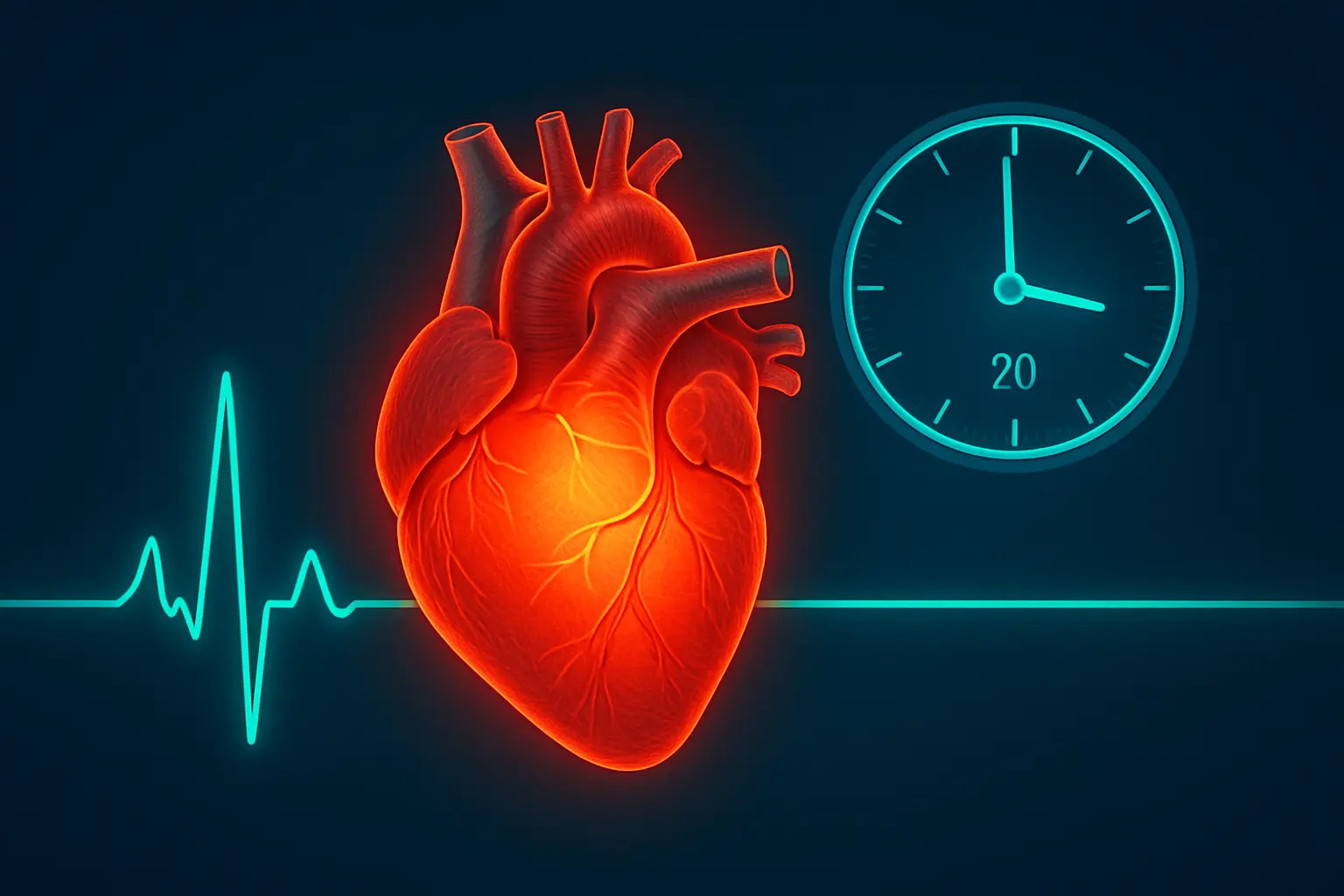
Your heart rate begins falling just 20 minutes after your last cigarette. Nicotine is a stimulant that keeps your heart beating 10–20 beats per minute faster than it needs to; once it stops arriving, your resting heart rate typically drops 5–15 bpm over the first days and settles into your true baseline within a few weeks. Here is the full timeline of what your heart does when you quit — hour by hour, then week by week.
Why smoking keeps your heart rate high
Every cigarette triggers an adrenaline release: nicotine stimulates the sympathetic nervous system, tightening blood vessels and pushing the heart to beat faster against higher pressure. Carbon monoxide compounds the problem by binding to red blood cells 200 times more readily than oxygen — so your heart pumps faster still to deliver the oxygen your tissues are missing. A pack-a-day smoker’s heart does thousands of extra beats every day just to break even.
The hour-by-hour timeline
- 20 minutes: heart rate and blood pressure take their first measurable dip as the last dose of nicotine wears off.
- 2 hours: peripheral circulation begins improving — hands and feet may feel warmer.
- 8 hours: carbon monoxide in your blood is cut roughly in half; oxygen levels climb toward normal. Your heart no longer has to over-beat to compensate.
- 12 hours: carbon monoxide reaches near-normal levels. The oxygen-starvation tax on your heart is effectively repealed.
- 24 hours: heart attack risk has already begun its decline — one of the fastest-moving numbers in all of medicine.
- 48–72 hours: nicotine is fully out of your system. This is when withdrawal peaks (irritability can transiently spike heart rate), but the underlying resting rate keeps trending down.
Weeks and months: the deeper recovery
- 1–2 weeks: resting heart rate stabilizes at its new, lower baseline. Many quitters wearing fitness trackers report their average resting rate down 5–15 bpm from smoking days.
- 2–12 weeks: circulation and vascular tone improve substantially; the same walk produces a lower heart rate than it did a month before. The 30-day mark brings measurable whole-body changes.
- 1 year: excess coronary heart disease risk is half a smoker’s.
- 15 years: heart disease risk approaches a never-smoker’s.
What’s normal — and what isn’t
Expect some noise on the way down. Withdrawal anxiety, disrupted sleep and stress eating can all cause temporary heart-rate spikes in the first two weeks — brief episodes are normal and pass. See a doctor promptly if you notice a persistently racing heart beyond the withdrawal window, chest pain or pressure, fainting, or palpitations that interrupt daily life. Quitting exposes your real cardiovascular baseline; occasionally that reveals an unrelated issue worth checking.
Watch your own heart recover
The most motivating way to experience this timeline is to see your own numbers move. The free iQuit app tracks all 15 research-backed recovery milestones live from your quit date — the 20-minute heart-rate drop is the very first one you unlock, usually before you’ve finished setting up your profile. Each milestone ticks from “in progress” to “achieved” as your smoke-free hours accumulate, alongside money saved and cravings overcome. For the numbers behind each stage, the site’s smoking cessation statistics roundup collects the research in one place.
FAQ
How much does heart rate drop after quitting?
Typically 5–15 bpm at rest within days to weeks, with the first dip 20 minutes after the last cigarette.
Why is my heart racing after quitting?
Short spikes from withdrawal anxiety and poor sleep are common in weeks one and two and pass on their own. Persistent racing, chest pain or fainting deserve medical review.
How long until my heart is “normal”?
Resting rate: days to weeks. Coronary risk: halved at one year, near never-smoker levels by 15 years.
Does quitting smoking lower blood pressure too?
Yes — blood pressure begins improving within 20 minutes and vascular function continues recovering over the following weeks.
Unlock your first milestone 20 minutes from now: download iQuit free on Google Play.