How Long Does Nicotine Withdrawal Last? A Symptom-by-Symptom Duration Guide (2026)
How long does nicotine withdrawal last? This is one of the first questions people ask before they quit smoking — and one of the most important. The fear of indefinite suffering is a major barrier to quitting. But nicotine withdrawal has a measurable, finite duration. It is not permanent. Knowing precisely how long each symptom lasts is both practical knowledge and psychological armor against the moments when withdrawal feels unbearable.
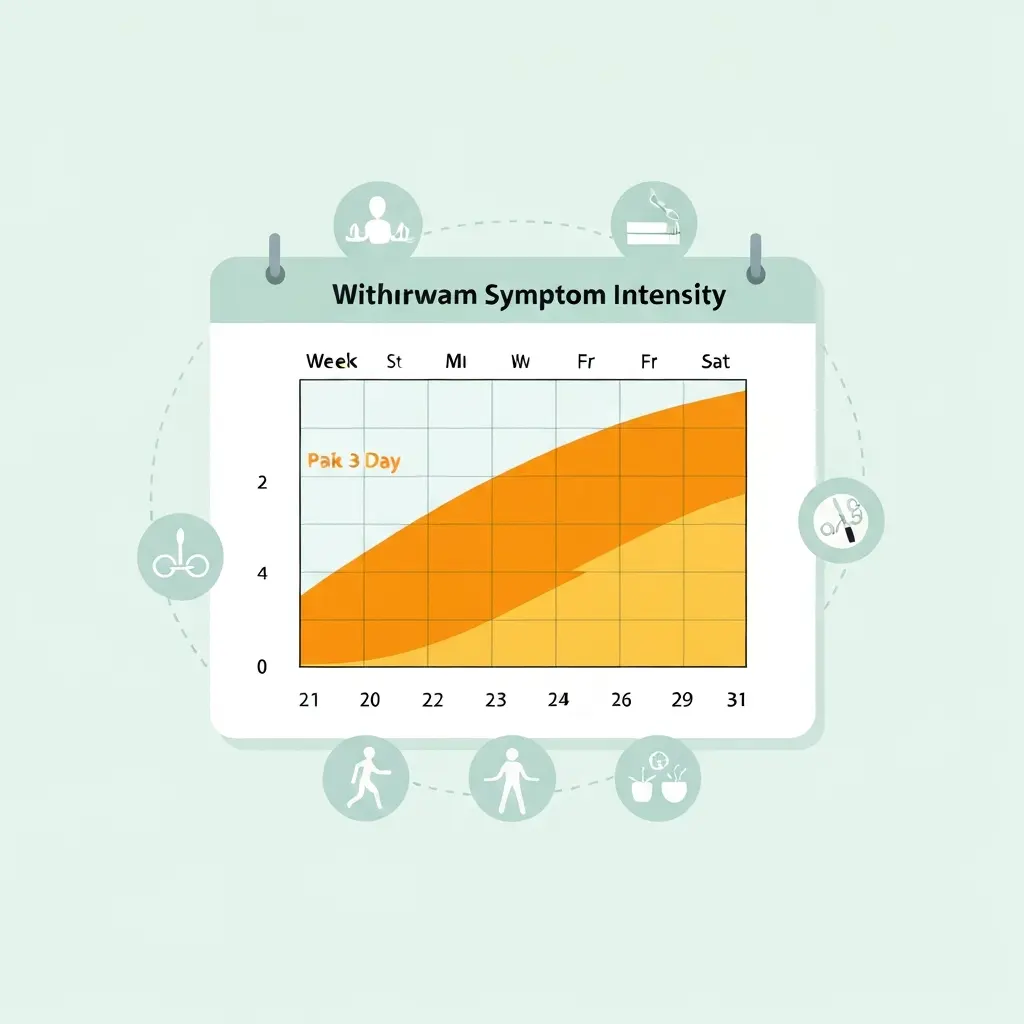
The honest answer: most physical withdrawal symptoms resolve within 2–4 weeks. The peak of intensity occurs on days 2 and 3. After that, symptoms follow a consistent downward trajectory. Psychological cravings — triggered by situational cues — can occur intermittently for up to 3 months, but they become shorter and less intense over time. By the 3-month mark, the vast majority of people who have stayed smoke-free feel normal.
This guide gives you the precise duration of every nicotine withdrawal symptom, backed by CDC, NCI, and clinical research data, so you know exactly what to expect and when to expect it to end.
Nicotine withdrawal symptoms begin 2–4 hours after your last cigarette and peak on days 2–3. Physical symptoms resolve for most people within 2–4 weeks. Psychological cravings can occur intermittently for up to 3 months in response to triggers, but they diminish significantly after week 4. Withdrawal does not last forever — it has a definitive endpoint.
Overall Duration Overview
Before diving into individual symptoms, here is the overall picture of nicotine withdrawal duration according to the National Cancer Institute and Cleveland Clinic:
| Phase | Timing | What’s Happening |
|---|---|---|
| Onset | 2–4 hours after last cigarette | First cravings and restlessness |
| Peak | Days 2–3 | All symptoms at maximum intensity |
| Acute Resolution | Days 4–14 | Physical symptoms declining; psychological symptoms persist |
| Subacute Phase | Weeks 2–4 | Mostly psychological; trigger-based cravings |
| Resolution | Weeks 4–12 | Cravings infrequent; most people feel normal |
Cravings: How Long Do They Last?
Each individual craving episode typically lasts 3–5 minutes. They do not build indefinitely — they have a peak and a trough, like a wave. This is one of the most important facts to internalize before you quit: every single craving you experience has a measurable end point.
In terms of overall craving duration across the quit journey:
- Frequency: Every 1–2 hours during days 1–3; reducing to every few hours by day 7; occasional by week 4
- Intensity: Peaks on days 2–3; significantly reduced by end of week 1; manageable by week 2
- Duration of pattern: Most people stop experiencing regular cravings by week 4–8; situational cravings (triggered by specific cues) can occur for up to 3–6 months but are much shorter and easier to dismiss
A key strategy: never try to outrun a craving. Delay for 5 minutes. It will almost certainly pass. Apps like iQuit’s craving tracker let you log and time cravings, which helps you see — with your own data — how they shorten over time.
Irritability and Mood: Duration
Irritability is one of the most disruptive nicotine withdrawal symptoms because it affects relationships. It is caused directly by dopamine deficit — your brain’s reward circuitry is running below its accustomed baseline.
- Onset: Within 4–8 hours
- Peak: Days 1–3
- Typical resolution: Weeks 1–2 for most people
- Extended cases: Some people experience mood fluctuations for up to 4 weeks
Strategy: Tell the important people in your life that you are quitting and that irritability is a medical withdrawal symptom, not a personality change. Physical exercise is the most evidence-backed immediate intervention for withdrawal-related irritability.
Insomnia and Sleep Disruption
Nicotine suppresses REM sleep. When it is removed, the brain rebounds with heightened REM activity — producing vivid dreams and sometimes disrupted sleep architecture in the first week or two.
- Onset: Night 1
- Peak: Days 2–7
- Typical resolution: 1–3 weeks
- Extended cases: Occasional sleep disruption can persist for up to 4 weeks in heavier smokers
After the withdrawal period, sleep quality for ex-smokers is significantly better than it was while smoking. Nicotine disrupts sleep architecture chronically — quitting ultimately produces better sleep, not worse. To understand the full recovery process, see our complete nicotine withdrawal timeline.
Difficulty Concentrating
Impaired focus during withdrawal is caused by the sudden removal of nicotine’s acetylcholinergic stimulation in the brain’s attention and executive function circuits.
- Onset: Within 24 hours
- Peak: Days 2–4
- Typical resolution: 1–2 weeks
Strategy: Schedule intellectually demanding work away from the first week if possible. Use short work intervals (Pomodoro technique: 25 minutes focused, 5 minutes break). Cognitive performance returns to — and often exceeds — smoking baseline within 2 weeks.
Increased Appetite and Weight Gain
Nicotine suppressed appetite through multiple mechanisms, including raising blood glucose levels and acting on hypothalamic satiety circuits. Its removal triggers increased hunger that can persist for several weeks.
- Onset: Days 1–2
- Peak: Weeks 1–3
- Typical resolution: 3–6 weeks for the acute increase; weight management is ongoing
On average, ex-smokers gain 4–10 lbs in the first few months. This is a real but manageable outcome, and the health benefits of quitting vastly outweigh the health risks of moderate weight gain. For strategies to minimise this, see our guide on quitting smoking without gaining weight.
Anxiety and Restlessness
One of the paradoxes of nicotine addiction is that smoking causes the very anxiety it seems to relieve. The “relief” you feel after a cigarette is largely relief from the withdrawal anxiety that the previous cigarette created. Remove nicotine entirely, and the brain’s anxiety circuits must recalibrate.
- Onset: Within 2–4 hours
- Peak: Days 1–3
- Typical resolution: 1–2 weeks for acute anxiety; baseline anxiety levels improve significantly by month 2–3
The Cochrane review on smoking cessation and mental health found that anxiety levels in ex-smokers are lower than when they were smoking, once the acute withdrawal phase passes. Quitting smoking is ultimately anxiety-reducing, not anxiety-inducing.
Source: Andrew Huberman — “Nicotine’s Effects on the Brain and Body and How to Quit”
Depression and Low Mood
Low mood or mild depressive symptoms are common in early nicotine withdrawal, particularly for people who have smoked for many years. This is a direct neurochemical consequence of dopamine and serotonin reduction.
- Onset: Day 1
- Peak: Days 1–3
- Typical resolution: Within 30 days for people without prior depression history
- Important note: People with pre-existing depression should involve a healthcare provider in their quit plan, as the interaction between cessation and antidepressant medication requires management
The long-term picture is strongly positive: research shows that mood, depression, and anxiety levels are all significantly better in ex-smokers after the withdrawal period compared to active smokers.
Physical Symptoms: Headache, Cough, Constipation
Headaches
- Cause: Improved blood flow (nicotine constricted blood vessels; their dilation can trigger headaches)
- Duration: Typically days 1–5; rarely extends to week 2
- Management: Adequate hydration, rest, over-the-counter pain relief if needed
Coughing and Increased Mucus
- Cause: Lung cilia recovering — they are now capable of clearing the accumulated debris that smoking paralysed them from moving
- Duration: Begins within days; can increase initially over the first 1–2 weeks as cilia become more active; resolves over 4–8 weeks as airways clear
- Management: Hydration; this is a sign of healing, not illness
Constipation and Digestive Changes
- Cause: Nicotine stimulated bowel motility; its removal causes temporary sluggishness
- Duration: Typically 1–2 weeks
- Management: Increased fibre and water intake; gentle exercise
Factors That Make Withdrawal Last Longer
Not everyone’s withdrawal follows the average timeline. Several factors extend withdrawal duration or increase severity:
- Heavy smoking history: Smoking 20+ cigarettes per day or smoking for 20+ years creates deeper neurochemical dependence. Withdrawal typically lasts longer and is more intense.
- No cessation support: Cold turkey attempts produce more severe withdrawal than medically supported cessation. NRT and prescription medication both attenuate and shorten the withdrawal experience.
- High stress environment: Ongoing stress during the quit attempt activates the same neurological pathways as nicotine cravings, amplifying withdrawal and prolonging the psychological phase.
- Mental health comorbidities: People with anxiety disorders, depression, or ADHD typically experience more intense withdrawal and may need longer-term support.
- Regular alcohol use: Alcohol is a major withdrawal trigger and relapse risk factor. Reducing alcohol intake during the first month of quitting is strongly recommended.
How to Shorten Withdrawal Duration
You cannot skip the withdrawal timeline entirely, but you can significantly reduce its severity and duration with the right tools:
- Nicotine Replacement Therapy: Patches, gum, or lozenges reduce peak symptom intensity by 50–70% and allow the brain to adjust at a more gradual pace. The physical withdrawal is less severe, making the psychological work easier.
- Varenicline (Champix/Chantix): The most effective prescription option. Partial agonist at nicotinic receptors, which reduces cravings and blocks the reward from any cigarettes smoked during the quit attempt.
- Exercise: 10–20 minutes of aerobic exercise reduces craving intensity within minutes. It provides a non-nicotine dopamine boost that directly addresses the neurochemical deficit of withdrawal.
- Quit apps and progress tracking: Apps like iQuit provide real-time reward feedback (milestones, money saved, health improvements) that engages the brain’s reward system without nicotine.
- Sleep prioritisation: Sleep is when the brain consolidates the neuroplastic changes needed for withdrawal recovery. Protecting sleep during the first 2 weeks accelerates the adjustment.
To understand how these strategies fit into a full cessation plan, see our guides on dealing with cigarette cravings and the full range of nicotine withdrawal symptoms.
Know Exactly Where You Are in Withdrawal
iQuit tracks your withdrawal timeline from day one, showing you which symptoms to expect and when they resolve. Real-time data replaces the fear of the unknown with confidence in the process.
FAQ: How Long Does Nicotine Withdrawal Last?
How long do nicotine cravings last after quitting?
Each individual craving episode lasts 3–5 minutes. Cravings are most frequent and intense during days 1–3, then decline steadily. Most people stop experiencing regular cravings by weeks 4–8. Situational cravings — triggered by environmental cues like coffee, stress, or social settings — can occur for up to 3–6 months after quitting, but they are shorter, less intense, and easier to dismiss than early withdrawal cravings.
Is it normal to still have cravings after 1 month of not smoking?
Yes, it is completely normal to experience occasional cravings after 1 month smoke-free. These are typically situational (triggered by specific cues) rather than purely physiological. They reflect the conditioned neural pathways formed during years of smoking. At 1 month, cravings should be significantly less frequent and intense than in week 1. They continue to decline through months 2 and 3. Experiencing a craving does not mean you are back to square one — it is a normal part of the recovery process.
How long does nicotine withdrawal insomnia last?
Nicotine withdrawal insomnia typically peaks in the first week and resolves for most people within 2–3 weeks. Vivid dreams are common during this period as the brain rebounds from suppressed REM sleep. After the withdrawal period, sleep quality in ex-smokers is significantly better than it was while smoking — nicotine chronically disrupts sleep architecture, and quitting ultimately improves sleep rather than worsening it long-term.
Does nicotine withdrawal get worse before it gets better?
Yes — withdrawal typically intensifies from day 1 through day 3 before it begins to improve. Day 1 is uncomfortable; days 2 and 3 are usually the most intense. After the day 3 peak, most physical symptoms begin a consistent decline. This is why so many people who try to quit cold turkey without preparation relapse on days 2–3: they expect improvement but experience an intensification. Knowing this in advance — and planning for days 2–3 specifically — is one of the most effective preparation strategies.
How long does nicotine withdrawal last with the patch?
With nicotine patches, the withdrawal experience is significantly attenuated compared to cold turkey. The patch provides a steady, controlled level of nicotine that prevents the sharp drop that triggers intense symptoms. Most people using patches experience mild-to-moderate symptoms rather than severe ones. The timeline for patch users is similar in duration (symptoms resolve over 2–4 weeks) but much lower in intensity. Patches are used for 8–12 weeks, with dose stepped down gradually to wean the brain off nicotine at a manageable pace.
Sources: CDC — Withdrawal Symptoms | NCI — Nicotine Withdrawal Fact Sheet | Cleveland Clinic — Nicotine Withdrawal