How to Quit Smoking and Reduce Cravings in 7 Days
Most people who want to quit smoking don’t fail because of weak willpower. They fail because they didn’t have a plan. The first 7 days after quitting are statistically the hardest — nicotine withdrawal peaks between 48 and 72 hours, and without a structured approach, cravings feel impossible to manage. But here’s what the research shows: smokers who use a structured quit plan are up to 3 times more likely to succeed than those who try to white-knuckle it alone.
This guide gives you a day-by-day framework to quit smoking and reduce cravings during that critical first week — the window that makes or breaks most quit attempts.
For more on this topic, see our guide on quit smoking.
For more on this topic, see our guide on how to quit smoking.
For more on this topic, see our guide on quit smoking.
For more on this topic, see our guide on how to quit smoking.
For more on this topic, see our guide on quit smoking.
Why the First 7 Days Are the Hardest When You Quit Smoking
Nicotine is one of the most addictive substances known — the American Lung Association notes it reaches the brain within 10 seconds of inhalation, triggering dopamine release that the brain quickly learns to depend on. When you stop, your brain doesn’t just miss the nicotine — it actively protests.
Within the first 24 hours, blood nicotine levels drop sharply. By day 2 or 3, withdrawal symptoms typically peak: irritability, difficulty concentrating, intense cravings, sleep disruption, and increased appetite. This is the biological low point of quitting.
Here’s something most quit guides won’t tell you: days 3 and 4 feel worse than day 1. Day 1 often runs on adrenaline and motivation. Day 3 is where resolve gets tested. Knowing this in advance — and planning for it specifically — is one of the most underrated parts of a successful quit attempt.
According to the CDC’s MMWR Adult Smoking Cessation report, approximately 55% of adult smokers attempted to quit at some point — but less than 9% succeeded for 6–12 months. The gap between “trying” and “succeeding” almost always comes down to preparation and craving management strategies.
Before You Quit: Preparation That Actually Works
Waking up one morning and deciding to quit cold turkey without preparation is a recipe for a rough 72 hours. A small amount of prep work — even just 2–3 days — makes a measurable difference in outcomes.
Set a Specific Quit Date
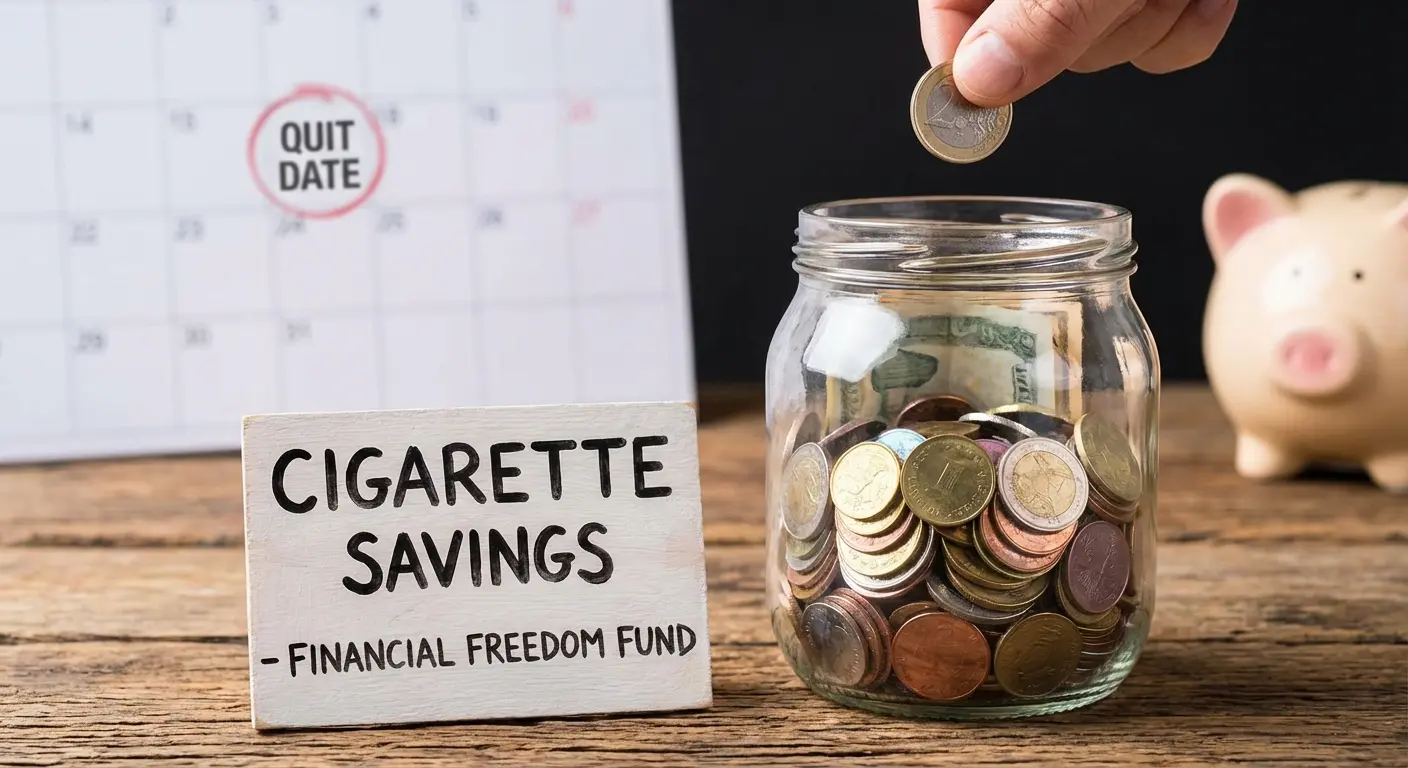
Pick a date within the next 7 days. Not “sometime next month” — a real date on the calendar. Research from the American Cancer Society shows that creating a structured quit plan significantly increases success rates compared to unplanned attempts. Write it down, tell someone you trust, and treat it like a commitment.
Know Your Triggers Before Day 1
Triggers are the situations, emotions, and habits that automatically prompt the urge to smoke. Common ones include: morning coffee, driving, after meals, stress at work, social drinking, and boredom. If you want to understand your triggers and why cravings happen, mapping them before your quit date lets you build specific responses rather than reacting in the moment.
Remove Tobacco Products from Your Environment
The night before your quit date: throw out every cigarette, lighter, ashtray, and spare pack. This includes the “emergency” pack in your car and the one in the back of the kitchen drawer. Access to cigarettes during a peak craving is a direct path to relapse — make that access as difficult as possible.
Build Your Support Network
Tell at least two people you’re quitting. Ask one of them if you can text them during hard moments. This isn’t about accountability in a pressured way — it’s about having a human anchor when your brain is telling you the craving is unbearable. The Smokefree.gov quit plan builder also helps you personalize your approach before your quit date.
The 7-Day Quit Smoking Plan (Day by Day)
What follows is a practical day-by-day framework — not a vague motivational outline, but specific actions to take on each day of your quit attempt. Adjust the details to your own triggers and lifestyle, but keep the structure.
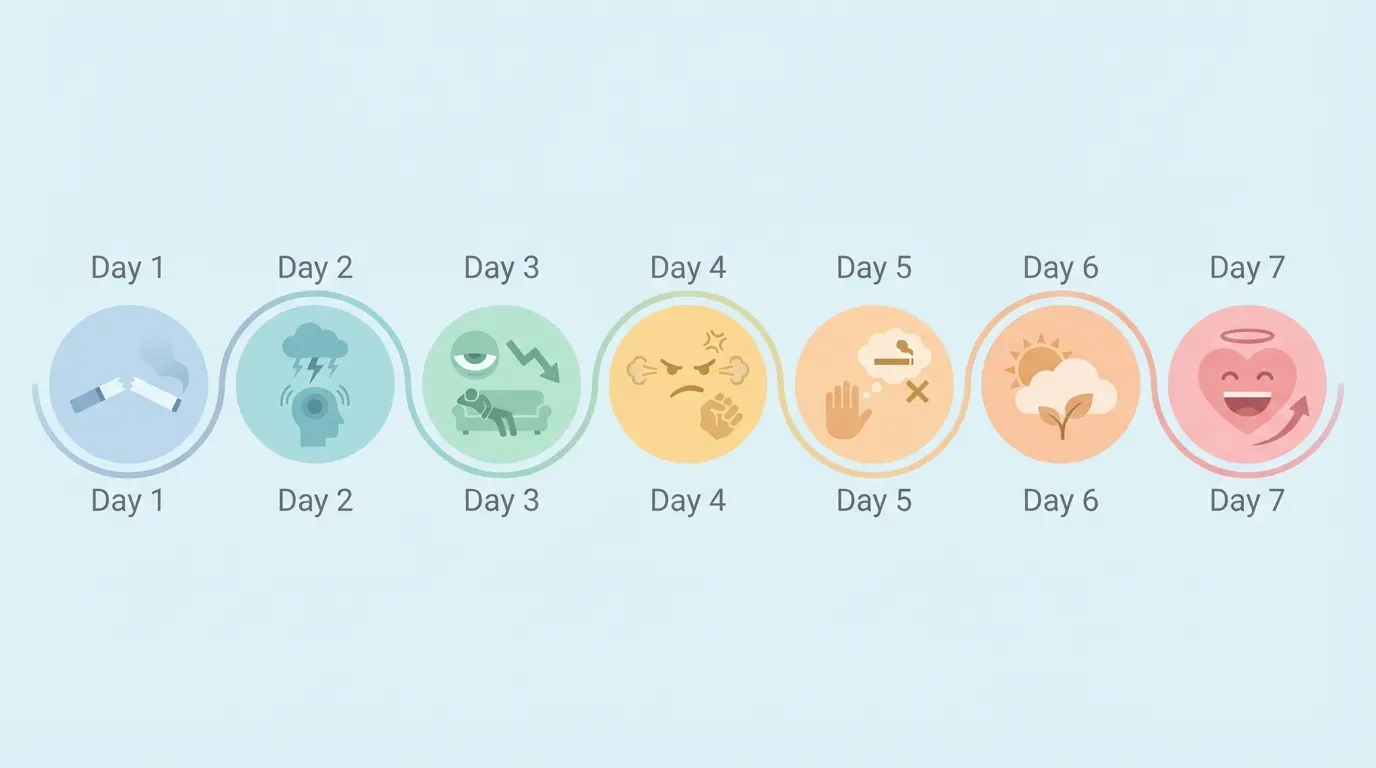
Day 1 — Quit Date: Commit and Control Your Environment
Your goal today: Get through the first 24 hours without a cigarette.
- Start NRT (patch, gum, or lozenge) if you’re using it — apply the patch first thing in the morning
- Keep your hands busy: chew sugar-free gum, drink water, hold a pen
- Change your morning routine slightly — if you always smoke with coffee, drink tea or move where you sit
- Text your support person when you feel a craving; simply saying “I want a cigarette” out loud (or in a message) reduces its intensity
Expect: Mild to moderate cravings, restlessness, heightened awareness of how often you used to smoke. This is normal.
Day 2 — Identify and Avoid Peak Trigger Situations
Your goal today: Navigate your first full day in your regular routine without smoking.
- Avoid alcohol today if possible — alcohol significantly lowers resolve and is one of the top relapse triggers
- After meals, go for a 5-minute walk instead of reaching for a cigarette
- Use the “4 D’s” for any craving: Delay (wait 5 minutes), Deep breathe (4-7-8 technique), Drink water, Do something else
- Check in with how you’re feeling emotionally — anxiety and irritability spike on day 2
Day 3 — The Peak: This Is the Hardest Day
Your goal today: Survive the biological peak of withdrawal without giving in.
- Plan your day around low-craving activities: physical movement, creative tasks, time in nature
- Have something crunchy to snack on — carrot sticks, celery, or sunflower seeds give your mouth something to do
- If you use a quit-smoking app like iQuit, use the SOS craving support feature during peak moments — the real-time coaching during a craving is particularly helpful on this day
- Remind yourself: every craving lasts 3–5 minutes. Set a timer. Do something for 5 minutes. The craving will pass.
Day 4 — The Fog Starts Lifting
Your goal today: Notice the physical improvements already happening.
- By day 4, carbon monoxide levels in your blood are near normal — your heart and lungs are already working better
- Sense of taste and smell begins returning (for many people, this is genuinely surprising and motivating)
- Review your reasons for quitting — write them down if you haven’t already
- Cravings should be slightly less frequent, though still intense when they come
Day 5 — Build New Micro-Habits
Your goal today: Replace the ritual of smoking with a different ritual.
- Pick one smoke-break slot you used to have (e.g., 10:30am at work) and replace it with a walk, a stretch, or 2 minutes of deep breathing
- Calculate the money you’ve saved in 5 days — most smokers are surprised by the number
- Prepare a short response for social situations where someone offers you a cigarette: “I quit” is a complete sentence
Day 6 — Manage Social and Emotional Triggers
Your goal today: Handle the social and emotional dimensions of quitting.
- If you’re around other smokers today, prepare mentally in advance rather than hoping willpower shows up
- Use mood tracking (available in apps like iQuit) to spot emotional patterns that precede cravings
- Acknowledge any negative emotions without using a cigarette to suppress them — even 5 minutes of sitting with an uncomfortable feeling builds the emotional muscle you need long-term
Day 7 — One Full Week: Recognize What You’ve Built
Your goal today: Consolidate progress and plan for week 2.
- One week smoke-free is a genuine milestone — take it seriously
- Physical symptoms of withdrawal should be significantly reduced (though cravings can still appear for weeks)
- Write down what worked this week and what was hardest — this becomes your personal quit playbook going forward
- Decide on your week 2 strategy: Are you staying on NRT? Will you seek additional support?
Your Craving Reduction Toolkit
Cravings are not emergencies, even though they feel like it. The key to surviving them is having specific responses ready before they hit — because when a craving peaks, your decision-making is impaired.
For a deeper look at effective strategies to manage withdrawal symptoms, including specific behavioral and physical coping methods, you’ll find a full breakdown of proven techniques. Here’s the core toolkit:
Immediate Craving Responses (Under 5 Minutes)
- Time it: Set a 5-minute timer. Most cravings peak and pass within that window.
- Cold water: Drinking a glass of cold water slowly gives your mouth and hands something to do.
- Physical movement: 10 jumping jacks or a quick walk disrupts the craving signal neurologically.
- Deep breathing: Inhale for 4 counts, hold for 7, exhale for 8. Repeat 3 times.
- Distraction task: Have one pre-decided task ready — a specific puzzle, a short video, a call to someone.
Behavioral Substitutions That Work
The cigarette ritual involves hand-to-mouth movement, a pause from activity, and a sensory experience. Substitutes that address all three elements work better than those that address only one.
- Toothpick or cinnamon stick (addresses oral fixation and hand movement)
- Herbal tea in the morning (replaces the morning cigarette ritual sensory experience)
- Short walks outside after meals (replaces the post-meal smoke break location and pause)
Stress-Based Craving Management
Stress is the number one relapse trigger for long-term ex-smokers. Building even a basic stress response toolkit before a high-stress moment arrives makes a measurable difference. What most people miss is that the goal isn’t to eliminate stress — it’s to stop automatically pairing stress with smoking. Progressive muscle relaxation, a 10-minute walk, or even a brief journaling session can interrupt that automatic response.
Nicotine Replacement and Medication Options Compared
Nicotine replacement therapy (NRT) roughly doubles your chances of quitting successfully compared to going cold turkey, according to the Mayo Clinic. The right choice depends on your smoking patterns, lifestyle, and personal preference.
| Option | How It Works | Best For | Notes |
|---|---|---|---|
| Nicotine Patch | Steady nicotine release over 16–24 hours | Heavy smokers, people who crave morning cigarettes | Apply to clean, dry skin; rotate sites |
| Nicotine Gum | “Chew and park” method delivers nicotine through gum tissue | People who want on-demand craving control | Don’t chew continuously — 30 chews then park |
| Nicotine Lozenge | Dissolves in mouth, absorbs through mucous membranes | People who prefer not to chew; discrete use | Don’t eat/drink 15 mins before use |
| Prescription Medication (Varenicline / Bupropion) | Reduces cravings and withdrawal symptoms at the brain level | Those who’ve failed NRT alone; heavy dependence | Requires doctor consultation; most effective overall |
| Combination NRT | Patch (background) + gum or lozenge (acute cravings) | Heavy smokers, multiple previous quit attempts | More effective than single NRT for heavy smokers |
The CDC’s quit smoking guide recommends talking to a healthcare provider about combination therapy if you smoke more than 20 cigarettes a day — a single patch or gum alone may not provide enough relief during peak withdrawal days.
Common Quit Smoking Mistakes and How to Avoid Them
Most people who’ve tried quitting before have made at least one of these — and some aren’t obvious until you understand the psychology of addiction.
Mistake 1: “Just One Cigarette Won’t Hurt”
It almost always does. For nicotine-dependent smokers, a single cigarette during the quit period can reset the craving cycle and restart withdrawal. This isn’t a moral failure — it’s neuroscience. One cigarette after 3 days smoke-free triggers the same dopamine response as before and tells your brain the habit is still active.
Mistake 2: Relying Only on Willpower
Willpower is a limited resource that depletes throughout the day — a well-established concept in behavioral psychology. Using it as your only strategy means you’re most vulnerable in the evening after a long, stressful day. That’s exactly when cravings tend to intensify. Structure and systems (NRT, support networks, scheduled activities) don’t deplete.
Mistake 3: Treating a Slip as a Failure
Most successful ex-smokers made multiple quit attempts before succeeding long-term. A slip on day 4 doesn’t erase the 4 days of progress. What determines the outcome is what you do after the slip. People who analyze what triggered the slip and adjust their plan almost always do better on their next attempt than they did before. Real stories from former smokers — like those shared in the CDC’s Tips From Former Smokers video series — consistently show that persistence through slips is a defining feature of those who eventually quit for good.
Mistake 4: Quitting During a High-Stress Period Without a Plan
Timing matters. Quitting during a predictably stressful period (a work deadline, a family crisis, moving house) stacks challenges against you. If you’re in a genuinely exceptional period of stress, it may be worth waiting 1–2 weeks and spending that time on preparation. That said — there’s rarely a “perfect” time. The goal is to avoid setting yourself up for unnecessary difficulty, not to wait indefinitely.
Mistake 5: Not Tracking Progress
What gets measured gets managed. Smokers who track craving frequency, intensity, and triggers over the first week learn their patterns faster and adapt their strategies more effectively. An app like iQuit — which includes journal and mood tracking alongside real-time craving data — gives you a concrete view of your progress that pure willpower-based quitting simply doesn’t provide.
Frequently Asked Questions About Quitting Smoking
How long do cigarette cravings last after quitting?
Individual cravings typically last 3–5 minutes, though they can feel much longer. Craving frequency is highest in the first 3 days and gradually decreases over 2–4 weeks. Some situational cravings (triggered by specific places, people, or emotions) can persist for months but tend to be less intense over time.
What is the most effective method to quit smoking?
Combining behavioral support with medication or NRT is the most effective approach, significantly outperforming cold turkey alone. According to the CDC and American Cancer Society, people using counseling plus NRT or prescription cessation medication have the highest long-term success rates. No single method works for everyone — the best method is the one you’ll actually use consistently.
Is it normal to feel worse before feeling better when quitting smoking?
Yes — this is one of the most common and least-discussed parts of quitting. Days 2–4 are typically worse than day 1 because nicotine blood levels drop sharply and withdrawal symptoms peak. Most people notice a meaningful improvement by days 5–7, with continued improvement over the following weeks.
Can I use nicotine gum and patches at the same time?
Yes — this is called combination NRT and is actually recommended for heavy smokers or those with multiple previous quit attempts. A patch provides a steady background level of nicotine throughout the day, while gum or lozenges address acute craving spikes. Talk to your doctor or pharmacist about the right dosage combination for your smoking history.
What should I do if I slip up and smoke a cigarette during my quit attempt?
Don’t treat it as a full relapse. Remove yourself from the trigger situation immediately, identify what caused the slip, and recommit to your plan the same day. Research consistently shows that smokers who analyze and learn from slips rather than abandoning their quit attempt achieve long-term cessation more often. A slip is data, not a verdict.
How much money will I save by quitting smoking?
Savings vary by country and how much you smoke, but a pack-a-day smoker in the US (where a pack averages $8–$10) saves roughly $2,900–$3,650 per year. Many quit-smoking apps calculate this automatically in real time, which serves as a powerful ongoing motivator throughout the quit process.
Take the Next Step in Your Quit Journey
Knowing how to quit smoking is only the beginning — the right tools make the difference between a plan on paper and one that actually holds up under pressure.
Here’s how to go deeper:
- Understand your personal smoking triggers — knowing why cravings happen helps you predict and prepare for them before they hit.
- Explore a full range of effective quitting strategies — including withdrawal management techniques and behavioral tools for the weeks ahead.
- For a comprehensive step-by-step quit plan with evidence-based phases from quit day through the first three months, see our detailed guide on how to quit smoking: the step-by-step plan for 2026.
- Use the Smokefree.gov quit plan builder to create a personalized plan based on your specific habits and triggers.
- If you want daily progress tracking, craving alerts, and AI-powered coaching in your pocket, the iQuit app (available on Google Play) brings together health recovery timelines, mood tracking, and an emergency SOS craving tool — all in one place.
The first 7 days are the hardest. You now have a plan for all of them.