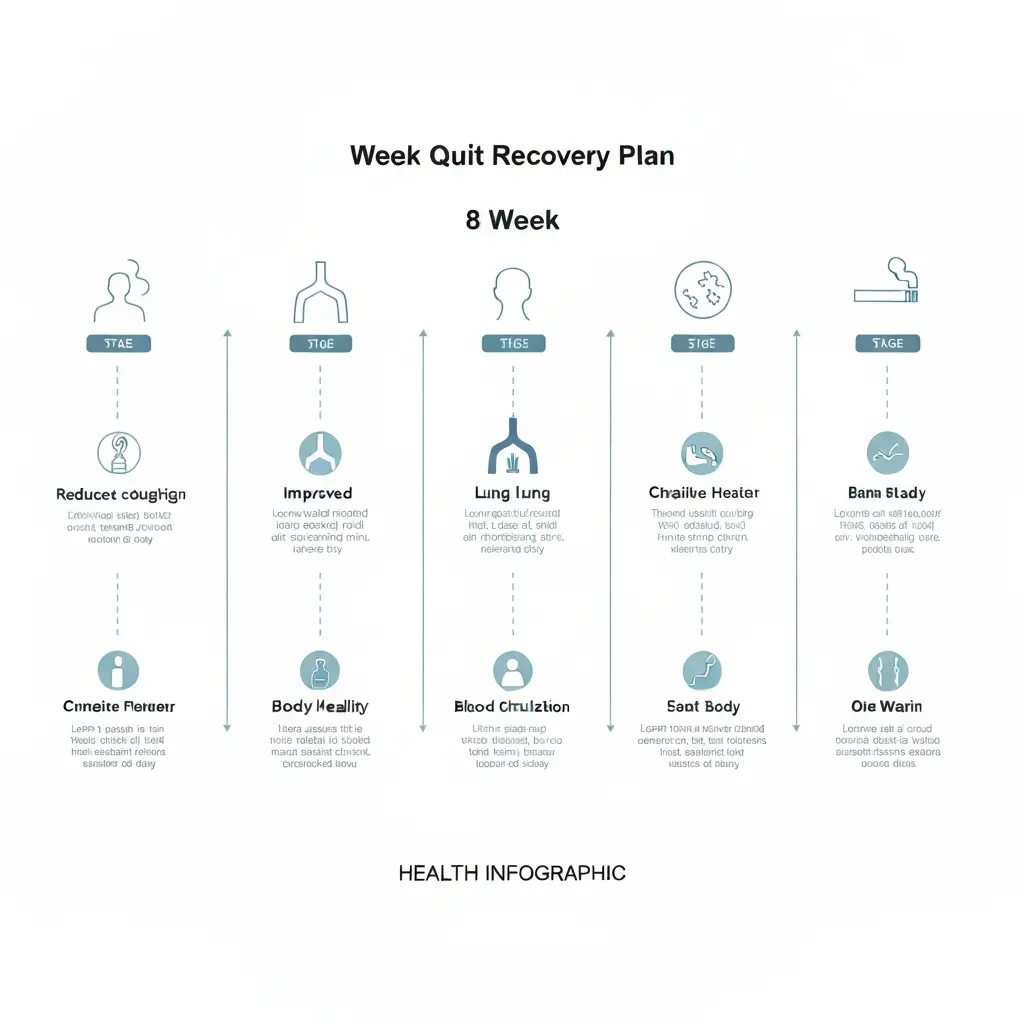
Quit Smoking: The Complete 8-Week Recovery Plan
Most people who want to quit smoking don’t fail because they lack willpower. They fail because they don’t have a plan. Cold turkey works for about 3–5% of smokers long-term — that’s not a strategy, that’s a lottery ticket. What actually works is a structured, week-by-week approach that addresses the physical addiction, the behavioral triggers, and the psychological patterns all at once.
This 8-week recovery plan is built on the same evidence base that informs WHO’s first-ever clinical tobacco cessation guidelines and the behavioral frameworks used by cessation specialists. It’s practical, honest about what’s hard, and specific enough to actually follow.
For more on this topic, see our guide on quit smoking.
If you’ve tried before and it didn’t stick, that’s not a character flaw. CDC data shows that among U.S. adult smokers who wanted to quit, only about 8% successfully quit in any given year. But here’s what that same data reveals: people who quit successfully average 8–11 attempts before achieving long-term abstinence. Each attempt teaches you something. This plan helps you apply those lessons systematically.
Why Quitting Smoking Matters More Than You Think
The health case for quitting is well-known. But the financial and psychological case is often underestimated — and that’s where a lot of motivation lives.
A pack-a-day smoker in the United States spends roughly $2,500–$3,500 per year on cigarettes alone (before accounting for healthcare costs, insurance premiums, or lost productivity). The Smokefree.gov savings calculator makes this concrete — plug in your pack count and price per pack, and you’ll see what quitting is actually worth over 1, 5, and 10 years. For many people, seeing “$35,000 over 10 years” displayed in plain numbers is more motivating than any health statistic.
Beyond money, there’s the psychological weight. Smokers consistently report feeling controlled by their habit — planning travel around smoking breaks, stepping outside in the cold, feeling anxious when a flight runs long. Quitting isn’t just a health decision. It’s reclaiming agency.
The American Lung Association documents health improvements beginning within 20 minutes of the last cigarette and continuing for years. Within 1 year, your excess risk of coronary heart disease drops by half. Within 5 years, stroke risk falls to that of a non-smoker. Within 10 years, your lung cancer risk is roughly half that of a current smoker.
These aren’t abstract statistics. They’re the biological reality of what’s waiting on the other side of this 8-week plan.
Before You Quit: The Assessment Phase
Jumping straight to a quit date without self-assessment is like starting a road trip without knowing where you’re going. Before Week 1 officially begins, spend 3–5 days gathering specific information about your smoking pattern.
How to Audit Your Smoking Habits
For two to three days before your quit date, carry a piece of paper wrapped around your cigarette pack. Every time you smoke, record:
- The time — when exactly did you light up?
- Your mood — stressed, bored, happy, anxious, automatic?
- The trigger — coffee, driving, after meals, phone calls?
- How necessary it felt — rate 1–5, where 5 is “couldn’t imagine not smoking right now”
What this reveals is that most cigarettes fall into two categories: high-craving (true physiological need) and habitual/automatic (social, situational, or emotional cues). Understanding this split is the foundation of everything that follows. For a deeper look at how trigger identification works, the guide on top strategies to quit smoking successfully covers the psychology of smoking addiction and trigger mapping in detail.
Assessing Your Nicotine Dependence Level
The Fagerström Test for Nicotine Dependence is a clinically validated 6-question tool that predicts how much withdrawal support you’ll need. Two questions carry the most weight:
- Do you smoke within 30 minutes of waking? (Yes = higher dependence)
- How many cigarettes do you smoke per day? (20+ = higher dependence)
Higher dependence scores strongly predict that quitting without pharmacological support (NRT, varenicline, or bupropion) will be extremely difficult. This isn’t a judgment — it’s information that helps you choose the right tools.

Weeks 1–2: Preparation and Quit Day
These two weeks are about building structure before the hardest moment — your actual quit day. The research is clear: a planned quit attempt with specific coping strategies outperforms spontaneous ones by a significant margin.
Week 1: Pre-Quit Preparation Checklist
- Set a specific quit date — ideally 7–14 days out. Not “soon.” A date on the calendar.
- Choose your NRT or medication approach — talk to your doctor or pharmacist. Start NRT on your quit day (or as directed for medications like varenicline, which require 1 week of pre-loading).
- Remove environmental cues — throw away all cigarettes, lighters, and ashtrays the night before your quit date. Clean your car. Wash clothes that smell of smoke.
- Tell three specific people — not a general announcement, but individual conversations with people whose support actually matters to you.
- Create your craving response plan — identify 3 short activities (under 5 minutes) you’ll do when a craving hits. Write them down.
- Build your quit plan — the Smokefree.gov quit plan builder walks you through a personalized structure in about 10 minutes.
Week 2: Your Quit Day and First 72 Hours
The first 72 hours are pharmacologically the most intense. Nicotine has a half-life of about 2 hours — by the time 3 days have passed, it’s largely cleared from your system. What you’re experiencing after that is psychological craving, not pure physiological withdrawal.
On quit day specifically:
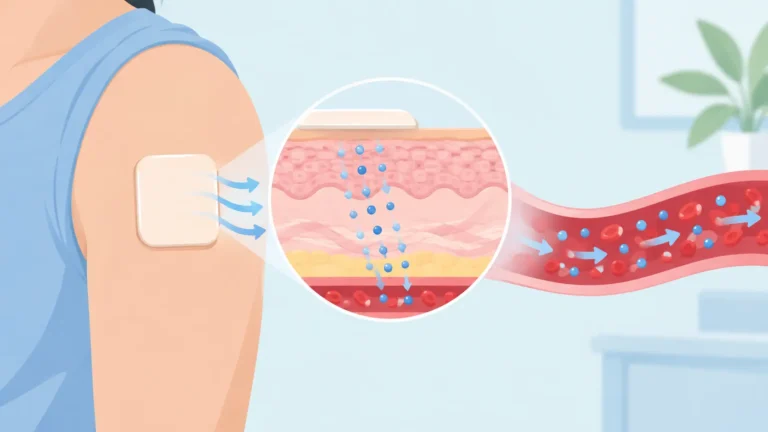
- Start your NRT as planned (patch, gum, lozenge, inhaler)
- Drink water more than usual — it helps flush nicotine metabolites and gives your hands and mouth something to do
- Change your morning routine deliberately — if you always smoked with coffee, drink it in a different room or on a walk
- Use the 4 Ds when cravings hit: Delay (wait 5 minutes), Deep breathe, Drink water, Do something different
Most cravings peak at 3–5 minutes and then subside. That’s the physiological reality. If you can ride out 5 minutes, you can ride out the craving.
Weeks 3–4: Managing Withdrawal and Early Cravings
By Week 3, the acute nicotine withdrawal is fading — but this is paradoxically when many people relapse. The initial adrenaline of “I’m doing this” wears off, and the triggers you haven’t yet addressed start pulling hard.
Common Withdrawal Symptoms and Evidence-Based Responses
| Symptom | Typical Duration | Evidence-Based Response |
|---|---|---|
| Intense cravings | 1–4 weeks (peaks at 2–3 days) | NRT, 4 Ds technique, distraction activities |
| Irritability/mood changes | 2–4 weeks | Exercise, mindfulness, communication with support network |
| Sleep disruption | 1–3 weeks | Avoid nicotine patch during sleep if vivid dreams occur; wind-down routine |
| Increased appetite/weight gain | Ongoing (first 3–6 months) | Structured healthy snacks, sugar-free gum, moderate exercise |
| Difficulty concentrating | 1–2 weeks | Short work blocks (25 min), hydration, brief walks |
| Coughing (increased temporarily) | 1–3 weeks | Normal healing response; stay hydrated, it resolves |
Here’s where it gets interesting: the anxiety and irritability you’re feeling aren’t nicotine “leaving your body” in any mystical sense. You’re experiencing the removal of a substance that temporarily suppressed those feelings — and your brain hasn’t yet recalibrated its baseline. This normalizes within 3–4 weeks for most people.
Practical Craving Management Techniques for Weeks 3–4
The behavioral swaps that work best are ones that address the same underlying need the cigarette was serving. For a stress-relief smoke, try box breathing (4-4-4-4 pattern) or a 3-minute cold water splash. For a boredom smoke, keep your hands occupied with a stress ball, pen, or even a toothpick. For social smokes, plan your first alcohol-involved social events carefully — alcohol is the single biggest relapse trigger, period.
For more practical techniques covering these specific scenarios, the article on effective strategies to help you quit smoking provides additional methods worth adding to your toolkit during these critical weeks.

Weeks 5–6: Behavioral Rewiring and Trigger Work
Weeks 5 and 6 are where the real behavioral work happens. You’re past the worst of physical withdrawal, but your brain’s habit loops are still wired for smoking in dozens of specific contexts.
Understanding Your Smoking Triggers
The most common trigger categories are:
- Emotional triggers — stress, anxiety, loneliness, boredom, celebration
- Situational triggers — driving, coffee, after meals, work breaks
- Social triggers — other smokers, alcohol, certain friends or settings
- Sensory triggers — the smell of smoke, seeing a lighter
Go back to your pre-quit smoking audit from Week 1. Your highest-frequency triggers are where you need to build the most specific response plans. This isn’t about willpower — it’s about designing your environment and responses so the default action is no longer reaching for a cigarette.
Behavioral Substitution — What Works and What Doesn’t
Telling yourself “I won’t smoke after dinner” creates a vacuum. Your brain hates vacuums. What works is replacing the behavior with something that satisfies a similar need:
- After-meal trigger: Immediately stand up and take a 5-minute walk, or brush your teeth. Both break the association and occupy the transition window.
- Stress trigger: Physical movement is genuinely the most effective short-term stress reliever (more so than the temporary relief nicotine provides). Even 2 minutes of brisk walking reduces cortisol measurably.
- Boredom trigger: Keep your hands and mouth occupied. Some people find that sunflower seeds, chewing gum, or even a straw help with the oral fixation component.
- Social pressure trigger: Rehearse your response to being offered a cigarette. Out loud, to yourself, before you’re in the situation. This sounds odd but dramatically reduces the “freeze” response when it happens in real life.
For more on the underlying behavioral science of smoking addiction — including how cue-reward loops form and how to interrupt them — the resource on quit smoking strategies and trigger management covers this in depth.
Weeks 7–8: Stabilization and Long-Term Maintenance
By Week 7, most people who’ve followed the plan have crossed a threshold that’s hard to describe until you’re there: smoking stops feeling like something you’re desperately trying not to do, and starts feeling like something that just… isn’t part of your life anymore.
That said, stabilization isn’t complacency. This phase is about consolidating what’s working and building the systems that will carry you through the high-risk moments ahead.
Week 7: NRT Tapering and Support Adjustment
If you’ve been using nicotine replacement therapy, most guidelines recommend beginning to reduce your dose around the 8–12 week mark (the exact timing depends on your product and dependence level — follow the product guidance and consult your pharmacist or doctor). Tapering too fast leads to a withdrawal spike; tapering too slow can maintain nicotine dependence in a lower-cost form.
Review your support network at this point. Who has been genuinely helpful? Who has accidentally added pressure? Adjust accordingly. Some people find that cessation support groups (online or in-person) become more valuable at this stage, when the acute crisis has passed and the maintenance challenge begins.
Week 8: Building Your Long-Term Maintenance Plan
The research on long-term quit rates consistently shows that the risk of relapse remains elevated for 6–12 months after quitting. That’s not discouraging — it’s a planning input. Here’s what a maintenance plan should include:
- High-risk situation identification — list the 5 situations most likely to trigger a relapse for you specifically. Plan for each.
- Emergency craving response — have a 5-step craving emergency plan written somewhere accessible. When a craving hits hard, cognitive function drops. You need the plan written down before you need it.
- Progress tracking — regularly checking in on days smoke-free, health milestones, and money saved is a proven motivational tool. Apps like iQuit automate this — tracking your health recovery timeline, money saved, and triggering an SOS mode during intense cravings, which is genuinely useful when you’re driving and can’t call someone.
- Response plan for slips — a single cigarette is not a relapse. A slip is data. What triggered it? What will you do differently? The framing here matters enormously: smokers who treat a slip as proof they’ve “failed” are far more likely to fully relapse than those who treat it as information.

Quit Smoking Medications and NRT: What the Evidence Says
The evidence on pharmacological support for quitting is one of the clearest in behavioral medicine. This isn’t controversial — using appropriate medication significantly increases your odds of long-term success.
Comparing Quit Smoking Treatment Options
| Treatment | Type | Effectiveness vs. Placebo | Key Considerations |
|---|---|---|---|
| Nicotine patch | NRT | ~1.6x more likely to quit | Steady delivery; combine with fast-acting NRT for best results |
| Nicotine gum/lozenge | NRT | ~1.5–1.7x more likely to quit | Good for craving spikes; requires correct use technique |
| Varenicline (Champix/Chantix) | Prescription | ~2.5x more likely to quit | Most effective single agent; requires prescription; monitor mood |
| Bupropion | Prescription | ~1.7x more likely to quit | Also treats depression; contraindicated in some conditions |
| Combination NRT (patch + fast-acting) | NRT | ~1.9x more likely to quit | More effective than single NRT; widely available OTC |
| Cold turkey (no aid) | None | Baseline | 3–5% long-term success rate without support |
The Cochrane systematic review on smoking cessation interventions provides the most rigorous comparison available. The headline finding: combination pharmacotherapy (especially varenicline or combination NRT) combined with behavioral support is consistently the most effective approach.
E-cigarettes are a separate and more complicated question. Current evidence suggests they can help some smokers reduce or quit, but the long-term health profile remains unclear. The WHO’s 2024 guideline does not recommend e-cigarettes as a first-line cessation tool. For smokers who have repeatedly failed with standard NRT, it’s a conversation worth having with a healthcare provider.
What Happens to Your Body After You Quit Smoking
One of the most powerful motivational tools available is knowing, in concrete terms, what’s actually happening in your body on any given day after your last cigarette. The timeline of recovery is faster than most people expect.
The Quit Smoking Health Recovery Timeline
| Time Since Last Cigarette | What’s Happening in Your Body |
|---|---|
| 20 minutes | Heart rate and blood pressure begin to drop toward normal levels |
| 8–12 hours | Carbon monoxide levels in blood drop by half; oxygen levels normalize |
| 24–48 hours | Carbon monoxide fully cleared; nerve endings begin regenerating; smell and taste start improving |
| 72 hours | Nicotine metabolites largely cleared; bronchial tubes begin relaxing; lung capacity starts increasing |
| 2–3 weeks | Circulation improves; lung function increases measurably; walking becomes easier |
| 1–9 months | Cilia in lungs regenerate; chronic cough and sinus congestion reduce significantly |
| 1 year | Excess risk of coronary heart disease is half that of a smoker |
| 5–10 years | Stroke risk falls to that of a non-smoker; lung cancer risk halves |
| 15 years | Risk of coronary heart disease approaches that of a lifetime non-smoker |
Tracking these milestones in real time is surprisingly motivating. The iQuit app’s health recovery timeline feature maps exactly where you are in this progression, updating in real time based on your quit date — which turns an abstract timeline into personal, visible progress.
Relapse Prevention Strategies That Actually Work
Relapse prevention isn’t about gritting your teeth harder. It’s about understanding the predictable patterns that lead to relapse and designing your life around them.
The Three High-Risk Categories
Research on relapse consistently identifies three categories that account for the majority of smoking relapses:
- Negative emotional states — stress, anxiety, depression, frustration, loneliness. This is the single biggest category, accounting for roughly 35% of relapses.
- Social situations — being around smokers, alcohol consumption, social pressure. About 20% of relapses.
- Positive emotional states — celebration, relaxation, reward-seeking. Often overlooked. “I’ve done so well, one won’t hurt” is one of the most dangerous thoughts an ex-smoker can have.
The counterintuitive insight here is that positive emotional contexts are actually more dangerous than many people expect. The associative memory of “smoking to celebrate” or “smoking to relax” is deeply embedded — and it gets activated precisely when vigilance is lowest.
What to Do If You Slip
Fair warning: this section is worth reading before you need it, not during.
If you smoke a cigarette after quitting, the evidence-based response is:
- Don’t catastrophize. One cigarette doesn’t erase weeks of progress.
- Identify exactly what triggered it — be specific, not vague.
- Recommit immediately. Set a new quit time (within hours, not days).
- Update your plan to address the specific trigger that caused the slip.
- Don’t reduce NRT or medication in response to a slip.
The slip-to-full-relapse transition is almost always driven by the thought “I’ve already failed, so it doesn’t matter.” That thought is the relapse, not the cigarette. Catching it and rejecting it is the actual skill.
Your 8-Week Quit Smoking Checklist
Print this, save it, or screenshot it. Concrete tracking beats vague intention every time.
Pre-Quit Week: Assessment
- ☐ Complete 3-day smoking audit (time, mood, trigger, necessity rating)
- ☐ Assess nicotine dependence level (Fagerström questions)
- ☐ Choose pharmacological support approach (discuss with doctor/pharmacist)
- ☐ Set specific quit date on calendar
Weeks 1–2: Preparation and Quit Day
- ☐ Remove all cigarettes, lighters, and ashtrays the night before quit day
- ☐ Start NRT/medication as directed
- ☐ Tell three specific people your quit date
- ☐ Create written craving response plan (3 activities under 5 minutes)
- ☐ Build personalized quit plan at Smokefree.gov
- ☐ Change morning routine on quit day
Weeks 3–4: Withdrawal Management
- ☐ Track withdrawal symptoms and responses daily
- ☐ Implement behavioral substitutions for top 3 triggers
- ☐ Increase water intake; reduce alcohol
- ☐ Add brief daily exercise (even 10 minutes counts)
- ☐ Check in with support person weekly
Weeks 5–6: Behavioral Rewiring
- ☐ Complete trigger map from pre-quit audit
- ☐ Build specific response plan for top 5 triggers
- ☐ Rehearse social pressure response (out loud)
- ☐ Identify and plan around first high-risk social situation
Weeks 7–8: Stabilization
- ☐ Begin NRT tapering per product guidance (or as advised by doctor)
- ☐ Create 12-month maintenance plan
- ☐ Write emergency craving response plan
- ☐ Identify top 5 long-term relapse risks and plan for each
- ☐ Calculate money saved and plan how to spend it (reinforcement)
Frequently Asked Questions About Quitting Smoking
How long does it take to quit smoking successfully?
Most pharmacological and behavioral support protocols run 8–12 weeks. Physical nicotine withdrawal peaks in the first 72 hours and largely resolves within 2–4 weeks. Psychological cravings and behavioral triggers can persist for 3–6 months, which is why an 8-week structured plan addresses both phases — not just the initial withdrawal period.
What are the most effective quit smoking tips for long-term success?
The most consistently effective quit smoking tips, backed by clinical evidence, are: using combination pharmacotherapy (NRT patch plus fast-acting NRT, or prescription medication), setting a planned quit date rather than quitting spontaneously, identifying and planning for personal triggers, building a support network, and having a written relapse response plan before you need one. Using multiple strategies together dramatically increases success rates compared to any single approach.
How do I quit smoking when I’ve tried and failed before?
Previous quit attempts are not failures — they’re practice. Research shows that most people who quit long-term make 8–11 attempts first. The key is to analyze what specifically triggered the last relapse (stress, social situation, alcohol, overconfidence) and build a more specific plan around that trigger. If you’ve tried without pharmacological support, this is the strongest single change you can make — varenicline roughly doubles the quit rate compared to willpower alone.
Does nicotine replacement therapy (NRT) really work for quitting smoking?
Yes — NRT is one of the most rigorously proven interventions in medicine. Compared to placebo, NRT increases the likelihood of successfully quitting by approximately 50–70%. Combination NRT (using a patch for steady delivery alongside gum or lozenge for craving spikes) is more effective than either product alone. The key is using it correctly and for long enough — most people stop too early.
What happens to your body when you quit smoking?
Within 20 minutes of quitting, heart rate and blood pressure begin normalizing. Within 8–12 hours, carbon monoxide levels drop significantly. Within 2–3 weeks, lung capacity measurably improves. Within 1 year, excess risk of heart disease is halved. Within 5–15 years, stroke and lung cancer risks approach those of a non-smoker. The body’s recovery timeline is faster than most people expect.
How do I manage cravings after quitting smoking?
Most nicotine cravings peak at 3–5 minutes and then subside — so the primary goal is outlasting them. The 4 Ds technique (Delay 5 minutes, Deep breathe, Drink water, Do something different) addresses cravings in the moment. NRT reduces the intensity of physiological cravings. Behavioral substitutions (exercise, cold water, oral alternatives) help with situational and habitual cravings. Having a written craving response plan prepared in advance is more effective than trying to improvise in the moment.
Additional Resources for Your Quit Smoking Journey
These resources are worth bookmarking as you work through the 8-week plan:
- Mayo Clinic: Strategies to Quit Smoking (Video) — A concise clinical overview of evidence-based cessation methods from Mayo Clinic physicians.
- The Dangers of Smoking and Vaping — Help to Quit (Video) — Covers health risks of both smoking and vaping with cessation guidance.
- American Lung Association: Quit Smoking Resources — Hotlines, tools, and evidence-based programs including the Freedom From Smoking program.
- Smokefree.gov: Build Your Personal Quit Plan — Free, personalized quit plan generator from the National Cancer Institute.