If you are asking can smoking cause chest pain because your chest hurts right now, read this first: sudden chest pain or pressure that does not go away is an emergency. Call 911 in the US or 999 in the UK before you read anything else. For everyone else, the short version is yes, smoking can cause chest pain in several different ways, and some of them are serious enough that a check-up is worth it.
When to call 911 or 999 first
Do not try to work out the cause of chest pain while it is happening. The NHS says to call 999 if you get “sudden pain or discomfort in your chest that does not go away,” which “can feel like squeezing or pressure inside your chest, burning or indigestion.” Call as well if the pain spreads to your arm, neck, jaw, stomach or back, or if you have chest pain and feel “sweaty, sick, light headed or short of breath” (NHS: chest pain).
The US National Heart, Lung, and Blood Institute gives the same instruction for angina: “If you have chest pain that does not go away, call 9-1-1 immediately” (NHLBI: angina). The NHS heart attack page also says not to drive yourself to A&E; the person you speak to at 999 will tell you what to do.
It is better to be told it was heartburn at the hospital than to wait at home through a heart attack. No one will think you are wasting their time.
Can smoking cause chest pain? Why it happens
There is no single mechanism. Smoking shows up as a risk factor for several different causes of chest pain, and which one you have decides how worried you should be.
| Cause | What it can feel like (NHS) | Smoking link |
|---|---|---|
| Angina or heart attack | Tightness, squeezing or pressure; may spread to arms, neck or jaw | Smoking raises the likelihood of both |
| Heartburn or indigestion | Starts after eating; bitter fluid; bloating | Smoking can cause or worsen reflux |
| Chest infection or pleurisy | Worse when you breathe in; green or yellow mucus; fever | See the airways section below |
| Muscle strain | Worse when you breathe in; eases when the muscle rests | Heavy coughing can strain the chest wall |
| Anxiety or panic | Sharp, continuous pain; fast heartbeat; sweating | Not directly, but nicotine cravings and withdrawal can feel anxious |
The causes and symptom descriptions in this table come from the NHS, which adds a warning that matters here: “Do not self-diagnose – see a GP if you’re worried.” Several of these causes feel alike from the inside.
Angina and heart attack: the serious causes
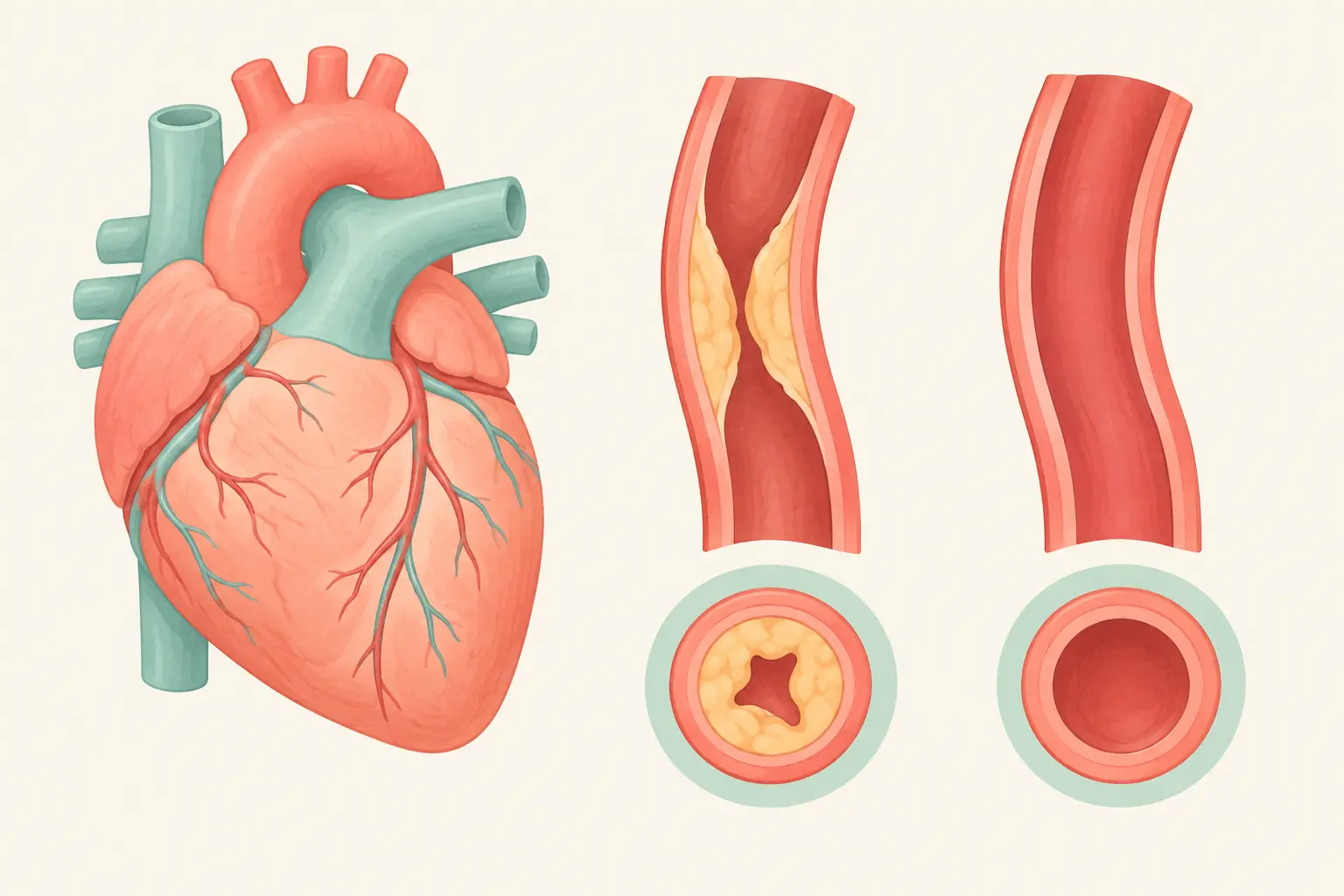
Angina is chest pain or discomfort that happens when part of the heart does not get enough oxygen-rich blood. The NHS explains that it happens “when the heart does not get enough blood,” usually because of coronary heart disease, where “the blood vessels supplying blood to the heart become narrowed or blocked by fatty deposits.” It can also be caused by heart blood vessels that tighten when they should not, called vasospastic angina.
Smoking is on the NHS list of things that make angina more likely, and the NHS also lists smoking among the reasons you are more likely to have a heart attack. The NHLBI names “smoking tobacco or long-term exposure to secondhand smoke” among the main lifestyle risk factors for angina. The NHS puts atherosclerosis, the fatty narrowing of arteries, down partly to lifestyle factors “such as smoking.”
A few practical details from the NHS help you tell angina apart from a heart attack, though only a clinician can do that for you:
- Angina “attacks usually last less than 10 minutes and should stop after resting for a few minutes or taking your angina medicine.”
- Pain that does not stop after resting, or that comes with sweating, nausea or breathlessness, is treated as a possible heart attack.
- Angina “can even feel like an upset stomach,” according to the NHLBI, so absence of a classic crushing pain does not rule it out.
Whether nicotine on its own is part of the problem, separate from smoke, is a common follow-up question, and we look at it in is nicotine bad for your heart. If you have already had a heart event, our article on quitting smoking after a heart attack covers what changes and what helps.
Heartburn and reflux: the non-cardiac cause
A great deal of smoker’s chest pain is not the heart. The NHS says heartburn and acid reflux are “sometimes caused or made worse by” a list of things that includes smoking, and its self-care advice includes “do not smoke.” That burning feeling behind the breastbone after a meal, with a sour taste, is a classic pattern.
The trouble is that reflux and angina can feel alike. Treat a new burning chest pain with the same caution as any other until a clinician has seen you, particularly if it comes on with exertion, spreads to the arm or jaw, or does not follow a meal.
Cough, airways and muscle strain
Chest pain that gets worse when you breathe in, comes with a fever, or goes along with yellow or green mucus points the NHS toward a chest infection, pneumonia or pleurisy rather than a heart problem. A chest sprain or strain, in contrast, is described as pain that “may get worse when you breathe in” and “feels better when resting the muscle.”
Smokers who cough a lot can strain the muscles around the ribs, which is one plausible route from a cigarette habit to a sore chest. There is no measured figure for how often this happens, so treat it as a possibility rather than a rule. If your cough has changed, lasts for weeks or brings up blood, read our guide to smoker’s cough signs and red flags, because those need to be checked.

Getting checked: what a doctor might do
For chest pain that comes and goes, the NHS says to see a GP, and to see one even if the pain “goes away quickly but you’re still worried.” If a GP thinks you may have angina, you will be referred to a heart specialist and may have tests such as blood tests, an electrocardiogram (ECG) to check the electrical activity of the heart, and scans including an angiogram, MRI or CT.
The NHLBI describes the US approach in a similar way: a provider asks about your symptoms and may order blood tests, an X-ray image, an ECG or an exercise stress test to find out how well your heart is working. Tell the clinician plainly how much you smoke and for how long, since it changes how they judge your risk.
What changes after you quit, and chest tightness in withdrawal
Stopping smoking is on both the NHS and NHLBI lists of things that reduce the chance of angina attacks and heart problems. The NHS angina page says simply “try to quit smoking, if you smoke.” Our overview of what happens to your body when you stop smoking lays out the recovery timeline from the first day onward.
One thing can confuse people: chest tightness is also reported after quitting, as part of withdrawal, which we cover in chest tightness after quitting smoking. That does not make new chest pain safe to ignore. If it is sudden, heavy, or spreads, use the emergency rules above. The nicotine withdrawal timeline shows which symptoms are normal and when they usually fade.
Turning the scare into a quit plan
A frightening chest-pain episode can be a powerful motivator, and it is a good moment to act while it is fresh. Once you have been checked, or while you wait for an appointment, write down your plan:
- Pick a start date within the next week and tell one person.
- Ask your doctor or pharmacist about nicotine replacement or prescription options that suit your health.
- Remove cigarettes, lighters and ashtrays from your home and car.
- List your three biggest trigger moments and decide what you will do instead.
Be kind to yourself if a first attempt does not hold. Many people need more than one try.
Use the first smoke-free days well
If chest pain has made you want to stop, the first days are the hardest part. iQuit is built for that stretch: you can log each craving with its trigger and how strong it was, use the SOS craving tools when an urge hits, and see your smoke-free days and money saved add up on the dashboard. You can quit cold turkey or by gradual reduction, whichever your doctor and you agree suits you.
iQuit does not assess symptoms and cannot tell you what is causing chest pain. Get medical help for the pain first, and use the app for the quit.
Start your smoke-free days with support
Log cravings, track money saved and get craving support when it counts. iQuit is free on Google Play and the App Store.
Download iQuit Free on Google Play
Download on the App Store
Frequently Asked Questions
Can smoking cause chest pain?
Yes. Smoking is a risk factor for angina and heart attack, can cause or worsen heartburn, and is linked to airway problems that hurt when you breathe. The NHS says most chest pain is not serious, but you should get medical advice just in case (NHS, 2023).
Why does my chest hurt when I smoke?
There are several possible causes, including reflux, irritated airways, a strained chest muscle or reduced blood flow to the heart. Because these can feel alike, the NHS advises not to self-diagnose and to see a GP if you are worried, especially if the pain comes and goes (NHS).
When should I call 911 or 999 for chest pain?
Call right away for sudden chest pain or pressure that does not go away, pain spreading to your arm, neck, jaw, stomach or back, or chest pain with sweating, nausea, light-headedness or shortness of breath. Do not drive yourself to the hospital (NHS; NHLBI).
Can smoking cause angina?
It raises the likelihood. The NHS lists smoking among the things that make angina more likely, and the NHLBI names smoking tobacco or long-term secondhand smoke exposure as a main lifestyle risk factor. Angina happens when part of the heart does not get enough blood (NHS; NHLBI).
How long does angina pain last?
The NHS says angina attacks usually last less than 10 minutes and should stop after resting for a few minutes or taking your angina medicine. If chest pain does not stop after resting, call 999 or 911 because it could be a heart attack (NHS, 2025).
Can heartburn from smoking feel like a heart attack?
Yes, the two can feel alike, and the NHLBI notes that angina can even feel like an upset stomach. The NHS says smoking can cause or worsen acid reflux. If a burning chest pain is new, severe or comes with exertion or sweating, treat it as an emergency (NHS; NHLBI).
Will my chest pain go away if I quit smoking?
Stopping smoking is advised for heart health by the NHS and NHLBI and lowers your risk of heart problems over time. Chest tightness can also appear briefly during withdrawal. Any new, severe or persistent chest pain still needs a medical check, whatever you smoke or have quit (NHS; NHLBI).