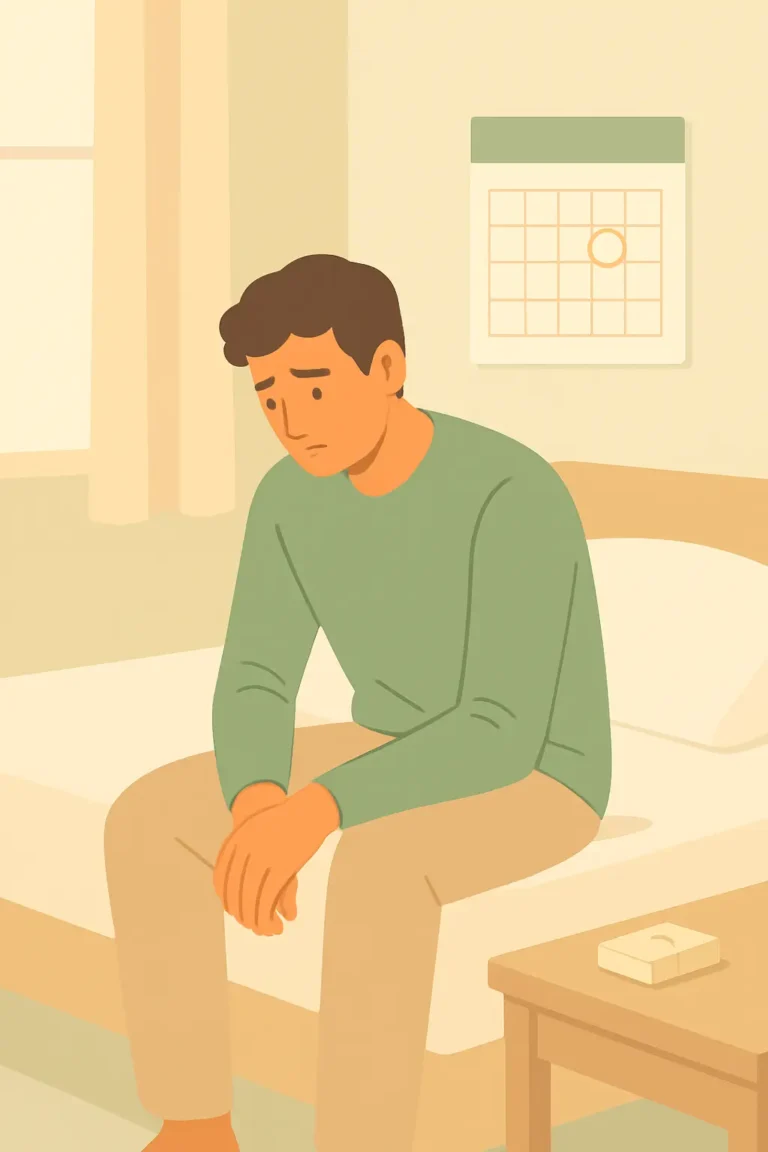

If you have just had a heart attack and you still smoke, quitting smoking after a heart attack is one of the few things you can do this week that measurably changes your odds of a second one. It is not a lifestyle suggestion tucked in alongside diet and exercise advice — for someone recovering from a cardiac event, it sits at the top of the list. Cochrane’s reviewers describe it as potentially the most effective secondary prevention measure there is.
That can feel overwhelming at the exact moment you have the least capacity to deal with it. You are frightened, you are in a hospital bed or just out of one, and the thing that used to calm you down is the thing you are now being told to give up entirely. This guide walks through what quitting actually does to your risk, whether nicotine replacement therapy (NRT) and varenicline are safe to use so soon after a cardiac event, and what to do if you slip.
Call emergency services (911 in the US, 999 in the UK) if you have:
- Chest pain that feels tight or like squeezing, especially spreading to your arms, neck or jaw
- Severe difficulty breathing — gasping, choking, or unable to get words out
- Lips or skin turning pale, blue or grey
- Sudden collapse, or someone not responding normally
Source: NHS — Heart attack. If symptoms are milder but new — breathlessness on less exertion than usual, or chest discomfort with nausea — do not wait it out at home. Contact your cardiac team, or use your local non-emergency line (111 in the UK).
How much quitting cuts your risk of a second event
The core message from cardiac secondary-prevention research is consistent, even where exact percentages vary by study population: continuing to smoke after a heart attack keeps working against every other treatment you are given. The Cochrane Database of Systematic Reviews, in its review of psychosocial interventions for smoking cessation in people with coronary heart disease, states plainly that “quitting smoking is potentially the most effective secondary prevention measure and improves prognosis after a cardiac event.” That is the review’s own framing, and it is worth sitting with: the single most powerful thing on the list is something no one can prescribe for you.
That same review found that structured cessation support (counseling combined with follow-up, not willpower alone) raised the odds of staying abstinent at 6–12 months, with a risk ratio of 1.22 (95% CI 1.13–1.32) across 37 trials and 7,682 participants, compared with usual care. In plain terms: people who got real support to quit after a cardiac diagnosis were meaningfully more likely to actually be smoke-free a year later than people who were just told to quit and left to manage it themselves.
Your heart itself starts adapting quickly once the cigarettes stop — carbon monoxide clears from your blood within a day, and blood pressure and heart rate begin to normalize from there (see our full cardiovascular recovery timeline and the hour-by-hour heart rate data). None of that erases existing artery disease, but it stops actively adding to it, which is the entire point after an MI.

The British Heart Foundation’s short explainer below covers exactly why smoking accelerates heart disease risk and what quitting changes:
Is NRT safe after a heart attack?
This is the question most people ask first, usually while still on a cardiac ward: can I use patches or gum right after a heart attack, or will the nicotine itself do more damage? The honest, sourced answer is nuanced rather than a flat yes or no.
The NCBI Bookshelf’s StatPearls clinical reference on nicotine replacement therapy states that “healthcare providers are advised to exercise caution when initiating NRT in patients with a history of angina or recent myocardial infarction,” and that patients with cardiovascular or peripheral vascular disease “should consider the potential risks and benefits before initiating NRT” because of nicotine’s effects on heart rate and blood pressure. Critically, it does not list recent MI as an absolute contraindication — it calls for cautious use and close monitoring, with a clear instruction that “if palpitations or irregular heartbeats develop, NRT should be promptly discontinued.”
The observational evidence is genuinely mixed. A large UK case-crossover study published in Addiction (2021), using Clinical Practice Research Datalink primary-care records for 282,429 adult smokers between 2006 and 2015, found NRT associated with higher odds of myocardial infarction — an odds ratio of 1.40 (95% CI 1.18–1.67) against a single reference period, and 1.54 (95% CI 1.36–1.74) using multiple reference periods. But the same authors were explicit that the association may not be causal: NRT “is prescribed for people with cardiac problems,” meaning some of that signal is likely confounding — sicker patients are more likely to be prescribed NRT in the first place, and more likely to have another cardiac event regardless of the medication. Read against the World Heart Federation’s Roadmap for Secondary Prevention of Cardiovascular Disease, which lists smoking cessation among the interventions that reduce recurrent cardiovascular events, the overall clinical direction still favors quitting by any effective, monitored method over continuing to smoke.
The practical takeaway: NRT after a heart attack is a conversation with your cardiology or primary care team, not a decision to make alone in the pharmacy aisle. Compare the blood pressure changes after quitting against what nicotine itself does, and bring both to that conversation.
The first 48 hours in hospital: the best quit window there is
If you are reading this from a hospital bed, you are in the single best position to quit that you will ever be in. An analysis of the Dutch RESPONSE trial, published in the Netherlands Heart Journal (2015), followed 754 patients after an acute coronary syndrome, 324 of whom (43%) were smokers. Among the smokers who were successfully smoke-free at one year, the large majority — 128 of 156, or 82% — had quit immediately after the cardiac event and stayed abstinent through the full year, without extra structured support layered on afterward. The authors titled the paper, bluntly, immediate quitters are successful quitters.
That is a striking number, and it runs against the instinct to “ease into it” or wait until you feel more stable. The forced abstinence of a hospital stay, combined with the acute fear of the event itself, appears to be the single strongest quit trigger this condition produces. Waiting until discharge, when routine and old cues return, measurably reduces that advantage.
Practically, this means: if a clinician offers you cessation counseling, NRT, or a referral before you leave hospital, take it, even if you feel too overwhelmed to think about it properly. You do not need a perfect plan on day one — you need to not restart.
Varenicline after an MI: what the trials show
Varenicline (brand name Chantix or Champix) carried a boxed warning for years over concerns about mood and behavior changes, which understandably makes people cautious about starting it right after a life-threatening cardiac event. The evidence on that specific concern has since moved a long way.
The largest dedicated safety trial, EAGLES, followed over 8,000 participants, including people with and without existing psychiatric conditions, comparing varenicline, bupropion, nicotine patch and placebo. Its published subgroup and follow-up analyses report no significant increase in neuropsychiatric adverse events attributable to varenicline or bupropion relative to nicotine patch or placebo, and varenicline produced the highest abstinence rates of the compared treatments.
On the cardiovascular side specifically, the same UK case-crossover dataset referenced above found varenicline associated with a reduced odds of all-cause death (OR 0.75, 95% CI 0.61–0.93) — a protective signal, not a harmful one, though observational data like this cannot prove causation either way.
Honesty matters more than reassurance here, so the other half of that same analysis belongs in the picture too: using multiple reference periods, it also found varenicline associated with higher odds of self-harm (OR 1.32, 95% CI 1.12–1.56) and suicide (OR 3.56, 95% CI 1.32–9.60). The authors flagged that these associations may not be causal either, and may reflect the quit attempt itself rather than the drug — exposure to NRT was linked to self-harm in the same dataset. That is exactly why the randomized EAGLES evidence carries more weight for causal questions, and why the practical instruction is simple: if you notice new low mood, agitation, or any thought of harming yourself while taking varenicline, tell your prescriber straight away rather than waiting for the next appointment.
Whether varenicline is appropriate for you specifically after an MI is a decision your prescriber makes based on your full cardiac picture, current medications, and how soon after the event you are — but “recent heart attack” is not, on the evidence available, a reason to rule it out by default. See our dedicated breakdown of varenicline’s side effects and course length if it is on the table for you.
The three medication options after an MI, side by side
| Option | What the evidence shows | Cardiac-specific caution |
|---|---|---|
| Nicotine replacement (patch, gum, lozenge) | Effective for cessation and available without prescription in most countries. In EAGLES the nicotine patch beat placebo for abstinence. | Not an absolute contraindication after an MI, but StatPearls advises caution and monitoring, and stopping promptly if palpitations or irregular heartbeats appear. Observational UK data show an MI association that may be confounded by who gets prescribed it. |
| Varenicline | Highest abstinence rates of the treatments compared in EAGLES, and no significant increase in neuropsychiatric adverse events versus patch or placebo. | UK observational data show reduced all-cause death but a self-harm and suicide signal; report new mood changes promptly. Prescriber decides based on your cardiac picture. |
| Bupropion | Beat placebo for abstinence in EAGLES and, like varenicline, showed no significant excess of neuropsychiatric adverse events versus patch or placebo. | Prescription-only; suitability after an MI depends on your other medications and history, so it is a conversation with your cardiology or primary care team. |
| No medication (unaided) | Genuinely works for a large share of post-MI quitters: in RESPONSE, 82% of the one-year quitters stopped immediately after the event without extra support. | No medication risk, but no safety net either. Structured support still raised abstinence (RR 1.22) in the Cochrane review, so take it if it is offered. |
Cardiac rehab and your quit plan
Cardiac rehabilitation programs exist precisely because a single hospital conversation is not enough to change a decades-old habit under stress. Tobacco treatment inside cardiac rehab is usually organized around the widely used “5 A’s” structure: ask every patient about tobacco use, advise them to quit, assess their willingness, assist with a concrete plan (counseling, medication, or both), and arrange follow-up rather than leaving it to chance. The value of that last step is the part people underestimate — the Cochrane review above found the benefit came from support combined with follow-up, not from a single conversation.
If your hospital or clinic offers cardiac rehab, enroll even if the smoking piece feels secondary to the physical therapy. Rehab sessions are also where under-dosed NRT or stalled progress gets caught early, because someone is actually asking. Pair rehab attendance with your own tracking — logging cravings, triggers and any slips gives your rehab team something concrete to work with instead of a vague “it’s going okay.”

Managing stress and cravings when you’re afraid
Fear is not a small side detail here — it is often the loudest craving trigger of the entire recovery. Many people who have just had a heart attack describe wanting a cigarette specifically because they are anxious about their heart, which is a cruel loop: the thing you reach for to calm down is the thing that put you here.
A few things help break that loop in the acute weeks:
- Name the loop out loud. “I want a cigarette because I’m scared, not because my body needs nicotine right now” is a genuinely useful sentence to repeat.
- Use a structured breathing technique during a craving spike — slow, paced breathing lowers heart rate and blood pressure in the moment, which is exactly what you want post-MI anyway.
- Log the craving instead of acting on it immediately. Noting the time, place and intensity gives you and your care team a pattern to work with, and most cravings pass within a few minutes regardless of what you do.
- Loop in a family member or friend for the first two weeks specifically. Recovery from a cardiac event is one of the few times most people will accept help without much resistance.
Having something to reach for in the exact moment a craving spikes — before you have time to act on it — matters more in these weeks than any long-term plan. iQuit’s shake-to-SOS screen opens straight into paced breathing and grounding exercises for that reason, and its craving forecasts learn which hours of your day are riskiest so the warning arrives before the urge does.
If you relapse after a cardiac event
Some people who quit immediately after a heart attack do go back to smoking, often weeks or months later once the acute fear fades and old routines return. If that happens to you, the most useful thing you can do is treat it as data, not a verdict on your willpower.
A slip does not erase the recovery your heart has already made, and it does not mean structured quitting “doesn’t work for you” — most successful long-term quitters have at least one earlier attempt that didn’t stick. What matters is how quickly you get back to a plan: re-contact whoever supported your first quit attempt, revisit NRT or medication dosing with your prescriber, and treat the relapse itself as new information about which trigger caught you off guard. Our guide on talking to your doctor about quitting covers exactly how to reopen that conversation without feeling like you’re confessing a failure.
Two other post-MI health changes worth tracking alongside your quit progress: cholesterol, since HDL and LDL shift measurably after quitting, and fitness capacity, since return-to-exercise timelines are often part of a cardiac rehab plan and give you a second, motivating number to watch alongside your smoke-free streak.
Post-MI Quitting FAQ
Is it too late to quit smoking after a heart attack?
No. Quitting after a heart attack still meaningfully lowers your risk of a second cardiac event, and the benefit starts within days, not years, according to the Cochrane Database of Systematic Reviews’ review of cessation interventions in coronary heart disease patients.
Is nicotine replacement therapy safe after a heart attack?
NRT is not treated as an absolute contraindication after a heart attack. Clinical guidance (StatPearls, NCBI Bookshelf) advises caution and monitoring in people with a history of angina or a recent MI, and says NRT should be stopped promptly if palpitations or irregular heartbeats develop. Always confirm with your own cardiology team first.
Can I take varenicline after a heart attack?
The largest safety trial to date, EAGLES (Lancet, 2016, over 8,000 participants), found no significant increase in neuropsychiatric adverse events from varenicline compared with nicotine patch or placebo. Your own prescriber makes the final call based on your specific cardiac history and current medications.
When is the best time to quit after a heart attack?
During the hospital admission itself. In the RESPONSE trial analysis (Netherlands Heart Journal, 2015), 128 of 156 successful quitters — 82% of the people still smoke-free at one year — had quit immediately after the acute coronary syndrome rather than waiting until they felt more stable or ready.
What if I relapse after a cardiac event?
A slip is not a reason to give up on quitting altogether. Multiple quit attempts before lasting success are the norm, not the exception. Reconnect with your care team or support plan quickly and treat the relapse as information about what trigger caught you off guard.
What chest symptoms mean I should call emergency services, not just my doctor?
Tight or squeezing chest pain, pain spreading to the arms, neck or jaw, severe difficulty breathing, or lips and skin turning pale, blue or grey. These mean call 911 (US) or 999 (UK) immediately, according to NHS guidance on heart attack.
Does nicotine replacement therapy itself raise the risk of another heart attack?
A UK case-crossover study of 282,429 smokers (Addiction, 2021) found NRT associated with higher odds of myocardial infarction, OR 1.40 to 1.54 depending on the reference period. The authors stressed the link may not be causal, because NRT is prescribed to people who already have cardiac problems. That is a reason for monitored use, not for continuing to smoke.
Should I report mood changes while taking varenicline?
Yes, promptly. The randomized EAGLES trial found no significant excess of neuropsychiatric adverse events with varenicline, but the same UK observational dataset noted a self-harm and suicide signal that the authors could not rule out. New low mood, agitation or thoughts of self-harm are a reason to call your prescriber that day rather than wait.
Does structured support actually beat willpower after a cardiac event?
Yes, measurably. The Cochrane review of psychosocial cessation interventions in coronary heart disease pooled 37 trials and 7,682 participants and found a risk ratio of 1.22 (95% CI 1.13 to 1.32) for abstinence at 6 to 12 months versus usual care. Support combined with follow-up is what carried the effect, not advice alone.
Give your heart the best possible follow-up
iQuit’s health-milestone tracker turns the abstract idea of “risk falling” into a visible timeline you can show your cardiac rehab team, and the SOS tool is there for the exact seconds a craving spikes during recovery. Free on Android.