Your Heart After Quitting Smoking: The Cardiovascular Recovery Timeline (2026)
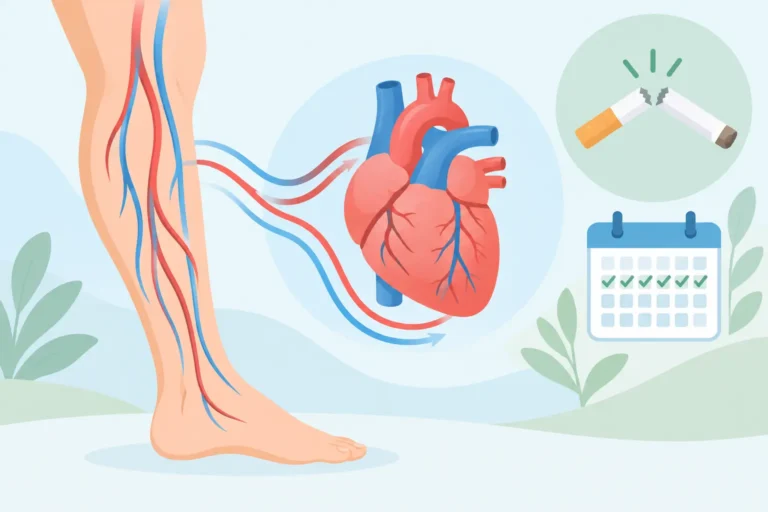
Every cigarette you smoke forces your heart to work harder — raising blood pressure, stiffening arteries, thickening the blood, and accelerating clot formation. The good news is that the heart recovery timeline after quitting smoking starts almost immediately. Within 20 minutes of your last cigarette your blood pressure begins to fall and your resting heart rate starts to drop. Within a year, your risk of a heart attack is cut in half. This guide walks you through every milestone, milestone by milestone, so you know exactly what your heart is doing for you right now.
Cardiovascular disease kills more smokers than any other cause. According to the CDC, smokers are two to four times more likely to develop coronary heart disease than non-smokers, and smoking is responsible for roughly one in four cardiovascular deaths in the United States. But the cardiovascular system is remarkably resilient. Quitting at any age produces measurable benefits — and the earlier you stop, the more of those benefits you capture.
The timeline below is sourced from the peer-reviewed cardiovascular research literature, the American Heart Association, the CDC, and WHO data. Where risks “approach never-smoker levels,” the evidence supports this phrasing for most moderate smokers; heavy, long-term smokers may need additional years to reach the same benchmarks.
Why Smoking Damages Your Heart
Tobacco smoke delivers more than 7,000 chemicals into your bloodstream every time you inhale. Several act directly on your cardiovascular system:
- Nicotine triggers adrenaline release, causing your heart to beat faster and your blood vessels to constrict, raising both heart rate and blood pressure acutely with every cigarette.
- Carbon monoxide binds to haemoglobin 200 times more avidly than oxygen, starving heart muscle of the oxygen it needs and forcing it to pump harder.
- Oxidative stress chemicals damage the endothelium — the delicate inner lining of arteries — triggering inflammation, plaque build-up (atherosclerosis), and arterial stiffening.
- Platelet-activating compounds make blood stickier, accelerating clot formation and dramatically raising the risk of a sudden blockage in a coronary artery.
This four-pronged attack explains why smokers face a two-to-four-fold higher coronary heart disease risk than non-smokers. Crucially, it also means that every one of these mechanisms begins to reverse the moment you stop smoking.
The Full Cardiovascular Recovery Timeline
| Time After Quitting | What Happens to Your Heart & Vessels | Source |
|---|---|---|
| 20 minutes | Blood pressure begins to drop; resting heart rate falls toward normal | CDC / NHS |
| 8 hours | Carbon monoxide levels in blood fall by half; oxygen delivery to heart muscle improves | NHS |
| 24 hours | Carbon monoxide fully cleared; nicotine-driven arterial constriction eases; acute MI risk begins falling | CDC / AHA |
| 48–72 hours | Platelet aggregation (stickiness) begins to normalise; blood viscosity decreases | PMC 7399440 |
| 2 weeks – 3 months | Circulation improves; exercise tolerance increases; endothelial function begins recovering | Better Health Victoria / NHS |
| 1 year | Risk of coronary heart disease and heart attack cut by 50% compared to a current smoker | WHO / CDC / AHA |
| 2–5 years | Excess MI risk falls by approximately 50% within 2 years; stroke risk approaches never-smoker level by 5 years for many ex-smokers | PMC 7399440 / AHA Circulation |
| 5 years | Arterial inflammation returns toward normal; smoking-related inflammatory markers normalise | PMC 1160597 |
| 15 years | Risk of coronary heart disease approaches that of a lifelong non-smoker for most ex-smokers | WHO / AHA Circulation |
Blood Pressure Recovery
Nicotine stimulates adrenaline, which narrows blood vessels and forces your heart to push harder against increased resistance. Each cigarette produces an acute spike in systolic and diastolic blood pressure lasting 15–30 minutes. If you smoke regularly throughout the day, your blood pressure may never fully return to baseline between cigarettes.
Within 20 minutes of your last cigarette, without nicotine driving arterial constriction, your blood pressure begins a measurable downward trend. Within 24 hours the acute nicotine-driven elevation is gone entirely. For most people, longer-term hypertension related to smoking-induced endothelial damage takes weeks to months to continue its recovery as vessel walls repair and arterial stiffness gradually reduces.
It is worth noting that some quitters experience a temporary blood pressure increase in the first few weeks due to nicotine withdrawal-related stress. This normalises as the withdrawal phase passes. If you have pre-existing hypertension, speak with your GP about monitoring during your quit attempt.
Resting Heart Rate Recovery
Smokers consistently have higher resting heart rates than non-smokers because nicotine perpetually stimulates the sympathetic nervous system — your “fight or flight” system — keeping the heart in a state of low-level arousal. A 2015 study published in Environmental Research tracked heart rate dynamics in a healthy aging cohort following smoking cessation and found that resting heart rate returned to near-normal levels within months of quitting, though full autonomic recovery in very long-term smokers could take years.
A lower resting heart rate means your heart does less unnecessary work over the course of each day — each beat at 70 bpm instead of 85 bpm saves your heart roughly 21,600 extra beats every 24 hours. Over a year, that is nearly 8 million fewer beats of unnecessary cardiovascular strain.
Clot Risk and Platelet Function
One of smoking’s most immediately dangerous effects is on platelets — the blood cells responsible for clot formation. Tobacco smoke chemicals make platelets hyperactive and “stickier,” increasing the likelihood that a clot will form on an atherosclerotic plaque and block a coronary artery, triggering a heart attack.
According to cardiovascular risk research published in PMC, platelet aggregation begins to normalise within 48 to 72 hours of cessation. Blood viscosity — another clotting risk factor — also begins improving in this window. This is why the acute MI risk starts falling meaningfully within the first few days and continues declining over the following months and years as both platelet function and endothelial health improve together.
MI and Stroke Risk Over Time
The reduction in heart attack and stroke risk after quitting is one of the most well-documented benefits in all of medicine. The key milestones are:
Heart Attack (Myocardial Infarction) Risk
The excess risk of MI falls by roughly 50% within the first one to two years after stopping smoking, according to research from the AHA’s Circulation journal. Risk falls sharply in the first one to two years and then continues declining more slowly over the longer term. For people who have already had a heart attack, quitting is even more powerful: persons with diagnosed coronary heart disease experience up to a 50% reduction in risk of re-infarction and sudden cardiac death if they quit after their first event.
Stroke Risk
Stroke risk follows a slightly different curve. For many ex-smokers, stroke risk approaches that of a non-smoker by approximately 5 years after quitting, as described by the CDC’s cardiovascular cessation guidance. The mechanism involves both the reduction in blood pressure (a primary stroke driver) and the normalisation of clotting tendency. Our dedicated roundup of smoking and stroke risk statistics goes deeper into the incidence data behind this specific timeline.
Long-Term Coronary Heart Disease Risk
By 15 years of smoke-free living, the risk of coronary heart disease for most ex-smokers approaches that of a lifelong non-smoker, according to WHO data and the AHA. Research from the Cross-Cohort Collaboration published in PLOS Medicine found that former smokers demonstrate over 80% lower relative risk than current smokers within 20 years of cessation across multiple cardiovascular outcomes.
British Heart Foundation: Smoking and Your Heart
Heart rate and blood pressure return to normal within 20 minutes of quitting. Heart attack risk drops to half that of a smoker after 1 year. Comprehensive BHF guide to how smoking damages the heart and what improves after you stop.
Does the Timeline Differ for Heavy Smokers?
Yes — and it is important to be honest about this. While light smokers (fewer than 10 cigarettes per day) may see their coronary heart disease risk approach never-smoker levels within the standard 15-year window, heavy, long-term smokers may need 15 to 25 years to fully close the gap. This reflects the cumulative endothelial damage, atherosclerotic plaque burden, and arterial stiffening that accumulates over decades of heavy use.
Critically, however, every year of not smoking produces benefit regardless of your smoking history. A 60-year-old who quits after 40 years of heavy smoking will still reduce their cardiovascular risk significantly. Quitting is never “too late” to matter — and the sooner you stop, the more benefit you accumulate.
For a broader picture of all the body systems recovering simultaneously, see our complete guide to Health Recovery Timeline: 50+ Data Points After Quitting Smoking and the Quit Smoking Benefits Timeline: 20 Minutes to 20 Years.
How iQuit Supports Your Cardiovascular Recovery
Watching your heart health numbers improve is one of the most motivating parts of quitting. The iQuit app tracks your smoke-free time and maps it to health recovery milestones — including cardiovascular markers — so you can see exactly where you are on the timeline above. When a craving strikes at the 3-week mark, knowing that your platelet stickiness has already normalised and your endothelium is repairing is genuinely useful motivation to hold the line.
You can also track your nicotine withdrawal journey alongside your cardiovascular recovery using our Nicotine Withdrawal Timeline: Complete Recovery Map and the What Happens When You Quit Smoking: The Full Health Recovery Guide.
Frequently Asked Questions
How quickly does heart rate drop after quitting smoking?
Your resting heart rate begins to fall within 20 minutes of your last cigarette as the acute nicotine-driven sympathetic stimulation fades. It typically normalises to a level consistent with non-smokers within days to a few weeks, though full autonomic recovery in long-term heavy smokers may take months or longer.
Does quitting smoking reduce blood pressure?
Yes. Each cigarette causes an acute blood pressure spike lasting 15–30 minutes. When you quit, these acute spikes stop immediately. Longer-term improvements in arterial stiffness and endothelial function continue over weeks and months, contributing to sustained blood pressure reduction for many ex-smokers.
When does heart attack risk decrease after quitting smoking?
The excess risk of MI begins falling within the first 24–48 hours as platelet stickiness normalises and carbon monoxide clears. The risk drops by approximately 50% within one to two years of quitting, according to AHA and WHO data. It continues declining over the following decade.
Can quitting smoking reverse coronary artery disease?
Quitting smoking significantly slows the progression of coronary artery disease and reduces the risk of a cardiac event. However, existing atherosclerotic plaques do not simply dissolve. The benefit is primarily in halting new damage, reducing inflammation, and lowering the probability that a plaque ruptures and causes a heart attack or stroke.
When does stroke risk return to normal after quitting smoking?
For many ex-smokers, stroke risk approaches that of a non-smoker at approximately 5 years after quitting, according to CDC guidance. This timeline can vary depending on how long and how heavily you smoked, your blood pressure control, and other individual risk factors.
Is it too late to quit smoking for heart health if I am over 60?
No. Research consistently shows that quitting at any age produces meaningful cardiovascular benefits. Even smokers who quit in their 60s or 70s reduce their risk of a cardiac event, improve their circulation, and extend their healthy life years. The benefit may take longer to accrue in heavy long-term smokers, but it is always worthwhile.