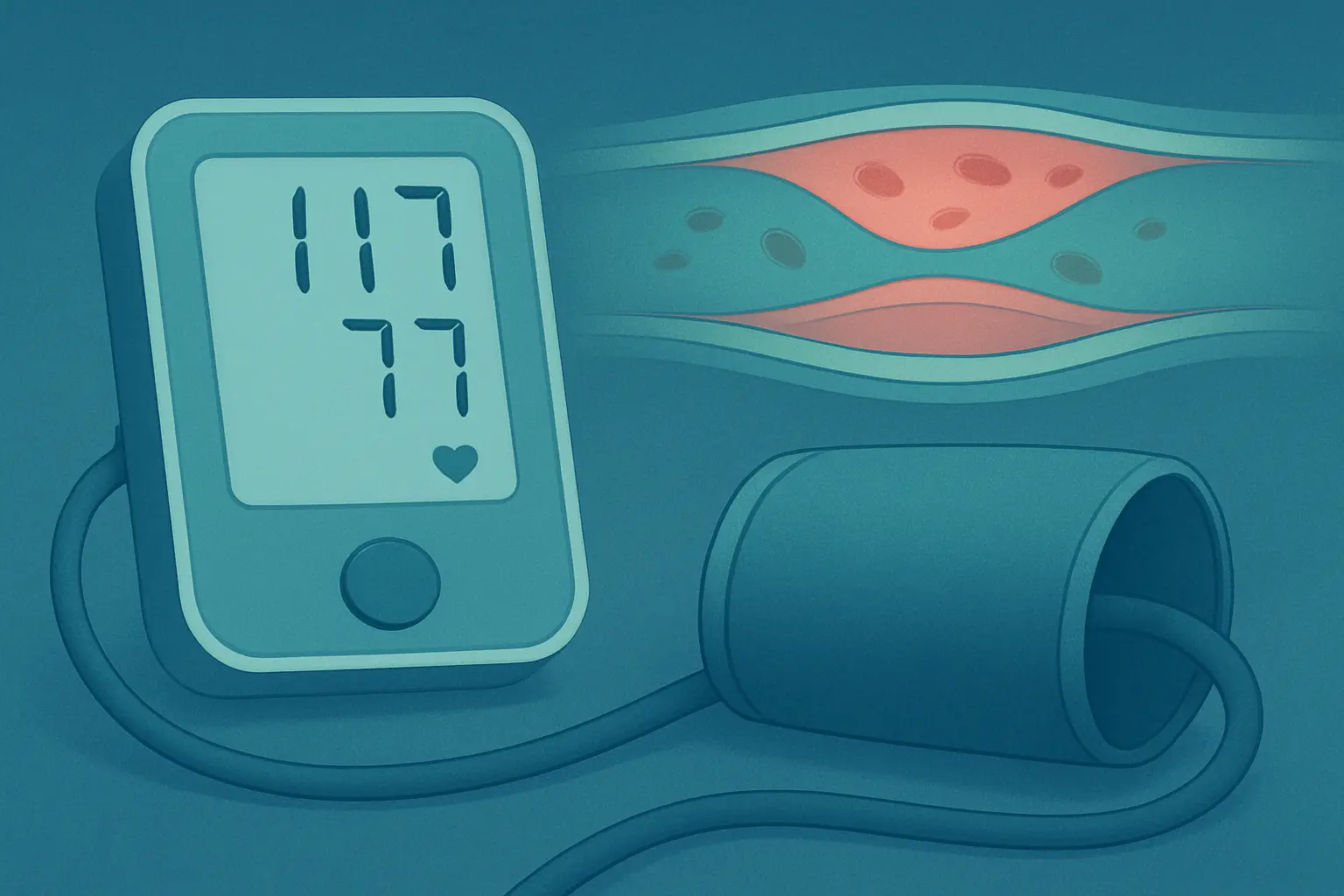
Every cigarette gave your arteries a workout they never asked for: a 5–10 mmHg blood-pressure spike lasting 15–30 minutes. Smoke a pack a day and the spikes overlap into a near-continuous artificial hypertension — your cardiovascular system spending most of its waking hours pressurized above its true baseline. Quit, and the spikes simply stop, within hours. What follows is a two-layer recovery: the immediate end of the surges, then the slower healing of the vessels themselves.
What each cigarette was doing
Nicotine triggers adrenaline release: heart rate up, vessels constricted, pressure raised — every single cigarette, all day, for years. Meanwhile carbon monoxide degraded oxygen delivery (the heart pumping harder to compensate — see the 48-hour blood recovery), and smoke chemicals inflamed the endothelium, the one-cell-thick lining that manages vessel dilation. Smoking attacks blood pressure from three directions: the surge, the oxygen tax, and the stiffening.
The recovery timeline
- 20 minutes: the last cigarette’s spike subsides — heart rate and pressure begin drifting toward true baseline. This is the first milestone on every quit timeline, and it’s a blood-pressure event.
- Hours–days: no more surges. Ambulatory monitoring of quitters shows daytime pressure profiles flattening as the 20 daily mini-hypertension episodes disappear.
- 2–12 weeks: endothelial function measurably improves — vessels regain their ability to dilate on demand. Circulation to hands, feet and skin follows (the circulation recovery most quitters literally feel as warmer fingers).
- 1 year: excess coronary heart disease risk halved.
- 15 years: heart disease risk near a never-smoker’s — the endpoint of the curve.
The paradoxical bump (and what it actually is)
A minority of quitters see blood pressure rise in the months after quitting, and it deserves an honest explanation: it’s almost never the absence of nicotine. The usual suspects are post-quit weight gain, comfort-eating’s salt and calories, and withdrawal stress. The fix is managing those variables — regular meals, movement, sodium awareness — not doubting the quit. Even with modest weight gain, quitting’s net cardiovascular ledger remains overwhelmingly positive; no cardiologist has ever prescribed resuming cigarettes.
Practical: measure it yourself
Blood pressure is one of the few quit benefits you can watch at home. If you own a cuff (or your pharmacy offers checks), take a baseline reading before quit day — ideally mid-afternoon, in the thick of the smoking day — then re-measure weekly at the same hour. Many quitters see the afternoon readings soften within weeks as the surge landscape flattens. Log the readings alongside your milestones in the free iQuit app journal — numbers you generated yourself are the most persuasive motivation there is, right next to the app’s tracked heart and circulation milestones.
When to involve a doctor
If you already have hypertension, tell your doctor you’re quitting — it’s the single best thing you can do for your pressure, and medication may eventually need adjusting downward. Seek advice promptly for readings persistently above 140/90, or any spike with chest pain, severe headache or vision changes — quitting-adjacent or not, those need review.
FAQ
Does BP drop after quitting?
The per-cigarette surges stop within hours; baseline improves modestly and vessel function recovers over weeks.
Why did mine go up after quitting?
Usually weight gain, salt or withdrawal stress — manageable, and not a reason to doubt the quit.
How fast does vessel health recover?
Endothelial function improves within weeks; coronary risk halves at one year.
Can quitting reduce my BP medication?
Sometimes, over time — never adjust yourself; review with your doctor as your numbers improve.
Watch your own numbers recover: download iQuit free on Google Play and track the milestones from the first 20 minutes.