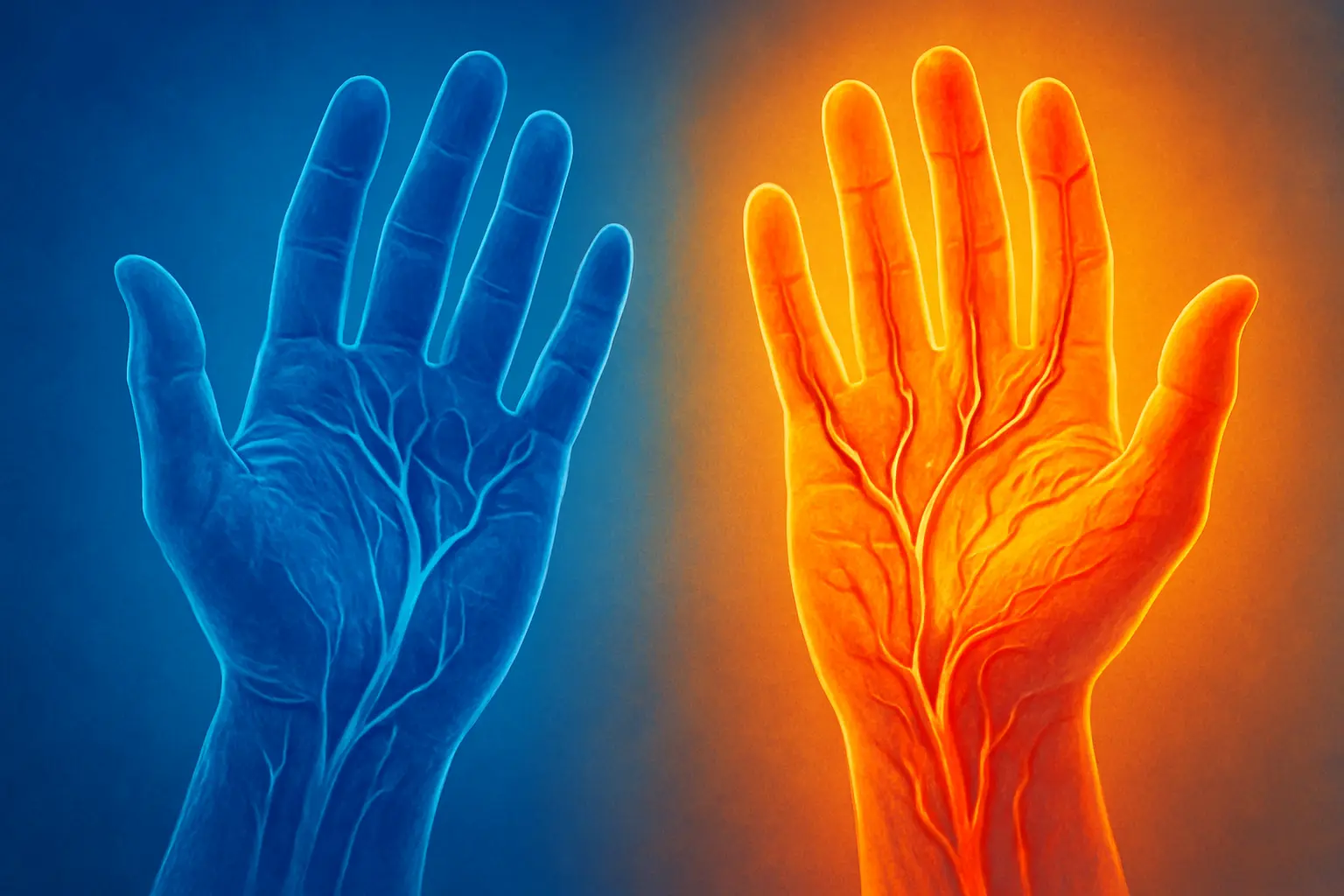
If your hands and feet have been cold for years, your cigarettes were the thermostat. Each one triggers vasoconstriction — peripheral vessels narrowing for 20–60 minutes, dropping finger and toe temperature by measurable degrees. Smoke a pack a day and the constrictions overlap: your periphery spends the entire waking day under-perfused. It’s why cold extremities are a classic smoker’s sign — and why one of quitting’s earliest, most literal pleasures is warmth coming back. Usually within days.
What smoking did to your plumbing
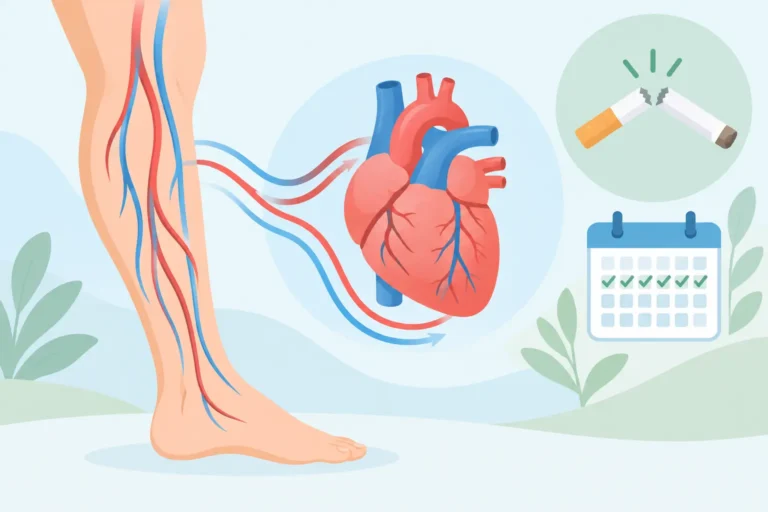
Three layers of damage. The acute squeeze: nicotine’s adrenaline release constricts peripheral vessels with every cigarette — thermal imaging shows fingers cooling within minutes of lighting up. The lining damage: smoke chemicals inflame the endothelium, the vessel lining that manages dilation, so even between cigarettes your vessels responded sluggishly. The oxygen tax: carbon monoxide displaced oxygen from your blood (the 48-hour CO story), so what circulation you had carried thinner cargo. Cold hands were the symptom you noticed; the same triple-hit was quietly working on coronary arteries, skin, gums and — yes — erectile function.
The recovery timeline
- Hours: the last cigarette’s constriction releases — for good. No more 20-minute squeezes, twenty times a day.
- Days 2–7: peripheral blood flow and skin temperature measurably improve. This is when quitters report actually feeling it: warmer fingers on the keyboard, feet that don’t need socks in bed. Small, absurdly satisfying, and completely real.
- Weeks 2–12: endothelial function recovers substantially — vessels regain their dilation response, the deeper fix behind the surface warmth. This same window powers the blood-pressure improvements and better exercise tolerance.
- Months–years: the structural risks retreat — peripheral artery disease risk declines with smoke-free years, wound healing normalizes (surgeons’ smoking bans exist for this), skin tone improves as micro-circulation returns, and erectile function measurably recovers in many ex-smokers. Gums heal on the same circulation logic — the mouth recovery story is this article in miniature.
Feel it faster
- Walk daily. Muscle contraction is a second heart for peripheral circulation — and walks double as craving medicine.
- Hydrate. Blood volume matters; the water habit you built for cravings serves the circulation too.
- Run the warm-hands test. Note your typical hand temperature this week (cold? bluish nail beds?) and check again at day 10. Self-measured proof beats any article — journal it.
The milestone you can hold
Most quit benefits are curves on a chart; this one is your own warm hands, within the first week. The free iQuit app tracks circulation improvement among its 15 recovery milestones — but honestly, your fingers will report it first. Log the moment in the journal; on a rough day in week three, “my hands are warm for the first time in a decade” is exactly the kind of receipt worth rereading.
FAQ
How fast does circulation improve?
Constriction ends within hours; felt warmth typically returns within days; vessel function recovers over 2–12 weeks.
Why were my hands always cold?
Nicotine’s vasoconstriction — each cigarette squeezed peripheral vessels for 20–60 minutes, all day, every day.
Does circulation recovery affect anything besides warmth?
Plenty: blood pressure, exercise capacity, skin, gums, wound healing and erectile function all ride the same recovery.
Is tingling in hands and feet normal after quitting?
Mild tingling in week one is commonly reported as flow returns; persistent numbness or pain deserves a doctor’s look.
Warm hands by next week: download iQuit free on Google Play and watch the circulation milestone unlock.