
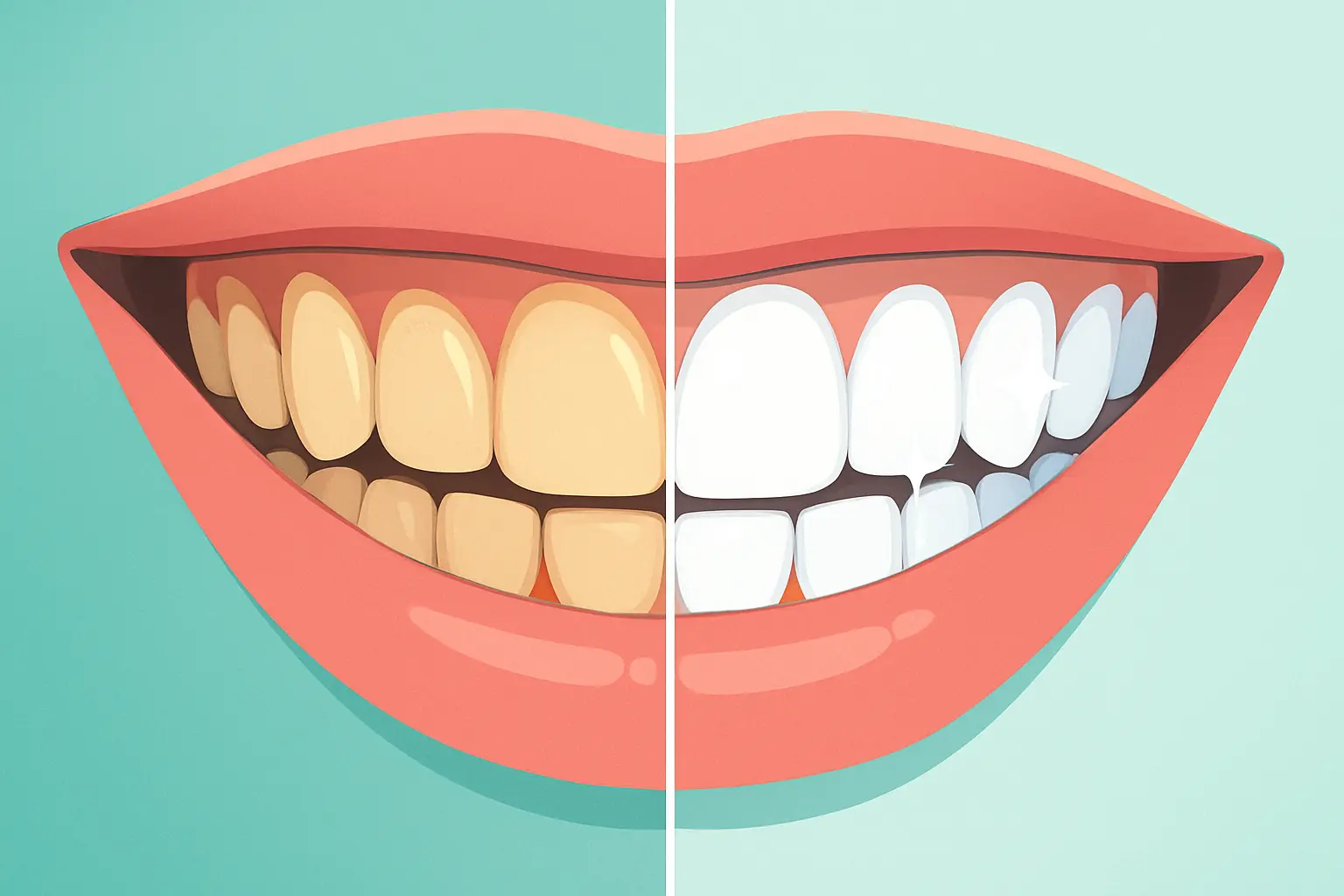
Your mouth took smoking’s first hit, every single cigarette — and it’s among the fastest to start healing. Smoke stained enamel, starved gum tissue of blood, roughly doubled your gum-disease risk, and — cruelest trick — masked the warning signs: nicotine’s vessel constriction meant smokers’ gums bleed less than their disease deserves, hiding trouble until it’s advanced. Quit, and the mask comes off, circulation returns within weeks, and the staining simply stops. Here’s the mouth-recovery timeline and what to actually do with it.
What smoking was doing in there
- Staining: tar and nicotine are pigments; every pack repainted your enamel yellow-brown, concentrating where smoke flowed.
- Gum starvation: nicotine constricts the tiny vessels feeding gum tissue — less oxygen, fewer immune cells, slower healing. Smokers run roughly double the periodontitis risk and lose more teeth.
- The masking effect: those constricted vessels also bleed less, so the classic early-warning sign of gum disease — bleeding on brushing — was suppressed. Many smokers’ “healthy-looking” gums were quietly deteriorating.
- Bonus damage: dry mouth, plaque-friendly chemistry, implant and extraction healing problems, and the oral cancer risk that dentists screen smokers for at every visit.
The recovery timeline
- Days 1–14: circulation returns to gum tissue as nicotine’s vasoconstriction ends — part of the same process warming your hands and feet. Paradox alert: gums may bleed more at first. That’s usually hidden gingivitis becoming visible now that blood flow is honest — the disease was there; the signal was suppressed.
- Weeks 2–8: tissue oxygenation and immune response normalize; healing capacity approaches a non-smoker’s. Breath improves as the smoke chemistry clears and taste returns.
- Months 2–12: gum-treatment outcomes for ex-smokers approach never-smoker levels; pocket depths respond to cleaning; new staining: zero. Bone already lost to advanced periodontitis doesn’t regrow on its own — what you save is everything still standing.
- Years: oral cancer risk declines progressively; tooth-loss trajectory bends toward normal.
The ex-smoker’s dental to-do list
- Book a cleaning for weeks 2–4. A professional scale-and-polish removes most surface staining in one visit — the single most visible reward of the whole quit, timed while motivation is high. Tell the dentist you’ve quit; it changes what they check.
- Report new bleeding, don’t panic over it. It’s usually the unmasking. Persistent or heavy bleeding deserves a periodontal check.
- Wait on whitening until after the cleaning — and enjoy that it finally lasts, now that the repainting has stopped.
- Weaponize the toothbrush. Brushing after meals kills the after-meal craving window with a clean-mouth signal — dental care and craving defense in one habit.
The smile as scoreboard
Few quit benefits are as literally visible as this one: the post-cleaning mirror moment is motivation you can photograph. Log it in the free iQuit app journal next to your milestones — and let every after-meal brush double as the app’s evening mission checkbox. Your mouth kept the receipts of smoking; it also posts the refunds fastest.
FAQ
Do gums heal after quitting?
Substantially — circulation and healing normalize within weeks; treatment outcomes approach never-smoker levels. Lost bone, however, doesn’t regrow alone.
Will my teeth whiten?
New staining stops immediately; a professional cleaning removes most existing surface stains.
Why are my gums bleeding MORE now?
Returning circulation unmasked existing inflammation. Usually good news arriving honestly — get it checked if heavy or persistent.
When should I see the dentist?
Weeks 2–4: cleaning, quit announcement, gum check. Perfectly timed reward and screening in one.
Make the mirror your scoreboard: download iQuit free on Google Play and book that cleaning.