Nobody smokes one habit. A pack-a-day smoker runs a daily schedule: the wake-up cigarette, the with-coffee cigarette, the mid-morning break, after lunch, the afternoon slump, the drive home, after dinner, before bed. Quit, and you don’t lose one ritual — you lose the architecture of your day, and every empty slot becomes a craving window. The daily-missions method rebuilds the architecture on purpose: one deliberate ritual for morning, one for afternoon, one for evening, planted exactly where the cigarettes used to live.
Why the schedule matters more than the cigarette
Habit research is unambiguous: behaviors anchored to existing time-and-context cues form fastest and stick longest. Smoking exploited this perfectly — it attached itself to waking, coffee, meals, breaks and transitions until the day itself became a chain of smoking cues. The trigger-hour mapping data shows most quitters’ cravings cluster in 3–4 predictable windows: they’re the ghost of the old schedule. You can white-knuckle each window as it opens — or occupy the territory first.
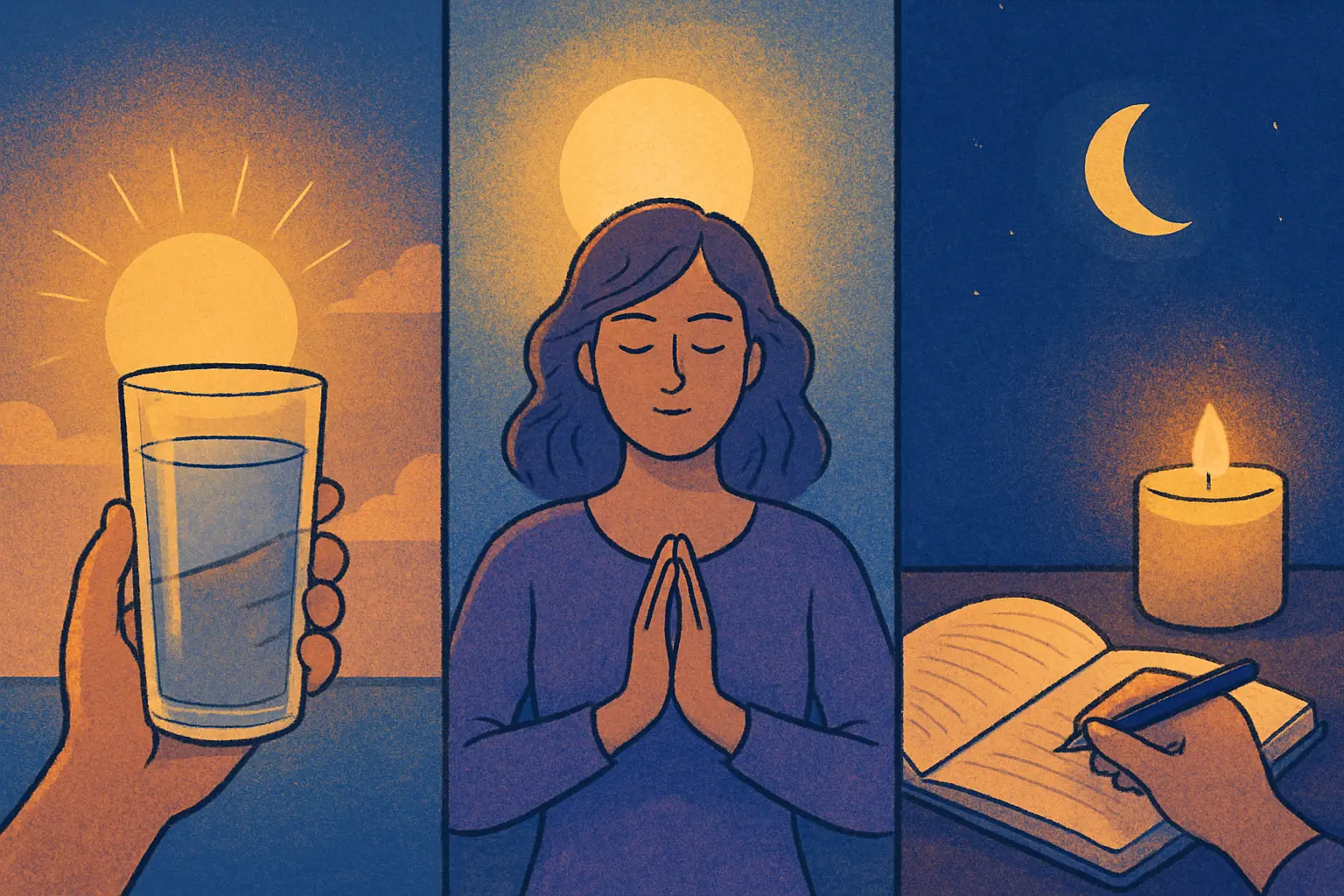
Morning mission: reflection and hydration
The wake-up and with-coffee cigarettes were the day’s anchor — nicotine levels were lowest, so the morning smoke felt the most “necessary.” The replacement targets the same slot with the same length ritual:
- A full glass of water before coffee. Overnight dehydration mimics and amplifies craving restlessness; water is the cheapest craving medicine there is.
- One line of intention. Thirty seconds of journaling — today’s one reason to stay quit, one danger you can see coming. This isn’t wellness theater: it’s pre-loading your answer for the moment a craving asks “why bother?”
- Coffee in a changed context. New mug, different chair, balcony swapped for kitchen — small scene changes that scramble the coffee-cigarette pairing.
Afternoon mission: the breathing pause
Smoke breaks were never really about smoking — they were legal permission to stop working for five minutes. Quitters who abolish the break (instead of the cigarette) end up stressed and craving. Keep the pause; change its contents:
- Step away at your usual break times — outside if that’s not too cue-loaded, a stairwell or window if it is.
- Run one breathing cycle: six rounds of box breathing takes about two minutes — the exact length of the old ritual, with the same slow-exhale physiology that made smoking feel calming.
- Return on purpose. The break ends with a decision, not a drift — same as stubbing out a cigarette did.
Evening mission: gratitude and wind-down
Evenings are the boss level — willpower depleted, rituals dense, and cravings measurably worse after dark. The evening mission closes the day deliberately:
- Immediately after dinner: brush teeth or make tea. The after-dinner cigarette is the strongest single cue most smokers have; fill the slot within two minutes of the last bite.
- Three lines of gratitude or wins — including every craving you outlasted today. Counting wins rewires the “I’m depriving myself” narrative into “I’m accumulating something.”
- A hands-busy wind-down — book, puzzle, controller, needlework — until bed. Idle hands plus tired willpower is the classic slip recipe.
Let the missions run themselves
The structure works best when something external keeps the rhythm for the first weeks. The free iQuit app ships this exact system as built-in daily missions — morning reflection and hydration, afternoon mindful pause, evening gratitude — checked off day by day, feeding your streak and achievements. Completing them also recharges your streak shields, so the routine that prevents slips is the same one that protects you if a slip happens anyway. About 66 days in, research says, the missions stop being tasks and start being your day.
FAQ
What replaces smoking in a daily routine?
Time-anchored rituals in the old slots: water and intention at morning coffee, a breathing pause at break times, teeth/tea plus gratitude after dinner.
Why not just quit and stay busy?
Unstructured busyness leaves the trigger windows intact. Habits form on time-and-context anchors — occupy them or they reopen.
How long until the new routine is automatic?
Deliberate for ~2 weeks, easier by week 4–6, automatic around the 66-day average habit-formation mark.
What if I miss a mission?
Nothing breaks — missions are momentum, not law. Miss one, do the next; the structure absorbs imperfection by design.
Get the three missions pre-built with streaks and rewards attached: download iQuit free on Google Play.