Night cravings feel stronger because they are stronger — four separate factors stack against you after dark. Your self-control is depleted from a day of resisting. Your evening rituals (dinner, drink, TV, balcony) were probably your densest smoking cues. The distractions that diluted daytime urges are gone. And in the first days of a quit, your blood nicotine bottoms out at night, turning the withdrawal signal up to maximum. Understanding the stack is half the fix; the other half is a plan for 9pm and another for 2am.
The four-factor stack
- Willpower is a battery, and it’s 9pm. Decision fatigue is real: after a day of resisting urges, saying no costs more. This is why so many slips happen on the couch, not at the office.
- Evenings are cue minefields. After-dinner, with-a-drink, before-bed — for most smokers these were the most ritualized cigarettes of the day, and each still fires its cue.
- Silence amplifies. During the day a craving competes with meetings and errands. At night it gets your undivided attention — and attention feeds urges.
- Chemistry hits bottom. In week one, overnight is your longest stretch without the nicotine your receptors still expect. Some quitters even wake mid-sleep with cravings as levels drop.
The evening prevention routine (9pm problem)
- Rebuild the after-dinner slot first. It’s the strongest cue of the night. Replace it with something hands-and-mouth shaped: tea ritual, fruit, toothbrushing immediately after eating (the clean-mouth signal measurably reduces urges).
- Watch the alcohol variable. Drinking at home is a top night-slip trigger — it dissolves the very self-control the evening already drained. Consider alcohol-free weekdays for your first month.
- Give your hands a job. Controller, knitting, fidget, sketching — the ritual half of the addiction doesn’t care what the replacement is, only that hands are busy. More ideas in what to do with your hands after quitting and the 3-minute rule protocol.
- Front-load a win. An evening walk or shower resets the cue landscape and burns restlessness before it converts to craving.
The 2am emergency plan
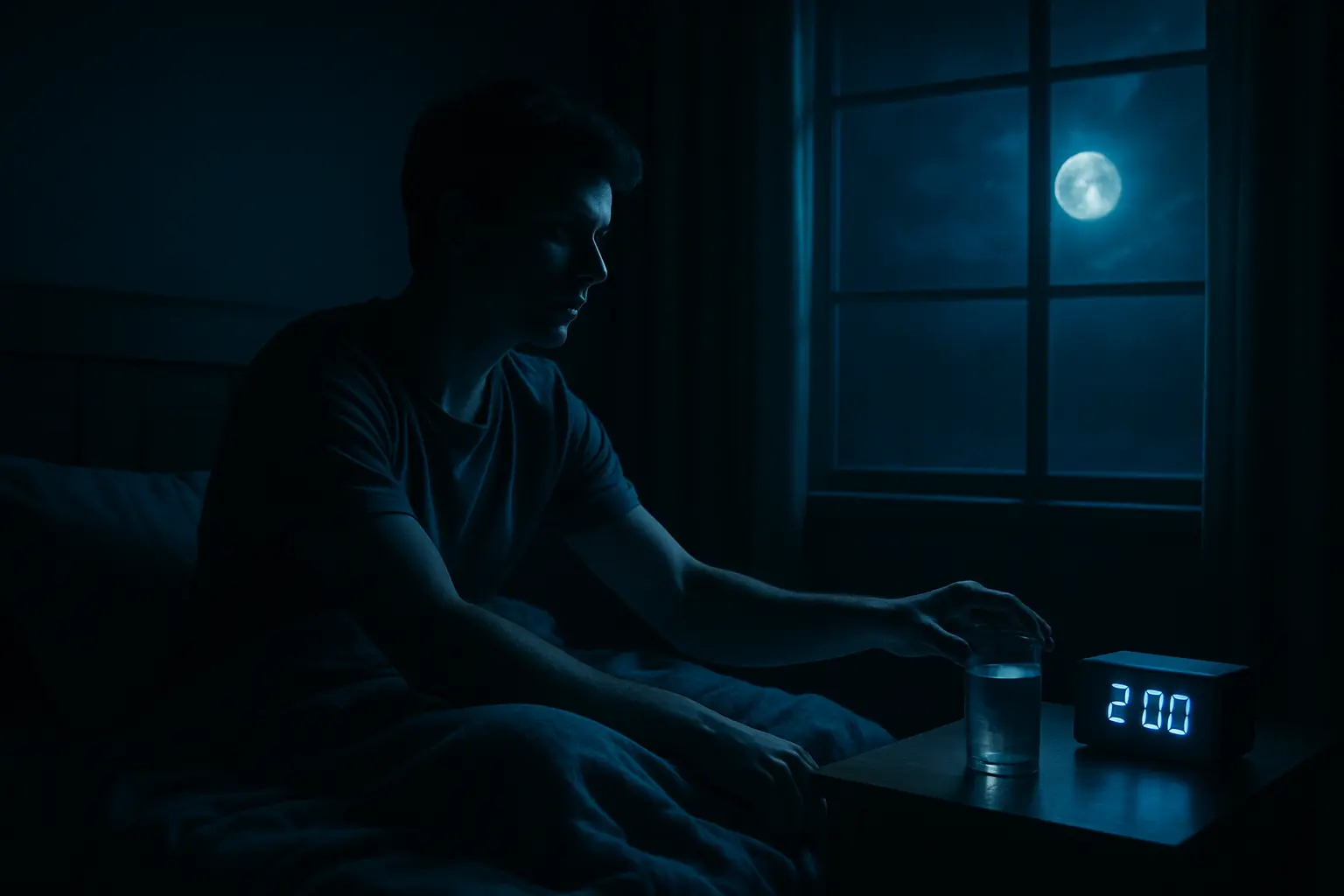
Waking with a craving is disorienting — you’re negotiating with an urge while half-asleep, which is unfair combat. Script it in advance:
- Sit up. Horizontal rumination stretches cravings; verticality breaks the loop.
- Drink the water you left by the bed. (Leave it there every night of month one.)
- Run 4-7-8 breathing — inhale 4, hold 7, exhale 8 — the pattern built for returning to sleep, unlike daytime box breathing.
- If you’re still awake at minute five, open your quit app’s SOS instead of your social feed: guided tools, not blue-light doomscrolling.
If broken sleep itself is your main battle, that’s a known and temporary withdrawal effect — the post-quit insomnia guide covers how long it lasts and what helps.
Let the app take the night shift
The free iQuit app is built for exactly these hours. Its AI coach answers at 2am when no human should. The SOS button (or a shake of the phone) launches breathing and grounding without thinking. And as you log cravings, the app learns your personal danger hours — for most people a sharp evening peak — and starts nudging you before the wave, not after. Night cravings also fade fast: receptors recalibrate within one to two weeks, and most quitters report normal evenings within a month.
FAQ
Why do I crave more at night?
Depleted willpower, cue-dense evening rituals, zero distractions and bottomed-out nicotine levels — all four stack after dark.
What do I do at 2am?
Sit up, drink water, 4-7-8 breathing. The peak passes in ~3 minutes; don’t negotiate horizontally.
Do night cravings end?
Yes — they peak in weeks one to two and fade sharply; most quitters have normal nights within a month.
Should I keep nicotine gum by the bed?
If you’re using NRT as part of your plan, yes — a 2am craving is a legitimate moment for it. Discuss dosing with a pharmacist.
Give your nights a backup: download iQuit free — the AI coach and SOS tools work the night shift so you don’t face 2am alone.