
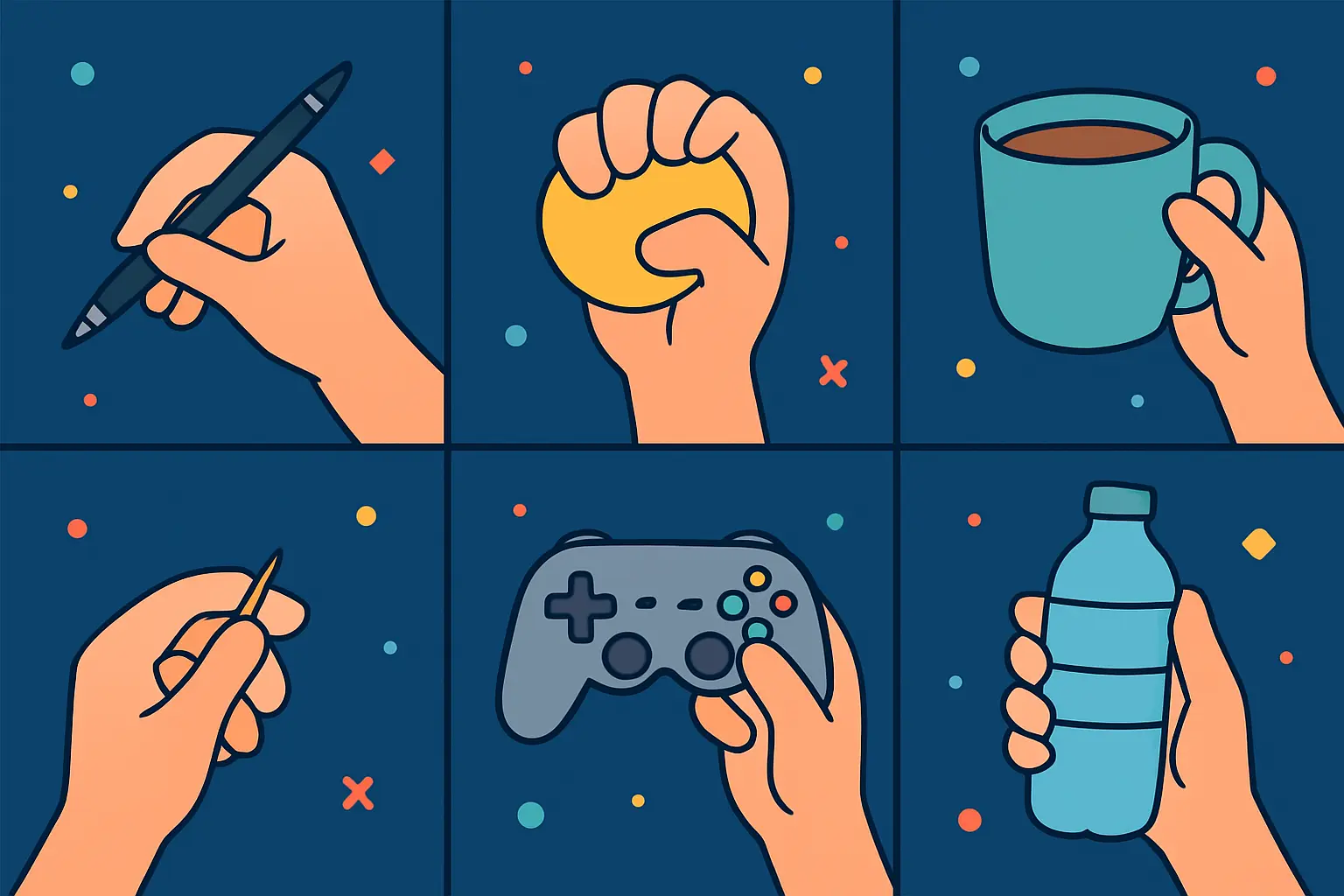
A pack-a-day smoker lifts hand to mouth more than 200 times a day — over 70,000 times a year. When you quit, the nicotine leaves in 72 hours, but that trained gesture keeps firing for weeks, which is why your hands feel weirdly, insistently empty. This isn’t a character flaw; it’s a motor habit missing its target. The fix isn’t suppression — it’s substitution. Here are 15 replacements that work, sorted by the situations where hands actually betray quitters.
At the desk (the unconscious reach)
- A clicky pen or fidget spinner — cheap, silent-ish, and endlessly spinnable during calls.
- A smooth worry stone or coin — one-handed, pocketable, invisible in meetings.
- Doodling — occupies hand and the drifting attention that invites cravings.
In the car (the commute cigarette’s ghost)
- Toothpicks or cinnamon sticks — hand and mouth, the full ritual, zero smoke.
- A water bottle with a sports cap — sip at every red light; hydration cuts craving intensity too.
- Steering-wheel drumming to a playlist — assign the danger commute a soundtrack that keeps fingers busy.
Social situations (drink in one hand, ghost in the other)
- Hold the glass in your smoking hand — one change, surprisingly effective at short-circuiting the reach.
- Snack strategy: things that take work — pistachios, edamame, sunflower seeds. Slow food is busy hands.
- Be the phone photographer — a legitimate hands-busy social role during the smoking-break exodus.
On the couch (the TV pairing)
- A controller, puzzle or handwork — gaming, jigsaws, knitting, model kits: the classic replacements because they work.
- Under-desk grip trainer or stress ball — passive TV time becomes literal grip strength.
- Tea ritual with a warm mug — wrapping both hands around heat is deeply soothing; build the evening around it.
After meals (the strongest bell of all)
- Brush your teeth immediately — hands busy plus a clean-mouth signal that measurably suppresses the urge.
- Wash the dishes on the spot — warm water, busy hands, and the after-dinner window closes before it opens.
- The virtual cigarette — for the moments when only the exact gesture will do, iQuit’s simulator gives you the press-hold-exhale ritual with nothing in it. It sounds odd; the virtual vs real comparison explains why it works.
Making replacements stick
Two rules turn this list from tips into results. Pre-position, don’t improvise: the fidget lives on the desk, the toothpicks live in the car door, the grip ball lives on the couch arm — mid-craving is too late to go shopping. Pair with the 3-minute rule: hands busy plus a timer beats hands busy alone; the full protocol is here. And log which replacements you actually used — patterns emerge fast. The free iQuit app tracks your cravings and coping strategies, learns which ones work for you, and its daily missions build replacement rituals into morning, afternoon and evening — exactly the structure empty hands need.
FAQ
Why do my hands feel so empty after quitting?
You trained a hand-to-mouth gesture 200+ times a day for years. The motor pattern outlives the nicotine by weeks — substitution retires it faster than suppression.
What’s the single best thing to hold?
Whatever lives where your cravings live: pen at the desk, toothpick in the car, warm mug on the couch. Placement beats perfection.
How long does the hand habit last?
Noticeably weaker in 3–6 weeks; situational flickers slightly longer. Every completed replacement weakens the wiring.
Do I need to buy anything?
No — most of the list is already in your house. The only “tool” worth installing is free.
Give your hands a plan for every situation: download iQuit free on Google Play — daily missions, craving log and a virtual cigarette for the stubborn moments.