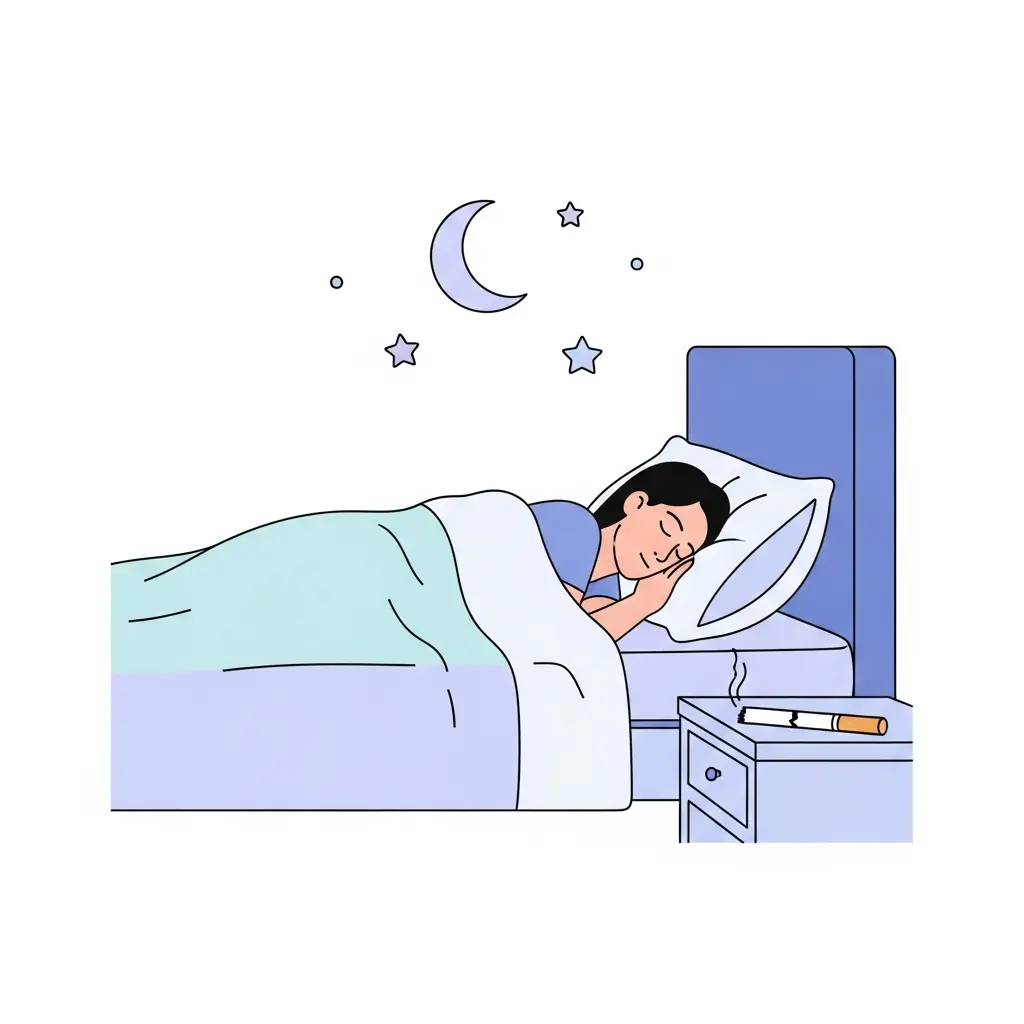
Why Can’t I Sleep After Quitting Smoking? How Long Insomnia Lasts and What Helps (2026)
Disrupted sleep after quitting smoking is one of the most common and frustrating withdrawal symptoms, affecting a significant proportion of people who stop. It happens because nicotine actively regulates the brain chemicals that govern sleep, and their sudden absence throws your sleep architecture temporarily out of balance. The reassuring news: for most people, withdrawal insomnia peaks in the first week and resolves within 2–4 weeks.
Why Does Quitting Smoking Cause Insomnia?
Nicotine is a stimulant that triggers the release of dopamine, serotonin, norepinephrine, and acetylcholine across the brain. Over years of smoking, your brain calibrates its own neurotransmitter production around a steady nicotine supply. Remove that supply suddenly, and the brain under-produces these chemicals during the adjustment period — creating a range of withdrawal symptoms including anxiety, irritability, difficulty concentrating, and disrupted sleep.
Sleep is particularly vulnerable because both serotonin and acetylcholine play direct roles in regulating the transition between sleep stages, including the regulation of REM (rapid eye movement) sleep. Research published in PMC (2019) reviewing sleep as a target for cessation treatment found that insomnia during withdrawal is a genuine neurobiological phenomenon — not a matter of mindset — and is associated with increased relapse risk in the first four weeks. Understanding this validates the experience and points toward real solutions rather than “just push through it.”
A separate study of sleep changes across nicotine withdrawal, published in PubMed (2014), tracked sleep architecture before, during, and three months after quitting. It found measurable disruptions to sleep continuity and REM patterns during acute withdrawal, with significant recovery by the three-month mark for most participants.
How Long Does the Insomnia Last?
Withdrawal symptoms generally peak around days 3–7 after the last cigarette, when nicotine and its metabolites have cleared the body. For sleep specifically, most people experience the worst nights during this first week, with gradual improvement over weeks 2–4. By the one-month mark, most people report that sleep has returned to — or exceeded — their pre-quitting baseline.
A minority of people, particularly long-term heavy smokers or those with a prior history of insomnia, may experience disrupted sleep for up to 8–12 weeks. If insomnia is severe and persists beyond four weeks, it is worth speaking to your GP, as treatment options including short-term cognitive-behavioural therapy for insomnia (CBT-I) are available. To understand the full arc of what withdrawal feels like from hour one to year one, read our complete nicotine withdrawal timeline.
Do Nicotine Patches Make Sleep Worse?
It depends on the patch type. Twenty-four-hour patches deliver a low continuous dose of nicotine overnight, which can trigger vivid dreams and lighter sleep in some users. This happens because nicotine suppresses REM sleep, and the patch interferes with the natural REM rebound that occurs during early recovery.
Switching to a 16-hour patch — applied in the morning and removed before bed — typically resolves patch-related sleep disturbances while still providing enough daytime coverage to manage cravings. The NHS recommends 16-hour patches as the default option for most people. Also avoid using nicotine gum or lozenges within 60 minutes of bedtime, as their stimulant effect can make falling asleep harder. For a full comparison of NRT forms, see our guide on nicotine gum vs patch vs lozenge vs inhaler.
What Sleep Hygiene Strategies Help Most?
What are the most important sleep habits during withdrawal?
The cornerstone of managing withdrawal insomnia is protecting your circadian rhythm. Keep a fixed wake-up time every day, even after a poor night — this is the single most powerful anchor for your sleep-wake cycle. Going to bed only when genuinely sleepy prevents the frustrating cycle of lying awake building anxiety about not sleeping.
Avoid caffeine after 2 pm. During nicotine withdrawal the nervous system is already running hot; caffeine amplifies anxiety and further delays sleep onset. Keep the bedroom cool (around 18–20°C / 64–68°F) and dark. Use the 4-7-8 breathing method — inhale for 4 counts, hold for 7, exhale for 8 — to activate the parasympathetic nervous system and reduce withdrawal-related tension before sleep.
Does cognitive-behavioural therapy help for withdrawal insomnia?
CBT for insomnia (CBT-I) is the most effective long-term treatment for sleep problems and is recommended by the NHS and CDC over medication for persistent insomnia. It involves stimulus control (re-associating the bedroom with sleep), sleep restriction therapy, and addressing the catastrophising thoughts about sleeplessness that prolong the problem. Digital CBT-I programmes are now available on prescription in several countries. If your withdrawal insomnia persists beyond four weeks, ask your GP about a CBT-I referral.
Does Exercise Reduce Withdrawal Insomnia?
A study published in PMC (2021) found that a single bout of aerobic exercise significantly reduced acute nicotine withdrawal-related sleep disturbances compared to a sedentary control condition. Participants who exercised reported faster sleep onset and fewer awakenings during the critical first week of withdrawal.
Even a 20–30 minute brisk walk during the afternoon provides sleep benefit: it raises core body temperature during activity, which then drops in the evening in a way that signals sleep readiness to the brain. Exercise also directly reduces craving intensity for several hours after the session — a double benefit during withdrawal. Avoid vigorous exercise within 90 minutes of your intended bedtime, as the post-exercise adrenaline release can temporarily delay sleep onset.
NHS Guidance — Managing Sleep After Quitting Smoking
- Use a 16-hour nicotine patch (removed before bed) to prevent overnight nicotine disruption
- Avoid caffeine after 2 pm — withdrawal already raises alertness
- Keep a fixed wake time daily to anchor your circadian rhythm
- Within 9 months, cilia in the lungs recover — breathing and sleep quality both improve
- CBT-I (cognitive-behavioural therapy for insomnia) is available on NHS prescription for persistent cases
Source: NHS Better Health — What Happens When You Quit Smoking
For a broader overview of all the physical symptoms you may encounter when stopping smoking and how to manage them day by day, read our guide on how to deal with nicotine withdrawal symptoms. Tracking your sleep quality alongside your craving patterns in an app like iQuit can also help you identify patterns and feel a sense of progress even on difficult nights.
When Should You Seek Medical Help?
Speak to your GP or doctor if: insomnia is severe (less than four hours of sleep per night) and has persisted for more than four weeks after your quit date; you are experiencing significant mood disruption alongside the sleep problems; or you are considering alcohol to help you sleep (alcohol is a leading smoking relapse trigger and severely impairs sleep architecture).
Short-term prescription options exist for severe withdrawal-related insomnia, but are not first-line due to dependency risk. CBT-I and sleep hygiene optimisation are the recommended first steps. Never use alcohol as a sleep aid during a quit attempt — the combination of disinhibition and conditioned smoking cues makes relapse highly likely. You can read more about why alcohol is particularly dangerous during a quit attempt in our article on nicotine addiction and anxiety.
Frequently Asked Questions
How long does insomnia last after quitting smoking?
For most people, sleep disturbances peak around days 3–7 and resolve within 2–4 weeks. A minority of long-term heavy smokers experience disrupted sleep for up to 8–12 weeks. If insomnia persists beyond four weeks, speak to your GP about CBT-I or short-term support options.
Why does quitting smoking cause insomnia?
Nicotine stimulates dopamine, serotonin, and acetylcholine — chemicals that regulate sleep. When nicotine is removed, the brain temporarily under-produces these chemicals, disrupting sleep architecture. The brain readjusts over 2–4 weeks as neurotransmitter balance is restored.
Is the insomnia from nicotine patches or from quitting itself?
Both can contribute. Twenty-four-hour patches deliver nicotine overnight and can cause vivid dreams or lighter sleep. Switching to a 16-hour patch (removed before bed) usually resolves this. Avoid NRT in the hour before bedtime for the same reason.
What sleep hygiene habits help most during nicotine withdrawal?
Keep a consistent wake time daily, avoid caffeine after 2 pm, keep the bedroom cool (18–20°C / 64–68°F), use deep breathing or progressive muscle relaxation before bed, and limit screen exposure in the final hour. These NHS and CDC-endorsed habits anchor your circadian rhythm during the adjustment period.
Does exercise help with sleep during withdrawal?
Yes. A 2021 PMC study found aerobic exercise significantly reduced acute nicotine withdrawal-related sleep disturbances. A 20–30 minute walk in the afternoon improves sleep onset and reduces craving intensity. Avoid vigorous exercise within 90 minutes of bedtime.
Should I take sleep medication while quitting smoking?
Over-the-counter antihistamine-based sleep aids may offer short-term relief but are not recommended for ongoing use. If sleep disruption persists beyond four weeks, speak to your GP. Do not use alcohol as a sleep aid — it severely disrupts sleep quality and is a major relapse trigger for smoking.
Can vivid dreams happen after quitting smoking?
Yes — vivid or smoking-related dreams are a common withdrawal symptom, caused by REM rebound as the brain restores normal sleep architecture. They are not harmful and typically settle within 2–4 weeks. Switching from a 24-hour to a 16-hour nicotine patch often reduces vivid dreams.
What relaxation techniques reduce withdrawal insomnia?
Progressive muscle relaxation (PMR), 4-7-8 breathing, and body-scan mindfulness are all evidence-supported. CBT-I (cognitive-behavioural therapy for insomnia) is the most effective long-term intervention for persistent sleep problems and is available through NHS services and digital platforms.