

The link between nicotine and ADHD is one of the best-documented and least-discussed facts in smoking research. People with attention-deficit/hyperactivity disorder are more likely to smoke, and when they try to stop, the attempt tends to be harder. That is not a character flaw or a motivation problem. It is a predictable interaction between how the condition works and how nicotine works, and it changes what a sensible quit plan looks like.
Why ADHD and smoking travel together
Start with the association, because it is solid. A 2014 meta-analysis in Pediatrics opens by stating that individuals with ADHD have a significantly higher risk of cigarette smoking. That review pooled 14 studies covering 2,360 people, and the elevated risk is the uncontroversial part of the field.
ADHD itself is common. A 2022 scoping review in Frontiers in Neuroscience describes it as a neurodevelopmental condition affecting approximately 5% of children and young people, persisting across the lifespan, with a neurobiology proposed to center on dopamine signaling and the regulation of attention and impulsivity.
Put those facts together and the shape of the problem appears. A condition involving impulsivity and a reward system tuned toward fast, reliable hits meets a drug engineered to deliver exactly that within seconds. The first cigarette is more likely to happen, daily smoking arrives sooner, and the habit settles on the same machinery that makes any routine hard to hold. Our explainer on how nicotine dependence forms covers that machinery in general terms.
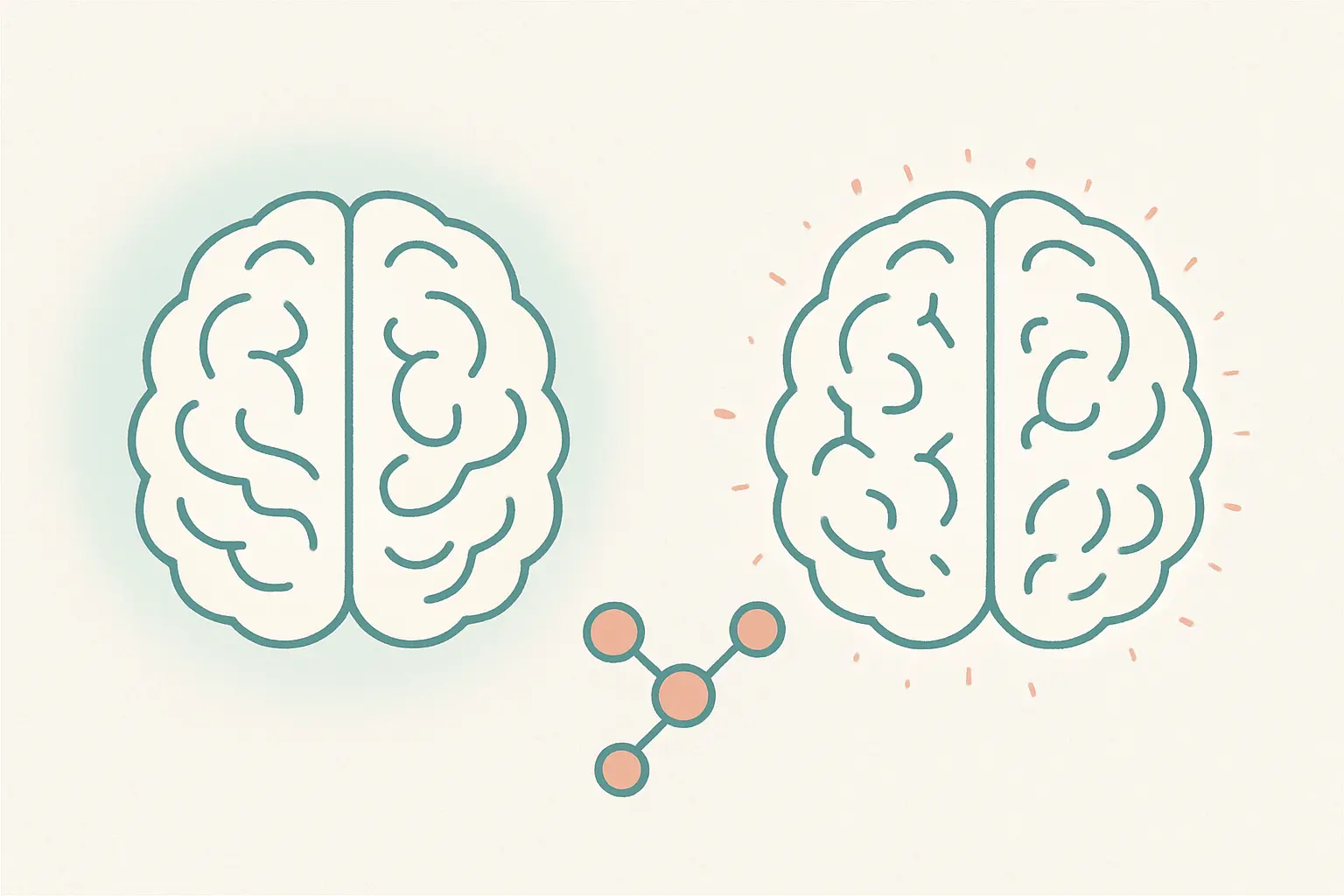
Researchers at a university medical school explain the overlap in this short talk.
The self-medication idea, and its limits
If you have ADHD and you smoke, you have probably noticed that a cigarette seems to sharpen things for a few minutes. That observation has a name in the literature: the self-medication model. It is worth taking seriously, and worth being precise about.
The 2022 scoping review took the model further than nicotine alone. It notes that tobacco smoke and e-cigarette aerosol carry potentially significant monoamine oxidase inhibitory properties, and proposes that those compounds, by indirectly raising dopamine availability, may reinforce smoking in ADHD even more than the nicotine does.
That is an explanation of a trap, not an endorsement of one. Nicotine is not a licensed treatment for ADHD in any country, no guideline recommends it for that purpose, and a cigarette is the most harmful available delivery system for any compound. The focus a cigarette seems to provide is largely relief of a withdrawal state the previous cigarette created, which is why it shrinks as dependence deepens and disappears once you are past the first weeks of a quit. If smoking felt like it was doing something for your attention, you were not imagining it and you were not weak. You were also not treating your ADHD.
Why quitting is measurably harder
Higher smoking rates would matter less if quit attempts succeeded at the same rate. They do not, and there is a specific finding worth knowing.
A double-blind, placebo-controlled trial of varenicline enrolled 157 treatment-seeking daily smokers aged 14 to 21 and gave everyone a 12-week course of medication or placebo plus weekly counseling. A secondary analysis scored ADHD symptoms at the start and split participants by symptom domain. Participants with high inattention symptoms were less likely to achieve seven-day abstinence during active treatment and at the end of treatment. High hyperactive and impulsive symptoms predicted no such difference.
The effect was not modified by whether someone received varenicline or placebo, so inattention was a general drag on quitting rather than something that broke the medicine. Quitting is a project of sustained, unrewarded, low-stimulation effort held together by remembering your own rules at the moment they are least appealing, which is the precise cognitive job inattentive ADHD makes hardest. The general reasons quitting is difficult are covered in our piece on the neuroscience of nicotine addiction; ADHD stacks on top of all of them.
Does treating ADHD help you quit?
It is the obvious hypothesis. If people with ADHD smoke to settle their symptoms, treat the symptoms properly and the smoking should loosen its grip. Researchers ran that experiment, and the answer was no.
The trial was an 11-week randomized, double-blind, placebo-controlled study across six clinical sites, run between December 2005 and January 2008. It enrolled 255 adults aged 18 to 55 who met diagnostic criteria for ADHD and wanted to quit, randomizing them to long-acting osmotic-release methylphenidate titrated to 72 mg per day or to placebo. Everyone received brief weekly counseling and 21 mg per day nicotine patches from the quit day through week 11. Four in five participants completed.
| Outcome | Methylphenidate | Placebo | Result |
|---|---|---|---|
| Prolonged abstinence | 43.3% | 42.2% | OR 1.1 (0.63 to 1.79), P = .81 |
| ADHD symptom score | Greater reduction | Smaller reduction | P < .0001 |
| Cigarettes per day after quit day | Greater reduction | Smaller reduction | P = .016 |
The authors’ conclusion was blunt: treatment for ADHD did not improve smoking cessation success. The medicine treated ADHD effectively and safely in this sample, and it reduced how much people smoked after their quit day. It simply did not move the number that counts. Blood pressure and heart rate rose to a degree the investigators called statistically but not clinically significant, and discontinuation did not differ between groups.
Two later analyses of the same participants add nuance. A 2018 paper found methylphenidate improved ADHD symptoms and withdrawal symptoms across the sample, with no overall effect on craving. A 2015 modeling paper found people with higher baseline ADHD severity did better on the medication while those with lower severity did worse, and simulated a rule of treating only above a severity threshold. That is a hypothesis generated from trial data, not a tested clinical rule.
The takeaway is not that ADHD medication is irrelevant while quitting. It is that it is not a quit aid. Treat it as what keeps the rest of your life running while you do the separate work of stopping smoking.
How the standard quit medicines perform
Nothing about ADHD takes the first-line stop-smoking treatments off the table. They remain the strongest thing available to you, and the inattention finding is an argument for wrapping more support around them rather than for skipping them.
Bupropion deserves a separate mention because it turns up in both fields. A 2023 review notes it has no serotonergic activity and works by inhibiting reuptake of norepinephrine and dopamine, and that it has been used for depression, for ADHD and for smoking cessation. On quitting, the review calls it an effective anti-smoking drug. On ADHD, it is candid that the evidence for efficacy is mixed, with poorly conducted randomized trials, small sample sizes and a lack of long-term assessment. Our guide to bupropion for quitting and the varenicline versus bupropion comparison cover the practical differences.
If the first-line options have already failed or are unsuitable, a prescriber can consider second-line possibilities such as the off-licence use of nortriptyline for quitting smoking. Those are prescriber decisions with their own safety trade-offs. Because ADHD and quitting both touch mood, sleep and concentration, tell whoever prescribes for you about every medicine you take.
Withdrawal when attention is already the problem
Here is the trap that catches people in week two. Nicotine withdrawal produces restlessness, irritability, difficulty concentrating and a short fuse. Those are also, word for word, core ADHD symptoms. When they intensify after your quit date, it is genuinely hard to tell whether your ADHD is spiraling or your withdrawal is doing what withdrawal does.
The evidence on whether withdrawal is objectively worse in ADHD is thin. A small online self-report study of 309 people found ADHD associated with earlier smoking initiation and more severe withdrawal symptoms for both cigarettes and e-cigarettes. That is a weak design, but it matches what people describe.
What matters more is what the misreading causes. If you conclude your ADHD has become untreatable, the natural next move is to stop quitting rather than ride out a temporary state. Our overview of what happens in your brain when you quit sets out what is temporary and what is recovery. Write down, before your quit date, that weeks one to three will feel like an ADHD flare and that this is expected.
What actually helps when you quit with ADHD
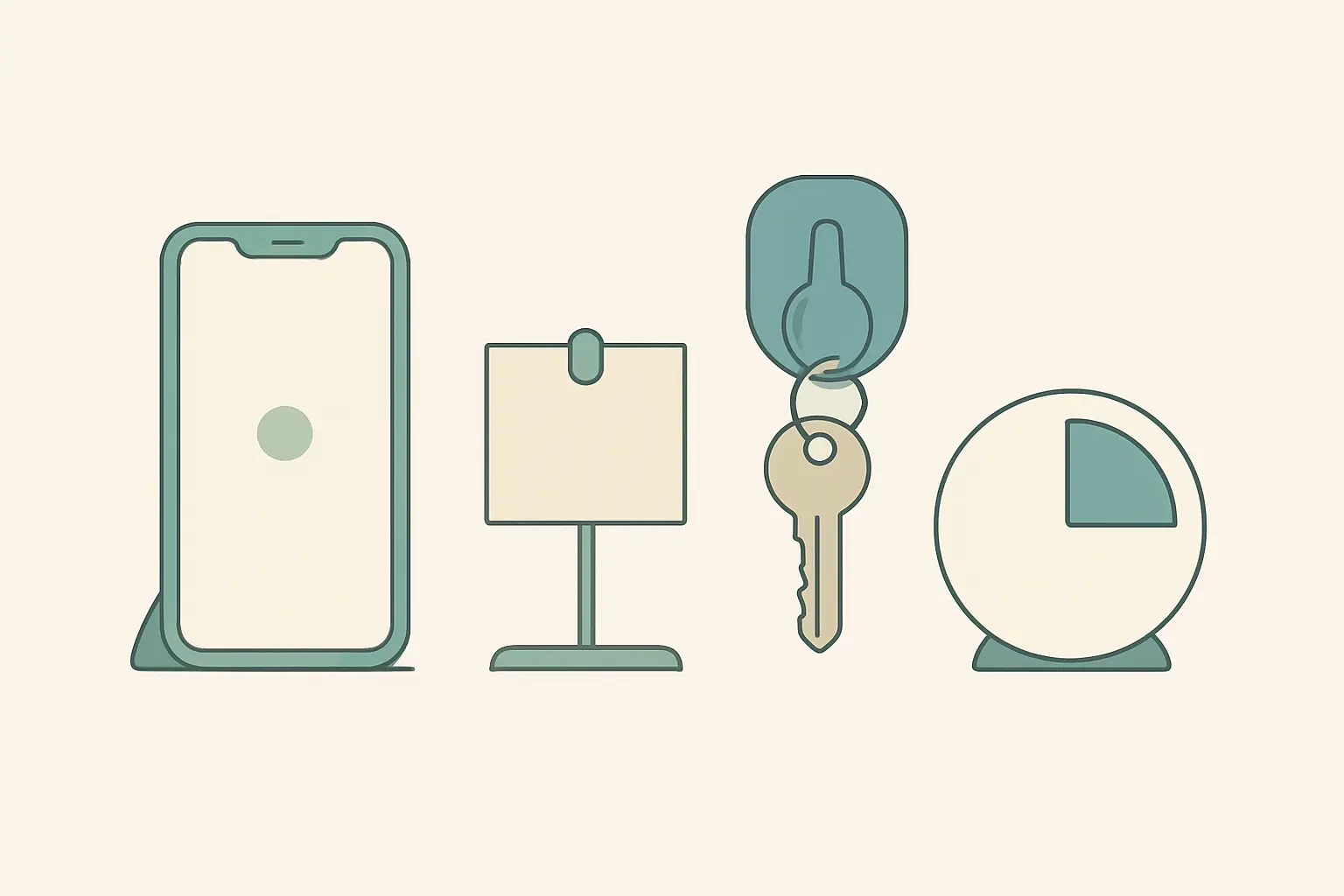
If inattention is the thing predicting a worse outcome, the design principle is simple: stop relying on remembering. Every part of the plan that lives only in your head will fail on a bad day.
- Make the plan external and interruptive. A reminder you have to check is a reminder you will miss. Use alerts that arrive on their own, and notes placed where you will physically walk into them.
- Shorten the horizon. Thirty days is an abstraction. The next two hours is something you can hold. Judge the day on whether you got through the last craving.
- Log cravings as they happen, not later. Retrospective recall is exactly the weak point. Capturing the trigger and intensity in the moment turns a blurred fortnight into a pattern you can plan around.
- Pre-decide the hard moments. Decide now what you do at the times you always smoked. A decision made in advance does not need making again under pressure.
- Give restlessness an outlet. It needs somewhere to go that is not a cigarette, and a physical substitute often matters more than any reasoning.
- Get a person involved, and pick your window. External accountability compensates for internal follow-through, and a quit goes better when your treatment is stable and life is not at its most chaotic.
This is where a phone earns its place, because it does the remembering. In the free iQuit app you can log each craving with its trigger and intensity as it happens, keep a mood journal, and use the SOS tools when an urge peaks, while the dashboard counts your smoke-free days, cigarettes avoided and money saved. For the week-by-week version, our step-by-step plan for quitting with ADHD builds a plan around these constraints.
The conversation to have with your prescriber
If you are on stimulant treatment for ADHD, or on any medication at all, your quit attempt is a clinical event and should be planned with the person who manages that treatment. Book it before your quit date, not during a difficult week.
Bring one finding with you. The 2014 Pediatrics meta-analysis found a significant association between stimulant treatment of ADHD and lower smoking rates, with larger effects where treatment was consistent over time. The authors were careful, since nearly all the studies were naturalistic, which rules out causal conclusions. But it is the opposite of the fear that treatment feeds the habit, and it is a reason not to stop your treatment in order to quit smoking.
- Your quit date, and whether the timing works alongside your current treatment.
- Which first-line stop-smoking medicine suits you, and how it interacts with everything else you take.
- That withdrawal will imitate an ADHD flare, and what you should both watch for so it is not misread as treatment failure.
- Any history of depression or anxiety. Our summary of what the research says about smoking and mental health is a reasonable primer.
- A check-in two to three weeks after your quit day, booked in advance, when the drop-off usually happens.
For background on the condition itself, the National Institute of Mental Health overview of ADHD is a reliable starting point.
Frequently asked questions
Does nicotine help ADHD symptoms?
Researchers have studied the idea, and a 2022 scoping review found support for a self-medication model. But that describes why cigarettes are hard to put down; it is not a treatment recommendation. Nicotine is not a licensed treatment for ADHD anywhere, smoking is the most harmful way to take it, and any short lift is followed by withdrawal that mimics the symptoms you were trying to settle (Frontiers in Neuroscience, 2022).
Why do more people with ADHD smoke?
A 2014 meta-analysis states that individuals with ADHD have a significantly higher risk of cigarette smoking. The likely reasons stack: impulsivity around a first cigarette, a reward system that responds strongly to a fast hit, social and stress factors, and a possible pharmacological pull from compounds in tobacco smoke beyond nicotine itself (Pediatrics, 2014).
Does treating ADHD make quitting easier?
Not on its own, according to the best test of the question. An 11-week randomized, double-blind, placebo-controlled trial of 255 adult smokers with ADHD found prolonged abstinence of 43.3% on long-acting methylphenidate versus 42.2% on placebo, an odds ratio of 1.1 with a confidence interval from 0.63 to 1.79. The authors concluded that treatment for ADHD did not improve smoking cessation success (Journal of Clinical Psychiatry, 2010).
Should I stop my ADHD medication while I quit smoking?
That is a decision for the prescriber who manages your ADHD treatment, and it should be made before your quit date rather than in a difficult week. A 2014 meta-analysis found stimulant treatment associated with lower smoking rates, not higher, so stopping treatment in order to quit is not supported by the evidence. Book the conversation early and bring your quit plan to it (Pediatrics, 2014).
Do varenicline and bupropion work if you have ADHD?
They remain the first-line options, but attention symptoms appear to blunt the result. In a placebo-controlled varenicline trial of 157 smokers aged 14 to 21, high inattention symptoms at baseline predicted lower seven-day abstinence during treatment and at the end of treatment, while hyperactivity and impulsivity symptoms did not. That argues for more support around the medicine, not for skipping it (Drug and Alcohol Dependence, 2023).
Is withdrawal worse with ADHD?
Possibly, though the evidence is thin. A small online self-report study of 309 people found ADHD associated with earlier smoking initiation and more severe withdrawal symptoms for both cigarettes and e-cigarettes. The bigger practical problem is overlap: restlessness, irritability and poor concentration are withdrawal symptoms and ADHD symptoms at once, which makes the first weeks easy to misread (Journal of Attention Disorders, 2023).
Does bupropion treat both ADHD and smoking at once?
It is used for both, but the two evidence bases are not equal. A 2023 review notes bupropion inhibits reuptake of norepinephrine and dopamine and is an effective anti-smoking drug, while for ADHD the evidence for efficacy is mixed, with poorly conducted trials, small samples and a lack of long-term assessment. Treat quitting and ADHD as two problems with one prescriber coordinating (Health Psychology Research, 2023).
Start with what you can measure
iQuit is free on Google Play and the App Store. Log every craving with its trigger and intensity the moment it hits, keep a daily mood journal, reach the SOS breathing and grounding tools in one tap, and watch your smoke-free days, cigarettes avoided and money saved add up, so the plan does not depend on you remembering it.
Download iQuit Free on Google Play Download on the App Store
This article is general information, not medical advice. Nicotine is not a treatment for ADHD. Do not start, stop or change any prescribed medication, including ADHD treatment, without talking to the clinician who prescribes it.