

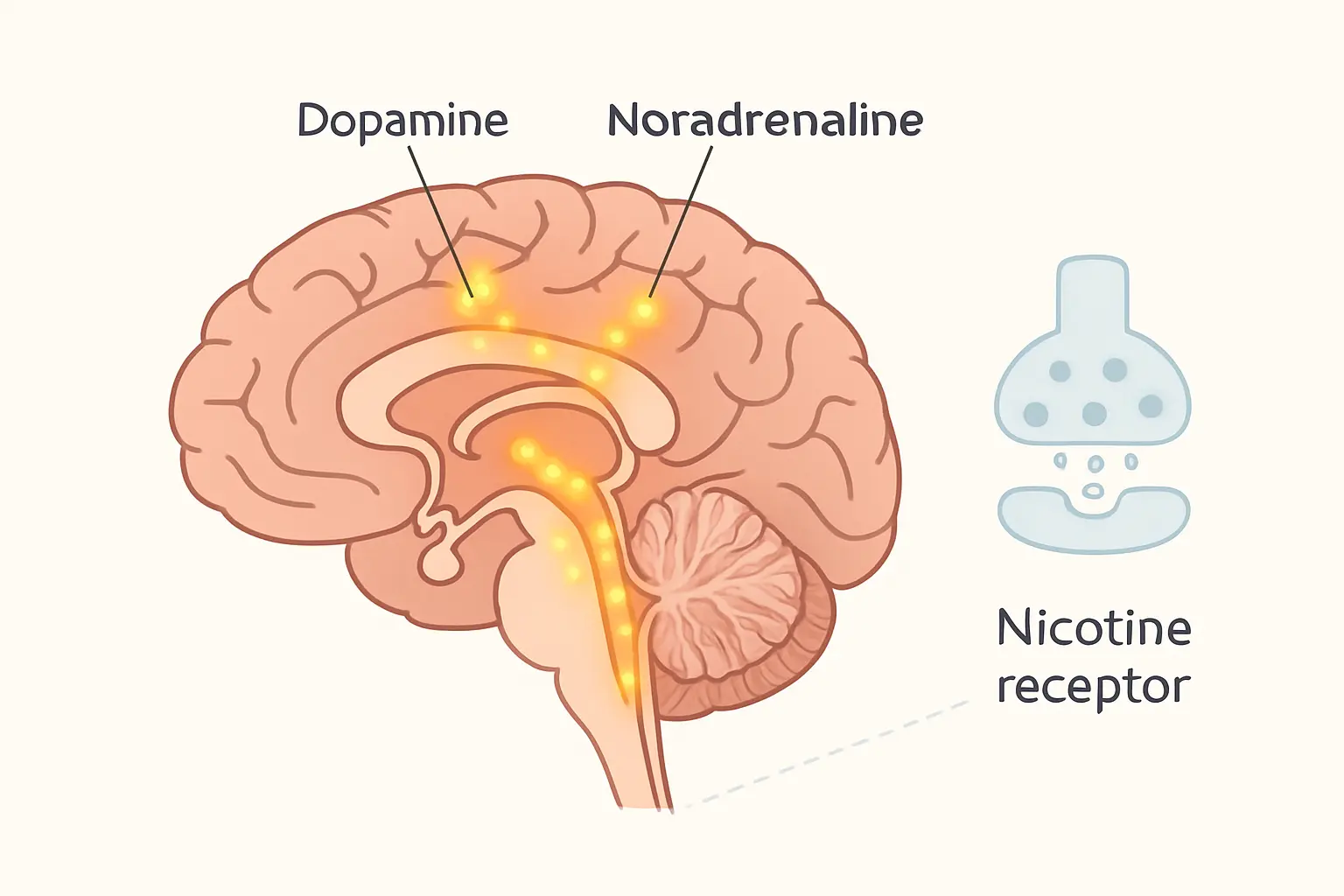
Bupropion (sold under the brand name Zyban for smoking cessation, and Wellbutrin for depression) is one of a small group of prescription medicines licensed to help people stop smoking — and it works differently from anything nicotine-based. Instead of replacing nicotine, it raises dopamine and noradrenaline activity in the brain to blunt cravings and withdrawal, which is why your prescriber may ask you to start it a week or two before your actual quit date. This guide covers exactly how bupropion works, the standard dosing schedule from the FDA label, who should not take it, what the evidence really shows about how well it works, and how to combine it safely with behavioral support.
What Is Bupropion and How Is It Different From NRT?
Bupropion was originally developed and is still widely prescribed as an antidepressant (Wellbutrin). Its exact mechanism in smoking cessation is not fully understood, but it is believed to work by inhibiting the reuptake of dopamine and noradrenaline in the brain, which eases nicotine withdrawal symptoms, and by weakly blocking nicotinic acetylcholine receptors, which may blunt the reward of smoking a cigarette (Cleveland Clinic, 2025).
This is a fundamentally different mechanism from nicotine replacement therapy (NRT). Patches, gum, and lozenges supply nicotine itself in a controlled way so your body can taper down gradually. Bupropion contains no nicotine at all — it changes brain chemistry around craving and mood instead. That is also why the two can be prescribed together (see the combining section below).
The Standard Dosing Schedule
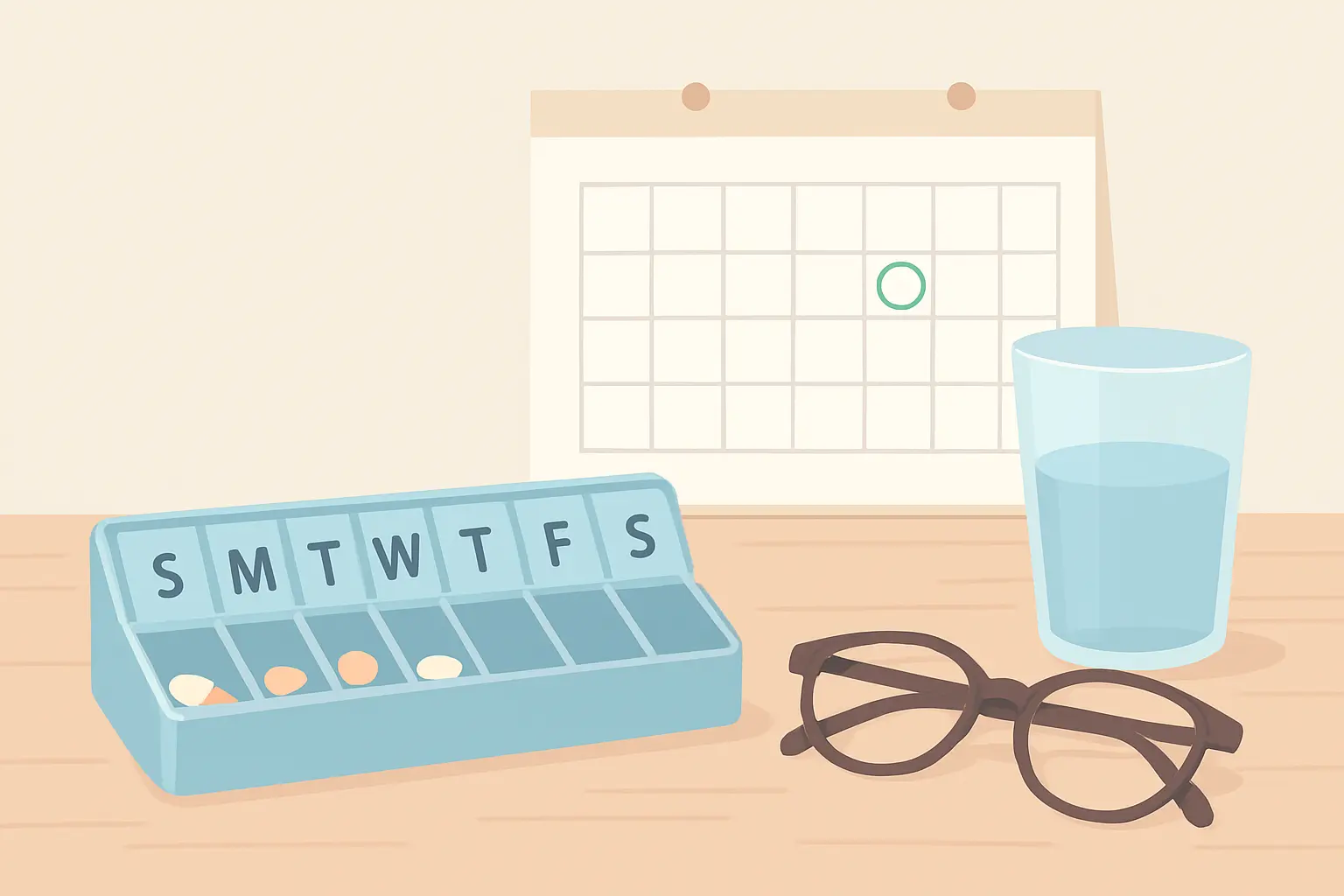
Dosing must always come from your prescriber, but the FDA-approved prescribing information for bupropion SR sets out the standard schedule that most prescribers follow (FDA prescribing information for bupropion SR, 2025):
| Days | Dose | Notes |
|---|---|---|
| Days 1–3 | 150 mg once daily | Started while you are still smoking, about one week before quit day |
| Day 4 onward | 150 mg twice daily (300 mg/day) | At least 8 hours between doses; do not exceed 300 mg/day |
| Quit date | Set within the first 2 weeks of treatment | Steady-state blood levels take about a week to build up |
| Total course | 7–12 weeks | Longer maintenance may be considered for relapse prevention, at your prescriber’s judgment |
Tablets must be swallowed whole and never crushed, split, or chewed, because doing so can release the dose too quickly and raise seizure risk (FDA prescribing information, 2025). Treatment starts before you actually quit, because it takes approximately one week of treatment to reach steady-state blood levels of bupropion (FDA prescribing information, 2025). NICE guidance similarly directs prescribers to provide bupropion before a person stops smoking and to agree a quit date within the first two weeks of treatment (NICE NG209, updated February 2025). This schedule is informational only — take bupropion exactly as prescribed. The dose, duration, and any adjustment for your health history must come from the clinician who prescribes it, never from an article. If you are not sure how to raise medication options with a doctor in the first place, our guide on how to talk to your doctor about quitting walks through what to ask.
How Well Does It Actually Work?
The most current and rigorous evidence comes from the 2023 Cochrane review of antidepressants for smoking cessation, which included 124 randomized trials covering 48,832 participants. It found high-certainty evidence that bupropion increases long-term quitting compared with placebo or no pharmacological treatment, with a risk ratio of 1.60 (95% CI 1.49 to 1.72; 50 studies, 18,577 participants) — in practical terms, roughly 49% to 72% more people had quit at six months or later than on placebo (Hajizadeh et al., Cochrane Database of Systematic Reviews, 2023).
The pivotal comparator trial behind the FDA label gives a sense of the real-world scale. In that nine-week, four-arm trial of 893 smokers, abstinence at 12 months was 15.6% on placebo, 16.4% on the nicotine patch alone, 30.3% on bupropion SR, and 35.5% on bupropion plus the patch — although the difference between the combination and bupropion alone was not statistically significant (Jorenby et al., New England Journal of Medicine, 1999). Short-term quit rates during treatment always look considerably higher than these one-year figures, because relapse in the months after a course ends is normal and expected. That is exactly why ongoing support matters as much as the pill itself.
The Cochrane review is also candid about bupropion’s limits. There was high-certainty evidence that people taking bupropion dropped out of trials because of adverse events more often than those on placebo (RR 1.44, 95% CI 1.27 to 1.65), and the evidence was not sufficient to establish that adding bupropion to NRT produces better quit rates than NRT alone (Cochrane, 2023).
Bupropion vs Varenicline: The EAGLES Trial
The largest and most reassuring safety study of quitting medications is EAGLES, a 2016 double-blind, placebo-controlled trial in 8,144 smokers, roughly half of whom had a history of psychiatric illness. It compared varenicline, bupropion, nicotine patch, and placebo head-to-head across 140 centers in 16 countries (Anthenelli et al., The Lancet, 2016).
Two results matter most for anyone weighing bupropion. First, on safety: EAGLES found no significant increase in moderate or severe neuropsychiatric adverse events with either varenicline or bupropion compared with nicotine patch or placebo — a finding that led the FDA to remove its earlier boxed warning about neuropsychiatric risk. Second, on effectiveness: varenicline outperformed bupropion, nicotine patch, and placebo, while bupropion and the patch were each more effective than placebo alone but broadly similar to each other (EAGLES, 2016).
If you want the full side-by-side numbers, our dedicated comparison of varenicline versus bupropion breaks down efficacy, side effects, and cost, and every quit-smoking pill compared adds cytisine into the mix.
Who Should Not Take Bupropion
Bupropion is not right for everyone, and the contraindications are firm rather than a matter of preference. The FDA label lists the following as absolute contraindications (FDA prescribing information for bupropion SR, 2025):
- Seizure disorder, current or past — bupropion lowers the seizure threshold. The label reports a seizure rate of approximately 0.1% (1 in 1,000) at doses of sustained-release bupropion up to 300 mg per day, rising to approximately 0.4% at doses up to 400 mg per day, which is why the smoking-cessation dose is capped at 300 mg.
- Current or prior diagnosis of anorexia nervosa or bulimia nervosa — a higher incidence of seizures was observed in these patients on bupropion.
- Abrupt discontinuation of alcohol, benzodiazepines, barbiturates, or antiepileptic drugs — withdrawal from any of these lowers the seizure threshold in the same way.
- Use of a monoamine oxidase inhibitor (MAOI) within the past 14 days — combining bupropion with an MAOI carries an increased risk of hypertensive reactions. This includes reversible MAOIs such as linezolid and intravenous methylene blue.
- Known hypersensitivity to bupropion or any other ingredient of the product.
NICE guidance (NG209, updated February 2025) also states plainly that bupropion should not be offered to people under 18, or during pregnancy or breastfeeding. Beyond the absolute contraindications, your prescriber will also want to know about any history of head injury, brain tumor, bipolar disorder, high blood pressure, diabetes treated with insulin or oral medication, or other drugs that could interact — including other antidepressants. None of this replaces an individual medical assessment: only your prescriber can tell you whether bupropion is safe for you, based on your full history.
Side Effects and What to Expect Week by Week
According to the FDA prescribing information, the most common adverse reactions (occurring in at least 5% of people and at least 1% more often than on placebo) are insomnia, rhinitis, dry mouth, dizziness, nervous disturbance, anxiety, nausea, constipation, and joint pain. Insomnia is the one people notice most; prescribers often suggest taking the second dose earlier in the day rather than close to bedtime, though never closer than eight hours after the first. In the smoking-cessation trials, adverse reactions were troublesome enough to cause 8% of people to stop treatment (FDA prescribing information for bupropion SR, 2025). Most people notice the medication easing cravings within one to two weeks of starting (Mayo Clinic, 2025).
One thing many people ask about is weight. Quitting smoking without support commonly comes with modest weight gain, and bupropion has a mild appetite-suppressing effect for some people during the first weeks of treatment, though this is not guaranteed and tends to fade over the course of treatment (Cleveland Clinic, 2025). It is a reason some prescribers favor bupropion for smokers who are specifically worried about weight, alongside people managing co-occurring depression, since the same medicine can support both conditions when a prescriber judges that appropriate.
Seizure is rare but is the serious risk to know about: call your prescriber immediately or seek emergency care for any seizure, and report unusual agitation, mood changes, or thoughts of self-harm right away, in line with FDA safety labeling for all antidepressant-class medicines.
Combining Bupropion With NRT and Behavioral Support
Because bupropion and nicotine replacement work through different mechanisms, the FDA label states that bupropion SR may be used together with a nicotine transdermal system, and prescribers sometimes do combine them. The evidence for the combination being better than either alone is weaker than many people assume: in the pivotal trial the combination reached 35.5% abstinence at 12 months versus 30.3% for bupropion alone, a difference that was not statistically significant (Jorenby et al., 1999), and Cochrane found insufficient evidence that adding bupropion to NRT beats NRT alone (Cochrane, 2023). Combination treatment should only be started under medical guidance, since it changes the side-effect profile your prescriber needs to monitor — blood pressure in particular.
What the evidence is most consistent about, across every medication option, is that pills work best alongside behavioral support, not instead of it. NICE NG209 is explicit that behavioral support should be offered to everyone stopping smoking, whichever aid they choose. This is the exact gap a structured app can fill: tools like iQuit’s craving log (which tracks triggers and intensity so patterns become visible), its predictive craving forecasts, and its free-tier AI coach for in-the-moment coping give you something concrete to do between prescriber appointments, while the medication does its work in the background. It does not replace your prescriber’s advice or your dosing schedule — it complements it. If you are comparing this medication route against other options first, our roundup of the best NRT options compared lays out the over-the-counter menu.
The CDC’s short explainer below walks through how to take bupropion SR correctly, including the titration schedule and common mistakes to avoid.
Who Bupropion Tends to Suit Best
No medication is universally best — the right choice depends on your health history and what you have tried before. In practice, bupropion is often considered for people who also have depression that a prescriber judges could benefit from treatment, people who are worried about post-quit weight gain, people who cannot tolerate or have not responded well to NRT, and people for whom varenicline is unavailable, not tolerated, or contraindicated. It is worth knowing that NICE places bupropion among the options that are less likely to lead to a successful quit than cytisinicline, varenicline, or combination NRT, so it is rarely a first choice when those are available (NICE NG209, 2025). It is one option among several, each with a different balance of effectiveness and side effects, covered in full in our quit smoking success rates by method data roundup.
Whichever medication you and your prescriber land on, pairing it with a full quit plan — not medication alone — consistently produces the best odds. Our complete evidence-based guide to quitting is a good next stop for building that fuller plan, and if you are also weighing combination NRT strategies alongside or instead of medication, see combination NRT vs single NRT compared or our broader look at which quit-smoking method to choose.
Frequently Asked Questions
How long before my quit date should I start bupropion?
The FDA label directs prescribers to begin dosing about one week before quit day, while you are still smoking, and to set a target quit date within the first two weeks of treatment. That gap exists because it takes roughly a week of dosing to reach steady blood levels that are actually effective against cravings (FDA prescribing information for bupropion SR, 2025).
Is bupropion the same as nicotine replacement therapy?
No. Bupropion contains no nicotine at all. It works on dopamine and noradrenaline pathways in the brain rather than supplying nicotine, which is why the FDA label allows it to be used alongside a nicotine transdermal system under medical supervision (Cleveland Clinic, 2025).
What is the maximum dose of bupropion for smoking cessation?
The FDA label caps smoking-cessation dosing at 300 mg per day, given as 150 mg twice daily with at least 8 hours between doses. Higher doses sharply raise seizure risk, from about 0.1% to about 0.4% at up to 400 mg per day (FDA prescribing information, 2025). Take it exactly as prescribed and never double up on a missed dose.
Can I take bupropion if I have a history of seizures?
No. A seizure disorder is an absolute contraindication on the FDA label, because bupropion lowers the seizure threshold. The same applies to a current or past diagnosis of anorexia or bulimia. Tell your prescriber about any seizure or eating-disorder history so they can recommend a safer alternative (FDA prescribing information, 2025).
Does bupropion work better than varenicline (Chantix/Champix)?
No, the EAGLES trial found varenicline more effective than bupropion for achieving abstinence, though both were safe and outperformed placebo. Bupropion remains a reasonable option when varenicline is unavailable, not tolerated, or contraindicated (Anthenelli et al., The Lancet, 2016).
Will bupropion cause weight gain?
Bupropion is not associated with the weight gain that commonly follows quitting smoking without support, and some people experience mild appetite suppression during treatment, though this varies and is not guaranteed for everyone (Cleveland Clinic, 2025).
Can I drink alcohol while taking bupropion?
Suddenly stopping regular heavy alcohol use while on bupropion raises seizure risk, and the FDA label lists abrupt discontinuation of alcohol as a contraindication. Discuss your drinking habits openly with your prescriber before starting treatment (FDA prescribing information, 2025).
How long do I need to take bupropion for?
The FDA label sets a course of 7 to 12 weeks, and notes that if you have not quit by then, that attempt is unlikely to succeed and the plan should be reassessed. NICE also asks prescribers to reassess you shortly before your prescription ends (FDA prescribing information, 2025; NICE NG209, 2025).
Medication Handles the Chemistry. iQuit Handles the Moment.
Whatever your prescriber recommends, the minutes when a craving actually hits still need a plan. iQuit’s craving log, predictive craving forecasts, and free daily AI coach give you something concrete to do between doses and appointments — alongside your prescriber’s care, never instead of it. Free on Android.