
A stroke changes everything at once: new medicines, therapy sessions, a body that may not do what it used to, and a long list of advice. Somewhere on that list is the instruction to stop smoking. Quitting smoking after a stroke is one of the most powerful things you can do to protect your brain from a second one, and it is safe to get help with it. This guide covers what the evidence says about recurrence, which stop-smoking treatments are used after a stroke, how to quit with fatigue, speech or mobility problems, and a simple four-week plan from hospital to home.
Does Quitting After a Stroke Lower the Risk of Another One?
Yes. Having a stroke or a transient ischemic attack (TIA, sometimes called a mini-stroke) puts you at higher risk of having another, and the NHS lists quitting smoking first among the things you can do to lower that risk. Smoking raises blood pressure, makes blood more likely to clot, raises “bad” cholesterol and can trigger atrial fibrillation, all of which feed stroke risk.
The Stroke Association says smokers are around three times more likely to have a stroke than non-smokers, and that your risk starts to fall as soon as you stop. After about five years, the charity says, your stroke risk can be around the same as someone who has never smoked.
The strongest data for survivors specifically comes from a cohort inside the IRIS trial. Researchers followed 3,876 people who had recently had an ischemic stroke or TIA for a median of 4.8 years. Of the 1,072 who were smoking at the time of their stroke, 42% had quit within a few months. Their outcomes were clearly better (Epstein et al., Neurology, 2017).
| Group | 5-year risk of stroke, heart attack or death |
|---|---|
| Quit smoking after the event | 15.7% |
| Kept smoking | 22.6% |
| Adjusted difference | About one-third lower risk for quitters (hazard ratio 0.66) |
This was an observational analysis, so it cannot prove cause and effect on its own, but it fits the wider evidence. For the population-level numbers, see our page on stroke risk statistics.
What Stroke and Stop-Smoking Guidance Says
Stroke care and stop-smoking care meet in hospital. In England, the NICE guideline on treating tobacco dependence (NG209) sets out what should happen for anyone admitted who smokes. The key points are practical:
- Stop-smoking support should be offered immediately if needed, otherwise within 24 hours of admission.
- Support should continue on site as often as needed during the stay.
- After discharge, weekly sessions, ideally face to face, should be offered for at least four weeks, or a referral made to local stop-smoking support.
- People should leave hospital with enough stop-smoking medicine to last at least a week or until their next support contact.
NICE also stresses that any risk from licensed nicotine products or stop-smoking medicines is much lower than the risk of smoking.
Despite that guidance, treatment is often missed. A US study of 3,153 people who smoked at the time of a stroke or TIA found that only 4.7% had a pharmacy claim for varenicline or bupropion within 12 months, compared with 74.6% for statins (Parikh et al., Preventive Medicine Reports, 2022). If nobody has raised it with you, raise it yourself.
If you have also had heart problems, our guide to quitting after a heart attack covers the cardiac side in detail.
Is Nicotine Replacement Safe After a Stroke?
Nicotine replacement therapy (NRT) delivers nicotine without the smoke. Patches, gum, lozenges, mouth sprays and inhalators ease cravings, restlessness and irritability while you break the habit.
The Stroke Association’s guide to smoking and the risk of stroke (December 2024) is clear on timing. NRT should only be started under medical supervision in someone who has had a very recent stroke, meaning within the last four weeks. It adds that in most cases NRT will still be prescribed, because the risks of continuing to smoke are usually greater than the risk of using NRT after a stroke.
In practice that means three things:
- In the first four weeks, use NRT only after the stroke team or your doctor has agreed it. Do not start patches on your own straight after discharge.
- After that, NRT is widely used. NICE says a combination of a long-acting product, such as a patch, and a short-acting one, such as gum or spray, works better than either alone.
- Get the dose right. NICE asks advisers to make sure people use a high enough dose to control cravings. Your pharmacist or stop-smoking adviser can match the strength to how much you smoked.
If a patch irritates your skin or disturbs your sleep, our guide to nicotine patch side effects explains what is normal and what to report.
In this short video from Hamilton Health Sciences, a clinical nurse specialist from a hospital stroke prevention clinic shares tips on quitting smoking to prevent another stroke.
Varenicline, Bupropion and Other Medicines
Prescription medicines are an option after a stroke, but the choice depends on your other conditions and medicines.
Varenicline
Varenicline is a tablet that reduces cravings and withdrawal and makes relapse less likely. It is prescription-only, and a course usually lasts 12 weeks. NICE advises starting it one to two weeks before your quit date. It is one of the options NICE lists as more likely to lead to success when combined with behavioral support.
Concerns about heart and circulation safety were tested in the EAGLES trial and its extension, which included 8,058 smokers. The researchers found no evidence that varenicline, bupropion or the nicotine patch increased serious cardiovascular events, including non-fatal stroke, during or after treatment (Benowitz et al., JAMA Internal Medicine, 2018). That trial studied the general population of smokers, not people in the weeks after a stroke, so individual advice still matters. Read more about varenicline side effects before you start.
Bupropion
Bupropion (Zyban) is also prescription-only and is less effective than varenicline or combination NRT, according to NICE. The US National Library of Medicine’s MedlinePlus advice says to tell your doctor if you have ever had seizures, a head injury, a brain tumor, a heart attack or high blood pressure, and that a history of seizures usually rules it out. If you have had a seizure since your stroke, bupropion is unlikely to be the right choice.
Cytisinicline and e-cigarettes
NICE added cytisinicline (also called cytisine) in 2025, but not for people aged 66 and over. The Stroke Association says vapes are less harmful than cigarettes but not completely safe.
| Option | Key point after a stroke | Source |
|---|---|---|
| Combination NRT (patch plus fast-acting) | Start under medical supervision if the stroke was within 4 weeks | Stroke Association, NICE |
| Varenicline | Prescription, usually 12 weeks, start 1 to 2 weeks before quit day | Stroke Association, NICE |
| Bupropion | Less effective; usually avoided with a seizure history | NICE, MedlinePlus |
| Cytisinicline | Not for people aged 66 and over | NICE |
| Nicotine vapes | Less harmful than smoking, not risk-free | Stroke Association |
Quitting With Fatigue, Aphasia or Limited Mobility
Standard quit advice assumes you can pop out for a walk or phone a helpline. After a stroke, the plan needs to fit the body and brain you have right now.
Fatigue
The Stroke Association describes post-stroke fatigue as very common and different from normal tiredness, because it does not get better with rest. Tired moments are high-risk moments for cravings. Keep a fast-acting NRT product within reach of your chair or bed, and plan your hardest tasks for your best-energy time of day.
Aphasia and communication problems
Around two-thirds of people have communication problems straight after a stroke, according to the Stroke Association, and tiredness or low mood can make them worse. Phone-based quit support may not suit you. Ask for face-to-face sessions, bring a family member, and use simple written cards such as “I want to stop smoking” or “I need a craving product” to show staff. A speech and language therapist can help you find what works.
Limited mobility
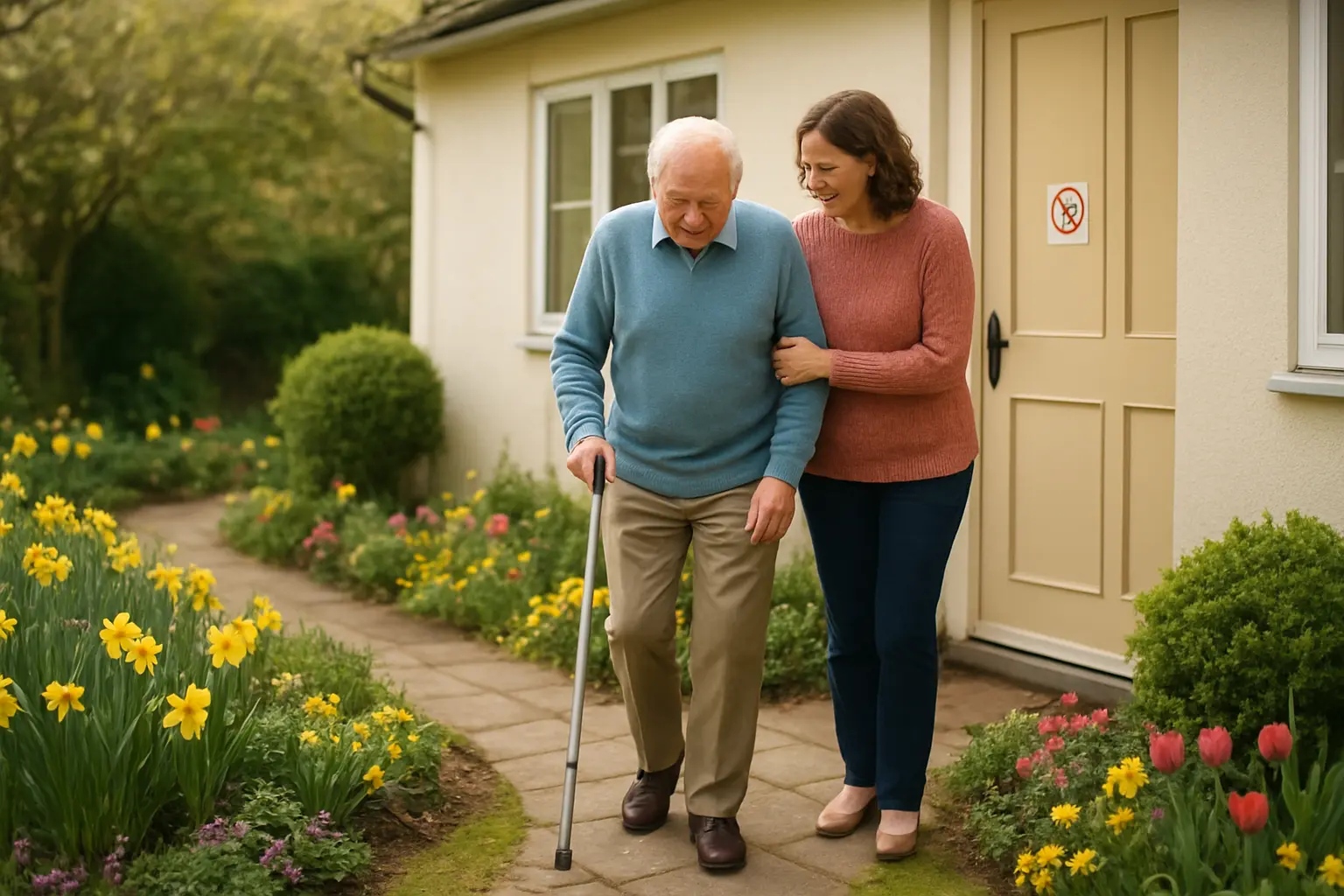
If you rely on others to get outside, cigarettes may be tied to being helped to a smoking spot. Replace that trip with a different short outing, such as the garden or a hallway walk with your physiotherapy exercises, and remove lighters and packs from places you can reach.
Post-Stroke Depression and Cravings
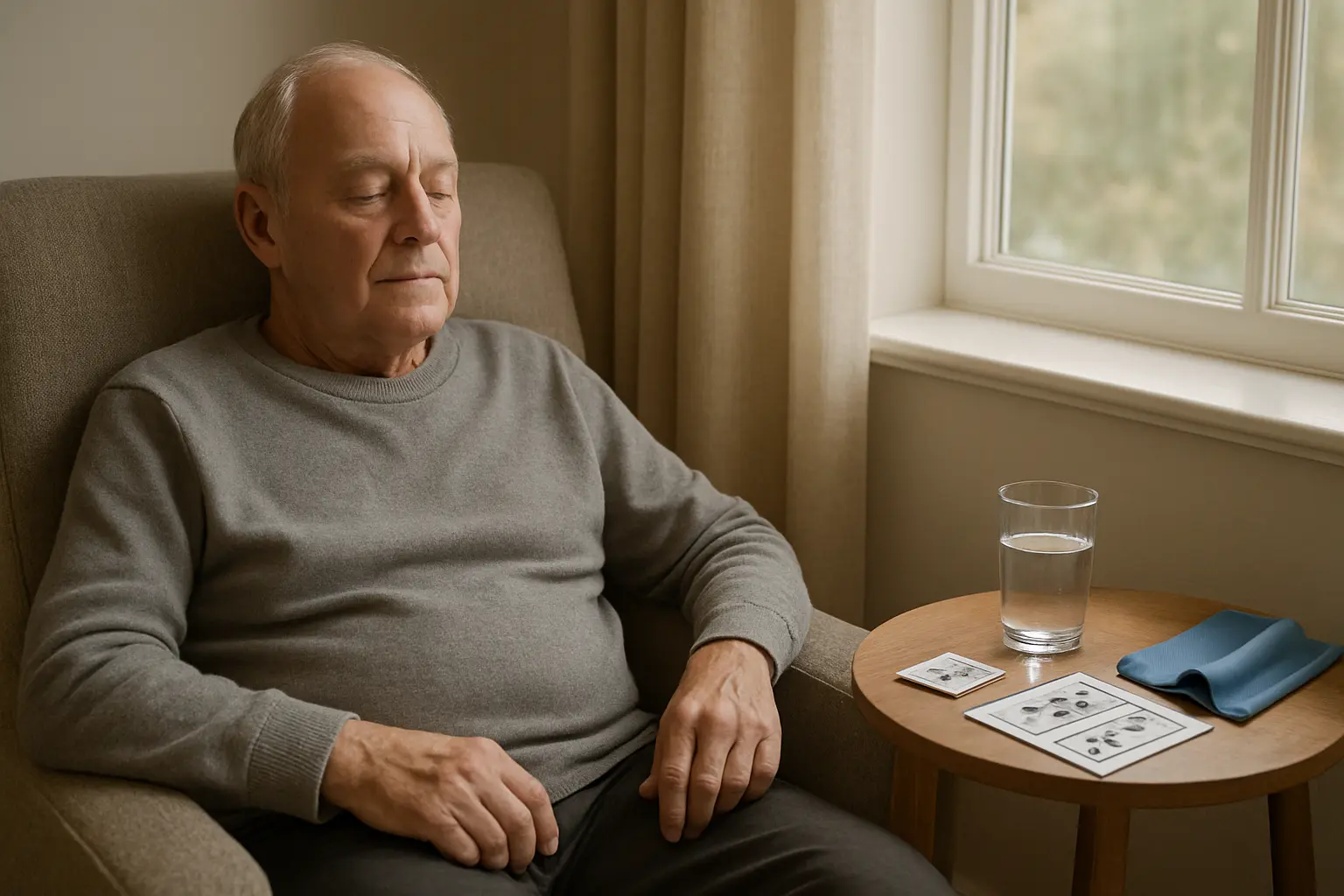
Low mood after a stroke is common. A review of 61 studies covering 25,488 people estimated that about 31% of stroke survivors experience depression (Hackett and Pickles, International Journal of Stroke, 2014). The Stroke Association notes that grief, loss of confidence and anxiety about having another stroke are also normal reactions.
Cigarettes can feel like the one thing that still brings relief. The Stroke Association explains why this is misleading: nicotine alters mood chemicals, so the calm you feel is largely withdrawal easing. When you quit, cravings can make you feel anxious and irritable at first, but after a while mood and anxiety levels should improve.
Treat mood and smoking together rather than one after the other:
- Tell your GP or stroke team if low mood is affecting you. The NHS notes that home recovery plans can include cognitive behavioral therapy for anxiety, depression and tiredness.
- If you take medicine for depression or anxiety, let your doctor know you are quitting, as they may want to review it.
- Expect cravings at emotional moments, such as a hard therapy session. A craving usually passes within several minutes, so delay and distract.
Health worries can be a turning point rather than a burden. Our article on quitting after a diagnosis looks at using that moment well. iQuit’s disease-risk insights show how your risk picture changes if you quit today, and its SOS craving tools are one tap away on low-energy days.
How Carers Can Help Without Nagging
Partners, adult children and friends often become carers overnight. The US government’s Smokefree.gov guide for supporters says people who feel supported are more likely to quit for good. It also lists what backfires: nagging, counting cigarettes, asking whether they smoked today, and getting upset after a slip.
What helps instead:
- Make the home smoke-free. The NHS says opening windows or smoking in another room does not protect others, and smoke can linger for hours. A smoke-free home and car protects everyone and removes cues.
- Handle the logistics. Collect prescriptions, keep NRT stocked, and book or join stop-smoking appointments.
- Notice small wins. A craving ridden out after physiotherapy deserves a mention.
- Look after yourself. The NHS notes that caring after a stroke can be difficult, frustrating and lonely, so carers need support too.
A Four-Week Plan From Hospital to Home
This plan follows NICE recommendations for hospital patients and Stroke Association advice. Adjust it with your care team.
| When | What to do |
|---|---|
| In hospital | Ask for stop-smoking support. Agree with the team whether NRT or another medicine is right for you now. |
| Discharge day | Leave with at least a week of treatment and a booked follow-up with stop-smoking support. Clear cigarettes, lighters and ashtrays from home. |
| Week 1 | Use treatment exactly as agreed. Plan for your two or three biggest trigger moments, such as after meals or after therapy. |
| Week 2 | Review with your adviser: is the dose controlling cravings? Log when urges hit and how strong they are. |
| Week 3 | Watch mood and fatigue. Tell your GP if low mood is building. Keep the home smoke-free. |
| Week 4 | Attend your weekly session. If you slipped, treat it as information about a trigger and keep going rather than starting over. |
Past week four, keep going with treatment for the full course. The Stroke Association notes that cravings can return at stressful moments even after you have stopped. See the cardiovascular recovery timeline and our guide to blood pressure after quitting for what comes next.
If phone lines are hard for you, an app can help. iQuit’s craving log records triggers and intensity, which makes those week-two reviews with your adviser far more useful.
Frequently Asked Questions
Does quitting smoking after a stroke reduce the risk of another stroke?
Yes. In the IRIS cohort of people who had an ischemic stroke or TIA, those who quit had a five-year risk of stroke, heart attack or death of 15.7%, compared with 22.6% for those who kept smoking. The Stroke Association says stroke risk starts to fall as soon as you stop (Epstein et al., Neurology, 2017).
Can I use nicotine patches after a stroke?
Usually, yes. The Stroke Association says NRT should only be started under medical supervision if your stroke was within the last four weeks, but in most cases it will still be prescribed because continuing to smoke is usually riskier. After that, combination NRT is widely used (Stroke Association guide, 2024).
Is varenicline safe for stroke survivors?
Varenicline is a prescription option your doctor can consider. The EAGLES trial of 8,058 smokers found no evidence that it increased serious cardiovascular events, including non-fatal stroke. That trial did not focus on people who had just had a stroke, so ask your stroke team or GP about your situation (Benowitz et al., JAMA Internal Medicine, 2018).
Can I take bupropion (Zyban) after a stroke?
It depends on your history. MedlinePlus advises telling your doctor about any seizures, head injury, brain tumor, heart attack or high blood pressure, and says a seizure history usually rules bupropion out. NICE also rates it as less effective than varenicline or combination NRT (MedlinePlus; NICE NG209).
Is cutting down enough after a stroke?
No. The Stroke Association says your stroke risk goes down the less you smoke, but even one cigarette a day still gives a significantly higher risk than not smoking at all. That is why stroke teams advise stopping completely, with treatment and support to make it manageable (Stroke Association, 2024).
How long after quitting does stroke risk drop to that of a non-smoker?
The Stroke Association says that after about five years, your risk of having a stroke can be around the same as someone who has never smoked. The fall starts as soon as you quit, and your own risk also depends on blood pressure, cholesterol, atrial fibrillation and other factors your team manages (Stroke Association).
What should hospitals offer stroke patients who smoke?
In England, NICE says support should start within 24 hours of admission, continue during the stay, and include weekly sessions for at least four weeks after discharge. Patients should leave with at least a week of stop-smoking medicine. If this was not offered, ask your ward team or GP (NICE NG209).
Protect Your Recovery, One Smoke-Free Day at a Time
iQuit shows your disease-risk insights, logs cravings with triggers and intensity for your adviser, and puts SOS craving support one tap away on tired days. Track days smoke-free and your health milestones as you recover. Free on Google Play and the App Store.
Download iQuit Free on Google Play Download on the App Store