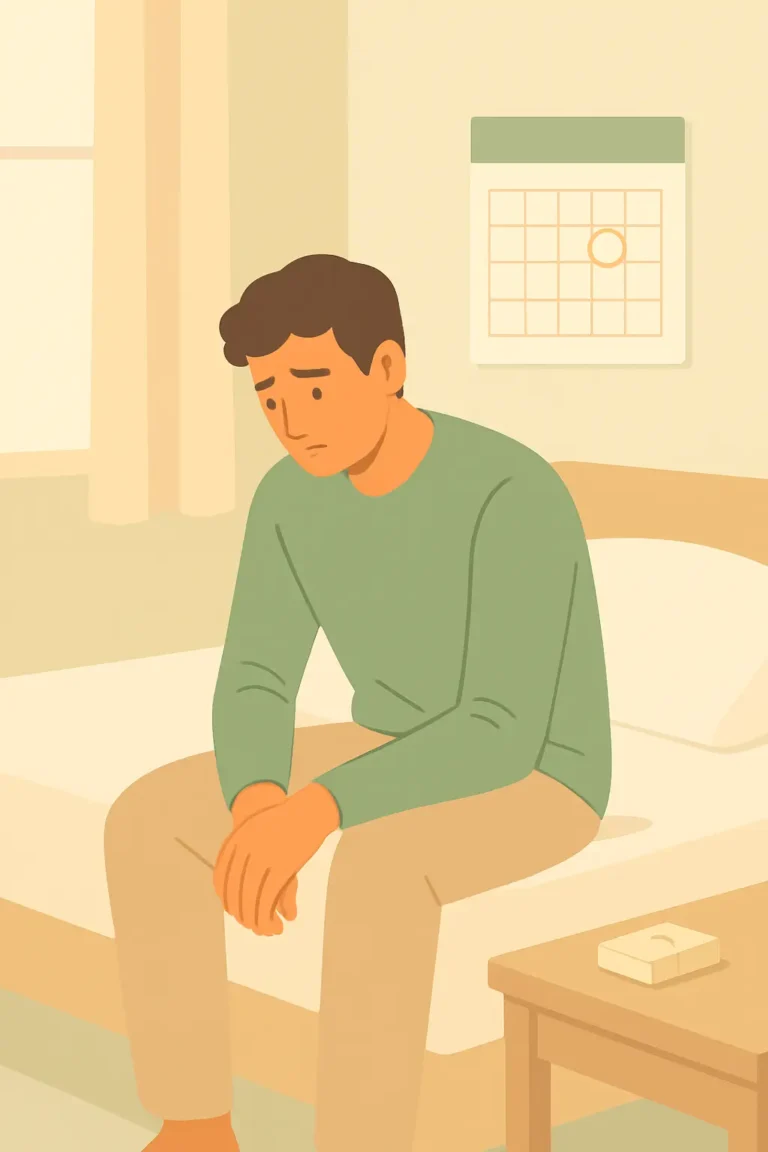
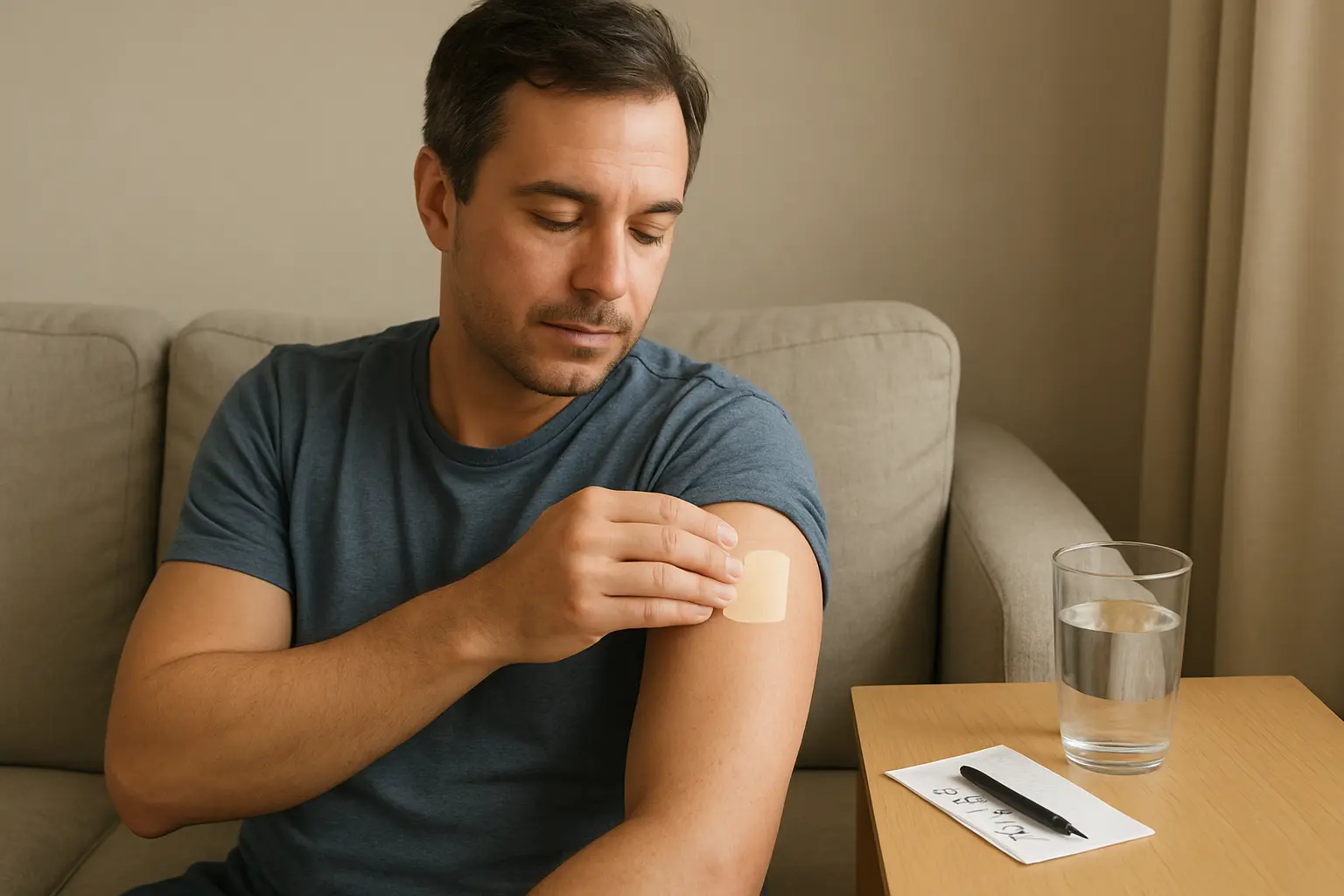
Most nicotine patch side effects are mild and short-lived: itchy or red skin where the patch sat, vivid dreams or broken sleep, and sometimes headache, dizziness or nausea in the first days. They are usually easy to manage with small changes, like moving the patch to a new spot each day or taking it off at bedtime. A few signs, such as a racing or irregular heartbeat, a spreading rash or trouble breathing, mean you should stop and get medical advice.
This guide covers each common side effect using the official product labeling, how to tell a side effect from withdrawal, and the warning signs that mean you should call a doctor or pharmacist. For most people the fix is a small adjustment, not stopping treatment.
Are nicotine patch side effects common?
Yes, mild side effects are common, but serious ones are rare. The UK summary of product characteristics for Nicorette Invisi patches lists itching as very common. Dizziness, headache, nausea, vomiting, rash and hives are listed as common. Palpitations, a fast heartbeat, flushing and raised blood pressure are uncommon, and serious allergic reactions are rare.
The same document notes that about one in five users of that patch get mild skin reactions during the first weeks, and that most unwanted effects appear early and depend on the dose. The first week or two is usually the bumpiest.
It helps to keep the bigger picture in view. A 2018 Cochrane review of 136 studies found that nicotine replacement therapy raises quit rates by 50% to 60%, with the patch alone raising them by about 64% compared with placebo or no NRT. Serious adverse events were extremely rare, so a patch that itches a little is usually worth adjusting rather than abandoning.
| How often | Side effects listed |
|---|---|
| Very common (more than 1 in 10) | Itching |
| Common (up to 1 in 10) | Dizziness, headache, nausea, vomiting, rash, hives |
| Uncommon (up to 1 in 100) | Palpitations, fast heartbeat, flushing, raised blood pressure, breathlessness, sweating, muscle aches near the patch, tiredness, chest discomfort |
| Rare (up to 1 in 1,000) | Serious allergic reaction, swelling of the face or lips, marked skin redness |
Skin redness, itching and rash: what helps
A pink, slightly itchy square where the patch was is the most common complaint. It happens because the adhesive and the nicotine sit against the same patch of skin for many hours. The FDA-approved NicoDerm CQ Drug Facts label gives clear rules that reduce irritation, and most of them are about placement.
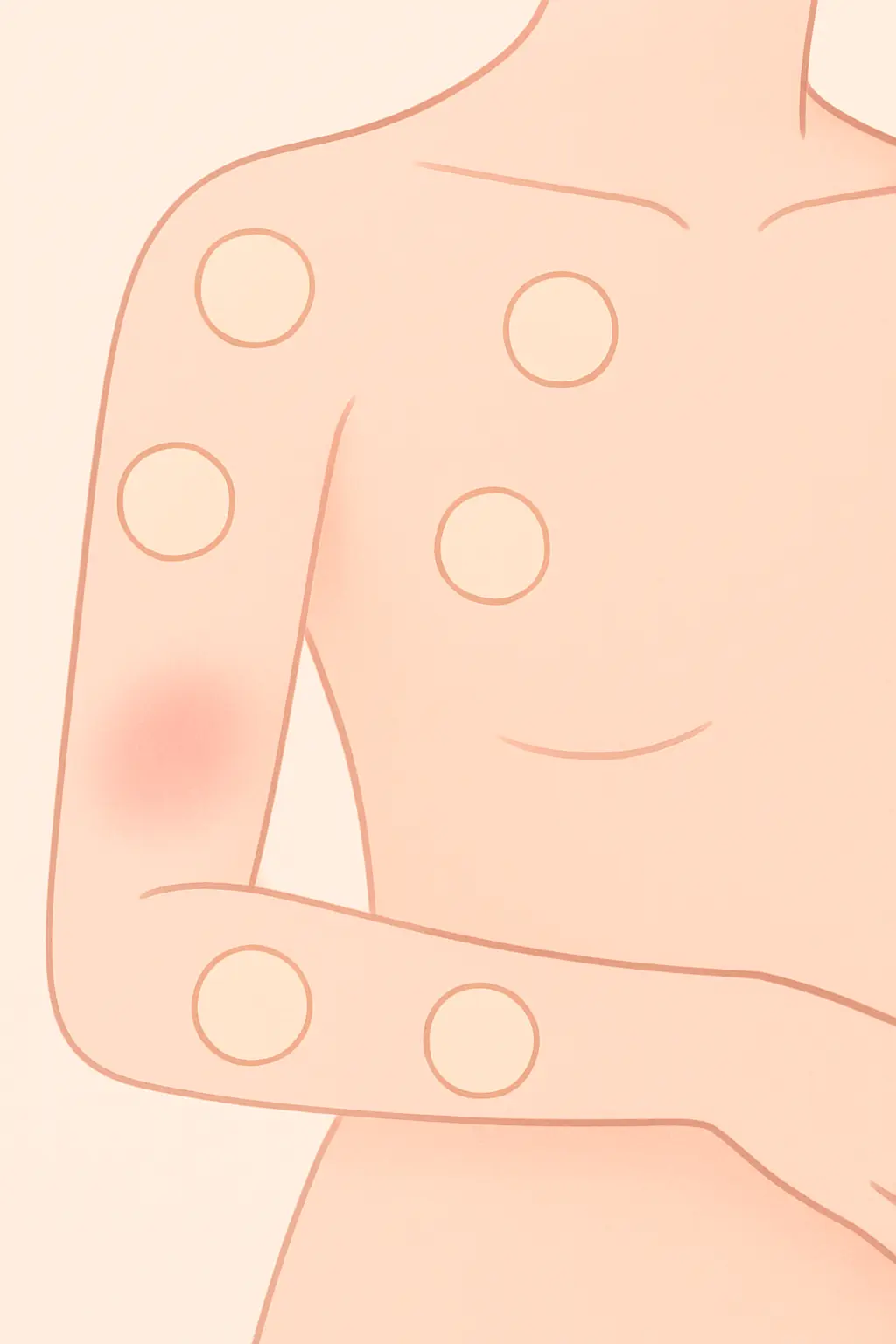
- Move it every day. Apply each new patch to a different skin site. The UK labeling says not to use the same site on consecutive days.
- Choose the right skin. Use clean, dry, hairless skin on the upper chest, upper arm or hip. Avoid irritated, oily, scarred or broken skin.
- Never go past 24 hours. The label warns that leaving a patch on longer may irritate your skin, and it loses strength after 24 hours anyway.
- One patch at a time, uncut. Do not wear two patches or cut one into pieces.
If you are unsure you are doing any of this right, our step-by-step guide on how to apply a patch correctly shows the full routine. If the itch bothers you, ask a pharmacist what is suitable for irritated skin.
Some people should be more careful. The label advises asking a doctor first if you have an allergy to adhesive tape or skin problems, because rashes are more likely. The UK labeling goes further and says people with chronic widespread skin conditions such as psoriasis, chronic dermatitis or hives should not use that patch. In that case, gum, lozenges or a mouth spray may suit you better, and our comparison of other NRT options explains the choices.
Stop using the patch and ask a doctor if the redness has not gone after four days, if the skin swells, or if you develop a rash. The UK labeling also mentions blistering or a burning feeling as signs of a more severe reaction.
Vivid dreams and trouble sleeping on the patch
Strange, intense dreams and waking in the night are well-known patch complaints, especially with patches worn overnight. The NicoDerm CQ label addresses this directly: if you have vivid dreams or other sleep disturbances, you may remove the patch at bedtime and put a new one on in the morning.
There is a trade-off. The same label says that if you crave cigarettes when you wake up, wearing the patch for 24 hours helps. So if you take it off at night, plan for the morning. Keep your morning routine short, get the new patch on as soon as you are up, and talk to a pharmacist about adding a fast-acting product. NHS Better Health recommends combining a slow-acting patch with a fast-acting source such as a mouth spray, and our guide to combination NRT covers how that works.
Some UK patches are designed to be worn for 16 hours, from waking to bedtime, which may be a simple switch. Keep in mind that poor sleep is not always the patch: the UK labeling lists night-time waking as a symptom of nicotine withdrawal itself.
A simple sleep note, or the mood journal in the iQuit app, helps you see whether bad nights line up with overnight wear or with the first days after your quit date.
Nausea, dizziness and headache
Feeling queasy, light-headed or headachy is common in the first days. MedlinePlus lists dizziness, headache, nausea, vomiting, diarrhea, and redness or swelling at the patch site as side effects, and advises telling your doctor if any are severe or do not go away.
These symptoms usually have one of three causes:
- Early adjustment. Mild symptoms that fade over several days fit the early-treatment pattern described in the UK labeling.
- A dose that is too high for you. If you smoked lightly, a full-strength patch may give you more nicotine than you are used to. The US label says people who smoke 10 or fewer cigarettes a day should not start on the 21 mg step and should begin on 14 mg instead. Our guide to choosing the right strength explains the steps.
- Smoking or vaping on top of the patch. MedlinePlus warns not to smoke or use other nicotine products while on the patch because overdose can result. Read more about smoking while on the patch.
If nausea or dizziness is strong, keeps coming back, or comes with vomiting and a fast heartbeat, treat it as a possible sign of too much nicotine.
This short video from the US Centers for Disease Control and Prevention shows how to use a patch, including where to put it and how to change it each day.
Side effect or nicotine withdrawal? How to tell
Stopping smoking causes its own symptoms, and some overlap with patch side effects. The UK labeling lists these as withdrawal effects: irritability, low mood, anxiety, restlessness, poor concentration, increased appetite, cravings, night-time waking, dizziness, cough and constipation.
A useful rule of thumb: too little nicotine tends to feel like craving, irritability and restlessness. Too much nicotine tends to feel like nausea, a pounding or fast heartbeat, sweating and weakness. Skin problems under the patch are a patch effect, not withdrawal.
| Symptom | More likely patch side effect | More likely withdrawal | What to try |
|---|---|---|---|
| Itching or redness where the patch was | Yes | No | Rotate sites; stop if it lasts over 4 days |
| Vivid dreams | Yes, mainly with overnight wear | Possible | Remove at bedtime, reapply in the morning |
| Waking at night | Possible | Possible | Track sleep with and without overnight wear |
| Strong cravings, irritability, restlessness | Unlikely | Yes | Ask a pharmacist about dose or adding fast-acting NRT |
| Nausea, fast heartbeat, sweating | Yes, especially if dose is high or you still smoke | Unlikely | Stop extra nicotine; seek advice |
| Hungrier than usual | No | Yes | Plan regular meals and snacks |
| Cough, constipation | No | Yes | Usually eases with time; see a doctor if it persists |
Logging symptoms for a week makes this much clearer. iQuit, free on Google Play and the App Store, lets you log each craving with its trigger and intensity, which shows whether urges are dropping as the patch settles in or staying high, a sign your dose may be too low. Our article on using an app alongside patches explains how to combine the two, and the record is useful to bring to a pharmacist.
Signs you are getting too much nicotine
The NicoDerm CQ label names the symptoms of nicotine overdose as nausea, vomiting, dizziness, weakness and rapid heartbeat. The UK labeling adds that overdose is more likely in people who had a low nicotine intake before, and in those using other nicotine sources at the same time.
If you notice these signs:
- Take the patch off and rinse the skin underneath with water.
- Stop any other nicotine, including cigarettes, vapes, pouches, gum or lozenges.
- Call a doctor or pharmacist for advice before you restart, since you may need a lower strength.
- Get urgent help if symptoms are severe, if someone collapses, has a seizure or has trouble breathing. In the US, Poison Control is on 1-800-222-1222, according to MedlinePlus.
The label also warns that used patches hold enough nicotine to poison children and pets, so fold them sticky sides together and dispose of them out of reach.

When to stop the patch and see a doctor
Based on the US label and MedlinePlus, stop using the patch and contact a doctor if you have any of the following:
- Skin redness from the patch that has not gone after four days, or skin that swells, or a rash.
- An irregular heartbeat or palpitations.
- Symptoms of nicotine overdose: nausea, vomiting, dizziness, weakness and a rapid heartbeat.
- Signs of an allergic reaction, such as difficulty breathing or a rash.
- A seizure, or a severe rash or swelling. MedlinePlus says to call a doctor immediately for these.
Call emergency services for serious trouble breathing, swelling of the face, lips or throat, or chest pain. The UK labeling also says to remove the patch before an MRI scan, because it can cause burns, so tell the radiology team you are wearing one.
Stopping the patch does not have to mean stopping your quit attempt. A doctor or pharmacist can suggest a lower strength, a 16-hour patch, or another licensed form of NRT.
Who should check with a doctor first
The label lists situations where you should ask a doctor before starting:
- Heart conditions: heart disease, a recent heart attack or an irregular heartbeat, since nicotine can raise heart rate.
- High blood pressure that is not controlled with medication.
- Skin: an allergy to adhesive tape or existing skin problems.
- Stomach ulcers or diabetes.
- A history of seizures.
- Medicines for depression or asthma, or another stop smoking medicine, because doses may need adjusting. The UK labeling explains that stopping smoking itself can raise blood levels of some drugs, such as theophylline and clozapine.
- Under 18: ask a doctor before use.
Pregnancy and breastfeeding: the US label says to use NRT only on the advice of your healthcare provider. The NHS says NRT is safe to use in pregnancy and recommends speaking to a health professional first so they can help you choose a product. The UK labeling suggests removing a patch at night during pregnancy if possible.
If cost is what stops you getting proper advice and a full course, see our guide to getting free or cheap nicotine patches, which covers stop smoking services that include support as well as products.
Nicotine Patch Side Effects FAQ
What are the most common nicotine patch side effects?
Itching at the patch site is the most common. Dizziness, headache, nausea, vomiting, rash and hives are also common, and the label addresses vivid dreams and sleep disturbance with overnight wear. Most side effects are mild and appear early in treatment (UK Nicorette Invisi SmPC; NicoDerm CQ label).
How long do nicotine patch side effects last?
Most occur in the early phase of treatment and ease as your body adjusts. Skin redness usually fades after you move the patch. If redness from the patch has not gone after four days, or any symptom is severe or does not go away, stop and ask a doctor (NicoDerm CQ label; MedlinePlus).
Why does the nicotine patch give me weird dreams?
Wearing a patch overnight keeps nicotine in your system while you sleep, and the product label recognizes vivid dreams and sleep disturbance as possible effects. The US label says you may remove the patch at bedtime and apply a new one in the morning. If you then crave on waking, ask a pharmacist about a fast-acting product (NicoDerm CQ label).
Is it normal for the patch to itch and leave a red mark?
Yes, mild itching and redness are very common. About one in five users of one UK patch had mild skin reactions in the first weeks. Use a different clean, dry, hairless site every day and never wear a patch past 24 hours. Stop if skin swells, blisters or a rash spreads (UK SmPC; NicoDerm CQ label).
Can a nicotine patch make your heart race?
It can. Palpitations and a fast heartbeat are listed as uncommon side effects, and a rapid heartbeat can be a sign of too much nicotine. The label says to stop and ask a doctor if you get an irregular heartbeat or palpitations. Seek urgent help for chest pain or trouble breathing (UK SmPC; NicoDerm CQ label).
What are the signs of too much nicotine from a patch?
Nausea, vomiting, dizziness, weakness and a rapid heartbeat. Overdose is more likely if you smoked lightly before or use other nicotine at the same time. Remove the patch, rinse the skin with water, stop other nicotine and call a doctor or pharmacist (NicoDerm CQ label; UK SmPC).
Can I shower with a nicotine patch on?
Yes. MedlinePlus says the patch may be worn while showering or bathing. If it loosens or falls off, replace it with a new one, and put each new patch on a different skin area to limit irritation (MedlinePlus).
Track cravings and side effects while you use the patch
Log cravings with trigger and intensity, keep a mood journal, and watch your smoke-free days add up. iQuit is free on Google Play and the App Store.
Download iQuit Free on Google Play
Download on the App Store