Worrying about how to quit vaping without gaining weight is one of the most common reasons people put off their quit date. You may have noticed that you vape more when you are bored or stressed, and you may fear that food will take its place. That worry is reasonable, and it deserves a real plan instead of a pep talk.
This guide explains why appetite often rises when you stop using nicotine, what the research can and cannot tell vapers, and a set of practical steps for meals, movement, sleep, and cravings. It also covers when to ask a doctor for help, because the goal is a body that is healthier in a month, not just a quit that avoids the scale.
How to quit vaping without gaining weight: why appetite rises
Nicotine suppresses appetite, and removing it can change both how hungry you feel and how you eat. The NHS explains the cigarette version of this: nicotine helps suppress your appetite, so when you quit, your appetite may increase. After about 48 hours, taste and smell improve, so food can taste nicer and you may feel hungrier (NHS: what could happen when you quit smoking).
Vapers get nicotine too, so the same appetite effect is plausible when you stop. But the weight data come from people who quit cigarettes. Evidence specific to vaping is limited, so treat any number you read about vape quitters with caution. What we can say with confidence is that nicotine withdrawal changes appetite and routine, and that the habit of putting something in your mouth every hour has to go somewhere.
The Cochrane review on this topic opens with a plain statement: most people who stop smoking gain weight, which can discourage some people from making a quit attempt (Cochrane: preventing weight gain after smoking cessation, 2021). It also notes that weight gain risks offsetting some, but not all, of the health advantages of quitting. The key word is some. The NHS says the health benefits of quitting far outweigh the risk of some weight gain.
Why the scale can move
- Appetite rebound. Without nicotine, hunger signals can feel louder.
- Better taste and smell. Food becomes more rewarding.
- Oral substitution. If your hand-to-mouth habit needs a replacement, snacks are the easiest one.
- Craving confusion. A nicotine craving can feel like hunger, so you eat when you actually want a vape.
If you want a deeper look at the hunger side, why you feel hungry after quitting breaks down what is going on, and metabolism changes after quitting covers the energy-burn side.
How much weight gain is typical?
Here is the uncomfortable truth about numbers: we do not have a solid average for people who quit vaping, and published figures for cigarettes vary by study, how long people were followed, and whether they used medication. Treat any single number you see online, including ones that sound precise, with a grain of salt.
What the Cochrane review does provide is a sense of what helps and what does not. In its analysis of cigarette quitters:
- Nicotine replacement therapy reduced weight at the end of treatment by about half a kilogram, a modest effect, and the benefit at 12 months was too imprecise to confirm.
- Exercise interventions showed little to no difference at the end of treatment, but weight was lower at 12 months in the three studies that measured it. The certainty of this evidence was low.
- Bupropion limited weight gain during treatment, but there was no evidence of benefit at 12 months.
- Detailed weight-management education without personalized assessment and feedback did not reduce weight gain and may have reduced smoking cessation rates.
That last point is important. It does not mean you should ignore your weight. It means that generic diet rules layered on top of quitting can backfire, because they add stress to a stressful time. Personalized plans, such as the one below, are a better bet.
| Approach | Short-term effect | Longer-term effect |
|---|---|---|
| Nicotine replacement | Modestly lower weight | Similar direction, too imprecise to confirm |
| Exercise programs | Little or no difference | Lower weight at 12 months in a few small studies |
| Generic weight-education advice | No reduction in gain | May have reduced quit rates |
| Bupropion (prescription) | Limited gain during treatment | No clear benefit at 12 months |
For a cigarette-focused view, read quitting cigarettes without gaining weight. The broader guide to preventing weight gain after quitting covers the same ideas in more depth.
Step 1: Plan meals and snacks for craving hours
The most reliable way to avoid mindless eating is to remove the mindlessness. Decide in advance when you will eat and what you will eat when a craving hits.
Map your craving hours
For three days before your quit date, note when you vape most. Most people have two or three clusters: first thing in the morning, mid-afternoon, and evening. Those are the windows where cravings will push you toward the fridge.
Build a snack plan
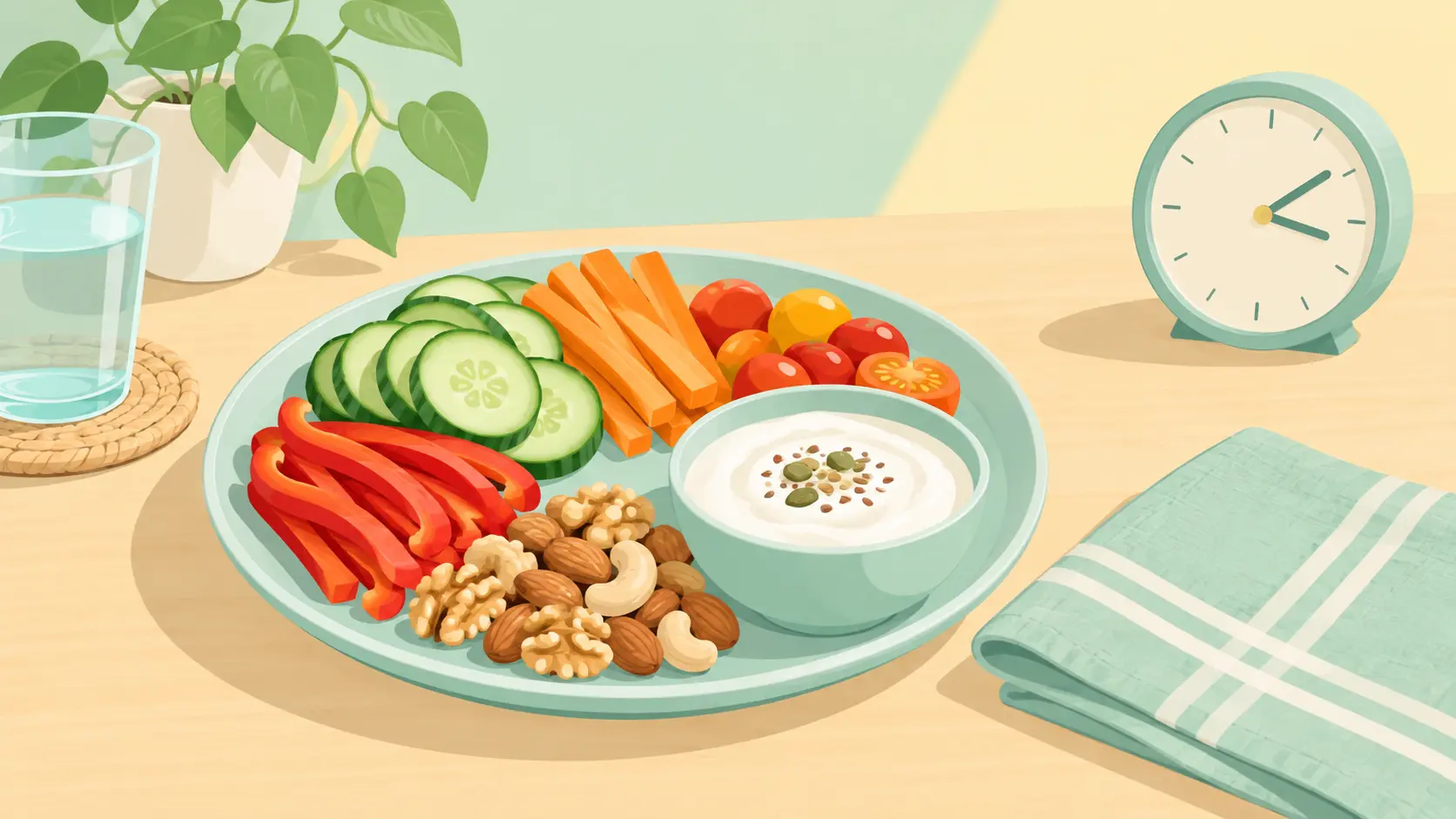
- Keep ready-to-eat options visible. Cut vegetables, fruit, plain nuts, yogurt, or whatever suits you.
- Keep treats out of easy reach. You will still be able to enjoy them. You just will not be grazing on them.
- Eat regular meals. Long gaps make cravings feel stronger. The NHS suggests focusing on balanced meals with fruits, vegetables, and wholegrain options.
- Pick a swap for the hand-to-mouth habit. Sugar-free gum, a toothpick, a straw, or a warm drink can give your hands and mouth a job without adding much food.
Check hunger versus craving
When the urge arrives, ask: when did I last eat? If it was recently, the urge is probably nicotine, not hunger. Wait ten minutes, drink a glass of water, and see what changes. If you are truly hungry, eat the planned snack.
Step 2: Move every day

You do not need a gym membership. The NHS notes that gentle activities like walking can help you stay fit and reduce cravings, and that is a double win during a quit attempt.
- Short bouts beat nothing. A ten-minute walk after a meal is easier to sustain than an hour-long plan you drop on day three.
- Attach movement to a craving. When the urge hits, stand up and walk around the block before you decide anything else.
- Keep it enjoyable. Dancing in the kitchen, cycling, swimming, or a short bodyweight routine all count.
- Build gradually. If you are already exercising, keep going. If you are not, start small so you do not feel punished.
Cochrane found only low-certainty evidence on exercise and weight after quitting, so view activity as one helpful habit, not a guarantee. It also happens to be a good mood booster, and mood is the thing that tends to dip in the first weeks.
Step 3: Use nicotine replacement to blunt appetite rebound
Nicotine replacement therapy gives your brain a gradual step down instead of an abrupt drop. The NHS says NRT can help control weight gain by speeding up how your body burns calories and reducing your appetite. In the Cochrane analysis, NRT reduced weight a little at the end of treatment, though the longer-term effect was unclear.
Whether NRT is right for you, and which product, is a question for a pharmacist or doctor. Follow the product label and professional advice; this guide does not give doses. In some places specific products are approved for quitting vaping, so it is worth asking what is available where you live.
NRT is not only about weight. It also helps you get through withdrawal so you are not tempted to vape again. If you are weighing options, our guide to the step-by-step quit vaping plan explains how to fit it into a plan.
Step 4: Protect sleep and hydration
Tired people crave quick energy, and nicotine withdrawal can disrupt sleep. That is a bad combination for snacking.
- Keep a steady bedtime. Aim for a consistent schedule, even on weekends, during the first month.
- Wind down without a screen or a vape. A shower, a book, or stretching can replace the late-night habit.
- Limit caffeine later in the day. Withdrawal can already make you jittery or restless.
- Drink water through the day. It gives you something to sip, and thirst is easy to mistake for hunger.
- Be gentle with alcohol. It lowers your guard on both vaping and eating.
If sleep problems persist beyond the first couple of weeks, or if your mood drops in a way that worries you, tell a doctor. If you want to know what to expect, the vape withdrawal timeline lays out the usual pattern.
Where iQuit fits
iQuit is free on Google Play and the App Store. Its daily missions give you morning, afternoon, and evening routines, so you have something to do at the hours you used to vape. Craving logs with triggers and intensity help you spot snack-craving hours, and SOS craving support gives you a few minutes of breathing and grounding before you decide to eat or vape. It supports your plan; it is not a diet tool or a medicine.
When to talk to a doctor
Most people do not need medical help to manage a few extra pounds. But talk to a doctor or pharmacist if:
- You have diabetes, heart disease, high blood pressure, or an eating disorder, or a history of one.
- You take medicines that interact with nicotine or that affect appetite and weight.
- Your appetite or mood changes feel extreme or distressing.
- You are thinking about restrictive dieting, skipping meals, or using supplements to control weight while you quit.
- You are pregnant or planning a pregnancy.
In the US, 1-800-QUIT-NOW connects you to free coaches who can help you build a plan, and the CDC says trained coaches provide confidential help at no cost to callers (CDC: quitting e-cigarettes).
Keep the trade-off in mind. If you gain a little while you work on quitting, you can address the weight later, once nicotine is no longer in the picture. Going back to vaping to avoid the scale gives up the health gain you were trying to protect.
Frequently Asked Questions
Do you gain weight when you quit vaping?
Some people do. The NHS says nicotine helps suppress appetite, so appetite may increase when you quit, and Cochrane notes most people who stop smoking gain weight. Data specific to vaping are limited, so a plan for meals, movement, and cravings is the safest approach.
Why am I so hungry after quitting vaping?
Nicotine suppresses appetite, and the NHS notes that after about 48 hours taste and smell improve, so food can seem nicer and you may feel hungrier. A craving can also feel like hunger. Wait ten minutes and drink water before you decide.
Is weight gain a good reason to keep vaping?
No. The NHS says the health benefits of quitting far outweigh the risk of some weight gain. Cochrane notes weight gain risks offsetting some, but not all, of the health advantages. You can work on weight once nicotine is out of the picture.
Does exercise stop weight gain after quitting?
The evidence is limited. Cochrane found little or no difference at the end of treatment and lower weight at 12 months in a few small studies, with low certainty. Exercise is still worthwhile because the NHS says gentle activity like walking can reduce cravings.
Can nicotine replacement help control weight when I quit?
It may help a little. The NHS says NRT can help control weight gain, and Cochrane found a small reduction in weight at the end of treatment. Ask a pharmacist or doctor which product suits you and follow the label.
Should I diet while I quit vaping?
Avoid crash dieting. Cochrane found low to very low certainty evidence that generic weight-management education without personalized support did not reduce weight gain and may have reduced quit rates. Eat regular balanced meals and focus on quitting first.
Your next step
Fill the hours you used to vape
iQuit is free on Google Play and the App Store. Use daily missions for morning, afternoon, and evening routines, log cravings with their triggers, and reach for SOS craving support before you reach for a snack or a vape.
Download iQuit Free on Google Play
Download on the App Store