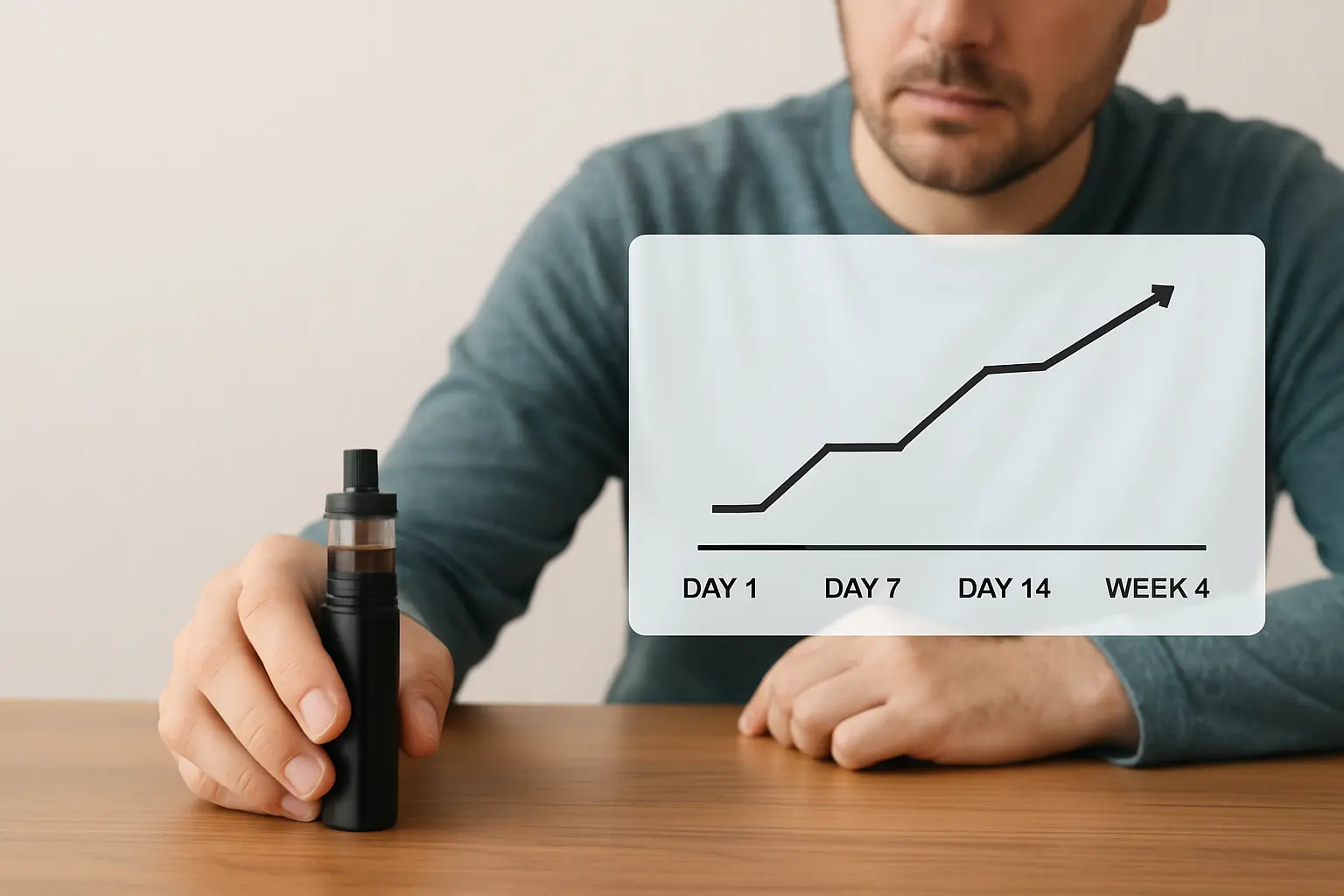
Vaping withdrawal is real, and if you’ve searched for a timeline written for smokers and felt like it didn’t quite match your experience, you’re not imagining it. Vape withdrawal timeline questions deserve vape-specific answers: e-cigarette users often vape all day long, absorb nicotine differently through nicotine salts, and lose a hand-to-mouth habit that can be even more constant than a cigarette pack ever was. This guide walks through what to expect hour by hour and week by week, why the first 48 hours can feel more relentless than cigarette withdrawal, and when it’s time to get medical support.
Why Vape Withdrawal Feels Different
Most withdrawal content online is written for cigarette smokers, but vaping has its own pattern. The full nicotine withdrawal timeline that applies to smoking still holds true in broad strokes — onset within hours, peak around day 2–3, tapering over 3–4 weeks, as described in the National Cancer Institute’s nicotine withdrawal fact sheet and by the NHS — but two things make quitting vaping its own experience: many vapers use their device throughout the entire day rather than in discrete cigarette breaks, and modern e-liquids often use nicotine salts, which laboratory research suggests are absorbed faster than the freebase nicotine in cigarette smoke. That combination means cue density is higher and the “constant background hum” of nicotine access disappears more abruptly than it does for someone who smoked ten cigarettes across a day.
The First 24 Hours
Cravings can begin within two to four hours of your last vape, alongside irritability, restlessness, mild headache or light-headedness, and increased appetite. Because many disposable and pod-based vapes use nicotine salts, some users describe this window as more intense than they expected from a “just nicotine” product — a reflection of how effectively salt-based nicotine is absorbed rather than any weakness on your part.
This short explainer, hosted by the Australian Government Department of Health, covers how nicotine addiction and withdrawal work and what’s happening in your brain during this stage:
Days 1–3: Peak Withdrawal
This is the hardest stretch for most people. Expect frequent cravings — some vapers describe an urge every 30 to 60 minutes — alongside disturbed sleep, mood swings, anxiety, low-grade irritability, and a cough as your airways begin clearing residue from vapor exposure. This matches the general nicotine-withdrawal peak described by the NHS and Cleveland Clinic, typically day 2 or 3, but vapers frequently report the craving frequency feeling higher than they remember from smoking, simply because a vape was almost always within reach and could be used almost anywhere.
Days 4–7: Physical Symptoms Start to Ease
Headaches usually begin to fade during this window, though cravings remain common. Appetite often increases as taste buds recover, and some people notice occasional dizziness or digestive changes as the body recalibrates. Irritability can still spike around ordinary daily hassles — this is normal and, per NHS guidance on stopping smoking and vaping, a sign that your body is genuinely adjusting rather than a sign anything has gone wrong.
This is also when most people first notice sleep beginning to stabilize, even if it isn’t fully back to normal. If you were a heavy end-of-day vaper, evenings can still feel strange without the routine — that’s worth planning around rather than being surprised by. Swapping the usual vape-and-scroll wind-down for a short walk, a warm shower, or a few minutes of slow breathing gives your evening a new anchor while the old one fades.
Weeks 2–4 and Beyond: The Habit Turning Point
By the second week, most of the sharpest physical symptoms have faded, and cravings increasingly cluster around habitual moments — after meals, with coffee, during a work break, or while driving — rather than firing constantly. Symptoms typically continue to fade over three to four weeks in total, though some people notice milder cravings or mood dips for a few months, particularly around known triggers (National Cancer Institute; NHS).
This is a good stretch to review what your triggers actually are rather than treating cravings as random. If most of yours cluster around specific times of day or activities, that pattern is useful information, not a setback — it’s exactly what predictive craving tools are built to learn from, so you can prepare for the moment before it arrives instead of reacting after the urge has already hit.
| Window | What’s happening |
|---|---|
| 0–24 hours | Cravings begin within 2–4 hours; irritability, restlessness, mild headache |
| 24–72 hours | Peak withdrawal; cravings frequent, sleep disrupted, mood swings, cough as airways clear |
| Days 4–7 | Headaches ease; cravings persist; appetite and taste recovering |
| Weeks 2–4 | Cravings become habit-triggered rather than constant; sleep normalizing |
| Month 2+ | Occasional cravings around known triggers; most physical symptoms resolved |
Nicotine Salt vs Freebase: Why It Hits Differently
Most modern disposable and pod vapes use nicotine salts rather than the freebase nicotine found in cigarette smoke and older e-liquids. Nicotine salts are chemically modified to be smoother to inhale at high concentrations, and preclinical pharmacokinetic research published in Neuropsychopharmacology in 2024 found that nicotine-salt aerosol delivered nicotine to the brain faster and to a higher peak level than freebase aerosol, more closely resembling the delivery profile of a cigarette. That research was done in an animal model rather than in people, so it explains a mechanism rather than proving an exact human dose curve. Even so, it fits what many users describe: someone vaping a high-strength salt-based device throughout the day may be maintaining a steadier nicotine level than a pack-a-day cigarette smoker, which is one reason the first 48 hours after quitting vaping can feel unusually relentless. It also explains why techniques for beating vape cravings often emphasize pacing and distraction more heavily than cigarette-focused advice does.
The “Phantom Vape” Reflex
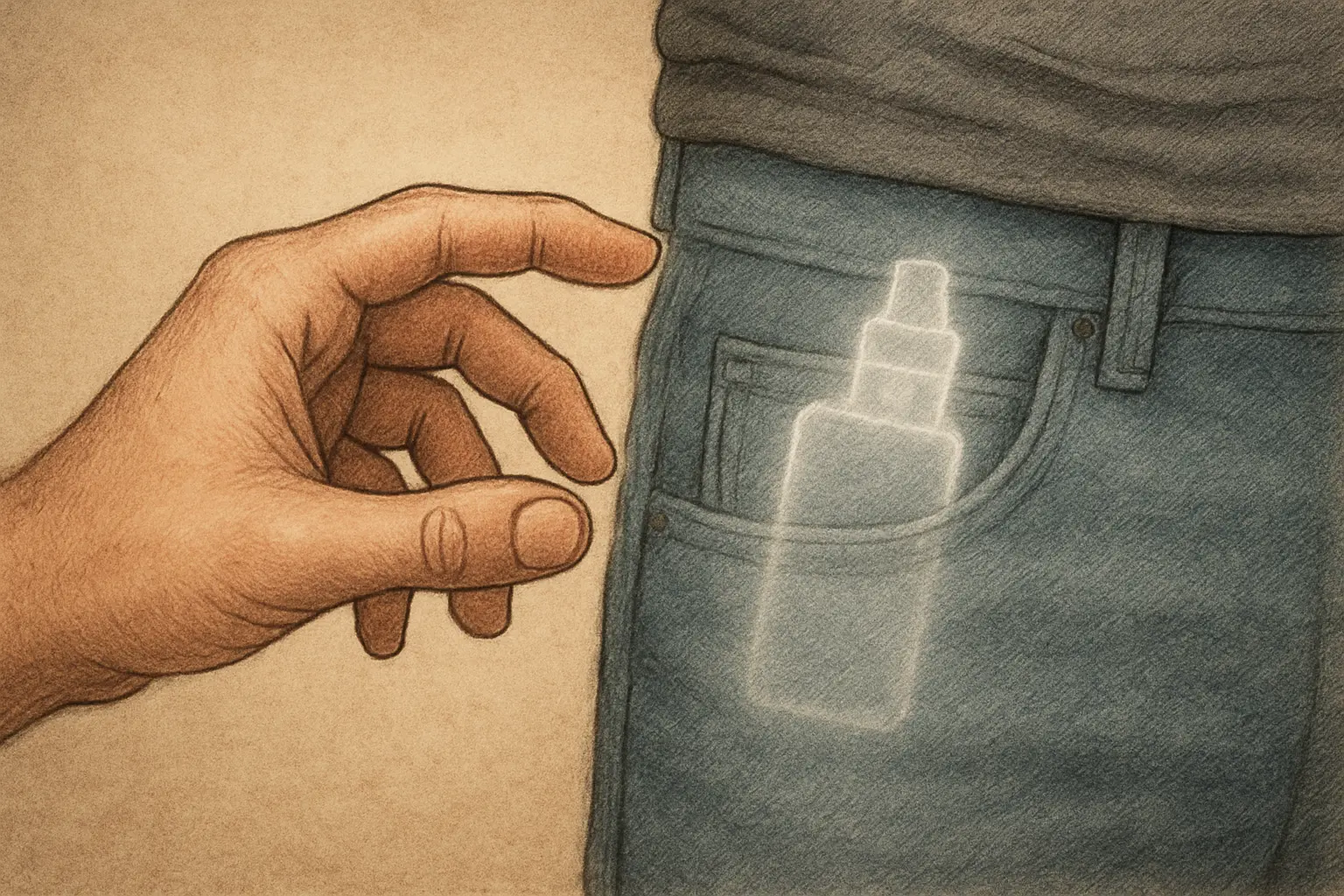
Many people who quit vaping describe an automatic hand movement toward a pocket or bag, followed by a small jolt of realization that the device isn’t there. This “phantom vape” reflex is a learned behavioral pattern, not a chemical craving — your brain built a strong association between certain moments (a pause in conversation, a red light, boredom) and the hand-to-mouth action of vaping, and that association takes time to unlearn even after the nicotine itself has cleared your system. Naming it when it happens (“that’s the habit, not a real need”) and keeping your hands briefly occupied — a pen, a water bottle, a stress ball — helps the reflex fade faster.
Mouth and Throat Changes
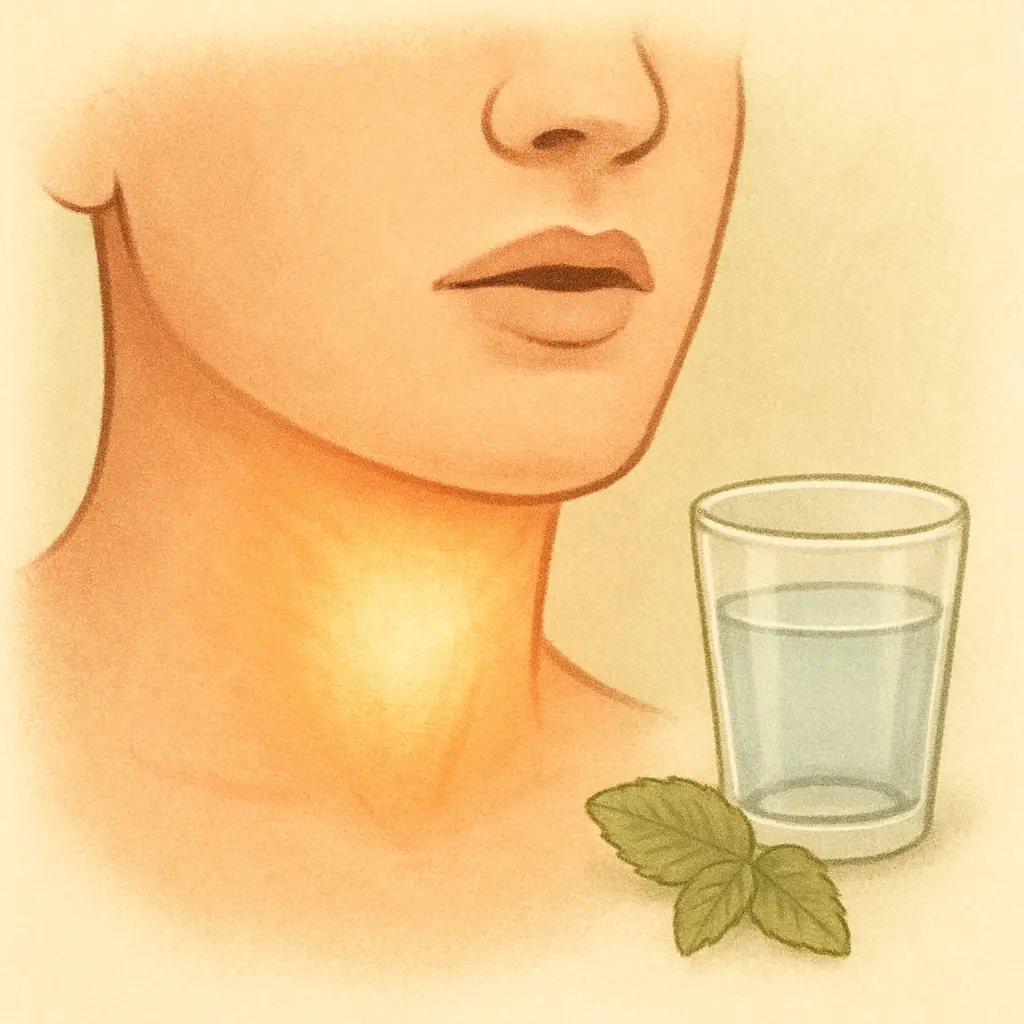
Some people notice a dry mouth, mild sore throat, or occasional cough in the first couple of weeks after quitting vaping, as the mouth and airway tissue adjusts to no longer being exposed to propylene glycol or vegetable glycerin vapor. Staying hydrated and using sugar-free gum or mints can ease dryness, and these symptoms typically resolve within the same three-to-four-week window as other withdrawal effects. For a full walk-through of the plan many people use to get through this stage, see the step-by-step plan for quitting vaping, and if pouches or dual use are part of your picture, the withdrawal shape is broadly similar to what’s covered in the guide to how long nicotine stays in your system and the nicotine pouch taper plan.
Whatever product you’re quitting, the underlying nicotine dependence and its withdrawal symptoms are chemically the same — only the delivery habit differs, a comparison covered further in whether vaping is worse than smoking. And unlike cigarette-only apps, iQuit’s vape cessation mode lets you tag whether an urge is vape-specific — a habitual reach — or a genuine chemical craving, and its SOS breathing tools and 4-7-8 exercise are built for exactly the sharp, short urges that dominate the first 72 hours.
When to See a Doctor
Withdrawal is uncomfortable but not usually dangerous. Still, seek medical advice if you experience panic-level anxiety, depressive symptoms that feel severe or persistent, insomnia that doesn’t improve after the first week or two, chest pain or a racing heart, or thoughts of self-harm. You should also talk to a doctor if you’re pregnant, have cardiovascular disease, take multiple psychiatric medications, or have relapsed repeatedly despite genuine attempts — these situations benefit from structured, clinical support rather than going it alone (smokefree.gov; NHS).
Frequently Asked Questions
How long does vape withdrawal last?
Most people experience the sharpest symptoms for the first three days, with overall withdrawal fading over three to four weeks (NHS; National Cancer Institute). Some milder cravings or mood dips, especially around known triggers, can continue for a few months for some people.
Is vape withdrawal worse than cigarette withdrawal?
The overall timeline is similar, but many vapers experience the first 48 hours as more constant, because all-day vaping and fast-absorbing nicotine salts can create a steadier baseline nicotine level than intermittent cigarette use, and the habit itself is used more frequently throughout the day.
What is a “phantom vape” craving?
It’s the automatic reach for a vape that isn’t there anymore — a learned hand-to-mouth habit rather than a chemical craving. It usually fades as the associated routines (a break, boredom, a stressful moment) are repeatedly experienced without the device.
Why do nicotine salts make quitting harder?
Preclinical research published in Neuropsychopharmacology (2024) found nicotine-salt aerosol delivered nicotine to the brain faster and to a higher peak level than freebase aerosol. That was an animal model rather than a human dosing study, but it offers a plausible mechanism for why all-day salt vaping can produce a sharper initial withdrawal.
Will my cough get worse after I quit vaping?
Some people notice a mild cough in the first week or two as airway tissue adjusts to the absence of vapor exposure. This is generally a normal, temporary part of recovery rather than a sign of harm, and it typically settles within the standard withdrawal window.
Can nicotine replacement therapy help with vape withdrawal?
Yes. Patches, gum, lozenges, and mouth sprays are all used to take the edge off nicotine withdrawal while the habit itself is broken, and NHS stop-smoking services support people quitting vaping as well as smoking. A pharmacist or stop-smoking adviser can help you pick a strength that matches how much you were vaping.
Why does my mouth feel dry after quitting vaping?
Mouth dryness and mild throat irritation in the first couple of weeks are common as oral tissue readjusts to no longer being exposed to vapor. Staying hydrated and using sugar-free gum usually resolves it within the same three-to-four-week window as other symptoms.
When should vape withdrawal prompt a doctor’s visit?
See a doctor for panic-level anxiety, severe or persistent low mood, insomnia that isn’t improving, chest pain, a racing heart, or any thoughts of self-harm. Pregnancy, cardiovascular disease, and repeated relapse despite genuine attempts are also good reasons to seek structured support.
Track Every Vape-Free Hour, Not Just Days
iQuit supports vape cessation directly, with craving logging, predictive craving forecasts that flag your riskiest hours before they hit, and SOS breathing tools built for the sharp, short urges that define the first 72 hours off vaping.