The molecule leaves faster than you’d think — the tests remember longer than you’d like. Nicotine’s half-life is roughly two hours, so it’s effectively gone from your blood within 1–3 days of the last cigarette. But your body converts most of it to cotinine — half-life ~16 hours — which is what tests actually hunt for, and cotinine hangs around in urine for up to 10 days. Hair, meanwhile, keeps receipts for months. Here’s the clearance timeline by test type, what genuinely speeds it up, and the crucial distinction between being nicotine-free and being craving-free.
The clearance table
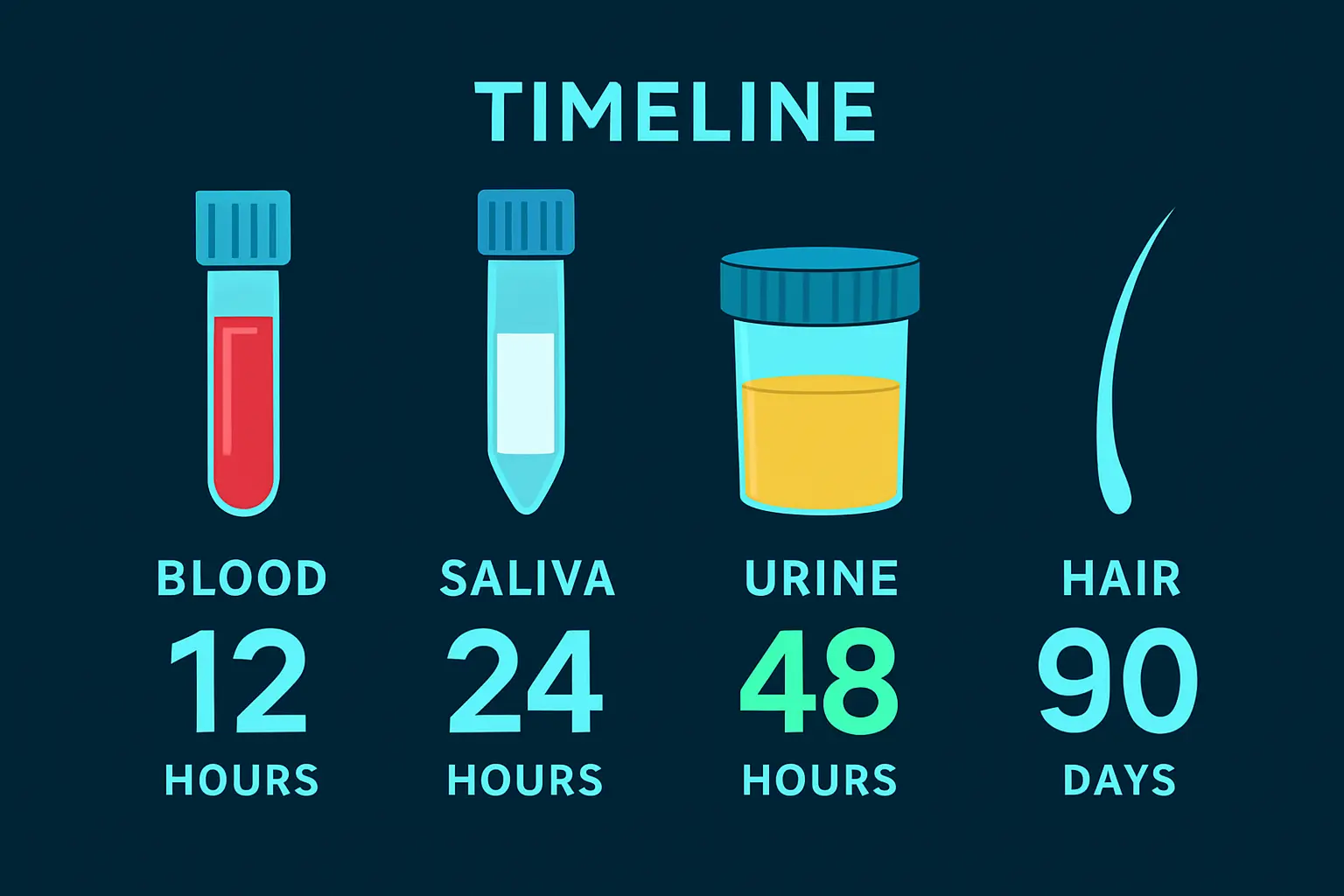
| Test / tissue | What’s measured | Detection window after last cigarette |
|---|---|---|
| Blood | Nicotine | 1–3 days |
| Blood | Cotinine | Up to ~10 days |
| Saliva | Cotinine | ~4 days (sometimes to 7) |
| Urine | Cotinine | ~3–4 days light use; up to 10+ days regular/heavy |
| Hair | Nicotine/cotinine | Up to 3 months (or as long as the hair) |
Windows vary with dose, duration, metabolism, and hydration; heavy long-term smokers sit at the top of every range. Insurance medicals and employer screens typically use urine or saliva cotinine — meaning around 1–2 weeks smoke-free puts most people below common thresholds. (Note: NRT users still test cotinine-positive — it’s nicotine, working as intended; tests can’t tell a patch from a pack.)
What actually speeds clearance (and what doesn’t)
- Helps modestly: hydration (cotinine exits via urine), exercise (circulation and metabolism), and simply… time. Genetics matter more than any hack — the CYP2A6 enzyme that processes nicotine varies widely between people.
- Doesn’t help: detox teas, saunas-as-nicotine-removal, cranberry folklore. Nothing meaningfully outruns the liver’s schedule. The good news: the schedule is short.
The two clocks: detox vs deconditioning
Here’s the part that matters more than any test: nicotine-free and craving-free run on different clocks. By hour 72, the drug is gone — the withdrawal peak of days 2–3 is your brain’s extra receptors sitting empty and loud, as the dopamine-loop article explains. Those receptors take 4–12 weeks to down-regulate, and the conditioned cues — coffee, car, stress — fade over weeks to months. So when a craving hits on day 20, nothing chemical is being “flushed out”; a habit memory is firing, and habit tools — not detox — are the answer. Quitters who understand the two clocks stop being demoralized by day-20 cravings: the detox succeeded; the deconditioning is simply still running.
Mark the milestone that matters
The 72-hour nicotine-free line is a genuine landmark — the last molecule processed, the purely chemical chapter closed. The free iQuit app tracks it within its 15 recovery milestones, then arms you for the second clock: craving logs and forecasts for the conditioned windows, SOS tools for the peaks, and a coach who knows the difference between withdrawal and memory. Detox is automatic. The rest is coached.
FAQ
How long does nicotine stay in blood?
The molecule: 1–3 days. Its metabolite cotinine: up to ~10 days.
When will I pass a cotinine test?
Most regular smokers clear urine/saliva thresholds within 1–2 weeks; hair can reveal use for months.
Can I speed it up?
Hydration and exercise help modestly; genetics and time do the real work. Detox products don’t.
Why do cravings outlast the nicotine?
Receptors take 4–12 weeks to down-regulate and cue memories longer — cravings after day 3 are conditioning, not chemistry.
Close the chemical chapter in 72 hours — get coached through the rest: download iQuit free on Google Play.