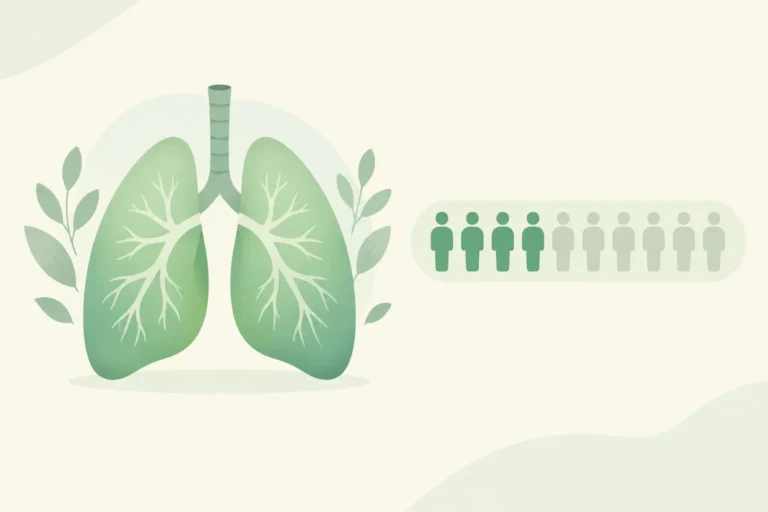
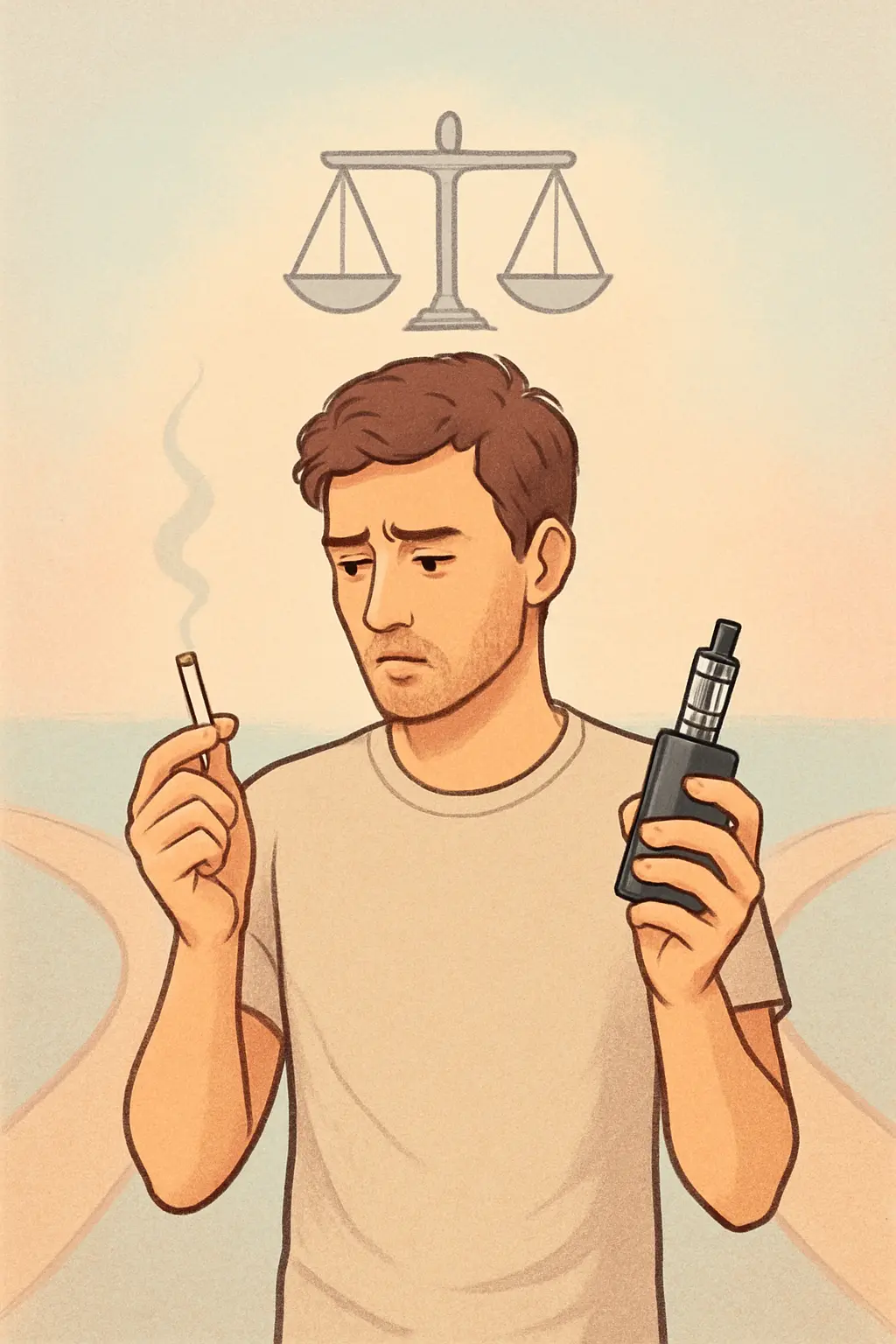
Is vaping worse than smoking? For an adult who smokes and switches completely to vaping, the evidence says no — vaping exposes you to far fewer toxicants than burning tobacco, and public health bodies including the NHS class it as less harmful. But “less harmful” is not “harmless,” and for a teenager or a never-smoker who takes up vaping, the honest answer flips: it is a net new harm, not a safer alternative to nothing at all.
What is actually in vape aerosol, and how does it differ from cigarette smoke?
Cigarette smoke is produced by burning tobacco leaf, wrapping paper, and additives at temperatures that generate more than 7,000 chemicals, at least 70 of which are known human carcinogens (CDC). Combustion is the core problem: it creates tar, carbon monoxide, and a cocktail of toxicants that vaping simply does not produce, because e-cigarettes heat a liquid rather than burn plant matter.
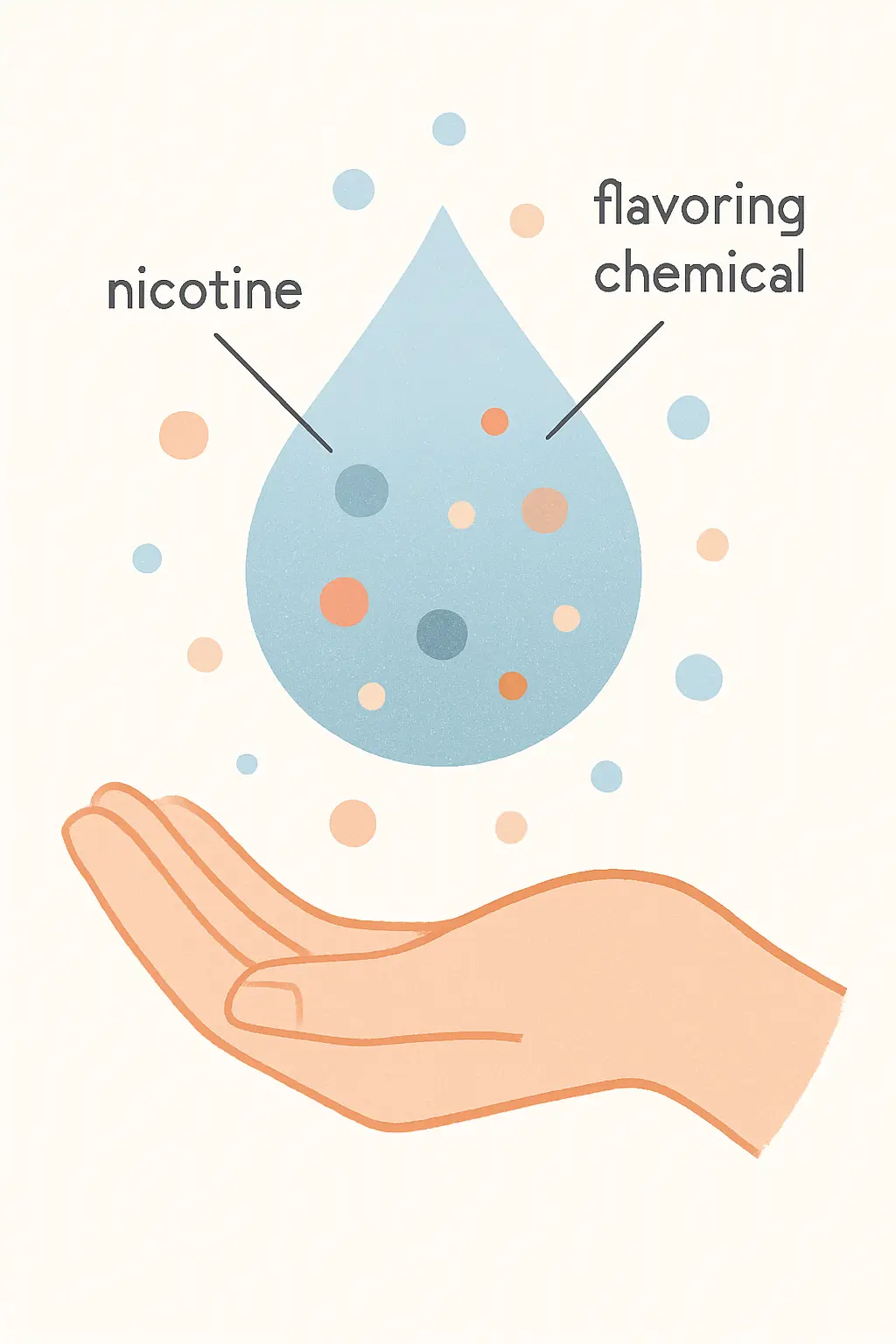
Vape aerosol instead contains nicotine, propylene glycol or vegetable glycerin, flavoring chemicals, and, at high device temperatures, trace amounts of formaldehyde and heavy metals such as nickel, tin, and lead leached from the heating coil. The Cochrane review of e-cigarettes for quitting smoking, updated on 26 August 2026 and covering 90 studies with 29,044 participants, reported that serious adverse events were rare across all groups, with the most common side effects being throat or mouth irritation, headache, cough, and nausea (Cochrane, 2026).
Is vaping really 95% less harmful than smoking?
The “95% less harmful” figure comes from a 2015 Public Health England evidence review and anchored a decade of UK harm-reduction messaging. It is a defensible estimate of relative toxicant exposure, not a precise clinical measurement. Current NHS guidance on vaping to quit smoking states simply that “nicotine vaping is less harmful than smoking” and that “vaping is not completely harmless” — the direction of the claim has not changed, but the certainty attached to any exact number has (NHS).
What has changed most is public belief, not the underlying science. The 2026 ASH Smokefree GB survey found that 54% of British adults now believe vaping is as harmful as, or more harmful than, smoking, and 52% of smokers believe the same (ASH, 2026). That gap matters clinically: smokers who wrongly believe vaping is just as dangerous are less likely to switch and more likely to keep smoking, which is the more harmful choice by every measured outcome.
Did vaping cause the EVALI lung injury outbreak?
EVALI (e-cigarette or vaping product use-associated lung injury) is frequently cited as proof that vaping is dangerous, but the outbreak’s own data tells a narrower story. The CDC recorded 2,807 hospitalized cases or deaths and 68 confirmed deaths as of 18 February 2020, concentrated in a sharp spike between August and September 2019 (CDC EVALI outbreak data).
Crucially, 82% of hospitalized patients with available data reported using THC-containing vape products, most from informal or black-market sources, and vitamin E acetate — an additive used to dilute illicit THC oils, never found in regulated nicotine e-liquids — was strongly linked to the injuries (CDC). EVALI was overwhelmingly a contaminated black-market cannabis vaping problem, not a nicotine vaping problem, though the two got conflated in public memory.
Does vaping harm your heart and blood vessels?
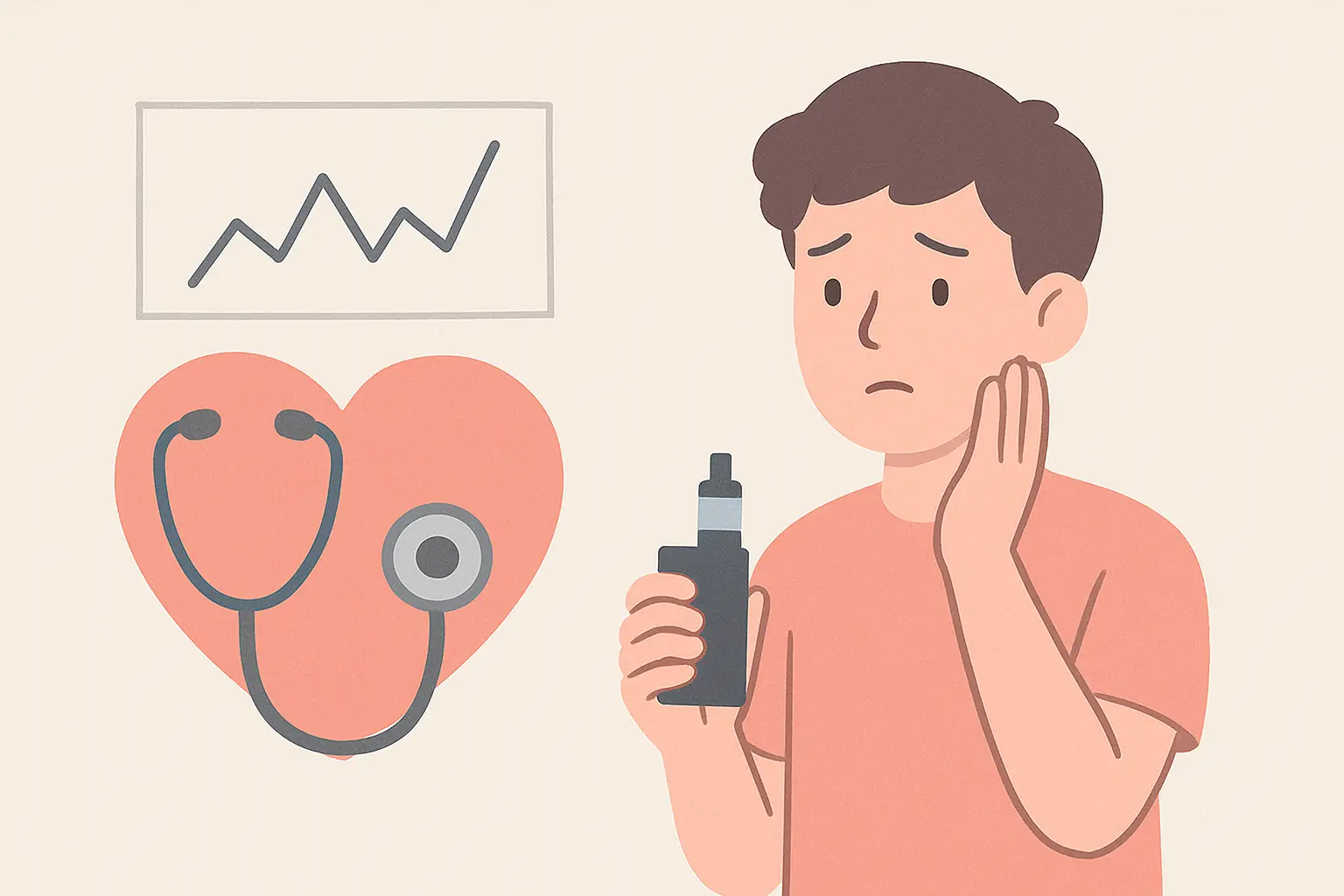
This is the area where current research is least reassuring. Peer-reviewed analyses published through 2025 have reported higher odds of myocardial infarction among regular vapers than among non-users, and researchers have documented arterial stiffness, altered heart rate variability, peripheral vasoconstriction, and cerebrovascular changes in people who vape regularly. Research published in the Journal of the American Heart Association has also found that even nicotine-free vaping disrupted the heart’s oxygen supply-demand balance, meaning cardiovascular strain is not purely a nicotine effect.
Even so, these effects are consistently smaller than those measured in people who smoke cigarettes, whose combustion byproducts damage blood vessels through multiple independent pathways at once. Longer-term longitudinal studies now underway should sharpen this picture considerably over the next few years, and the cardiovascular signal is the single strongest reason not to treat vaping as a permanent destination.
What do we still not know about long-term vaping risk?
Modern e-cigarettes have only been in mass use since the early-to-mid 2010s, so no study yet captures 30 or 40 years of exposure the way cancer-registry data does for cigarettes. This is the honest limit of the evidence: current data covers respiratory symptoms, short-term biomarkers, and now emerging cardiovascular signals, but not lifetime cancer incidence.
What is measurable so far is reassuring by comparison. People who switch completely from smoking to vaping show lower levels of NNAL and carbon monoxide — established biomarkers of tobacco-specific carcinogen and combustion exposure — than people who continue smoking. That is consistent with vaping being meaningfully less harmful, without proving it is safe over a lifetime.
In this Mayo Clinic Health System explainer, a pulmonologist walks through how smoking, vaping, and chewing tobacco compare on real clinical risk.
Is vaping safe for teenagers or people who never smoked?
No — and this is where the “less harmful than smoking” framing becomes actively misleading. Comparative harm only makes sense as a choice between two products for someone already smoking. For a teenager or an adult who has never smoked, the honest comparison is vaping versus not using nicotine at all, and vaping loses that comparison every time. The NHS is blunt about it: children and non-smokers should never vape.
The FDA’s 2025 National Youth Tobacco Survey, published in June 2026, found 9.5% of US high school students (about 1.50 million) currently using a tobacco product, with e-cigarettes the most commonly used product at 7.1% of high schoolers — though overall youth tobacco and e-cigarette use has been declining since 2022 (FDA, NYTS 2025). Dependence, not just prevalence, is the concern: Truth Initiative reports that almost a quarter of adolescents who vape want to quit and have already made a quit attempt, which is not how a casual habit behaves.
So, is vaping worse than smoking? The verdict, by risk domain
There is no single yes-or-no answer that fits every reader, because the honest answer depends on who is asking. The table below breaks the comparison down by risk domain, based on the evidence above.
| Risk domain | Cigarette smoking | Regulated nicotine vaping |
|---|---|---|
| Respiratory (COPD, chronic bronchitis) | High — combustion is the primary driver | Lower, but throat/airway irritation is common |
| Cardiovascular | High — multiple combustion pathways | Emerging risk signal; smaller than smoking |
| Cancer | High — 70+ known carcinogens in smoke | Unclear long-term; lower biomarker exposure short-term |
| Nicotine dependence | High | High — similar addictive potential to smoking |
| Risk if never used tobacco before | Should not start — highest avoidable risk | Should not start — avoidable added risk |
For a smoker who switches completely, vaping is the less harmful of two harmful choices. For someone starting from zero nicotine use, neither product is the right starting point — and the goal, whichever route you take, is to end up nicotine-free rather than trade one dependence for another. If you currently use both, using vaping to quit smoking as an interim step is different from stopping altogether, and it’s worth understanding the distinction before you decide.
Apps like iQuit support this exact transition: its craving-logging tools and predictive craving forecasts work the same way whether the trigger is a cigarette or a vape pen, and its 15 health-milestone tracker gives people switching from either product a concrete, visible sense of progress.
If you’ve decided vaping isn’t the answer, what actually works?
Whether you currently smoke, vape, or both, the underlying goal is the same: getting free of nicotine dependence altogether, on a timeline that suits you. Reviewing the most effective way to quit smoking is a useful starting point, since the same combination of behavioral support and, where appropriate, NRT or prescription medication applies whether cigarettes or vapes are the habit you’re breaking.
If vaping specifically is what you’re trying to stop, the process differs slightly from quitting cigarettes — cravings tend to be shorter but more frequent, and device habits (the hand-to-mouth action) are often stronger. A dedicated guide to how to quit vaping walks through the evidence-based approach, and reading about what is in cigarette smoke can be a powerful motivator for anyone still weighing whether to switch or quit outright.
Regulation is also shifting the landscape quickly: the 2026 vape regulation changes in the UK have already removed disposable vapes from shelves, which is prompting many dual users to reconsider quitting nicotine entirely rather than switching devices. For a deeper look at what happens physically in the days after stopping vaping, see the vape withdrawal timeline, and for the bigger national picture, our roundup of 2026 vaping prevalence and quit-rate statistics puts these individual risks in context.
Frequently Asked Questions
Is vaping 95% safer than smoking?
The 95% figure comes from a 2015 Public Health England review estimating relative toxicant exposure, not an exact safety measurement. Current NHS guidance describes nicotine vaping simply as less harmful than smoking, and adds that vaping is not completely harmless and that its long-term effects are not yet known (NHS).
Does vaping cause cancer?
Vape aerosol contains far fewer carcinogens than cigarette smoke, which has at least 70 known cancer-causing chemicals produced by combustion. Vaping does not involve combustion, but modern e-cigarettes have not existed long enough for researchers to measure lifetime cancer incidence, so long-term cancer risk remains genuinely unknown (CDC, Cochrane 2026).
Is vaping bad for your heart?
Research published through 2025 links regular vaping to higher odds of heart attack compared with non-users, plus measurable arterial stiffness and altered heart rate variability, and this appears partly independent of nicotine content. These effects are documented but currently appear smaller in magnitude than the cardiovascular damage caused by cigarette smoking.
What caused the EVALI outbreak, if not regular vaping?
EVALI was linked overwhelmingly to illicit THC vape cartridges containing vitamin E acetate, an additive never found in regulated nicotine e-liquids. CDC data shows 82% of hospitalized EVALI patients with available data had used THC-containing products, most from informal sources, not standard nicotine vapes (CDC, February 2020).
Is vaping better than smoking for quitting nicotine altogether?
Nicotine e-cigarettes are more effective for smoking cessation than nicotine replacement therapy, producing roughly four additional quitters per 100 people in Cochrane’s 2026 review. But vaping is still a nicotine product with high dependence potential, so it works best as a bridge toward stopping nicotine entirely rather than a permanent replacement.
Should a teenager ever vape instead of smoke?
No. The “less harmful than smoking” comparison only applies to someone already smoking who is switching products; for a teenager who has never smoked, vaping is an added health risk with no offsetting benefit. The FDA’s 2025 National Youth Tobacco Survey found e-cigarettes remain the most-used tobacco product among US teens, and the NHS states plainly that children and non-smokers should never vape.
Is secondhand vape aerosol dangerous?
Secondhand vape aerosol contains far lower concentrations of harmful chemicals than secondhand cigarette smoke, since there is no combustion or sidestream smoke, but it is not simply water vapor and does contain nicotine and ultrafine particles. Public health guidance generally still recommends avoiding exposing others, particularly children and pregnant people, to any vape aerosol (Mayo Clinic).
How long has vaping been studied compared with smoking?
Cigarette smoking has been studied since the 1950s, with decades of cancer-registry and mortality data. Modern e-cigarettes have only been in widespread use since the early-to-mid 2010s, so researchers simply have not had time to observe a full lifetime of exposure, which is why long-term risk estimates remain provisional.
Does nicotine-free vaping avoid the health risks?
Not entirely. Research published in the Journal of the American Heart Association found that even nicotine-free vaping disrupted the heart’s oxygen supply-demand balance, indicating that flavoring chemicals and heating byproducts, not just nicotine, contribute to cardiovascular strain during vaping.
If I already vape, what is the best thing I can do for my health?
Stop using both products. If you still smoke, switching completely to vaping lowers your exposure to combustion toxicants, but the best-supported outcome in every major guideline is quitting nicotine altogether. Behavioral support combined with a stop-smoking aid gives the highest success rates, and your pharmacist or doctor can help you choose one.
Ready to stop the cycle for good — not just switch products?
iQuit’s craving forecasts, virtual cigarette, and streak shields work whether you’re quitting cigarettes, vapes, or both — with 15 health milestones to show your progress every step of the way.