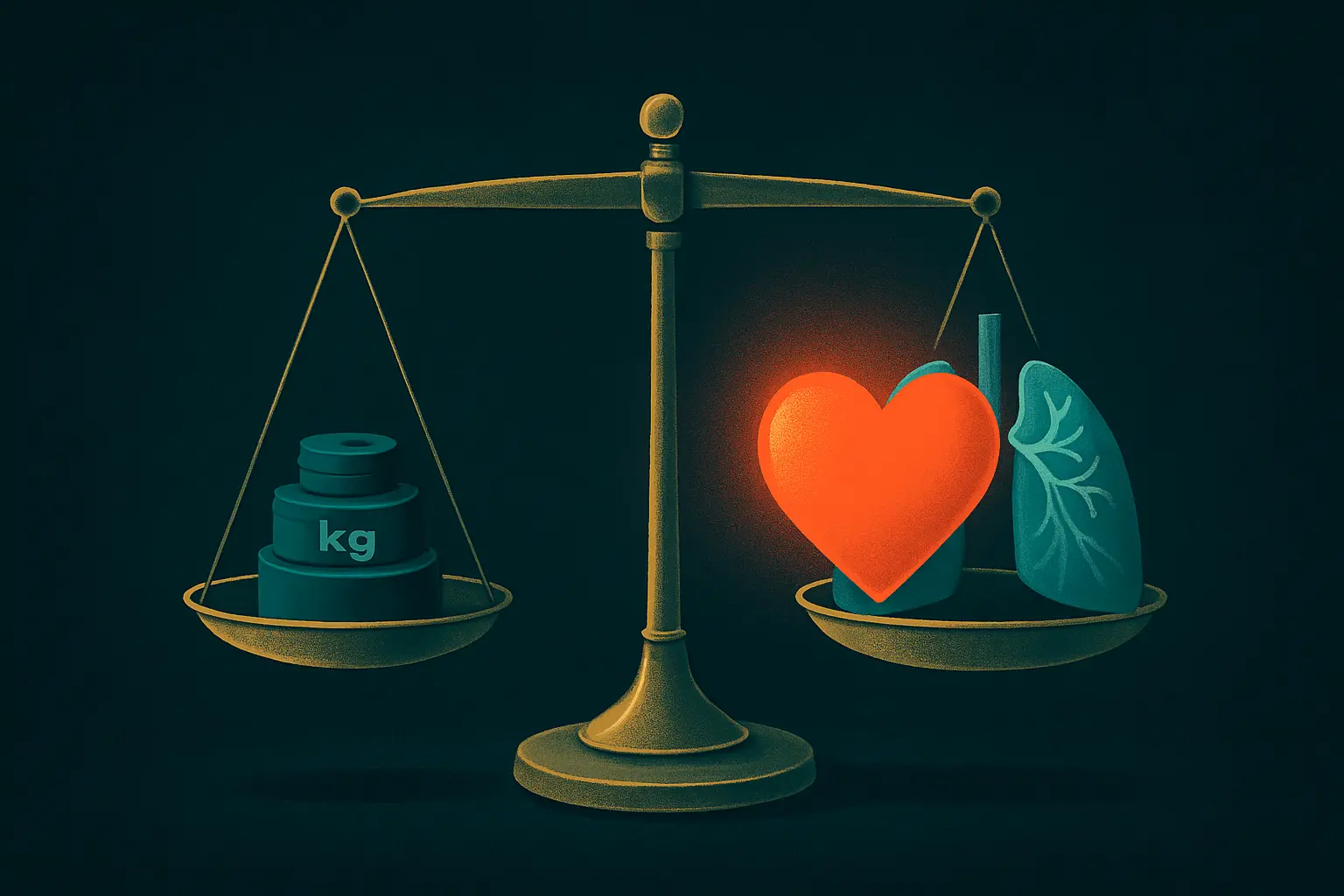
The weight fear is the most common reason people postpone quitting — so here are the actual numbers. Nicotine raised your resting metabolic rate by roughly 100–200 calories a day and suppressed appetite through hypothalamic effects. Quitting removes both. The measured result: average weight gain of about 4–5 kg over the first year, most of it in the first three months, with a substantial minority gaining little or nothing. And the health trade isn’t close — you would need to gain far, far more than average to offset a meaningful fraction of quitting’s benefit.
The metabolic accounting
| Factor | Effect while smoking | After quitting |
|---|---|---|
| Resting metabolic rate | +100–200 kcal/day (stimulant effect) | Returns to true baseline |
| Appetite signaling | Suppressed | Unmasked — real hunger returns |
| Food reward | Blunted taste and smell | Restored — food is genuinely better |
| Fat distribution | Smoking favors visceral (dangerous) fat | Improves toward healthier distribution |
| Insulin sensitivity | Impaired by smoking | Improves over months |
Two rows there rarely make the fear-based conversation. Smoking preferentially drove visceral fat — the metabolically dangerous kind around organs — and impaired insulin sensitivity, raising type-2 diabetes risk. So a quitter who gains a few kilos of subcutaneous weight while losing visceral fat and improving insulin function has, metabolically, made a trade that a scale alone reports badly.
Why the “slowed metabolism” framing is wrong
Your metabolism didn’t slow — it stopped being chemically inflated. Nicotine was running a mild, continuous stimulant program (raised heart rate, thermogenesis) that cost you a tarred lung to maintain. Post-quit, you’re at your genuine baseline for the first time in years. That’s a ~100–200 kcal/day adjustment: roughly one snack, or a 25–30 minute daily walk. Framed that way, the correction is unremarkable — which is exactly why walking is the standard first recommendation, doing double duty as craving relief.
The honest risk profile
- Who gains more: heavier smokers (25+/day), higher dependence, and those who replace the hand-to-mouth ritual with snacking rather than substitutes.
- When it happens: front-loaded — most gain occurs in the first three months while appetite runs hottest, then plateaus.
- What it costs: in risk terms, near-nothing next to what you removed. Studies following quitters with typical gain still show major cardiovascular and mortality benefit; the diabetes-risk bump from weight is dwarfed by the vascular gains.
Managing the three months that matter
The playbook is unglamorous and effective: walk daily (covers the entire metabolic delta), anchor meals with protein to prevent grazing, run the water-then-three-minutes test to separate real hunger from craving-in-costume, and keep crunchy low-calorie snacks where the ritual urge strikes. The free iQuit app supports the behavioral half — craving logs that expose fake hunger, the Walk It Off challenge that builds the daily movement habit, and daily missions that keep the first three months structured rather than improvised.
FAQ
Does quitting slow your metabolism?
It returns to baseline — nicotine had been inflating it by ~100–200 kcal/day.
How much weight will I gain?
Average 4–5 kg in year one, most in the first three months; many gain less.
Is the gain worth it?
Overwhelmingly — quitting’s cardiovascular and mortality benefits dwarf typical weight gain, and visceral fat and insulin sensitivity improve.
What single habit offsets it?
A 25–30 minute daily walk — roughly the metabolic delta, plus craving relief.
Handle the three months that matter: download iQuit free on Google Play.