The hunger is real, and it has four separate causes arriving at once. Nicotine was quietly running two metabolic interventions on you: suppressing appetite through its action on hypothalamic circuits, and burning an extra 100–200 calories a day through stimulant effect. Quit, and both programs cancel — while your recovering taste buds make food more rewarding than it’s been in years, and your brain, missing its 45-minute nicotine appointments, starts presenting cravings in hunger’s costume. Understanding the four engines is most of the fix.
The four engines of post-quit hunger
- Suppression lifts. Nicotine dampened appetite signaling directly. Your current hunger isn’t excessive — it’s what your body always wanted, unmuted. You’re meeting your actual appetite for the first time in years.
- The metabolic rebate ends. The stimulant burn (~100–200 kcal/day) stops. Modest, but real — roughly one snack’s worth of daily margin gone.
- Food got better. Within 48 hours taste and smell begin their recovery, and by week two meals genuinely deliver more reward. Eating more when food tastes better isn’t weakness; it’s coherence.
- Cravings wear hunger’s costume. Nicotine withdrawal and hunger produce overlapping sensations — restless emptiness, poor focus, irritability. Early quitters routinely eat a craving and find it doesn’t help, because it wasn’t hunger.
The costume test: hungry or craving?
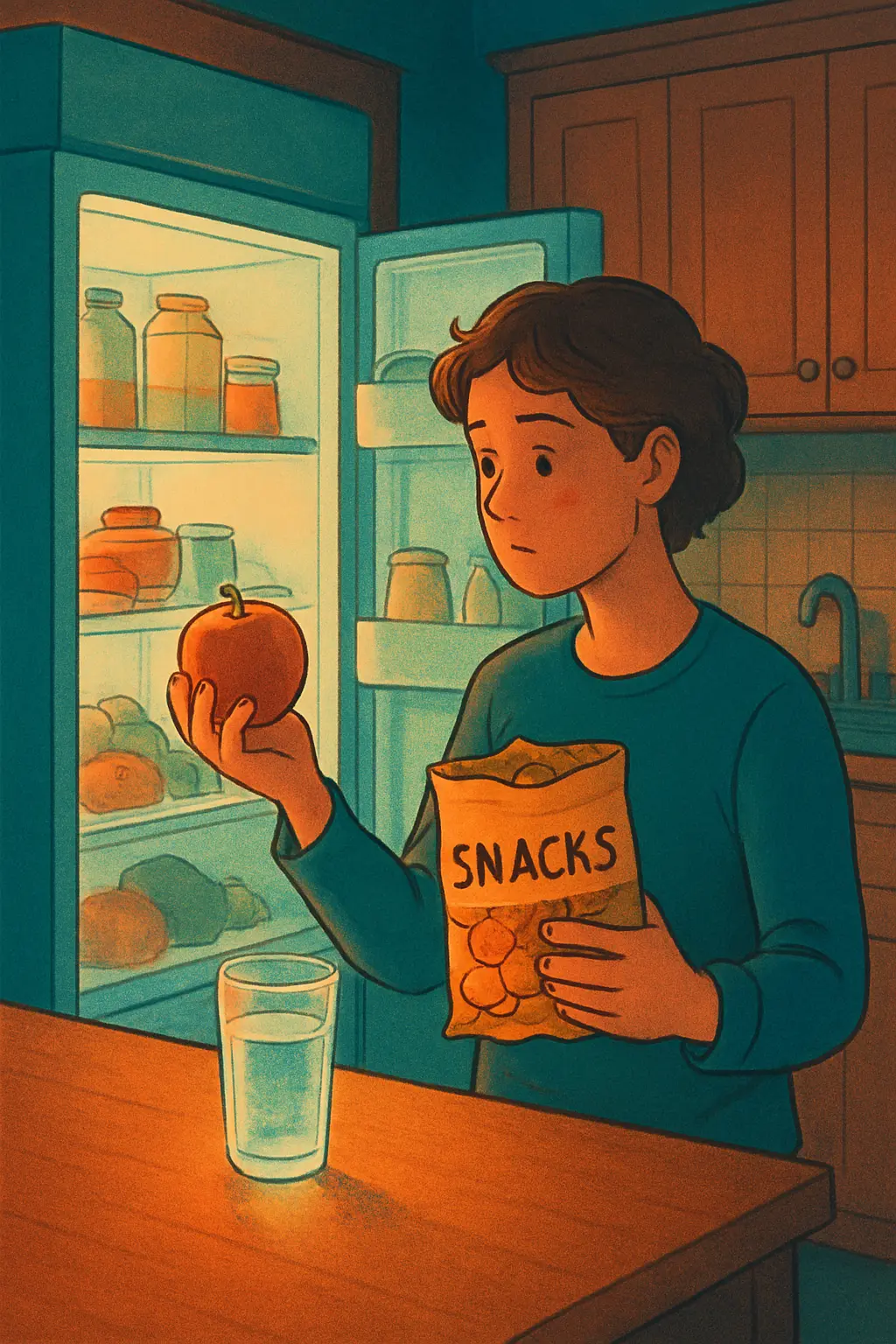
Before snacking, run the two-step: drink a glass of water, wait three minutes. Genuine hunger survives water and grows steadily; a craving-in-costume peaks and passes on the same 3-minute wave every urge rides (the 3-minute rule works on fake hunger too). If it passed — that was nicotine’s ghost, and it just got beaten with tap water.
Feeding the real hunger, smart
- Anchor meals with protein. Regular, protein-forward meals prevent the all-day grazing that withdrawal restlessness invites.
- Stock the crunch drawer. The hand-to-mouth ritual wants servicing — give it carrots, apples, popcorn, nuts-in-moderation rather than the biscuit tin. Crunchy beats soft for ritual satisfaction (there’s a reason nobody stress-eats yogurt).
- Respect the sweet spike. Nicotine messed with blood-sugar regulation; early quitters often crave sugar specifically. Fruit first; if it must be chocolate, portion it deliberately instead of negotiating with the bag.
- Walk daily. Movement blunts cravings acutely and offsets the metabolic shift — the double-duty tool of the entire quit.
For a fuller, meal-by-meal version of this same logic — including what to actually put on the plate at breakfast, lunch, and the danger zone that is the evening snack window — see our complete guide to what to eat when quitting smoking.
The honest weight math
Average post-quit gain is about 4–5 kg over a year — not the mythical 20 pounds — and a substantial minority gain little or nothing (the myths article covers the folklore). Cardiologically, you’d need to gain vastly more than that to offset even a fraction of quitting’s benefit. Handle the first month’s surge with the tools above and the curve flattens on its own as chemistry settles — sharpest weeks are the first two to four, largely settled by month three.
Track both curves
The free iQuit app won’t count your calories, but it defuses the engine underneath: log the “hunger” that hits at your old smoking times and watch it expose itself as scheduled cravings; run the SOS breathing instead of the snack when the costume test fails; and let the journal note what actually helped. Most quitters find the appetite story resolves itself once the craving story does.
FAQ
Why am I so hungry?
Suppression lifted, metabolism normalized, food tastes better, and cravings mimic hunger — four engines at once.
How long does it last?
Sharpest for 2–4 weeks, largely settled by month three.
How do I tell hunger from craving?
Water + three minutes. Hunger persists and grows; a craving peaks and passes.
Will I definitely gain weight?
Average ~4–5 kg; many gain less. The health ledger still favors quitting by an order of magnitude.
Beat the costume cravings first: download iQuit free on Google Play.