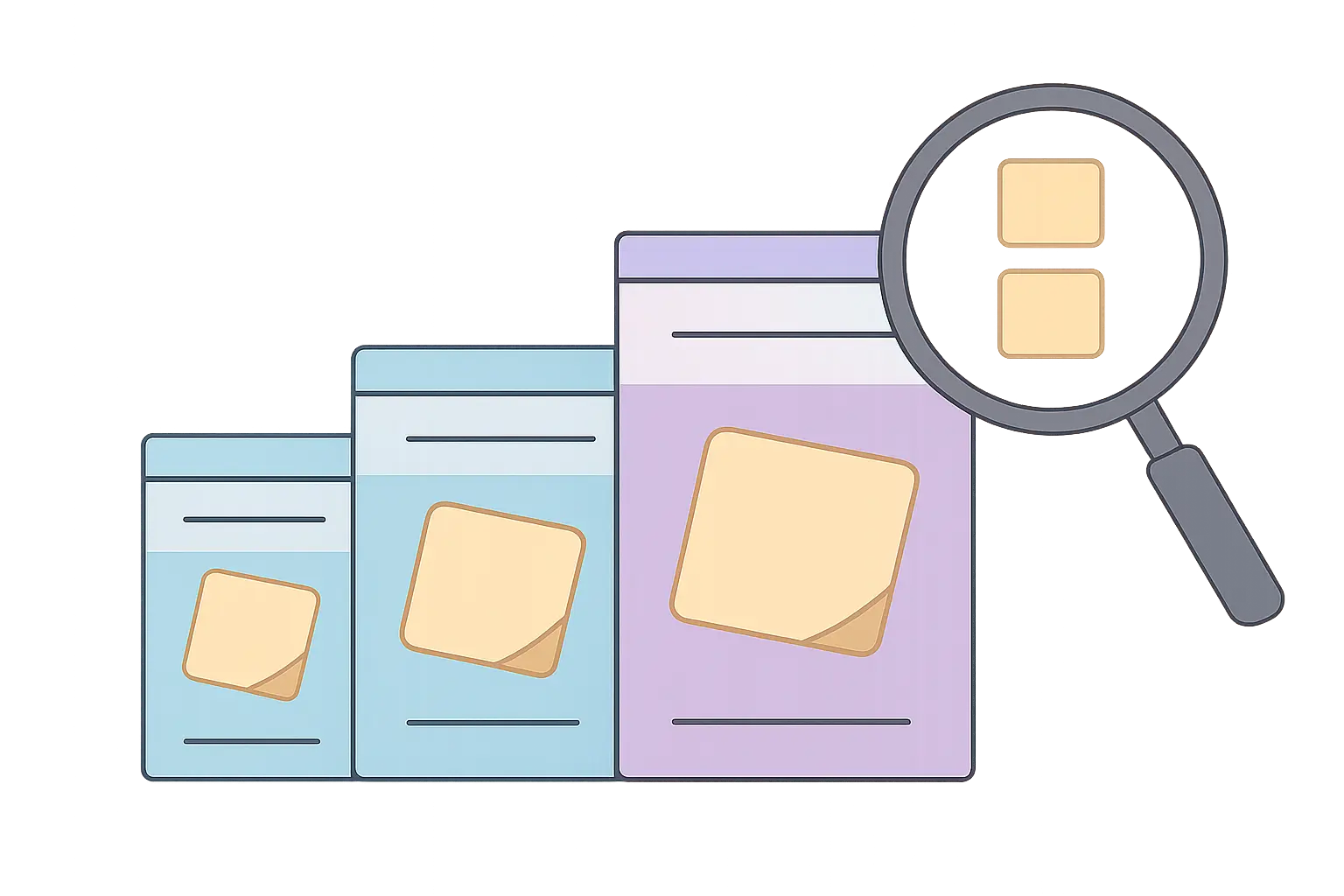
Standing in the pharmacy aisle deciding between the 21mg, 14mg, and 7mg nicotine patch is one of the most common points where people either get NRT right or quietly set themselves up to fail. Get the nicotine patch strength too low for a heavy smoking habit and cravings will overwhelm the patch within days; start too high as a light smoker and side effects like nausea or dizziness can put you off NRT altogether. The decision is more mechanical than it looks — it comes down almost entirely to how many cigarettes you smoke a day, and it is printed on the box.
21mg vs 14mg vs 7mg at a Glance
| Strength | Typically for | Common role |
|---|---|---|
| 21mg (24-hour, US) | More than 10 cigarettes a day | Starting dose for more dependent smokers |
| 14mg (24-hour, US) | 10 or fewer cigarettes a day, or step-down from 21mg after six weeks | Starting dose for lighter smokers, or mid-taper |
| 7mg (24-hour, US) | Final step-down stage | Last stage before stopping the patch |
| 25mg / 15mg / 10mg (16-hour, UK) | 25mg for 10 or more a day; 15mg below that; 10mg as the final step | The UK daytime-only ladder, removed at bedtime |
Which Strength Should You Start On?
The single input that decides your starting strength on the label is cigarettes per day. The US over-the-counter nicotine patch Drug Facts label is explicit: start at 21mg if you smoke more than 10 cigarettes a day, and do not start on 21mg if you smoke 10 or fewer. That means a smoker of exactly 10 a day starts on 14mg, not 21mg — a detail a lot of online dosing charts get wrong.
Time-to-first-cigarette (how soon after waking you smoke) is not part of the label threshold, but it is a well-established marker of nicotine dependence that stop-smoking advisors use when judging how much support you are likely to need. Our deep dive on why time-to-first-cigarette predicts addiction covers why clinicians weight it, and it is worth mentioning to your pharmacist even though it will not change which box you buy.
| Cigarettes per day | US 24-hour patch | UK 16-hour patch |
|---|---|---|
| More than 10 | 21mg (Step 1) | 25mg (Step 1) |
| Exactly 10 | 14mg — the US label says not to start on 21mg | 25mg (the UK threshold is 10 or more) |
| Fewer than 10 | 14mg | 15mg |
| Very light or occasional | 14mg, used for a shorter course; speak to a pharmacist | 15mg or 10mg; speak to a pharmacist |
For a fuller sense of how much nicotine you are actually replacing, see our explainer on how much nicotine is in one cigarette. If you have never used a patch before, our step-by-step guide to applying nicotine patches correctly covers rotation sites, timing, and skin care that a strength chart alone will not. The NHS Better Health quit smoking service also offers free advice and, in many areas, free or subsidized NRT.
The 8-12 Week Step-Down Calendar
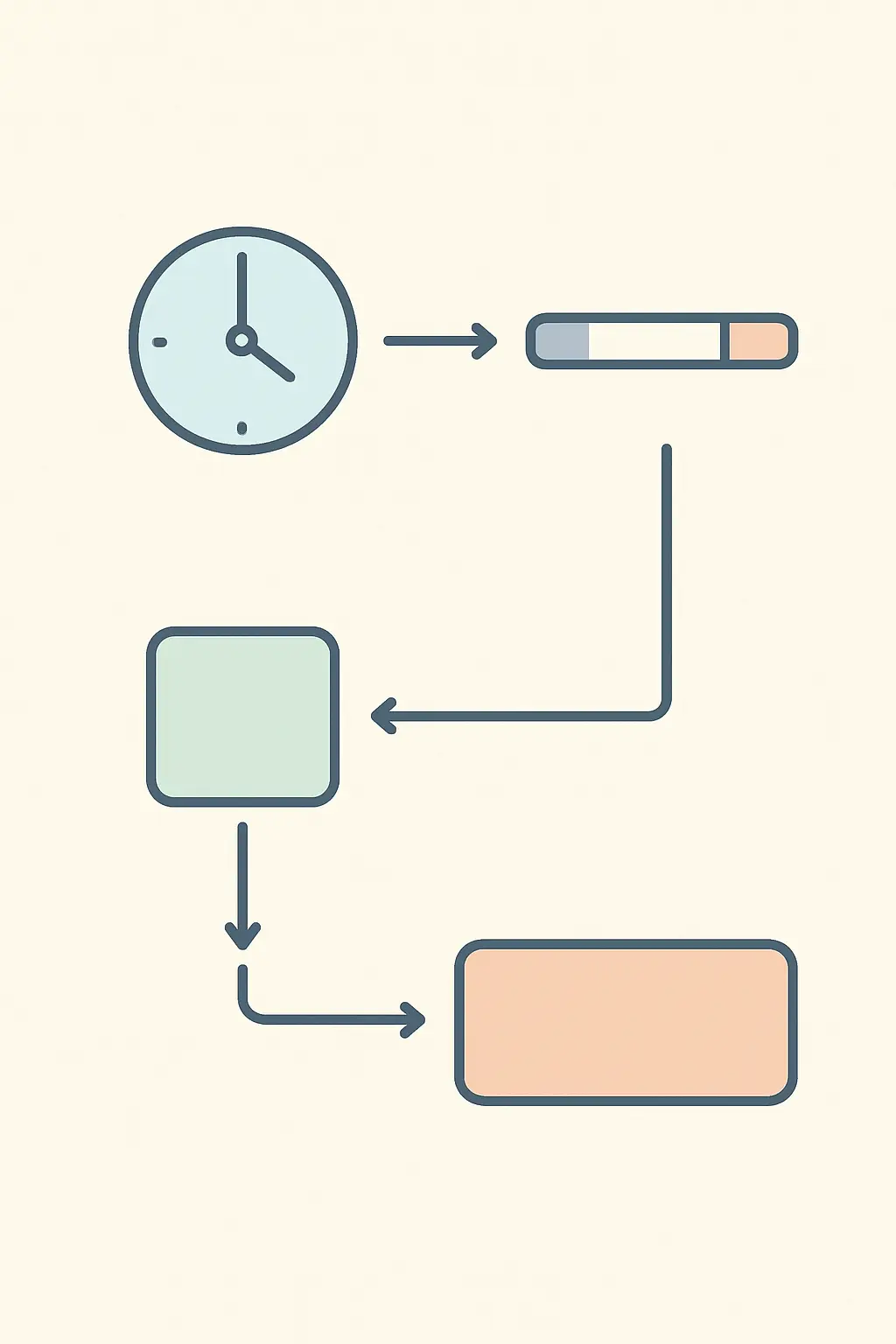
The US over-the-counter patch label sets out a 10-week program for someone starting at 21mg:
- Weeks 1-6: 21mg (24-hour) daily.
- Weeks 7-8: Step down to 14mg.
- Weeks 9-10: Step down to 7mg.
- After week 10: Stop the patch entirely.
Smokers who start on 14mg run six weeks at that dose before a final two weeks at 7mg. The UK 16-hour ladder is similar in shape: an initial period at 25mg, then roughly two weeks at 15mg and two weeks at 10mg (Nicorette 16-hour patch summary of product characteristics).
This is a starting template, not a rigid rule. If cravings are still frequent when a step-down date arrives, holding at the current strength for another week or two is a common and reasonable adjustment — but check with a pharmacist first, since the total course length your product’s label supports is what governs how long you can stay on.
Two Common Mistakes
Stepping down too fast. Dropping to a lower strength before withdrawal symptoms have genuinely settled at the current dose is one of the most common causes of relapse mid-taper. If cravings are still frequent after the scheduled step-down point, staying at the current strength an extra week or two is a reasonable adjustment rather than a failure.
Under-dosing heavier smokers. Someone smoking a pack a day starting on a 14mg patch “to be cautious” is a common instinct, but it usually backfires — an under-dosed patch leaves enough residual craving that many heavy smokers give up on NRT within the first week, concluding incorrectly that “patches don’t work for me” when the real issue was the starting dose.
Not sure whether you are ready to step down? Logging your patch changes and every breakthrough craving for a week gives you an actual answer instead of a guess. iQuit is free on Google Play and tracks both in one place.
16-Hour vs 24-Hour Patches
The two formats differ mainly in when nicotine is delivered. The 24-hour patch (the standard US over-the-counter format) is worn through the night and gives continuous overnight coverage, which some people find helps prevent a strong first-thing-in-the-morning craving. The 16-hour patch (the standard UK format) is removed before bed, so it avoids overnight nicotine delivery but means coverage is only building back up once it goes on again in the morning.
Overnight wear has one well-documented downside, and the US patch label addresses it directly: if you have vivid dreams or other sleep disturbances, the label instructs you to remove the patch at bedtime and apply a new one in the morning. That is a straightforward fix, and it is the reason the 16-hour format exists at all. If sleep disruption is your main concern, the daytime-only format is a reasonable, low-risk alternative.
Neither format is inherently “stronger” than the other, and the strength numbers are not interchangeable between them — 21mg over 24 hours and 25mg over 16 hours are broadly comparable in daily delivery, but the products are not formally cross-labeled as equivalent, so do not treat a switch between formats as a simple like-for-like swap. Follow the ladder printed on whichever product you are actually using. Our broader roundup of the best NRT options covers how patches compare with gum, lozenge, and spray if you are still weighing formats generally rather than strengths specifically.

When to Add a Fast-Acting Form Instead of Stepping Up
If cravings break through even at your current patch strength, the evidence-based response is usually not to move to a higher patch dose — it is to add a fast-acting form (gum, lozenge, spray) for those specific breakthrough moments. That is the combination-NRT approach Cochrane rates as high-certainty evidence, with 17.4% of combination users quitting long-term versus 13.7% on a patch or gum alone. Our full combination NRT vs single NRT comparison covers dosing the fast-acting side of that pairing in detail, and our comparison of gum, patch, lozenge, and inhaler NRT covers the specifics once you decide to add one. If you are not yet sure the patch is the right NRT form for you at all, our comparison of every NRT option lays out patch, gum, lozenge, and spray side by side before you commit to a strength.
One question that comes up constantly alongside strength selection is whether it is safe to smoke while wearing a patch during a cut-down period rather than an abrupt stop. Our guide on whether you can smoke while using nicotine patches addresses that directly, since the answer affects how you should interpret breakthrough cravings during the early weeks of a patch-based quit attempt.
Our Recommendation
If you smoke more than 10 cigarettes a day, start on the 21mg 24-hour patch (or 25mg 16-hour in the UK) and plan the full 8-12 week step-down rather than stopping abruptly. If you smoke 10 or fewer a day, the US label puts you on 14mg — do not start on 21mg. Choose the 24-hour format if morning cravings are your biggest challenge, and the 16-hour format (or removing the 24-hour patch at bedtime) if sleep disruption is more of a concern. If breakthrough cravings persist at any stage, add a fast-acting form rather than jumping to a higher patch strength than your smoking pattern supports. As always, this is general educational information — confirm your specific starting dose and step-down timing against your product’s label, and check with a pharmacist if you are pregnant, have a cardiovascular condition, or are unsure. Never exceed the maximum daily dose printed on your product’s packaging, and do not combine multiple patches or add a second nicotine source without first checking the label and, ideally, a pharmacist.
Logging your patch changes and any breakthrough cravings daily makes it much easier to tell whether you are genuinely ready to step down or need another week at your current strength. The iQuit app’s craving log and predictive craving forecasts were built for exactly this kind of day-to-day NRT tracking.
Frequently Asked Questions
What nicotine patch strength should a pack-a-day smoker use?
A pack-a-day smoker is well above the label threshold, so the US over-the-counter patch label puts them on 21mg (24-hour), stepping down to 14mg at week seven and 7mg at week nine. In the UK, the equivalent 16-hour starting strength is 25mg. Always confirm against your specific product’s label.
How do I know if I should start on 14mg instead of 21mg?
The US Drug Facts label is precise about this: if you smoke 10 or fewer cigarettes a day, do not start on the 21mg patch — start on 14mg. Only smokers of more than 10 a day begin at 21mg. Note the UK 16-hour ladder draws its line differently, at 10 or more cigarettes a day for the 25mg patch.
How long should I stay on each patch strength?
The US label’s 10-week program is six weeks at 21mg, two weeks at 14mg, and two weeks at 7mg. People starting at 14mg run six weeks there and two weeks at 7mg. If cravings are still frequent at a step-down date, holding for another week or two is common practice — check with a pharmacist about your product’s total course length.
Should I use a 16-hour or 24-hour nicotine patch?
The 24-hour patch gives overnight coverage, which can reduce morning cravings but can cause vivid dreams or sleep disturbance in some users — the US label tells you to remove it at bedtime and apply a fresh one in the morning if that happens. The 16-hour patch, standard in the UK, is removed at bedtime by design but offers no overnight coverage.
What happens if I start on too low a patch strength?
Under-dosing, especially in heavier smokers, often leaves enough residual craving that people abandon NRT within the first week, mistakenly concluding patches do not work for them. Matching your starting strength to your actual cigarettes-per-day is one of the most important steps for NRT success.
If cravings break through at my current patch strength, should I move to a higher dose?
Usually not. The evidence-based response to breakthrough cravings is to add a fast-acting form (gum, lozenge, or spray) for those specific moments rather than increasing your patch strength beyond what the label supports for your smoking pattern — this is combination NRT, which Cochrane rates as high-certainty evidence at 17.4% quit versus 13.7% for a single form.
Can I skip straight to 7mg to avoid side effects?
No — 7mg is a step-down strength on the US label, not a starting dose. Starting too low relative to your actual cigarette consumption usually causes more problems than it solves, since under-treated withdrawal cravings are the main reason people give up on NRT. Follow the dosing chart for your smoking pattern and speak with a pharmacist if you are concerned about side effects.
Track Your Patch Step-Down and Cravings
iQuit logs your NRT routine alongside cravings and forecasts your riskiest hours — so you know when to hold your dose and when you’re ready to step down.