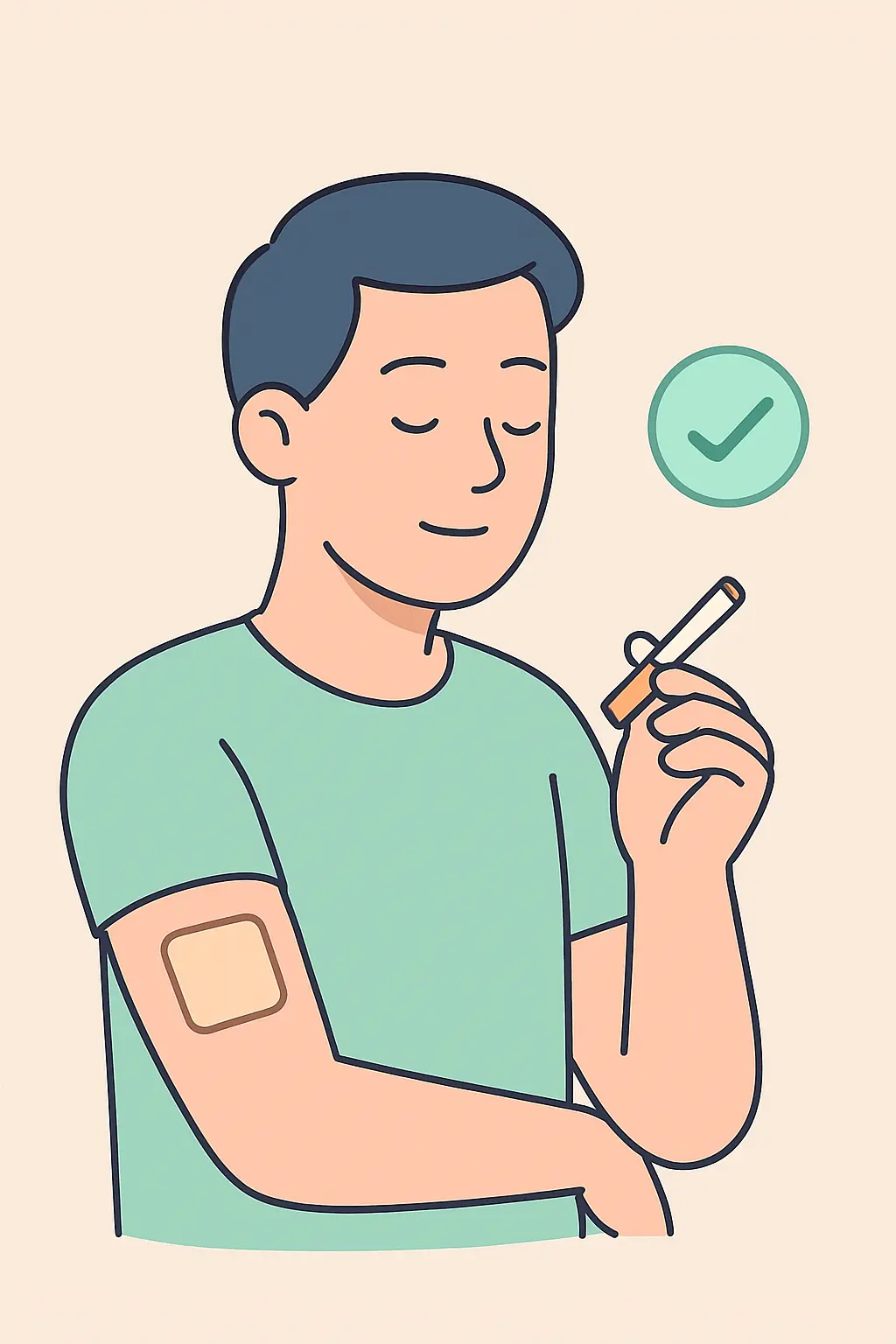
Can you smoke while using a nicotine patch? For most adults, smoking an occasional cigarette while wearing a nicotine patch is not considered dangerous, and the blanket warning on older packaging reflected caution rather than proven harm. UK stop smoking services actively run structured plans that combine NRT with gradual cigarette reduction. Regulators differ on this, though, so it is worth a two-minute conversation with a pharmacist before you plan around it.
Where did the “don’t smoke on the patch” warning come from?
The original caution on nicotine patch packaging dates back to early product labeling, when manufacturers erred on the side of caution about combining a steady background dose of nicotine with the sharp nicotine spikes from smoking, without the years of real-world safety data available today. It reflected an absence of evidence, not evidence of actual danger.
That picture has changed substantially in the UK. Nicotine replacement therapy carries a licensed indication for “cut down to stop” (also called nicotine-assisted reduction to stop), which explicitly covers using NRT, including patches, while still smoking during a structured reduction plan. The NCSCT’s cut down to stop resources describe it as a treatment option within local stop smoking services, particularly for people who are more dependent or facing multiple challenges when quitting.
Where you live changes the answer. That licensed indication is a UK position, and it is not universal. In the United States, over-the-counter NRT has not been approved by the FDA for use alongside continued smoking, and the American Cancer Society’s guide to nicotine replacement therapy advises talking to a health care provider if you want to use NRT while continuing to smoke as part of your quit plan. The practical takeaway is the same either way: one cigarette on a patch is not a medical emergency, but a planned reduce-while-patched approach should be set up with a pharmacist, doctor, or stop smoking advisor rather than improvised.
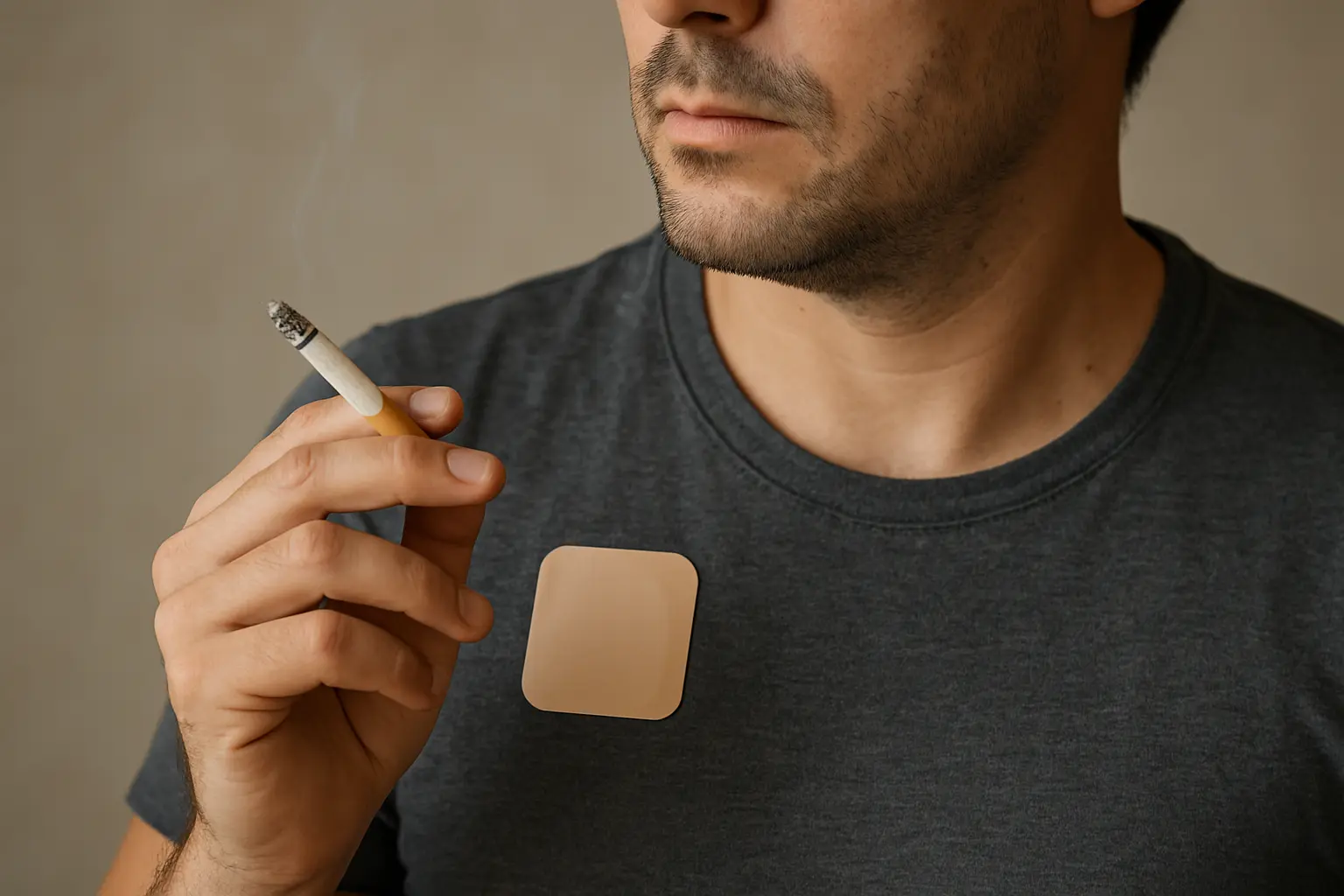
What does nicotine overdose actually look like?
Nicotine overdose is a real but rare event, and it looks quite different from the mild buzz or slight lightheadedness some people notice from combining a patch with a cigarette. Recognized symptoms include headache, pale skin, nausea or abdominal pain, weakness, diarrhea, tremors, agitation, confusion, restlessness, an unusually fast or irregular heartbeat, rapid breathing, and cold sweats.
In practice, overdose is far more associated with accidental exposure, such as a child or pet chewing on a used or unused patch, than with an adult correctly wearing one patch while occasionally smoking. If you experience several of these symptoms together after smoking on a patch, remove the patch, seek medical advice, and mention exactly how much nicotine you have been exposed to. Never wear more than the number of patches your product label or advisor specifies.
What is pre-loading, and why do stop smoking services use it?
Pre-loading means starting NRT, such as a patch, for a period before your actual quit date, while you are still smoking normally. Rather than being unsafe, this approach has shown better outcomes than starting NRT only on quit day itself, because it lets your body adjust to a steady nicotine baseline before you take on the added challenge of stopping smoking abruptly.
This is precisely why a large UK trial comparing structured reduction against abrupt quitting gave its abrupt-quit group two weeks of NRT pre-treatment before their quit date, using NRT and cigarettes side by side as standard practice, not as an exception. Pre-loading is now a routine part of UK stop smoking service protocols, delivered with practitioner supervision rather than as a self-directed experiment.
What is the cut-down-to-quit protocol?
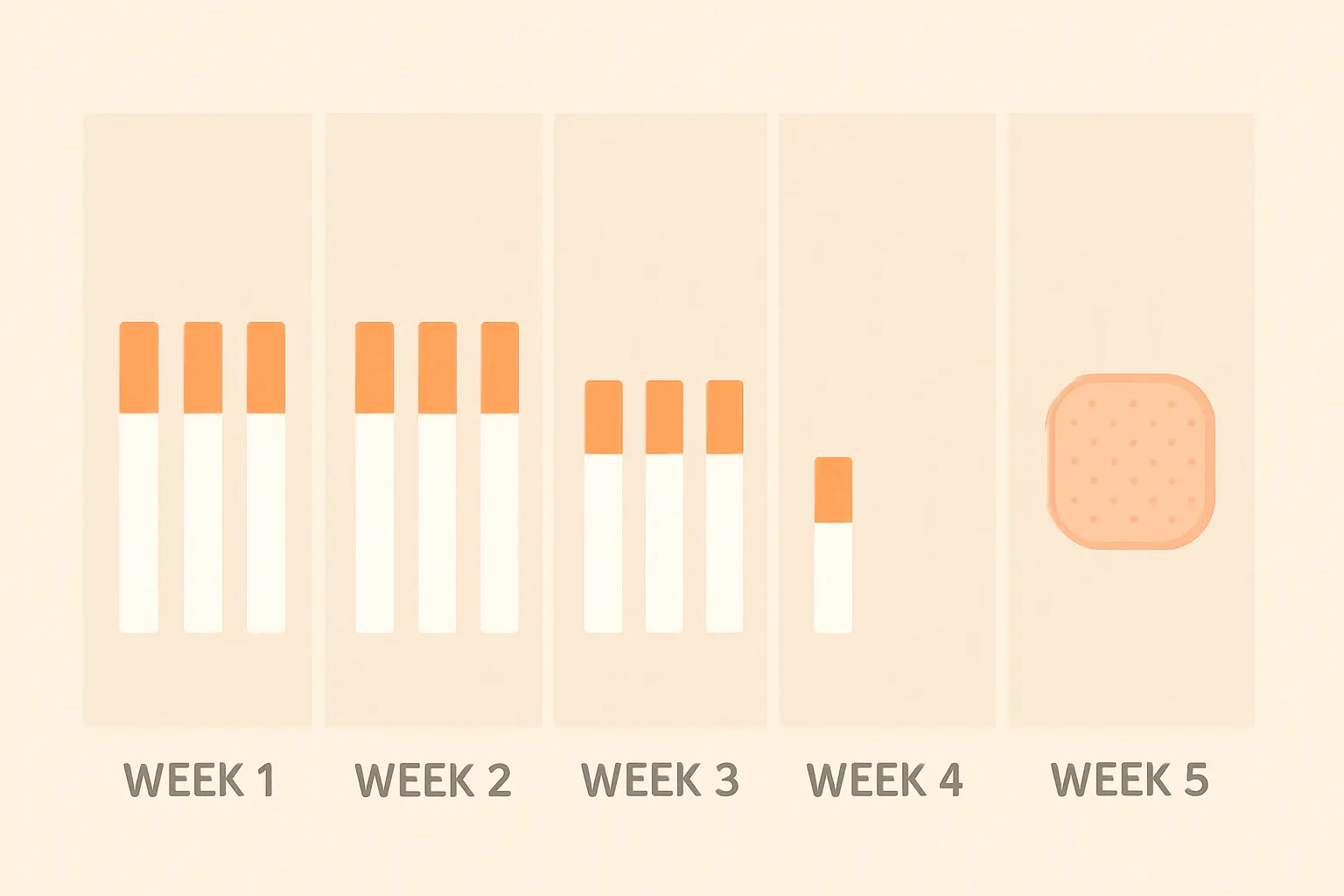
Cut Down to Stop (CDTS), also called cut-down-to-quit, is a structured program in which you reduce the number of cigarettes you smoke each day on a set schedule, while increasing your use of NRT to make up the difference, working toward a full quit date typically within four to six weeks. It sits within the harm-reduction approaches covered by NICE guideline NG209 on tobacco and is delivered through UK stop smoking services.
The general rule of thumb used by UK stop smoking services is to replace each cigarette cut with roughly 1mg of NRT for most adults, or 2mg for people with certain mental health conditions who tend to be more nicotine-dependent, with regular review to adjust the dose. When reducing by 10 or more cigarettes a day, or when someone is struggling to meet their reduction targets, services typically add a faster-acting NRT product (such as gum, lozenge, or spray) alongside the patch, since the patch alone delivers a slow, steady dose rather than a quick hit for a sudden craving.
Structured behavioral support from a trained practitioner is a core part of CDTS, not an optional extra — the evidence base is strongest when reduction is paired with both a stop smoking aid and multi-session support, not attempted with willpower and a patch alone. Dosing figures like the 1mg-per-cigarette rule are service guidelines applied by an advisor who reviews your progress, not a formula to self-prescribe from.
What does the evidence say about quit rates?
The 2019 Cochrane review of reduction versus abrupt cessation found no significant long-term difference in quit outcomes between structured smoking reduction and abrupt stopping (risk ratio 1.01, 95% CI 0.87–1.17; 22 studies, 9,219 participants). Critically, reduction approaches that included a stop smoking aid produced significantly higher quit rates than reduction attempted without one (RR 1.68, 95% CI 1.09–2.58; 11 studies, 8,636 participants), with the strongest evidence for a faster-acting NRT product or varenicline rather than the patch alone (Cochrane, 2019).
| Approach | CDTS result | Abrupt quitting result |
|---|---|---|
| Reduction with NRT vs abrupt quitting (UK Rapid Reduction Trial) | 39.2% abstinent at 4 weeks | 49.0% abstinent at 4 weeks (with 2 weeks NRT pre-loading) |
| Long-term quit outcomes (Cochrane, 22 studies) | No significant difference between approaches (RR 1.01, 95% CI 0.87–1.17) | |
| Reduction with vs without a stop-smoking aid | Higher quit rates with an aid (RR 1.68, 95% CI 1.09–2.58) | |
Abrupt quitting still tends to edge out reduction approaches at four weeks, and remains the preferred first option for anyone who feels able to stop in one go. But CDTS, done with a proper NRT aid and support, is a genuinely evidence-based option for people who are not ready or able to stop abruptly, not a consolation prize. It is especially useful for people who are more heavily dependent, have tried and failed to quit abruptly before, or belong to priority groups such as those with severe mental illness or experiencing homelessness.
Who genuinely should ask a clinician first?
Pregnant women should not use a self-directed cut-down-to-stop approach combining continued smoking with NRT. CDTS is specifically not recommended in pregnancy because of the ongoing risk of tobacco exposure to the fetus, and pregnant smokers should get individualized guidance from a midwife or doctor rather than following a general reduction plan.
People with a recent cardiac event, unstable or worsening chest pain, or a serious heart rhythm problem should also check with a doctor before combining NRT with continued smoking, since this is the population where product labels have historically applied extra caution. The same goes for anyone under 18, anyone taking prescription stop-smoking medication, and anyone in a country where NRT is not licensed for use alongside smoking — which includes the United States.
When to see a doctor: Beyond these groups, seek medical advice if you experience chest pain, an irregular or racing heartbeat, severe nausea, or confusion while combining a patch with smoking — these are not expected effects and warrant prompt evaluation. Never stop taking a prescribed stop-smoking medication or NRT regimen without first talking to the prescribing clinician, even after a slip. A pharmacist can answer most of these questions in a few minutes, without an appointment.
What should you do the day after a slip?
Keep the patch on and keep going. The single most common way a cut-down-to-stop attempt fails is not the slip itself — it’s the all-or-nothing thinking afterward, where one cigarette becomes “well, I’ve ruined it” and both the reduction plan and the NRT get abandoned together. A slip is data about what triggered it, not proof that the whole approach has failed.
This is exactly the reframe behind iQuit’s streak shields feature: a slip logs as information to learn from, not as a reason to erase your progress or give up on the plan entirely. If you’re mid-reduction, simply resume your planned NRT dose and reduction target the next day, and consider what specifically triggered the slip so your plan can account for it going forward. Reading about what happens after just one cigarette can also help put a single slip into perspective. If slips are becoming frequent, that’s a signal to get structured behavioral support rather than to abandon NRT — the complete withdrawal symptoms guide can help you tell ordinary withdrawal discomfort apart from a sign you need more support.
If you’re just getting started with a patch, how to apply nicotine patches correctly covers placement, timing, and rotation, and it’s worth knowing how long nicotine stays in your body so you understand why a steady patch dose behaves differently from a cigarette’s quick spike. For choosing between NRT formats generally, the best NRT options ranked compares patches against gum, lozenges, and sprays, while combining patch and fast-acting NRT and choosing the right patch strength both matter for a cut-down plan specifically. And on the reframe that makes slips survivable in the first place, why one slip should not erase your progress goes into more depth.
Frequently Asked Questions
Is it dangerous to smoke while wearing a nicotine patch?
For most adults, no. In the UK, NRT carries a licensed “cut down to stop” indication that covers using a patch alongside reduced smoking during a structured plan supported by NICE guidance and the NCSCT. The old blanket warning reflected an absence of evidence rather than proven danger. Check with a pharmacist or doctor before planning around it.
Does the advice differ in the US and the UK?
Yes. UK licensing explicitly permits using NRT while cutting down, and stop smoking services deliver that as a structured program. In the US, the FDA has not approved over-the-counter NRT for use alongside continued smoking, and the American Cancer Society advises talking to a health care provider first if you want to do so as part of your quit plan.
What is pre-loading a nicotine patch?
Pre-loading means starting to wear a nicotine patch for a period, often around two weeks, before your actual quit date while you continue smoking normally. Research summarized by UK stop smoking services links this approach to better quit outcomes than starting NRT only on the quit date itself. It is delivered with practitioner supervision.
What is cut-down-to-stop (CDTS)?
CDTS is a structured program where you reduce daily cigarettes on a schedule, typically over four to six weeks, while increasing NRT use to compensate, working toward a full stop date. It is used by UK stop smoking services for people unable or unwilling to quit abruptly, with behavioral support built in.
What are the symptoms of nicotine overdose?
Symptoms include headache, pale skin, nausea, weakness, diarrhea, tremors, agitation, confusion, restlessness, a fast or irregular heartbeat, rapid breathing, and cold sweats. True overdose from correctly wearing one patch plus occasional smoking is rare in adults; it is more commonly linked to accidental exposure, such as a child or pet contacting a patch.
Should I stop using my patch if I have a slip and smoke?
No — keep wearing the patch and resume your plan the next day. Abandoning NRT entirely after a single slip is a bigger risk to your overall quit than the slip itself, since it removes the very support that helps you get back on track. If slips become frequent, speak to a stop smoking advisor rather than stopping NRT.
Does cut-down-to-stop work as well as quitting abruptly?
A 2019 Cochrane review found no significant long-term difference between structured reduction and abrupt stopping (RR 1.01, 95% CI 0.87–1.17), though abrupt quitting tends to edge ahead at four weeks and remains the first-choice recommendation for people who feel able to do it. CDTS is a genuinely evidence-based alternative for people who cannot commit to stopping abruptly.
Is cut-down-to-stop safe during pregnancy?
A self-directed cut-down-to-stop approach that involves continued smoking alongside NRT is specifically not recommended during pregnancy, because of the ongoing risk of tobacco exposure to the fetus. Pregnant smokers should speak with a midwife or doctor for individualized, supervised guidance rather than following a general reduction plan.
How much NRT should replace each cigarette I cut out?
UK stop smoking services typically use a guideline of about 1mg of NRT per cigarette cut for most adults, or 2mg for people with certain mental health conditions, adjusted through regular review with an advisor. When reducing by 10 or more cigarettes daily, adding a faster-acting NRT product alongside the patch is usually recommended. This is a service guideline, not a self-dosing formula.
A slip doesn’t have to undo your progress
iQuit’s streak shields treat a slip as data, not defeat, so one cigarette on a hard day never has to mean starting over. Log it, understand the trigger, and keep going.